Visit Worldwide Topsites
Showing posts with label Craters-Aristoteles and Eudoxus. Show all posts

Monday, 25 April 2016

Video frames by astronomical telescope. Aristoteles and Euxodus lunar craters.

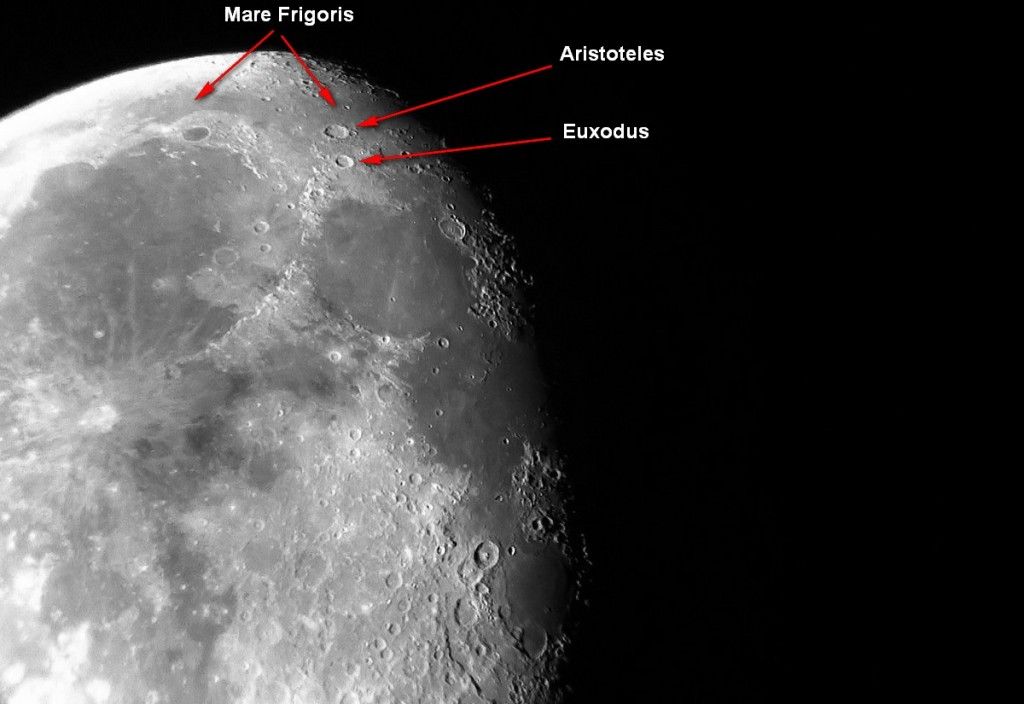
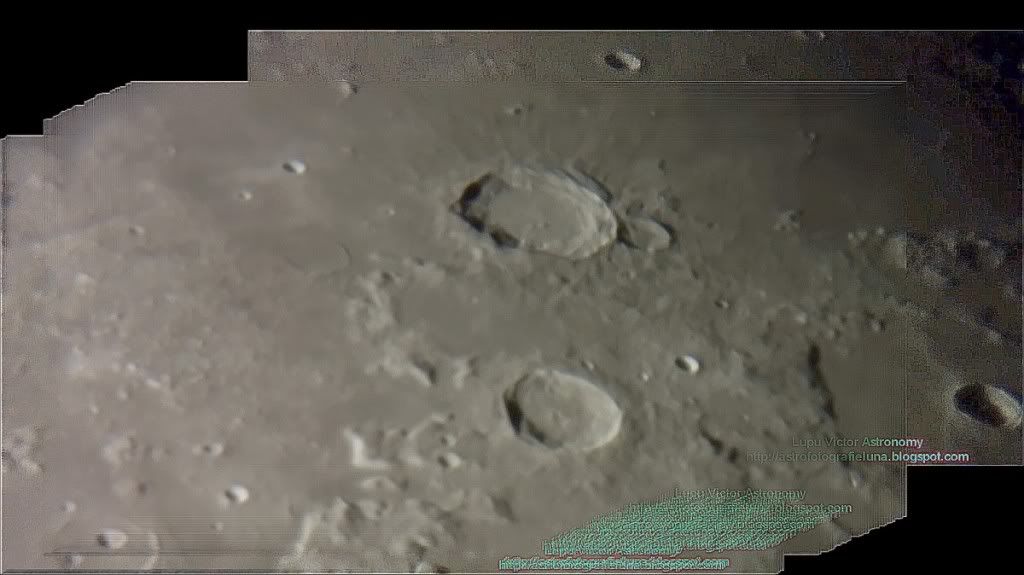
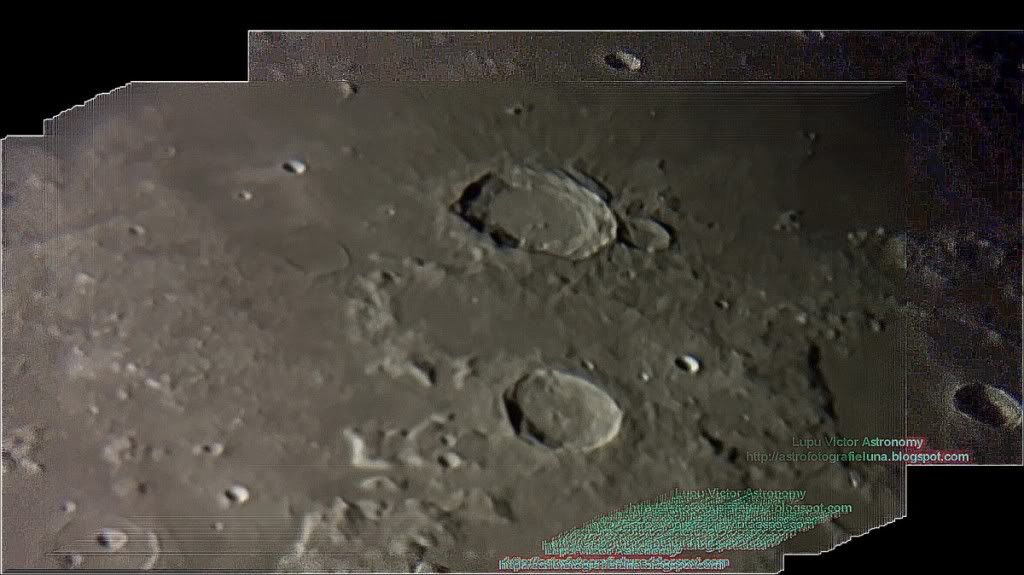
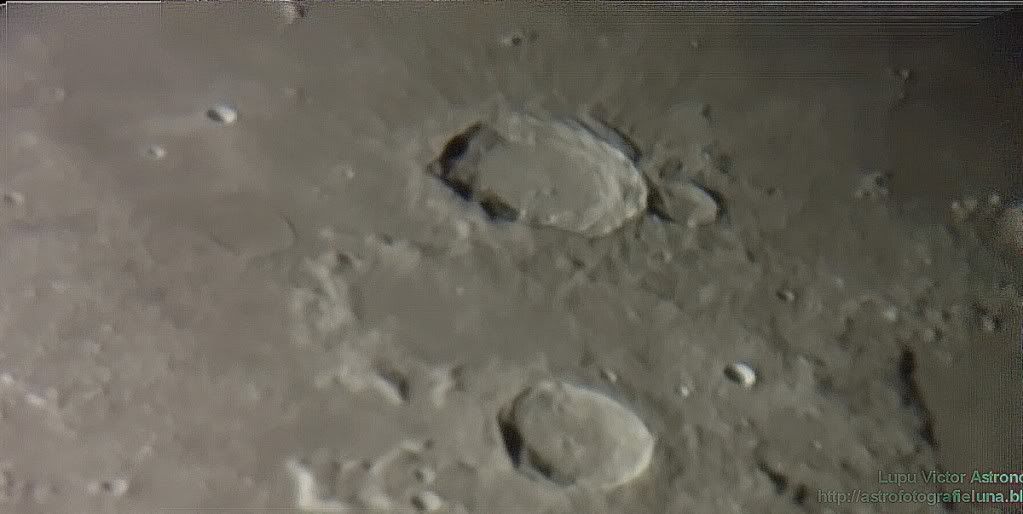
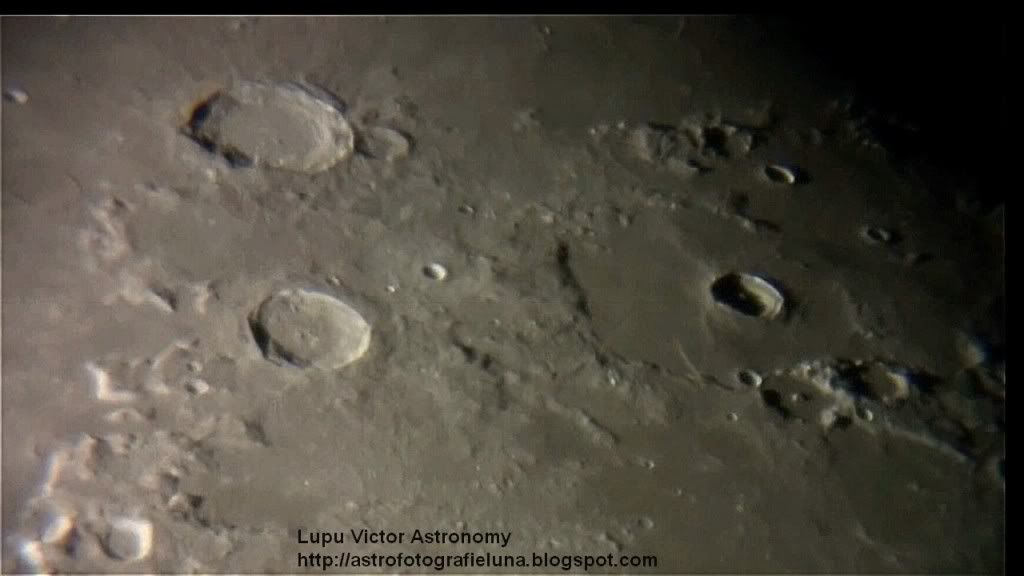
These are images taken by the telescope, I have captured northern craters on the moon. The most highlighted are Aristoteles and Euxodus, located south of Mare Frigoris. The two craters form a distinct pair for observers through a telescope.

As a feature of Aristoteles (87 km), we see a small crater on the eastern edge directly attached to it, called Michell (30 km). To the west, a mountainous arc can be seen between the two craters, which I guess is part of Montes Caucasus, south of Eudoxus (67 km).


Aristoteles crater is believed that occurred in the Erathostenian age. Since the central peaks are not located in its center, that makes us think that the cosmic object that produced it came in an oblique angle.

In the first images, the landscape takes us to the lunar horizon from Aristoteles to the edge of the Moon, where we can see lined up several small craters to northeast, starting from Aristoteles, as Galle (21 km), and its satellite craters Galle C ( 11 km), G, and B (7 km), Democritus A (11 km) and last, larger Democritus (39 km).


Magnitude: -10.82
Phase: 0.46
Distance: 399.283 km
Illuminated: 45.6% (0% = New, 100% = Full)


Astronomical instrument: Celestron C8-Newtonian telescope,
Eyepiece: Plossl 20mm, 2x Barlow
Mount: CG5 (EQ5)
Camera: Sony CX130
Filter: no
Date: 30.01.2012
Location: Baia Mare, Romania
Processing: FastStone Image Viewer


In the picture below are labeled craters and other lunar features in the region. To better understand this photo, you should note that the label with the name or the letter of larger craters could be found at their center, and on the small craters, you should find them around them, usually above.

Mai sus si jos: Data: 20/07/2011.


Tuesday, 24 February 2015

The Moon. North lunar craters Video through telescope.


In these images we can see many craters on the Moon, namely its north. These include features such as mountains and craters as: Vallis Alpes / Montes Alpes, Plato (109 km), Hercules / Atlas (69/87 km), Burg (40 km), Aristoteles / Euxodus (87/67 km)
The video was also used in Registax program to process images with higher quality, but also for simple video captures.

The video was made with the camera mounted on the telescope, to be more exact on the telescope eyepiece. To protect the telescope from vibrations, I used a tracking motor from Lacerta, and thus the image was more stable.

However, even with this tracking device for celestial bodies, there were vibrations of the telescope tube, causing the image to be slightly unstable. For this, I used the video stabilization option in Sony Vegas editing software, so the video was 100% correct on this issue.

Unstable aspect of the image through the telescope is caused by a combination of turbulence in the Earth's atmosphere and increased streams of heat from the ground and buildings.

Images were obtained by attaching a camera directly into the eyepiece of an astronomical telescope of 8 inch Newtonian; For this reason the eyepiece visual field was increased.

Images processed in Registax of crater Plato, here.
Unprocessed images (video captures), of crater
Plato are here.

Moon Age: 9.05 days
Phase: 70.5% (0% = New, 100% = Full)
Distance: 399.221 km


Optics (telescope or lenses): Celestron C8-Newtonian telescope, eyepiece 20mm Plossl, 2x barlow
Mount: CG5 (EQ5)
Camera: Sony CX130
Filter: no
Date: 10/03/2014
Location: Baia Mare, Romania
Processing: Sony Vegas HD Platinum 10.0


Friday, 29 August 2014

Did I discovered a new Moon crater?


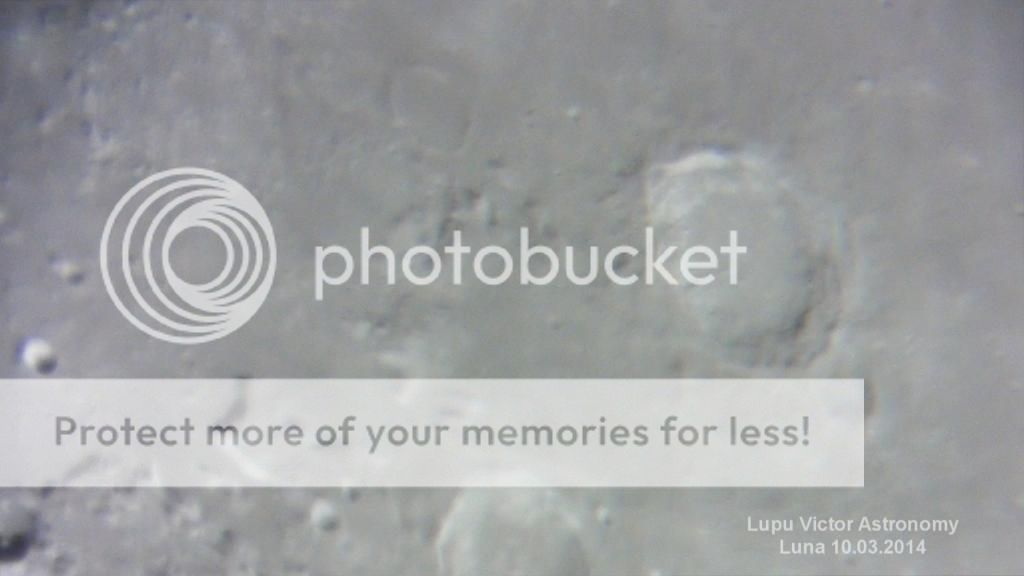
Observe craters Aristoteles and Euxodus (87/67 km), two craters on the Moon's north.

Looking at these pictures, something crossed my mind seeing the mountain formation west of the two craters, that in this area there is a crater, so old and bombed, that is barely distinguishable. If you look closer, those mountains are curved, which may mean that that is what survived from the western edge of the crater, the rest being covered by lava.

This is the second crater "discovered" by me, the first being the one that fits Rupes Recta. There are no data on these alleged craters anywhere on the internet, or maybe I do not know. If this is a new crater discovered (but old), it should be named Lupu, by my name. :)Just kidden.


Moon Age: 9.05 days
Phase: 70.5% (0% = New, 100% = Full)
Distance: 399.221 km


Optics: Celestron C8-Newtonian telescope, 20mm Plossl, 2x barlow
Mount: CG5 (EQ5)
Camera: Sony CX130
Filter: no
Date: 10/03/2014
Location: Baia Mare, Romania
Processing: FastStone Image Viewer


Friday, 21 December 2012

Aristotle lunar crater by astronomical telescope 2012


Aristoteles (87 km) and Eudoxus (67 km) forms a prominent duo that can be seen by any telescope. The pair is visible when lit by the sun, even through binoculars, with well-defined shapes of light when fully lit. Of the two, Aristotle is much more impressive, with a slightly polygonal shape and large interior walls, showing some of the largest terracing than any crater on the Moon. Its floor, is relatively goodwith two peaks on the floor, in the south. South of Aristotle, the terrain becomes somewhat uneven.

Although Aristoteles (87 km) is bigger than Euxodus (67 km), it is shallow, with a depth of 3.3 km, compared to Euxodus, which is 3.4 km deep.


Aristoteles crater was named after the Greek astronomer and philosopher Aristotle (383-322 BC), the name of the crater was approved in 1935.

Optics: Celestron C8-Newtonian telescope, 20 mm Plössl, 2x barlow
Mount: CG5 (EQ5)
Camera: Sony CX130
Filter: no
Date: 04/27/2012
Location: Baia Mare, Romania
Processing: video captures, FastStone Image Viewer


Above and below: Date: 20/07/2011.

Monday, 17 December 2012

Euxodus a splendid crater seen by astronomical telescope.


Euxodus (67 km), is a Moon crater but also on Mars is a crater with the same name.

In this region the Apollo missions were not conducted.  The nearest Apollo mission, was 632 km far away from this crater, straight to the west, where the Apollo 15 astronauts drove a rover close to the Hadley mountain foothills, somewhere north of Apenninus.

There is a video of these images, in a separated article.

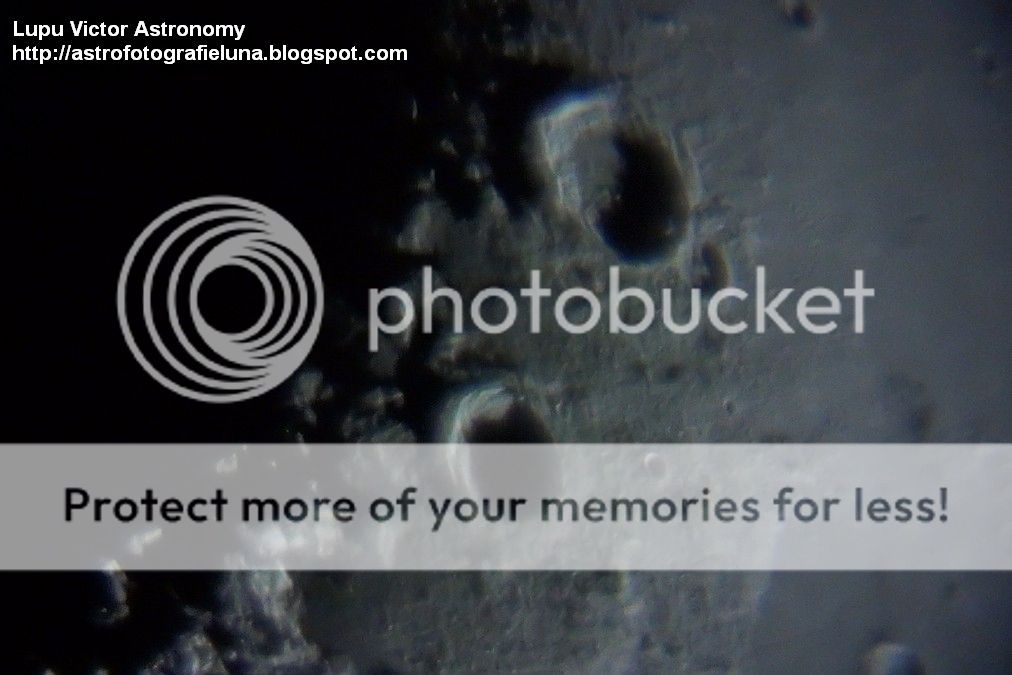
In the picture above, Euxodus is about 80% in the shade, and just inside the western edge is illuminated by the sun, which shines from the east. Terraced inner walls are uneven, and it's rim has a wide collar Euxodus, is the younger brother of the crater Aristoteles (87 km), which is further north. The depth of Euxodus to the floor, is reaching 3.4 km.

Optics: Celestron C8-Newtonian telescope, 20mm Plössl, 2x barlow
Mount: CG5 (EQ5)
Camera: Sony CX130
Filter: no
Date: 04/27/2012
Location: Baia Mare, Romania
Processing: video capture, FastStone Image Viewer


The image below is a video capture made ​​on July 20, 2011. The above one is made on 20/07/2011
 

Thursday, 12 July 2012

Aristoteles Euxodus and Burg craters on the Moon


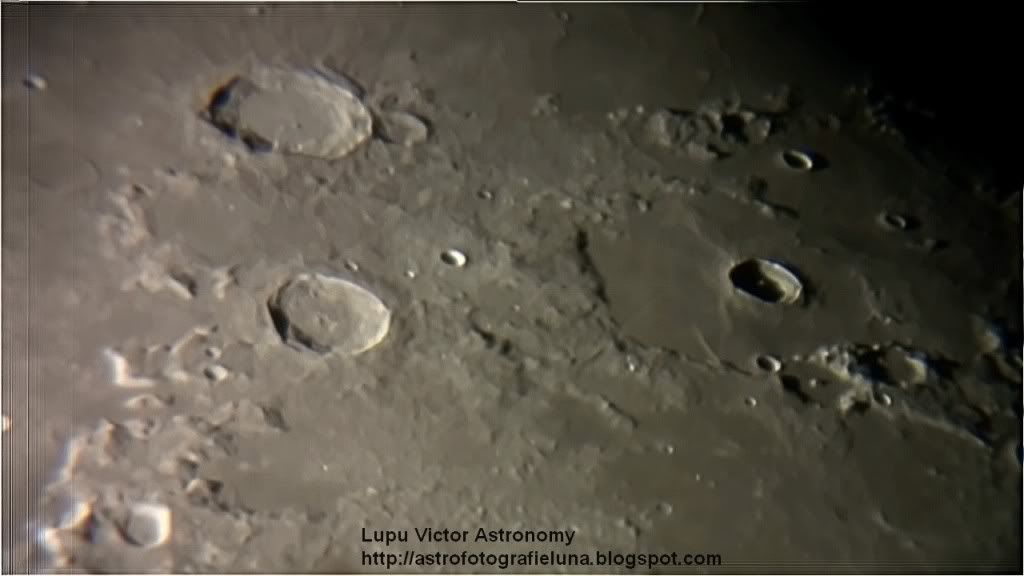
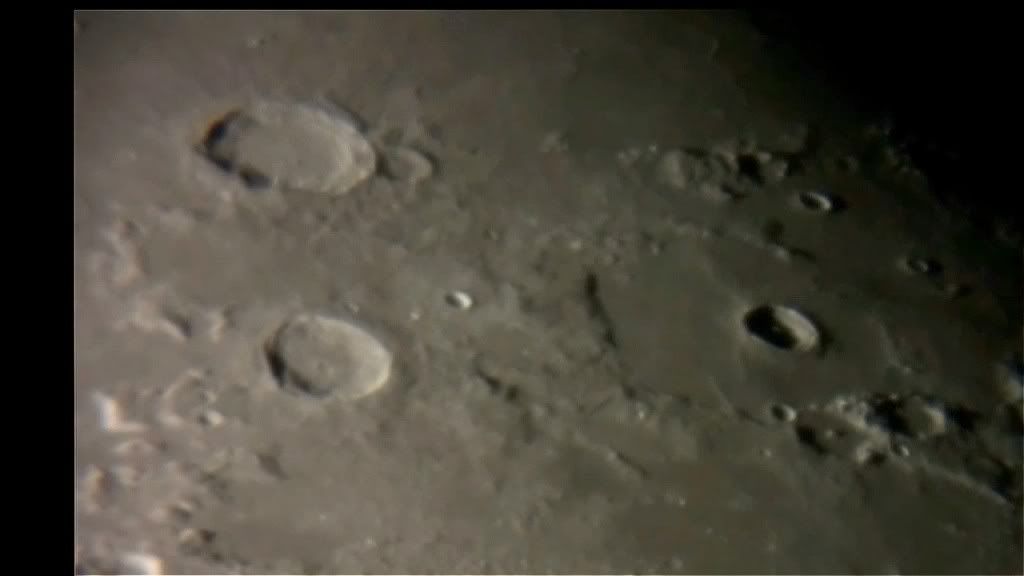
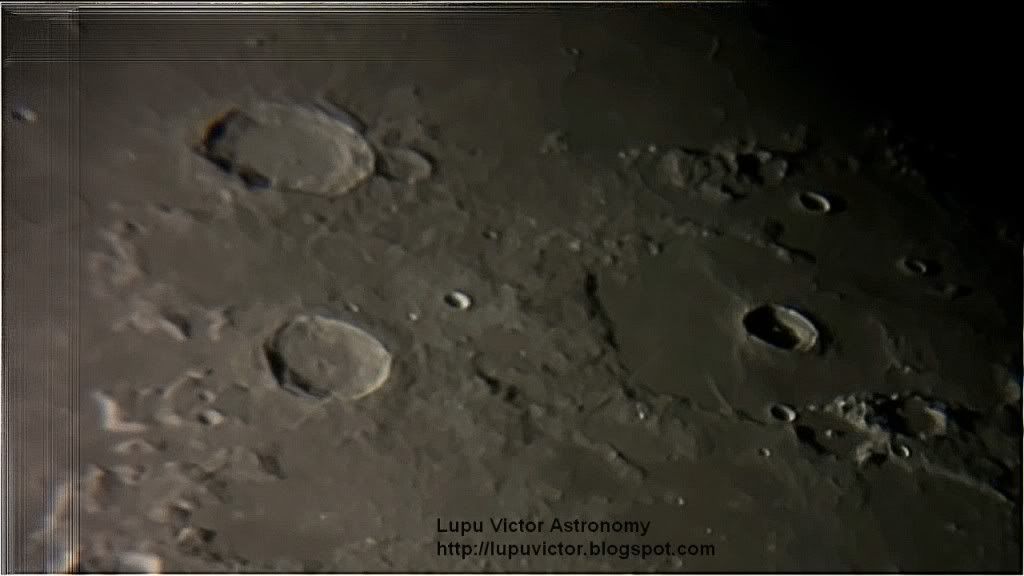
     In the video captures above, are Euxodus and Aristoteles craters, which are located on the north side of the Moon, the on the head of Caucasus mountains. Montes Caucasus are 500 km long, located south of Aristoteles (87 km) and Eudoxus (67 km), and marks a part of the northwestern border of Serenitatis Sea. On their right, is crater Burg, located in the center of Lacus Mortis
These are video captures. Processed images of this area, can be found here:
Registax: Lacus Mortis and crater Burg: Images by astronomical telescope.


Photographer: Victor Lupu
Optics: Celestron C8-inch reflector telescope-Newtonian, plossl 20 mm, 2x Barlow
Mount: CG5 (EQ5)
Camera: Sony HDR CX105
Filter: No
Date: 20/07/2011
Location: Baia Mare, Romania
Processing: Faststone


Monday, 9 July 2012

Impressive craters Aristoteles and Euxodus Video by telescope

Spectacular pair of craters Aristoteles and Euxodus, located at the edge of Mare Frigoris, or "Cold Sea," can be easily identified even through binoculars.

 Terminator (the edge between light and shadow) in this video, falls on Montes Caucasus's peaks. Some of these peaks of the mountains are high enough to be visible in the sun.

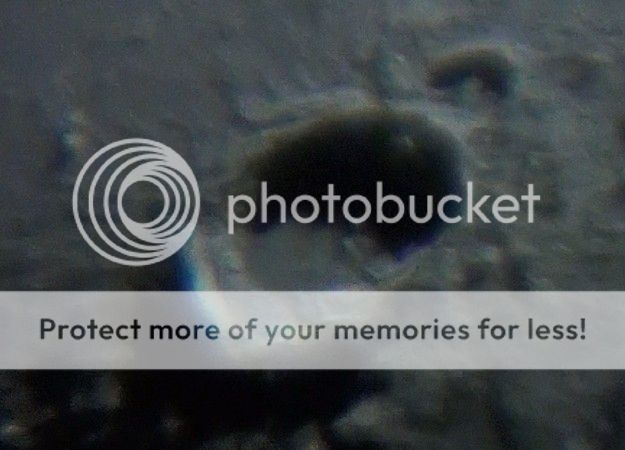
 Observe and note the impressive crater Aristoteles, and note the smooth floor and its terraced walls. More than half of the crater is in darkness and the shadow of the eastern edge, is projected onto the floor. In the center of this crater are two small central peaks. The northwest edge is perfectly shaped.

Eudoxus, a deep crater, complex, with steep edges and terraces, ranging from 1 km higher in the north to 4.3 km to the southeast, is immersed in total darkness. Just east of the crater interior walls glow in sunlight. In the crater are central peaks, but not seen because of the shadow.

 The two craters, Eudoxus and Aristoteles, from different eras. The first dates from Copernican, and the second era Eratosthenian era.


Video: Victor Lupu
Optics: CelestronC8 "-Newtonian telescope, plossl20mm, 2x Barlow
Mount: CG5 (EQ5)
Device: Sony CX-130
Video mode: Full HD progressive 1920x1080
Filter: no
Date: 27/04/2012
Location: Baia Mare, Romania
Processing and editing: Sony Vegas 10


                                       Date: 20/07/2011

The image below is a video capture made ​​on July 20, 2011.

Thursday, 22 March 2012

Registax: Aristotle and Euxodus the astronomical telescope.


Image 1 to 3: 26 frames, 90% lowest quality

The two craters Aristoteles and Euxodus are two craters on the north side of the Moon. They have similar shapes but different sizes. This area, unlike the South Pole, is flat, without many craters. Here we find large seas, and or small or very large craters.

Images of the area around the craters of the same night: Registax: Lacus Mortis and crater Burg: Images by astronomical telescope.


Photographer: Victor Lupu
Optics: Celestron C8 inch reflector telescope-Newtonian, super plossl 20mm, 2x Barlow
Mount: CG5 (EQ5)
Camera: Sony HDR CX105 to 8x optical zoom
Total Magnification: 800x
Filter: No
Date: 20/07/2011
Location: Baia Mare, Romania
Processing: Registax


The image below is a video capture made ​​on July 20, 2011.

Friday, 9 March 2012

Registax: Lacus Mortis and crater Burg: Images by astronomical telescope.


Figure 1: 179 frames, 90% Lowest quality
Figure 2: 179 frames, 90% Lowest quality
Figure 3: 2 frames, 100% Lowest quality
Figure 4: 111 frames, 90% Lowest quality
Figure 5: 2 frames, 100% Lowest quality

Lacus Mortis, in Latin "Lake of Death", is 151 km in diameter, and is a plain of basaltic lava flows, located on the north-east of the Moon. It lies south of Mare Frigoris, being separated from the sea, by a thin arm terrain. South is Lacus Somniorum.

  Visible east of the midpoint, is the crater Burg. The west of Lacus Mortis, contains an extensive system of cracks in zig-zag, called Rimae Burg, spanning a distance of approximately 100 kilometers.


Burg (Bürg) -40 km in diameter is located at the center of Laus Mortis. To the south and southeast are the pair craters Plana and Mason (44 and 43km). To the west, beyond the edge of Lacus Mortis, is the prominent crater Eudoxus.
Burg's edge is nearly circular, and the interior is bowl-shaped, and there is a high mountain situated in the center. Over the crest of the mountain, some observers have noted a small crater, like a pit.

Aristotle and Euxodus are two craters to the left in photo, below each other.


Photographer: Victor Lupu
Optics: Celestron C8-inch reflector telescope-Newtonian, plossl 20mm, 2x Barlow
Mount: CG5 (EQ5)
Camera: Sony HDR CX105 to 8x optical zoom
Total Magnification: 800x
Filter: No
Date: 20/07/2011
Location: Baia Mare, Romania
Processing: Registax


The image below is a video capture made ​​on July 20, 2011.


All images are © Copyright 2010-2015 Lupu Victor. All rights reserved.Images may not be reproduced, published, or copied in any form without written permission of the author. Thank you for respecting the intellectual property rights. ASTROFOTOGRAFIA | Lupu Victor Astronomy - Contact - About
Design by Free WordPress Themes | Bloggerized by Lasantha - Premium Blogger Themes | Online Project management