Visit Worldwide Topsites
Showing posts with label Things about the Moon. Show all posts

Sunday, 8 June 2014

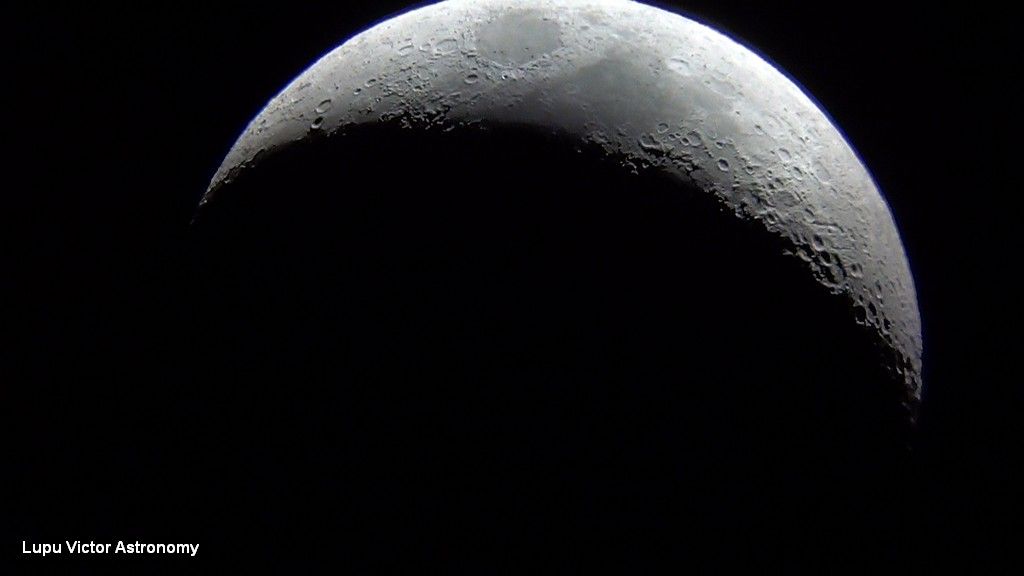
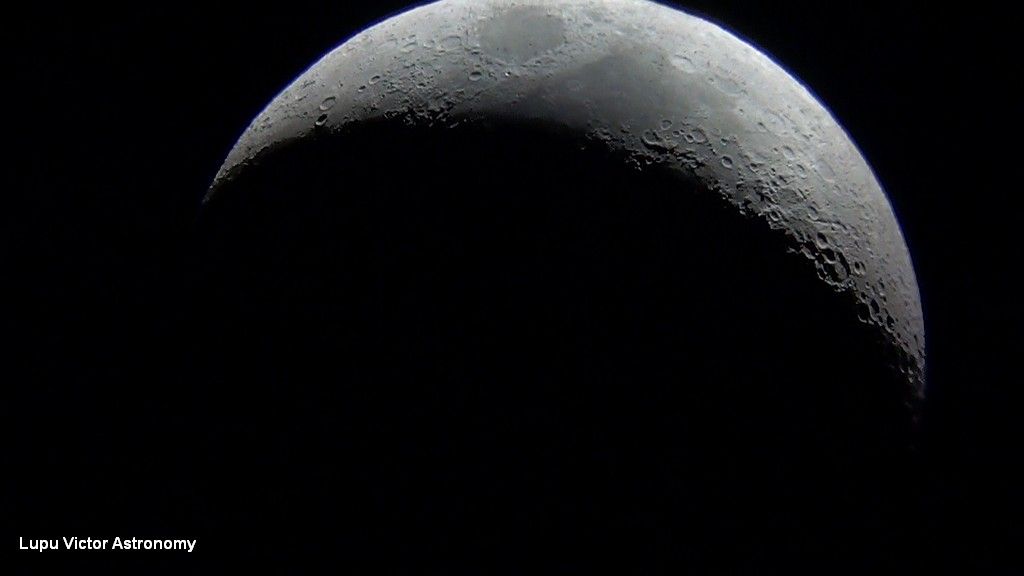
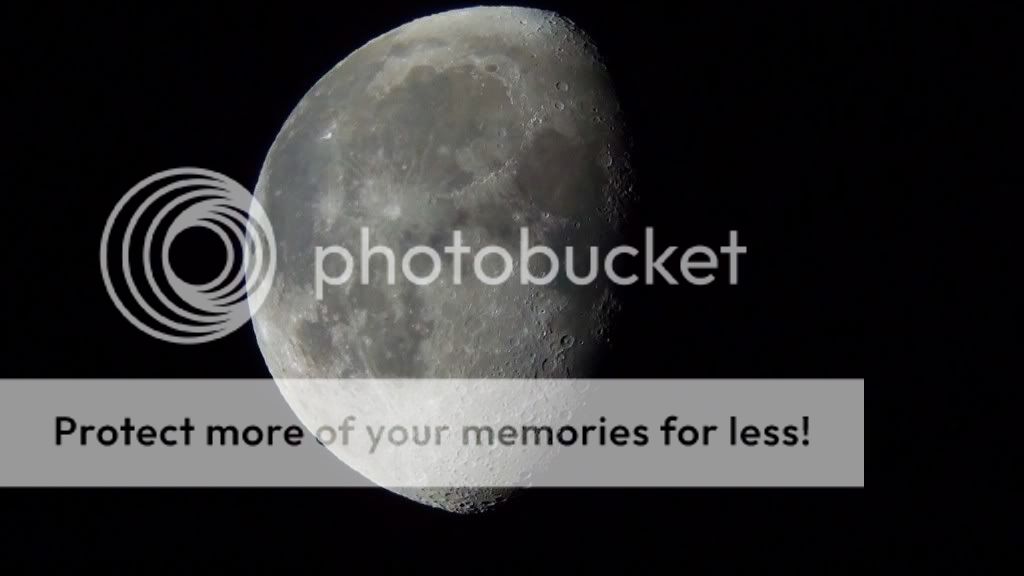
Astronomy observing the Moon through a telescope.


Astronomy can be amplified for you if you like this science, observing the Moon through a telescope. What you see in magazines, internet, documentaries, is not like what you see when you put your eye to the eyepiece of the telescope.

With a medium telescope like mine, I enjoy the Moon, a place of many craters. You can not reach this place but only with a powerful aircraft to get you there, and a suitable cosrum to survive. But it is still difficult to land on such rugged area, and thats why you can not find in the history of flight to the Moon, missions that have been carried out on its south pole.

The Moon is very large and I wonder sometimes, how can a body like this, is orbiting Earth, so big that can be classified as a planet? It is not just a satellite similar to those of Mars, Phobos and Deimos, which should be be hard to observe them with a telescope, but the Moon is a planetoid that is right here in our garden, which you can admire, with or without an optical device.

For those who have not seen a planet with their eyes, you want to see one? Look up and there she is, beautiful, bright, and large: Selena (Moon).


Distance: 387.568 km
Phase: 17% (0% = New, 100% = full)


Optics: Celestron C8 "-Newtonian telescope, 20mm Plossl, 2x Barlow
Mount: CG5 (EQ5)
Camera: Sony CX130
Filter: no
Date: 11/09/2012
Location: Baia Mare, Romania
Processing: Registax, FastStone Image Viewer


Monday, 24 February 2014

What is the night temperature on the Moon?

10 frames at 100% best quality in Registax.

I made this article because "what is the temperature at night on the Moon?" is a question asked by those who have found my blog.

In general , the temperature on the Moon varies due to several causes such as topographic location , Moon phase (day- night) , the position of the Earth and the Moon to the Sun ( perihelion - aphelion ) , and recently it was shown that temperature variations are recorded in function of the crater; in newer ones, is a slightly higher temperature than in other older areas.

During the afternoon on the Moon, at the equator temperatures can be higher than boiling water over 100 degrees Celsius , while night can be colder than liquid oxygen . NASA scientists say that on the south pole of the Moon, the temperature recorded is as low as the most distant object in the solar system , Pluto . By day, on the lunar south pole , there were -238 degrees Celsius.

Because the Moon is close to Earth, it receives the same amount of light from the Sun , so if you look at it, you can imagine that's how our planet would look if it would have no atmosphere.
More about the temperatures on the moon , read here: Temperature of the Moon-Video.

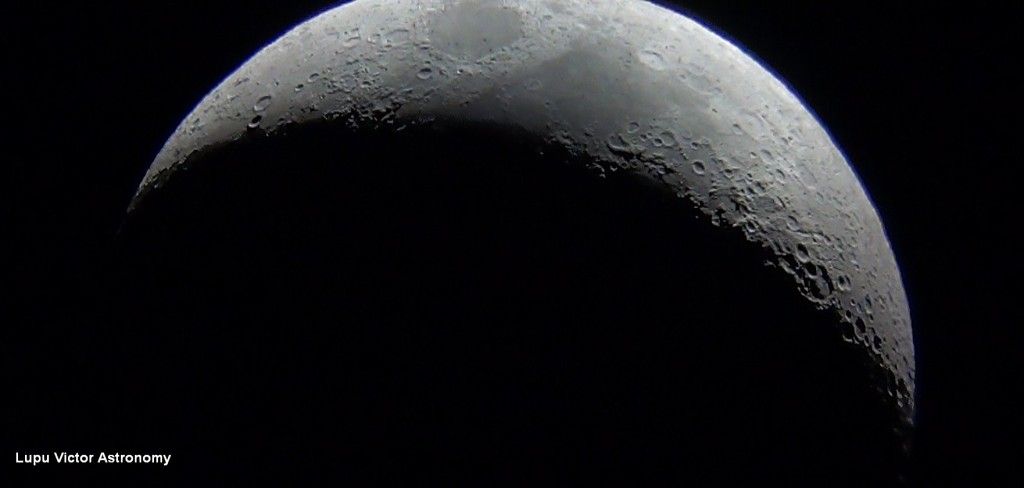
Age of the Moon: 7 days
Phase: 51% (0% = New, 100% = Full)
Distance: 384.488 km


Optics: Celestron C8-Newtonian telescope, 20mm Plossl, 2x barlow
Mount: CG5 (EQ5)
Camera: Sony CX130
Filter: no
Date: 29/04/2012
Location: Baia Mare, Romania
Processing: Images in Registax, FastStone Image Viewer


Saturday, 24 November 2012

The Moon A mystery even now


The Moon is the closest celestial body of all that are in our Solar System. For this reason, it is most easily studied by scientists to gain important information about the cosmos.
  Apollo missions of the late 60s and early 70s, have brought to Earth 382 kg. of lunar rock that have been studied by scientists to have knowledge about soil composition and age of the Moon. The fact is, that even with these rocks in front of them, we still have much important things to discover about it. As an example, even in 2012, scientists discovered that solar particles could be the probable source of water stuck inside the lunar soil. This is because, over the past five years, the spacecrafts observations and laboratory measurements of moon rocks of the Apollo, overthrew the belief that the moon is dry.
Lunar soil has strange properties because it contains glass bubbles filled with nanoparticles. Nanoparticles are released when micrometeors crushes the glass.

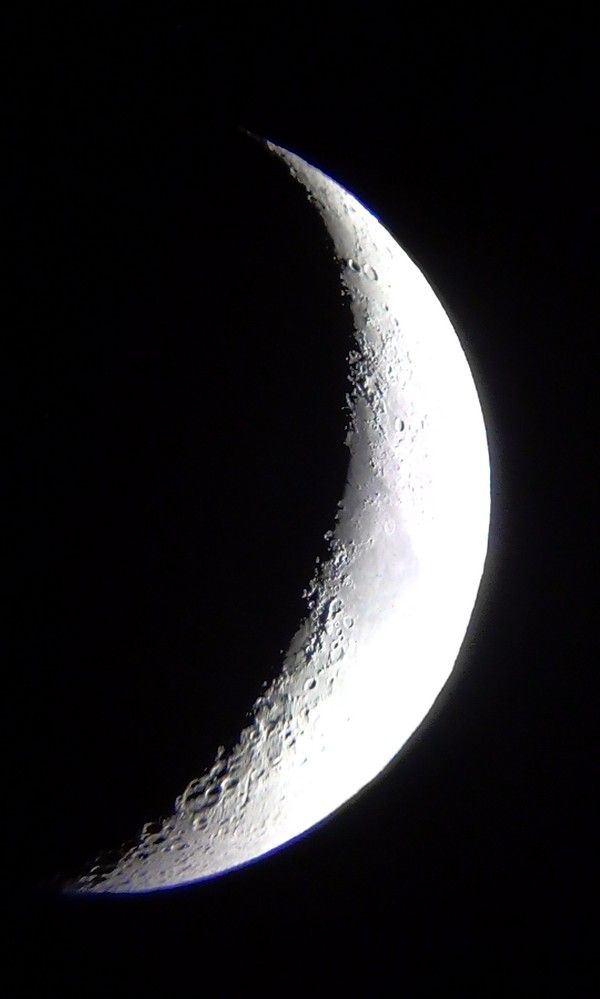
Optics: Celestron C8-Newtonian telescope, 20mm Plössl, 2x barlow
Mount: CG5 (EQ5)
Camera: Sony CX130
Filter: no
Date: 04/27/2012
Moon age: 5 days
Phase: 28% (0% = New, 100% = Full)
Location: Baia Mare, Romania
Processing: video capture, FastStone Image Viewer

Thursday, 2 August 2012

Solar System exploration: What if we had no Moon


In our Solar System is known only one Moon by us in astronomy, actually in the whole cosmic space, responsible for life on a planet, and this is our Moon, called Selena, because without it, life on Earth would take a turn hard to imagine.
 Mars also has two moons, Phobos and Deimos, but some asteroids-like, and not very large and the planet does not depends on their existence in terms of its rotation, tilt axis, the gravitational pull causing tides, and others. These moons do not have a spherical shape, and look like asteroids from the asteroid belt, that are lost, being caught in the orbit of Mars.

If our moon were not where it is, most the oceans would have suffered, which would not be attracted by its gravity towards the equator, and therefore water would be redistributed to the poles of the planet.
        Another effect would be affecting Earth's rotation axis and to stay the same direction, as the Moon is a stabilizing factor of our planet. Earth could have a chaotic rotation, and also chaotic seasons. It is possible to wake up ourselves with 10 seasons, or only 2. Behavior of the Earth is unknown in this situation.

There is no doubt that the Earth will not have a 24-hour day, but most likely, it will spin faster on its axis, making the day having fewer hours. Moon slows the Earth causing it to have its rotation on its axis of today.

The distances when the Earth reaches perihelion and aphelion from the Sun may also be changed. In addition, we can not predict not even the pocesses that would change the Earth's core. Unprecedented volcanic eruptions and earthquakes can occur, that the major population of today did not know about.
        Life on Earth would not look anything like the one we are living now, because species adapted to the current climate, would disappear. The climate would be unpredictable, and many animals on the planet will not migrate to large territories to find conditions favorable to life again.

In conclusion, the relationship between Earth and the Moon is crucial to life on our planet. All the normal processes would suffer a bit, starting from the core to the surface of our planet, making it unrecognizable to be seen from space.
 Regardless of how the Moon came to orbit our planet, enjoy it, look at it in a romantic or science way in all its splendor, and do not forget that this rock in space made ​​us a great service.

Photographer: Victor Lupu
Optics: Celestron C8-Newtonian telescope, plossl 20mm, 2x Barlow
Mount: CG5 (EQ5)
Device: Sony CX130 
Filter: no 
Date: 26/02/2012
Location: Baia Mare, Romania
Processing: Sony Vegas 10 video capture Splash Player


Video: Victor Lupu
Optics: CelestronC8 "-Newtonian telescope, plossl20mm, 2x Barlow
Mount: CG5 (EQ5)
Magnification: 100x
Device: Sony CX-130
Video mode: Full HD progressive 1920x1080
Filter: no
Date: 27/02/2012
Location: Baia Mare, Romania
Processing and editing: Sony Vegas 10

Tuesday, 30 August 2011

What is the name of the Moon? But the Earth?

All celestial bodies seen until now in this Universe have names.Planet's names (Mercury, Venus, Mars, Jupiter, Saturn, etc..), and natural satellites (moons) of neighboring planets have names too (Io, Europa, Ganymede, Phobos...). But what is the name of our Earth or our Moon? Neither our solar system has no name, not even our sun.

 Earth's name is the Earth, our moon's name is the Moon, and our sun is the Sun.
Earth (Terra) means ground or land, moon means a natural satellite of a planet and the solar system, means a star (sun) along with at least one planet,wich forms a solar system.

 In our Solar System, the first four planets, Mercury, Venus, Earth, Mars, are terrestrial, have land,earth, soil, but our earth should have also a name.Unfortunately, I think it's impossible to say exactly who first originally named our planet "the Earth". I do not think anyone put this name on purpose. This name was put before the world understanded that the Earth is also a celestial body that floats in space.

 It's strange that the most important astronomical objects that we know, have no name.
In terms of poetry, the Moon is named Selena, and the Earth is named Gaia, but the names are not recognized by astronomers, science.
So, the Earth and our Moon do not yet have names, and should be named somehow, someday.
Photographer: Victor Lupu
Optics: Celestron C8"-Newtonian telescope, 20mm plossl
Mount: CG5 (EQ5)
Device: Sony CX105 without zoom
Total magnitude: 50x
Filter: No
Date: 16/07/2011
Location: Baia Mare, Romania
Processing: FastStone, video capture

Sunday, 28 August 2011

Video-The best north lunar craters through my 8" telescope

This video has been stabilized although the images were not so unstable. The day before I filmed and captured Goldschmidt crater and the neighboring craters located north of the Moon, the atmosphere was good as well.
Goldschmidt impact crater soil was identified as distinct from mountainous material surrounding,the soil having properties rather similar to those found on the far side of the Moon.


Name: Goldschmidt and north of Moon craters video
Video: Victor Lupu
Optics: Celestron C8 "-Newtonian telescope, plossl 20mm, 2x Barlow
Mount: CG5 (EQ5)
Device: Sony CX105 at 6x optical zoom
Total Magnification: 600x
Filter: No
Date: 12/05/2011
Location: Baia Mare, Romania
Edit: Sony Vegas Video stabilized

Friday, 15 July 2011

The origin of the Moon


The Moon in November, on winter night.
Video by Victor Lupu
Optics: Celestron C8-Newtonian telescope, 20mm plossl
Mount: CG5 (EQ5)
Device: Sony CX105
Filter: No
Date: 18/11/2010
Location: Baia Mare, Romania
Processing: 10 Sony Vegas
Perhaps the biggest mystery of the Moon is its origin. Currently, the most plausible theory is that a great collision occurred about 4.5 billion years ago between Earth and a Mars-sized planet that had a path through our planet and destroyed our young Earth.The collision then formed a ring around Earth's orbit, which eventually condensed into a molten Moon.
Other favorite ideas that are no longer sustainable is the theory of fission, which provides that the Moon was detached from Earth long ago, probably from the region that is now the Pacific Basin.But the capture theory assumes the opposite: The Moon is an object caught by the Earth's gravity.

Friday, 6 May 2011

SELENE-THE MOON

Photographer: Victor Lupu
Optics: Celestron C8-Newtonian reflector telescope, plossl 20mm, 2x Barlow
Mount: CG5 (EQ5)
Device: Sony HDR CX105
Filter: No
Date: 21/032011
Location: Baia Mare, Romania
Processing: video capture


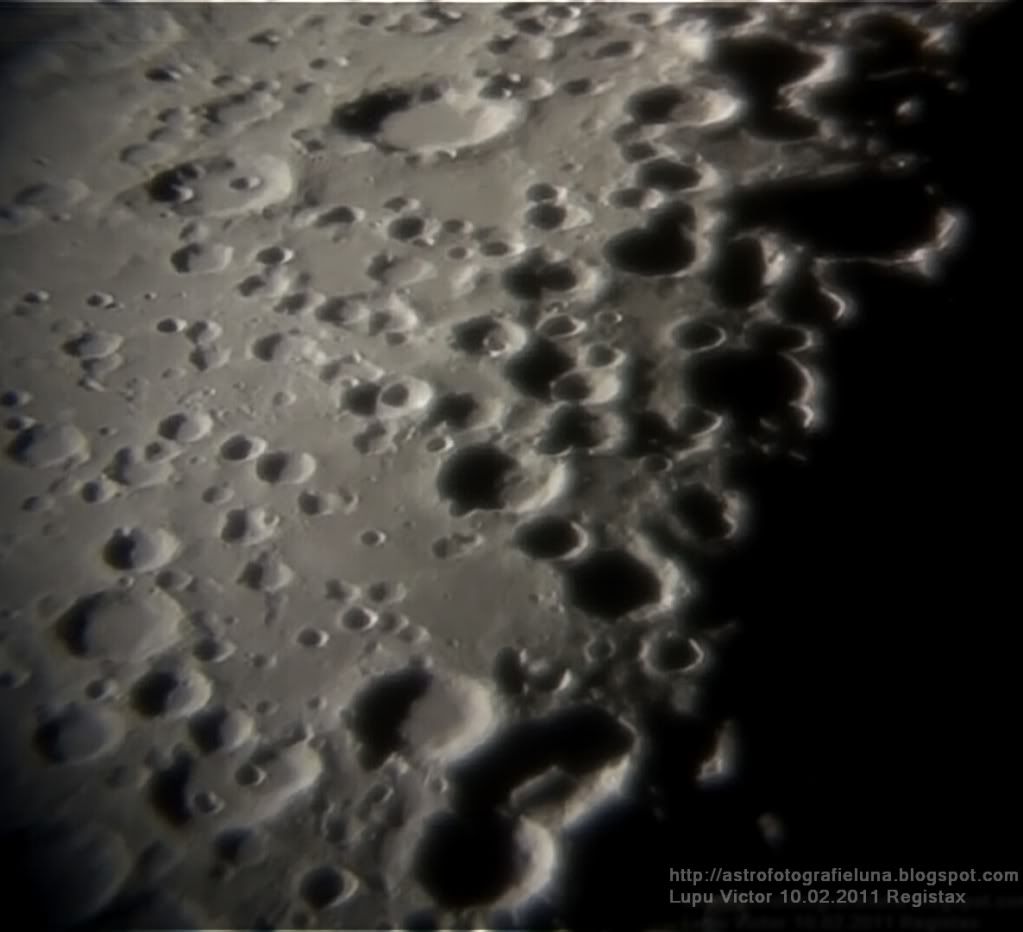
       For a long time, the Moon is recognized as an excellent celestial body for telescopes because it is relatively close.Some craters near the poles are permanently located in the dark ,in very cold regions.
The most popular name for the Earth's natural satellite is "Moon".The Moon derived from "moone"(around 1380), who developed from "mone"(1135), and derives from the old "mōna" in English (dating to before 725).

 The mainly adjective on our natural satellite, is "Luna" in Latin. A less common adjective is "selenar", derived from ancient Greek Selene (Σελήνη), from which the prefix "Seleno" (as in selenography) is derived.
 Major geologic process that affected the Moon's surface are impact craters formed when asteroids and comets have collided with the lunar surface. It is estimated that about 300,000 craters larger than 1 km exists on the near side of the Moon only. Some of them have the names of scientists, artists and explorers.

Thursday, 24 February 2011

At what distance I see the Moon

A simple calculation that I did to know what distance I am from the Moon while watching through a telescope, it appeared this:
-telescope data:
          -focal length: 1,000 mm
          -eyepiece: 20 mm.
          -Barlow lens: 2x
          -video camera optical zoom: 10x
-Calculation: -1000:20 x2 = 100 (or 100x)
                        -100x10 = 1000 (or 1000x)
        If the Moon is approx. 400,000 kilometers from the Earth, it means that:
                         400.000:1000 = 400 (that I am at 400 km above the Moon)
If you replace the data with an eyepiece of 10 mm instead of 20 mm, and the other data to be the same, it follows that I would approach the Moon with another 200 km. Am I right?

 
All images are © Copyright 2010-2015 Lupu Victor. All rights reserved.Images may not be reproduced, published, or copied in any form without written permission of the author. Thank you for respecting the intellectual property rights. ASTROFOTOGRAFIA | Lupu Victor Astronomy - Contact - About
Design by Free WordPress Themes | Bloggerized by Lasantha - Premium Blogger Themes | Online Project management