Visit Worldwide Topsites
Showing posts with label Planets-Saturn. Show all posts

Monday, 3 August 2015

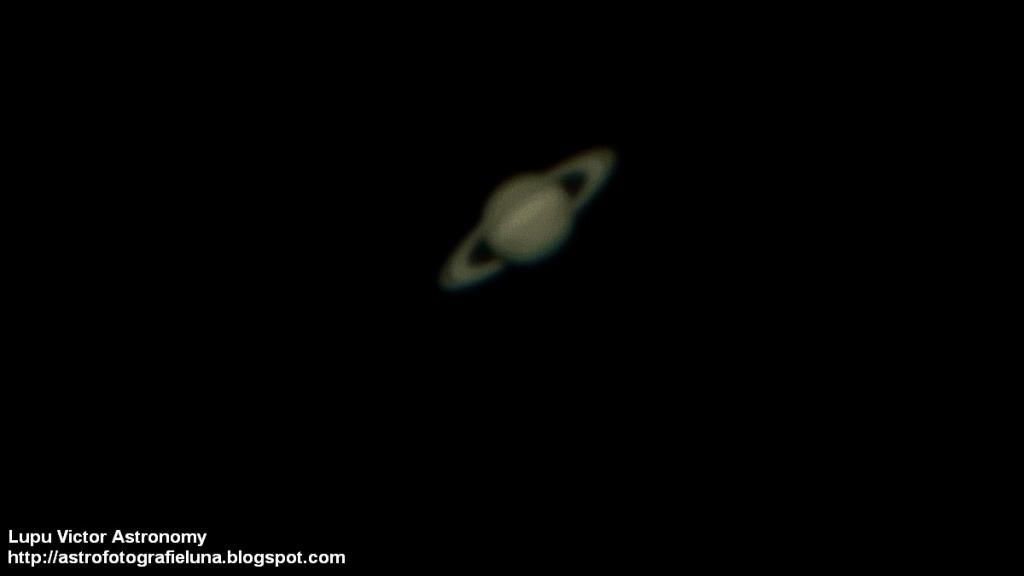
Planets Images through a telescope Saturn. (processing Registax)

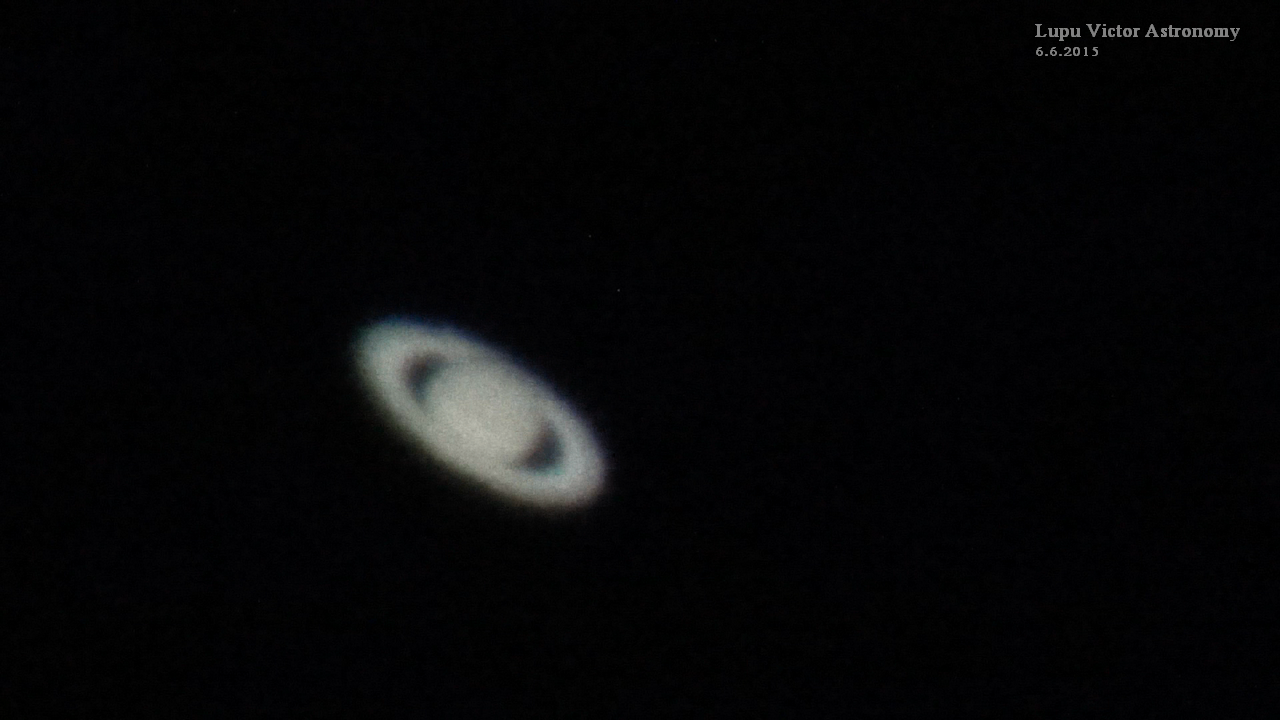
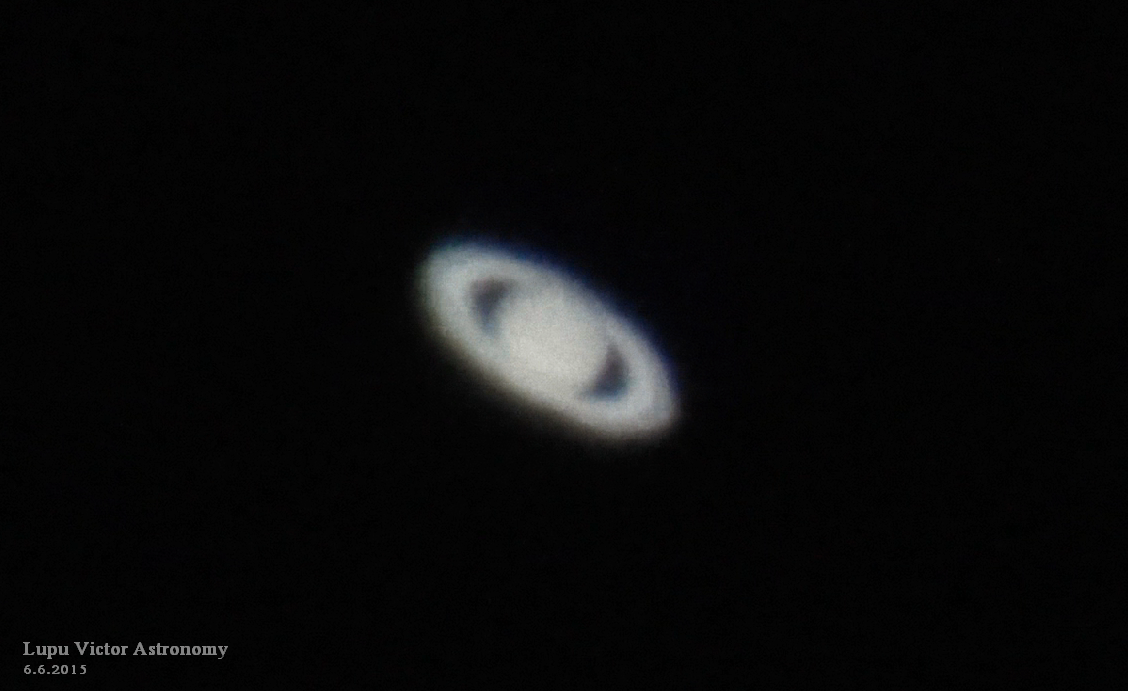
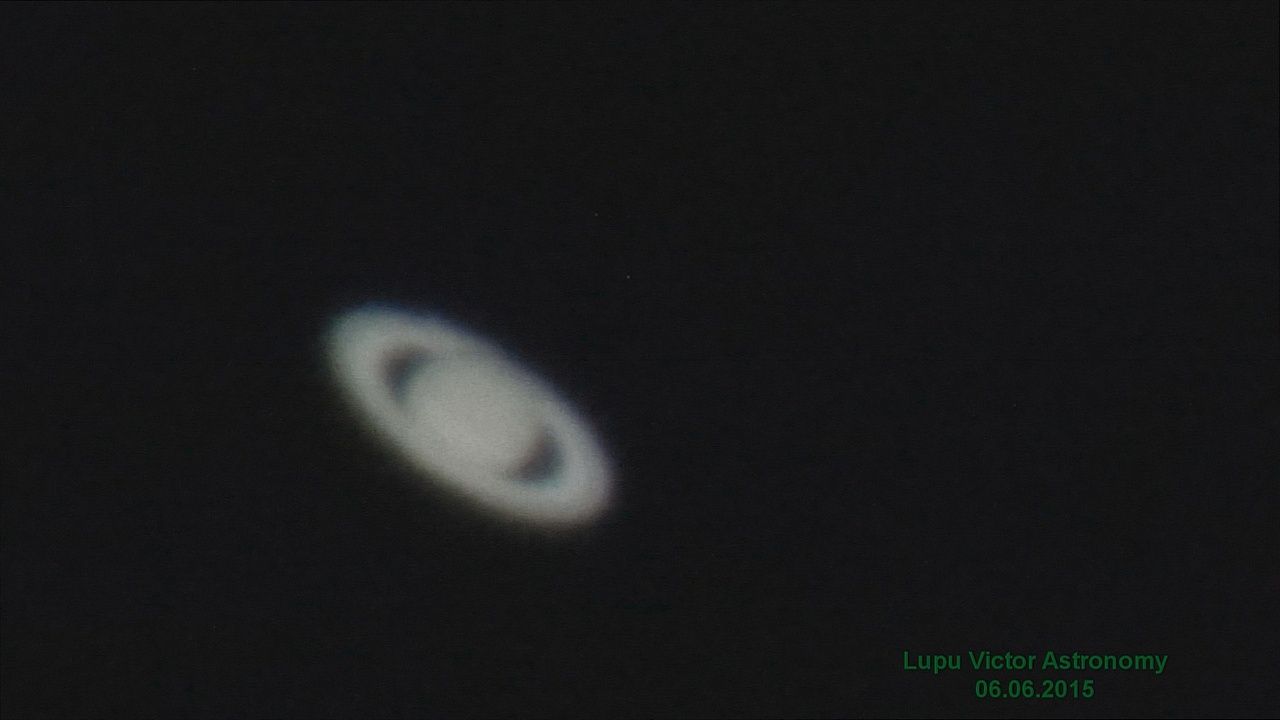
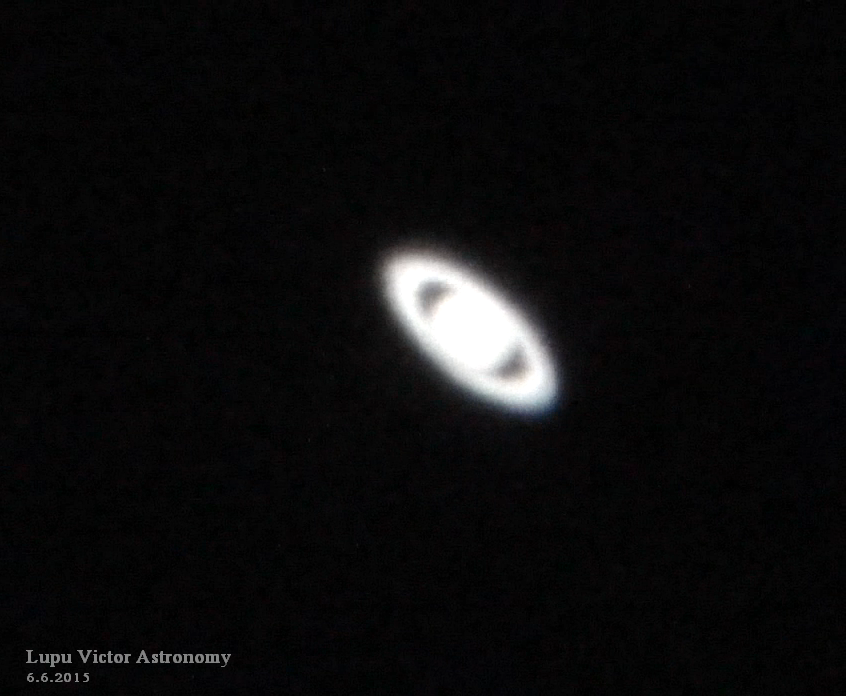
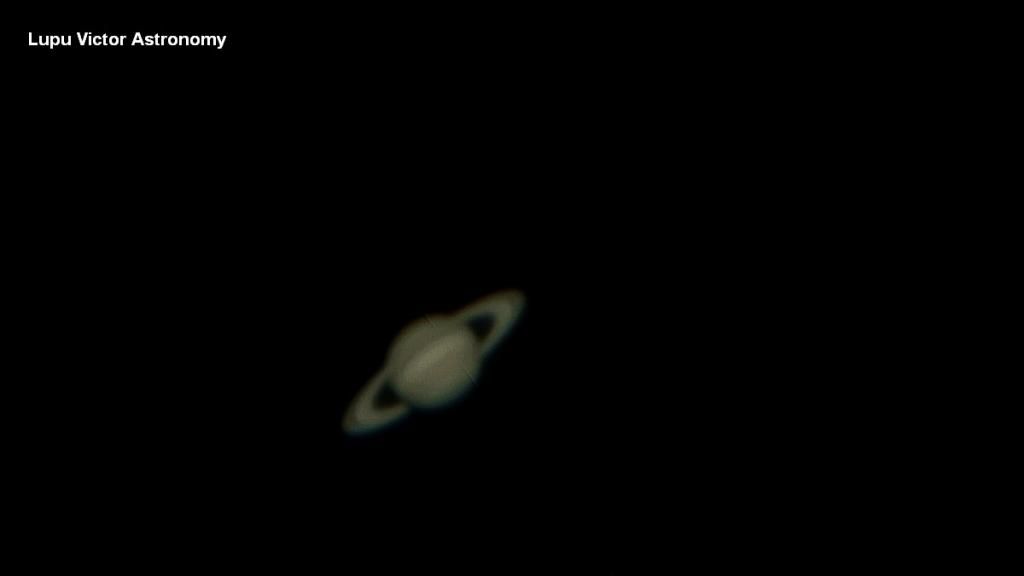
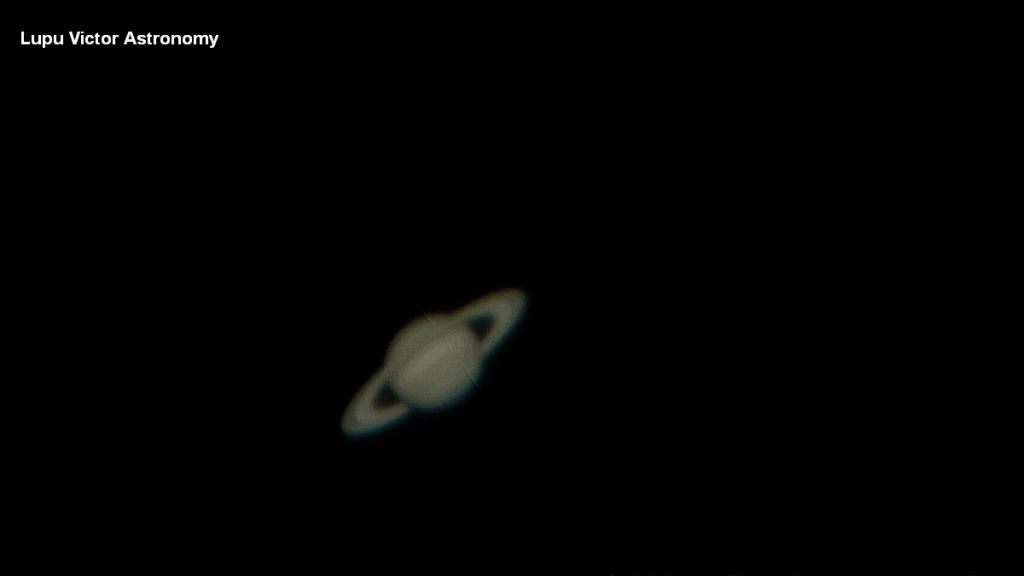
I think these are the most successful Saturn images that I have achieved so far. In the last image we see four of the moons of the planet, and by their distance from the planet, these are Tethys, Dione, Rhea and Titan.

Saturn has a surface of 83,7x bigger than Earth, which makes it the second largest planet in our Solar System.

This planet has a ring system which makes it visually unique. These rings stretch to 120.700 kilometers above the planet's equator.

An interesting thing to know about Saturn's rings is that between them are infiltrated satellites as Pandora and Prometheus, which acts as shepherds of these rings, preventing them to disperse.

Video images from which I extracted the planet Saturn, are here.
Other snapshot images are here.


818 video frames, in Registax.

26 video frames, in Registax.
91 video frames, in Registax.
358 video frames, in Registax.
303 video frames, in Registax.
51 video frames, in Registax.
129 video frames, in Registax.
1878 video frames, in Registax.
409 video frames, in Registax.
418 video frames, in Registax.

Planet: Saturn
Magnitude: 0.30
Distance: 8.99 AU (1,344,884,857 km)
Lighting: 100%
Astronomical Instrument: Celestron C8-Newtonian telescope, 20mm Plossl, 2x Barlow
Mount: CG5 (EQ5)
Camera: Sony CX130
Filter: no
Date: 06/06/2015
Location: Baia Mare, Romania
Processing: FastStone Image Viewer

Thursday, 30 July 2015

Video of Saturn through the telescope.

In this article we watch videos with the planet Saturn through a telescope. At that time, the beautiful ringed planet was at a distance less than the average of 1.4 billion kilometers from the Sun, namely 1.34 billion kilometers. Also at that time, the planet's rings were tilted toward us.

I wanted to see this planet at different approaches and exposures. The atmosphere was severe observing the planet when the camera was zooming at maximum, but in moderate zooming Saturn was seen acceptable. At times we can distinguish separations between rings (Cassini division), and even a bit of features on the planet.

Snapshot Images in these clips are here.


Planet: Saturn
Magnitude: 0.30
Distance: 8.99 AU (1,344,884,857 km)
Lighting: 100%
Astronomical Instrument: Celestron C8-Newtonian telescope, 20mm Plossl, 2x Barlow
Mount: CG5 (EQ5)
Camera: Sony CX130
Filter: no
Date: 06/06/2015
Location: Baia Mare, Romania
Processing: FastStone Image Viewer


Tuesday, 16 June 2015

Photos of Saturn through astronomical telescope. Astronomy Essay.

In these images we see that Saturn at this time appears inclined towards in the night sky seen from Earth through an astronomical telescope. This angle of this planet is new to me. There are moments of clarity revealing important features such as the division of Cassini, which represents a pause between rings. The planet Saturn does not have so manyfeatures on its surface like Jupiter, another gaseous planet, but in some moments are distinct several distinct shades.

Cassini division separates the inner wider B ring and the outer A ring, which can be observed in some of these images below.
In 1675, Giovanni Domenico Cassini determined that Saturn's ring is composed of multiple smaller rings with gaps between them; the largest of these gaps was later named the Cassini Division. This division is a region 4,800 km wide between ring A and B.
Saturn is the 6th planet from our Sun.Because the large mass and the gravity, Saturn has extreme conditions when compared to Earth.The interior is probably composed of an iron-based compounds, nickel, silicon and oxygen surrounded by a deep layer of metallic hydrogen, a layer of liquid hydrogen and liquid helium, and finally, a gaseous outer layer.

Saturn is a planet known in antiquity as it is one of the five planets visible with the naked eye.

Galileo Galilei, first observed Saturn's rings through a telescope in 1610. He first described the planet as having "handles". Later, because of his telescope aberrations, he thought that the rings are two twin moons orbiting around the planet.

In our times, being a popular scientific instrument, the telescope can be used to observe Saturn's rings, and with the new video and photo cameras, can be achieved exceptional astrophotos and clips of this planet.

The average distance between Saturn and the Sun is over 1.4 billion km (9 AU). With an average orbital speed of 9.69 km / s Saturn needs 10.759 days (or about 29 years and a half), to complete one revolution around the sun.
    Elliptical orbit of Saturn is inclined 2.48 ° relative to the Earth's orbital plane. Because of eccentricity of 0056. the distance between Saturn and the Sun varies by about 155,000,000 km between perihelion and aphelionwich is the closest and most distant planet in its orbit along the way.

General data:

10.11595804 AU Aphelion (1,513,325,783 km)
9.04807635 AU Perihelion (1,353,572,956 km)

Orbital period
29.4571 years or 10759.22 days (24491.07 Saturn solar days)
Polar Radius 54,364 ± 10 km (8.5521 Earths)
Surface area 4.27 × 10¹⁰ km2 (83 703 Earths)
Equatorial rotation speed 9.87 km / s (35,500 km / h)
Axial tilt 26.73 °

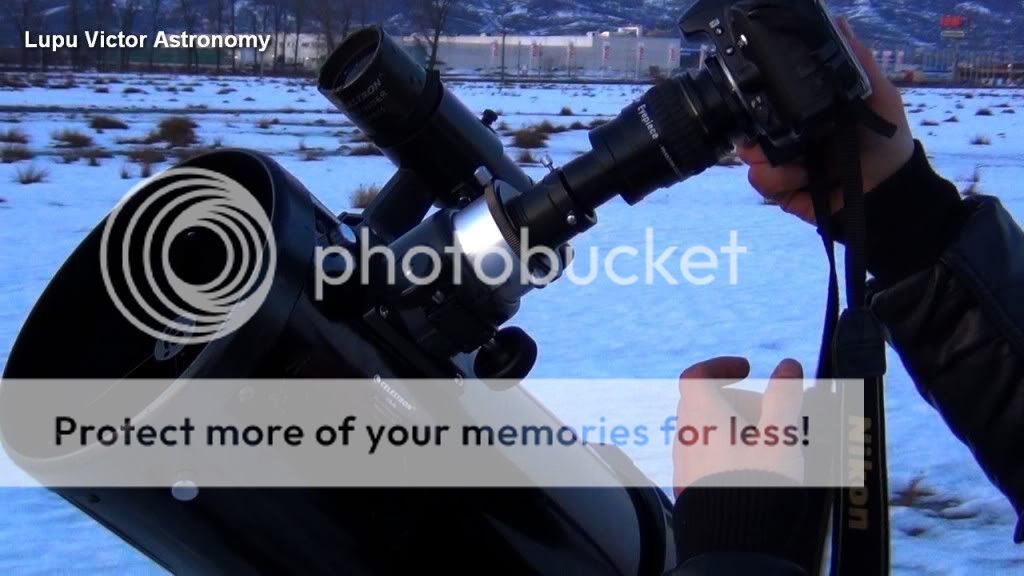
Photos of Saturn through the astronomical telescope. The images were obtained by attaching a video camera directly into an astronomical telescope's eyepiece; for this reason, the eyepiece's visual field was enhanced. These are simple video captures.


Planet: Saturn
Magnitude: 0.30
Distance: 8.99 AU (1,344,884,857 km)
Lighting: 100%
Astronomical Instrument: Celestron C8-Newtonian telescope, 20mm Plossl, 2x Barlow
Mount: CG5 (EQ5)
Camera: Sony CX130
Filter: no
Date: 06/06/2015
Location: Baia Mare, Romania
Processing: FastStone Image Viewer


Tuesday, 12 November 2013

Sony handycam astrophotography. Saturn 100% illuminated.
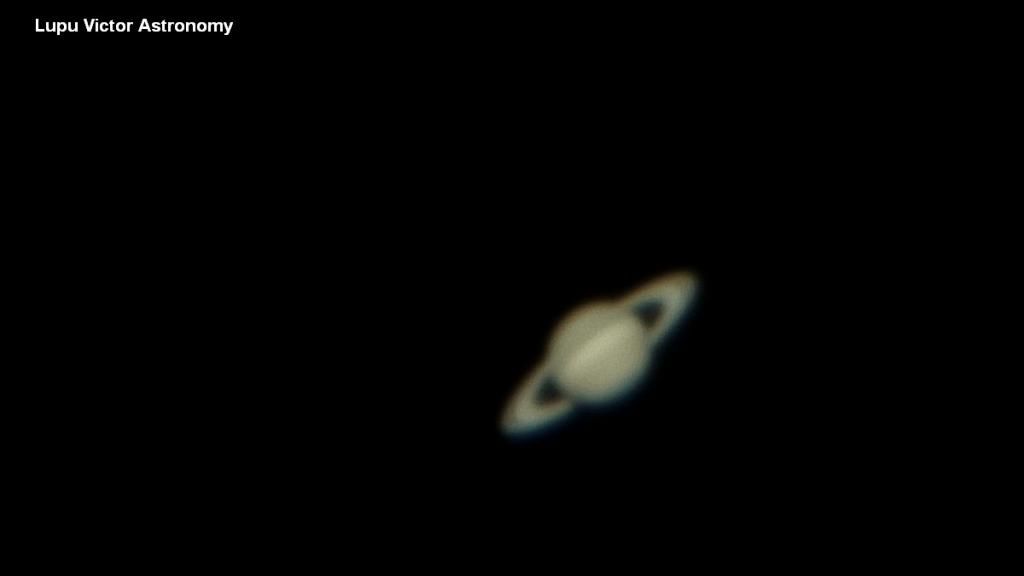
25 frames, at 95% in Registax.
8 frames, at 95% in Registax.
76 frames, at 95% in Registax.
263 frames, at 95% in Registax.
26 frames, at 95% in Registax.
61 frames, at 95% in Registax.
26 frames, at 95% in Registax.


At the end of April, in addition to Moon craters, I filmed Saturn, the second largest planet in the Solar System. What we see here are actually video images processed in Registax program that has transformed them in photos.

The video from which were extracted these Photos, is here: [FullHD] Saturn planet video by telescope.
Simple video captures can be seen here: Saturn images through 8 inch Celestron.

Planet: Saturn
Distance: 709 093 907 km.
Illuminated: 100%
Optics: Celestron C8-Newtonian telescope, 20 mm Plossl, 2x Barlow
Mount: CG5 (EQ5)
Camera: Sony CX130
Filter: no
Date: 29.04.2012
Location: Baia Mare, Romania
Processing: Images in Registax, FastStone Image Viewer


Friday, 4 October 2013

New collection of my Saturn images

185 video frames in Registax.
134 video frames in Registax.
185 video frames in Registax.
144 video frames in Registax.


These are probably the best images with Saturn I have achieved through this Newtonian telescope with camera attached.
Saturn amaze by the beauty of it's rings. If we imagine the planet without rings would it would be less important for the observers, because it would become just a whitish planet, without too many features to be seen on it, if we compare it with the Jupiter which, although with not observable rings, though is full of colors and angry clouds, and the famous reddish stain on the southern hemisphere, with its surface in continue changes.

Although you may believe that the pictures are old, from March 2012, only now they were processed, so for me these images are in premiere. In fact all images in new articles are made in the same manner, later, because the amount of videos and the time does not allow me an image processing in the same day, week or even year. The first thing I do after a night filming through the telescope, is to post some quick video catches which are easy to do, and after that, the video material will wait their turn for a deeper processing in Registax (for example).

You can see here the video of Saturn: [FullHD] Saturn planet video by telescope

Optics: Celestron C8-Newtonian telescope, 20mm Plossl, 2x Barlow
Mount: CG5 (EQ5)
Camera: Sony CX130
Filter: no
Planet Saturn
Distance: 8.79 A.U.
Date: 24.03.2012
Location: Baia Mare, Romania
Processing: Images in Registax, FastStone Image Viewer

[FullHD] Saturn planet video by telescope

Monday, 25 March 2013

Saturn images through 8 inch Celestron


Ask some of the amateur astronomer which are using a telescope what he considered his the most beautiful thing in the sky, and many of them will tell you it is Saturn. In fact, many say that their first glimpse of this planet, was what made ​​them focus on astronomy. A view of Saturn in a good telescope, often attract sighs of the visitors, who, after a lifetime of seeing the planet rings in cartoonsare "terrified" at the sight of the original.

Saturn's rings should be visible even through the smallest telescope at 25x. A 3-inch telescope at 50x can show you the ring as a detached structure on both sides of the planet.

8-inch telescopes are excellent for observing Saturn. With this size of telescope, you can have a magnification of up to 300x or more. Most will offer the best observation of 350x or less, some can go up to 450x before the image to degrade, or you can not see too much Saturn, because it will take a little tracking engine on the telescope to follow the sky, due to Earth's rotation.


Optics: Celestron C8-Newtonian telescope, 20mm Plössl, 2x barlow
Mount: CG5 (EQ5)
Camera: Sony CX130
Filter: no
Date: 29/04/2012
Location: Baia Mare, Romania
Processing: video captures, FastStone Image Viewer


Evening sky map of 29 April 2012, captured image with Stellarium program.

 
All images are © Copyright 2010-2015 Lupu Victor. All rights reserved.Images may not be reproduced, published, or copied in any form without written permission of the author. Thank you for respecting the intellectual property rights. ASTROFOTOGRAFIA | Lupu Victor Astronomy - Contact - About
Design by Free WordPress Themes | Bloggerized by Lasantha - Premium Blogger Themes | Online Project management