Visit Worldwide Topsites
Showing posts with label Rima Ariadaeus. Show all posts

Tuesday, 17 May 2016

Pictures by telescope. Julius Caesar, Agrippa and Godin.

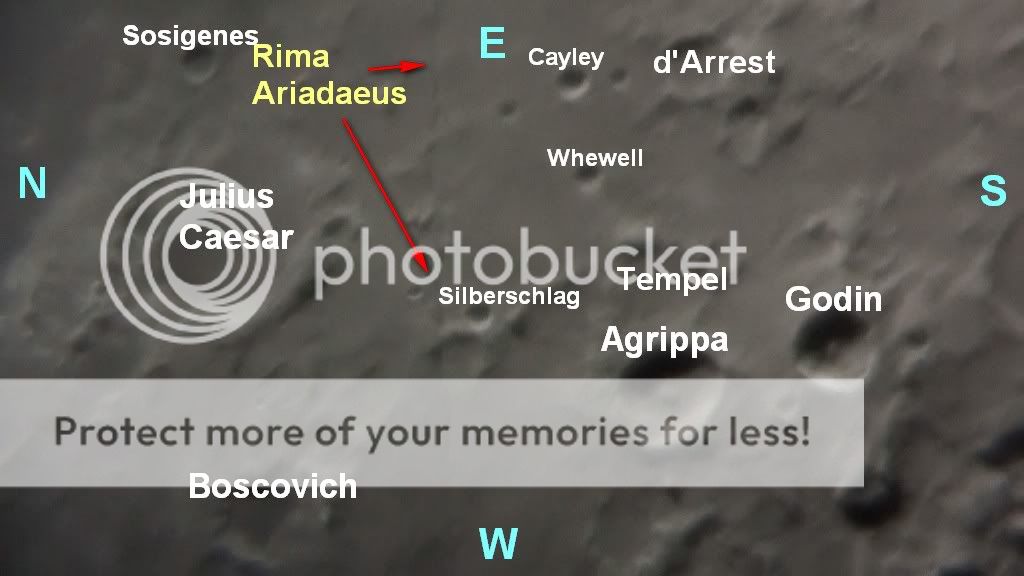
Julius Caesar (90 km) is a large crater in size with a low southern edge and an interesting feature at east as more craters lined up and at west is a ditch named Rima Ariadaeus.

The floor of this crater is divided in two shades. Probably because of the basin Mare Tranquillitatis on the east, so a part of the floor is darker.

Craters Agrippa and Godin (45 and 35 km.) are left in images and Sosigenes is located at Julius Caesar's southeast.


Magnitude: -10.82
Phase: 0.46
Distance: 399.283 km
Illuminated: 45.6% (0% = New, 100% = Full)


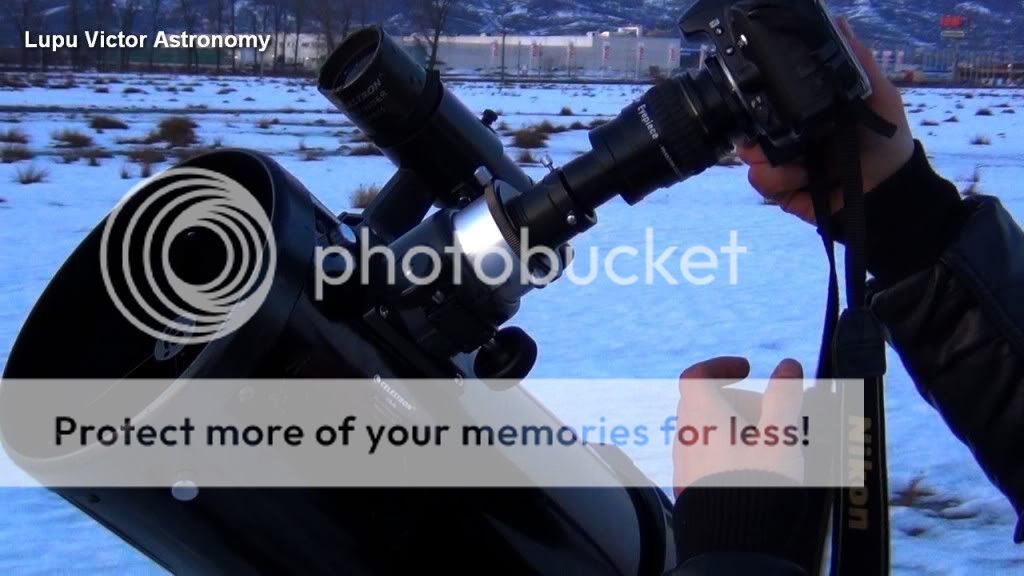
Astronomical instrument: Celestron C8-Newtonian telescope,
Eyepiece: Plossl 20mm, 2x Barlow
Mount: CG5 (EQ5)
Camera: Sony CX130
Filter: no
Date: 30.01.2012
Location: Baia Mare, Romania
Processing: FastStone Image Viewer


In the picture below are labeled craters and other lunar features in the region. To better understand this photo, you should note that the label with the name or the letter of larger craters could be found at their center, and on the small craters, you should find them around them, usually above.

Image from April 10, 2011.

Thursday, 24 January 2013

Sabine and Ritter lunar craters. Astronomical telescope images


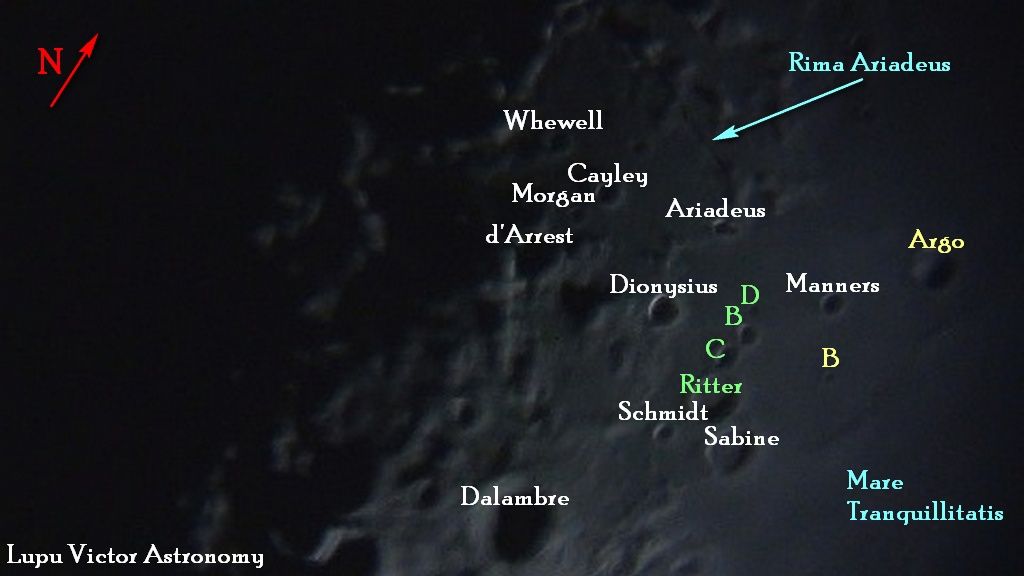
Sabine (30 km and 1.3 km depth) is a lunar crater that forms a pair with Ritter crater (29 km) north-west, and are located on south-west of Mare Tranquillitatis basin. The edges of these craters are separated by a distance of only 3 km. To the west is the bowl-shaped crater Schmidt, and further north are Manners and Arago.


The outer rim of this crater is roughly circular and relatively featureless. The floor has a pair of small craters on it and there is a ridge on the western edge of the floor.

Approximately 85 km south-east is "statio Tranquillitatis", the landing site of Apollo 11, the first manned mission on the Moon.


Ritter (29 km and 1.3 km depth) is a similar crater to Sabine, both similar in size, depth and the shape, which makes me think that they were created by successive impacts in the same period.

North of it, are three smaller craters, called Ritter C (14 km), B (14 km), D (7 km), written by their distance from Ritter.


Other interesting features that can be seen in these images is a "scratch", Rima Ariadaeus, Dalambre crater that is submerged in shadow, but also smaller craters like d'Arrest, Whewell, Cayley, Dionysius or Manners.

Optics: Celestron C8-Newtonian telescope, 20mm Plössl, 2x barlow
Mount: CG5 (EQ5)
Camera: Sony CX130
Filter: no
Date: 04/27/2012

Location: Baia Mare, Romania
Processing: video capture, FastStone Image Viewer


Friday, 19 October 2012

Rima Ariadaeus and Julius Caesar Pictures by telescope


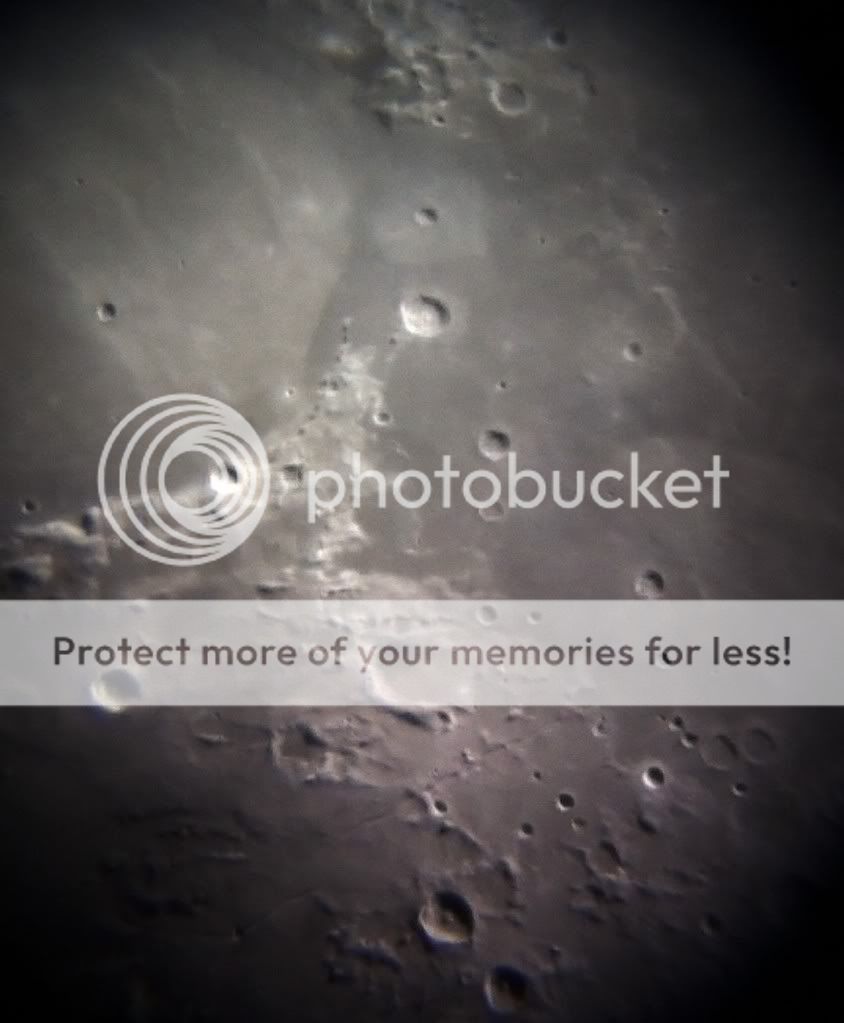
Rima Ariadaeus goes eastward over the wavy terrain between Agrippa and Julius Caesar, to meet with Mare Tranquillitatis border to the east. Rima Ariadaeus is 220 km long, and in some places is 9 km wide. It is one of the most impressive Rille of the Moon.
Note the large eroded crater Julius Caesar (90 km) to the northeast.
Other features that are seen here are Sinus Honoris, craters like Ross, Maclear and Sosigenes, Plinius and Menelaus.

Optics: Celestron C8-Newtonian telescope, 20mm Plössl, 2x barlow
Mount: CG5 (EQ5)
Camera: Sony CX130
Filter: no
Date: 04/27/2012
Location: Baia Mare, Romania
Processing: video capture, FastStone Image Viewer


The above image was created on Date: 10.02.2011 Location: Baia Mare, Romania, Processing: Sony Vegas 10 video capture.


Wednesday, 22 June 2011

Julius Caesar Moon crater

Photographer: Victor Lupu
Optics: Celestron C8-Newtonian telescope, plossl 20mm, 2x Barlow
Mount: CG5 (EQ5)
Device: Sony CX105
Filter: No
Date: 10/02/2011
Location: Baia Mare, Romania
Processing: 10 Sony Vegas, video captures
         Julius Caesar (90 km), is a lunar crater flooded by lava, with low, irregular and heavily worn walls, and with a depth of 3.4 km. It is located west of Mare Tranquillitatis and Manilius crater southeast of the Mare Vaporum. To the east is Sosigenes (18 km). Julius Caesar has levels on the interior, especially in the south-vest.The northern half interior has a darker albedo than the south. Most likely the floor was covered by the impact that created the Imbrium basin. There are a number of residues which overlap along the edge of the south and north-eastern edge. A low ridge crosses the floor in the northeast section of the crater.
Crater name comes from Gaius Julius Caesar (13 July 100 BC - 15 March 44 BC), who was a roman general and statesman. He played a critical role in the gradual transformation of the Roman Republic into the Roman Empire.
Other craters in the photos are Agrippa and Godin and Boscovich (46 km).


Photographer: Victor Lupu
Optics: Celestron C8-Newtonian telescope, plossl 20mm, 2x Barlow
Mount: CG5 (EQ5)
Device: Sony CX105
Filter: No
Date: 10/04/2011
Location: Baia Mare, Romania
Processing: 10 Sony Vegas, video captures

 
All images are © Copyright 2010-2015 Lupu Victor. All rights reserved.Images may not be reproduced, published, or copied in any form without written permission of the author. Thank you for respecting the intellectual property rights. ASTROFOTOGRAFIA | Lupu Victor Astronomy - Contact - About
Design by Free WordPress Themes | Bloggerized by Lasantha - Premium Blogger Themes | Online Project management