Visit Worldwide Topsites
Showing posts with label Craters-Manilius. Show all posts

Wednesday, 30 March 2016

Stunningly beautiful astronomical telescope: craters Menelaus and Manilius.

In these images we see lakes, mountains, craters and seas located on the central-east of the Moon.

We mention Menelaus crater (27 km), Manilius (39 km) and Boscovich (46 km), the 3 lakes Gaudii, Lenitatis and Hiemalis, Montes Haemus, Mare Serenitatis and Mare Vaporum.

These snapshots were chosen as the clearest made of a video camera attached to the telescope.

Menelaus crater is small but visually easy to locate thanks to the layout of the south shore of Mare Serenitatis and the foothills Montes Haemus.

Manilius is larger but with a well defined edge, south of Lacus Doloris. It has a depth of 3.1 km, and to this phase is almost totally in shadow.

Boscovich (46 km), is located southeast of Manilius. It is almost entirely eroded by impacts, and therefore its shape is not circular. Its floor is cut by a system of Rille called Rima Boscovich. Interesting is the satellite crater Boscovich P (67 km), which is elongated in the direction of the crater Manilius.
Mare Vaporum is at the terminator, and therefore there is less light present.

As a conclusion, these pictures are very beautiful and interesting at the this phase of the moon. The features that you are glaring from the first moment, are crater Manilius and Montes Haemus.


Magnitude: -10.82
Phase: 0.46
Distance: 399.283 km
Illuminated: 45.6% (0% = New, 100% = Full)


Astronomical instrument: Celestron C8-Newtonian telescope,
Eyepiece: Plossl 20mm, 2x Barlow
Mount: CG5 (EQ5)
Camera: Sony CX130
Filter: no
Date: 30.01.2012
Location: Baia Mare, Romania
Processing: FastStone Image Viewer


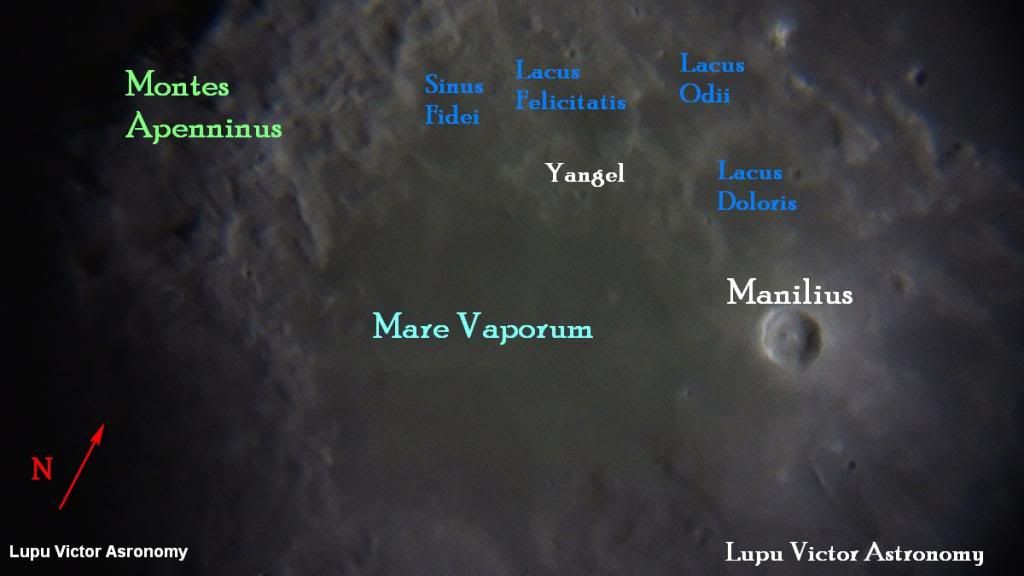
In the picture below are labeled craters and other lunar features in the region. To better understand this photo, you should note that the label with the name or the letter of larger craters could be found at their center, and on the small craters, you should find them around them, usually above.


Saturday, 28 February 2015

Moon through telescope. Mare Vaporum and Manilius.

193 video frames in Registax.

In this area dominates large areas of lava. Mare Vaporum is located west of Manilius crater (39 km). It is the dark region of the image. The shades of color are variable. In the southern part of the basin we see a darker belt near Rima Hyginus, which makes us understand that the soil in the area is more concentrated in the composition.

Manilius crater is quickly noticed because of its brightness in these images. When the sun shines it at a high angle, it is observed the rays with a high albedo starting from it. These range up to 300 km from the crater.

On the north and east of Manilius, are located the 4 lakes: Doloris, Gaudii, Lenitatis and Hiemalis. To the east of them, we see smaller bright crater
, Menelaus (27 km).


Moon Age: 9.05 days
Phase: 70.5% (0% = New, 100% = Full)
Distance: 399.221 km


Optics (telescope or lenses): Celestron C8-Newtonian telescope, eyepiece 20mm Plossl, 2x barlow
Mount: CG5 (EQ5)
Camera: Sony CX130
Filter: no
Date: 10/03/2014
Location: Baia Mare, Romania
Processing: Registax,  FastStone Image Viewer


Monday, 29 December 2014

Craters on the surface of the Moon Eratosthenes, Sinus Aestuum, Gambart.


These images include a larger area of the center area of the Moon.
Craters and other areas of relief observed while watching the clip, are: Manilius, Mare Vaporum, Sinus Aestuum, Eratosthenes, Stadius, and Gambart.

This video was also used in Registax program to process images with higher quality, but also for simple video captures.
Registax Photo Images are here.


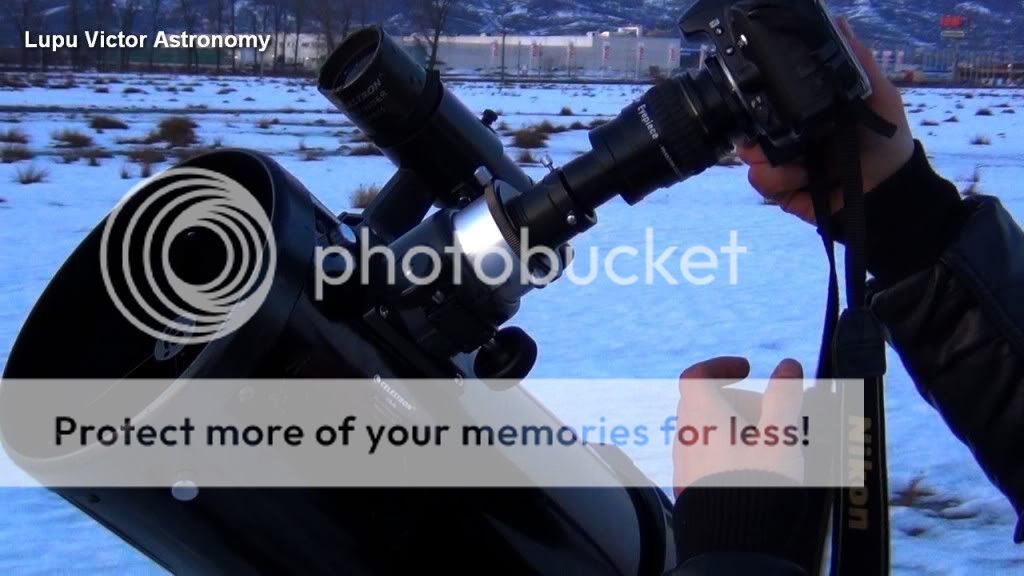
The video was done with the camera mounted on the telescope, specifically on the telescope eyepiece. To protect telescope of vibrations, I used a guide motor from Lacerta, and thus the image was more stable. 


However, even with this tracking device for celestial bodies, there were vibrations of the telescope tube, causing the image to be slightly unstable. For this, I used the video stabilization option in Sony Vegas editing software, so the video was 100% correct on this issue.

Moon Age: 9.05 days
Phase: 70.5% (0% = New, 100% = Full)
Distance: 399.221 km


Optics (telescope or lenses): Celestron C8-Newtonian telescope, eyepiece 20mm Plossl, 2x barlow
Mount: CG5 (EQ5)
Camera: Sony CX130
Filter: no
Date: 10/03/2014
Location: Baia Mare, Romania
Processing: Sony Vegas HD Platinum 10.0


228 frames, in Registax.


Tuesday, 12 February 2013

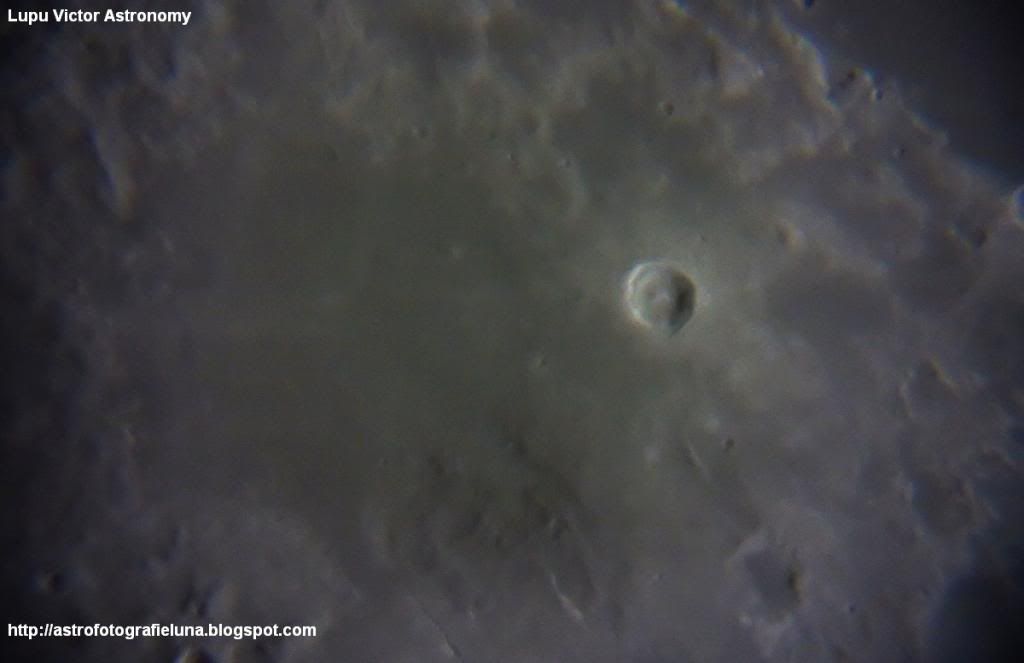
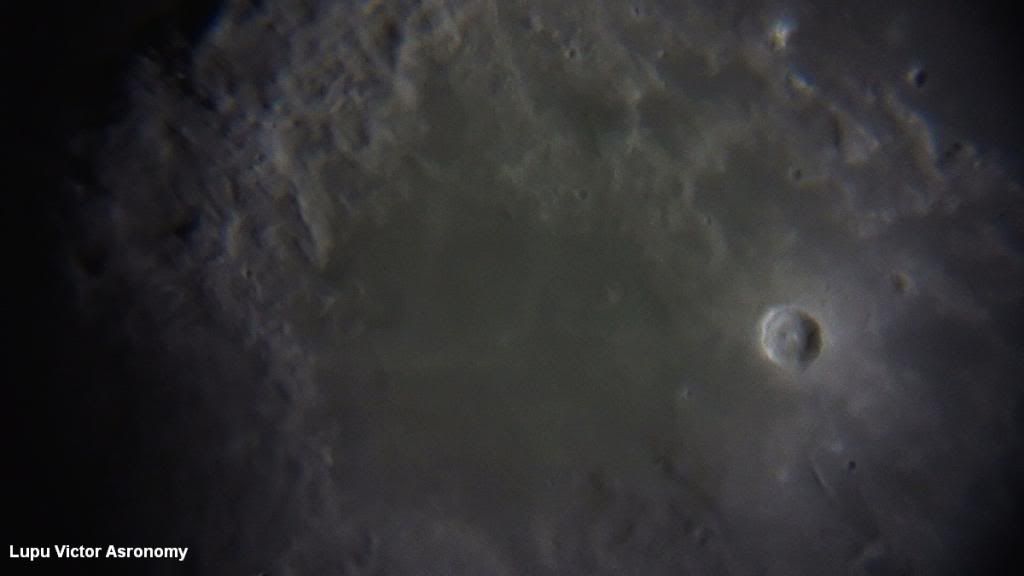
Mare Vaporum and Manilius on the Moon Pictures through the telescope.


Manilius (39 km) is like crater Plinius (43 km)on shapes, dimensions, they are just a few kilometers difference in size, and both have central mountains, but also because they are the only of its kind in the region.

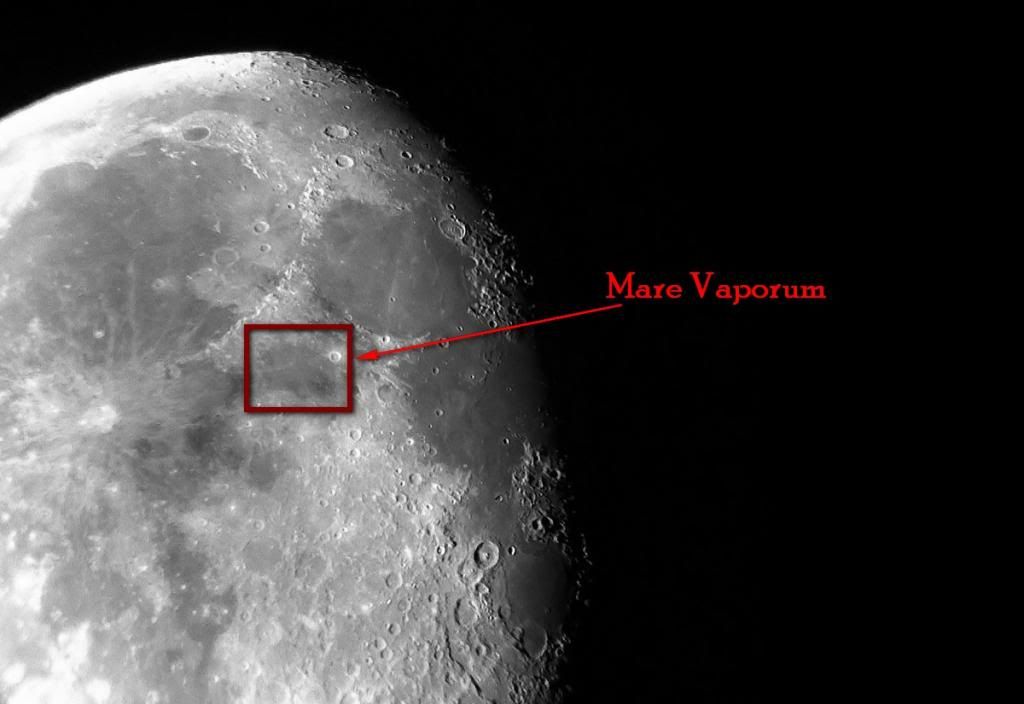
Manilius, is located on the east of Vaporum basin, a plain at the foot of the Montes Apenninus. Mare Vaporum (245 km), has a round shape, distinctive and clearly defined, without interpenetration with other basins.

It is adjacent to lakes, called "Lacus": on north, Lacus Felicitatis, Odii, Doloris, and Sinus Fidei at northwest. West, Mare Vaporum is framed by Montes Apenninus.

Moon age: 7 days
Stage: 51% (0% = New, 100% = Full)
Distance: 384.488 km


Optics: Celestron C8-Newtonian telescope, 20mm Plössl, 2x barlow
Mount: CG5 (EQ5)
Camera: Sony CX130
Filter: no
Date: 29/04/2012
Location: Baia Mare, Romania
Processing: video capture, FastStone Image Viewer


Friday, 23 March 2012

Video images through the telescope


Moon, from north to south, the middle region. These regions are full of impacts.


Craters Manilius and Menelaus in the clouds. Between the two craters are the three lakes: Gaudii, Lenitatis and Hiemalis.


 Horseshoe-shaped Julius Caesar crater, is at the bottom of the video, and Plinius, located on Mare Tranquillitatis.

Video: Victor Lupu
Optics: CelestronC8 "-Newtonian telescope, plossl20mm, 2x Barlow
Mount: CG5 (EQ5)
Device: SonyCX105 at 7x optical zoom
Total Magnification: 700x
Filter: no
Date: 20/07/2011
Location: Baia Mare, Romania
Processing and editing: Sony Vegas 10

Tuesday, 8 November 2011

Manilius and Menelaus craters on the moon-images through the telescope

Photographer: Victor Lupu
Optics: Celestron C8-Newtonian telescope, plossl 20mm, 2x Barlow
Mount: CG5 (EQ5)
Device: Sony CX105 at 6x optical zoom
Total Magnification: 600x
Filter: no
Date: 12/05/2011
Location: Baia Mare, Romania
Processing: FastStone Image Viewer, Video captures


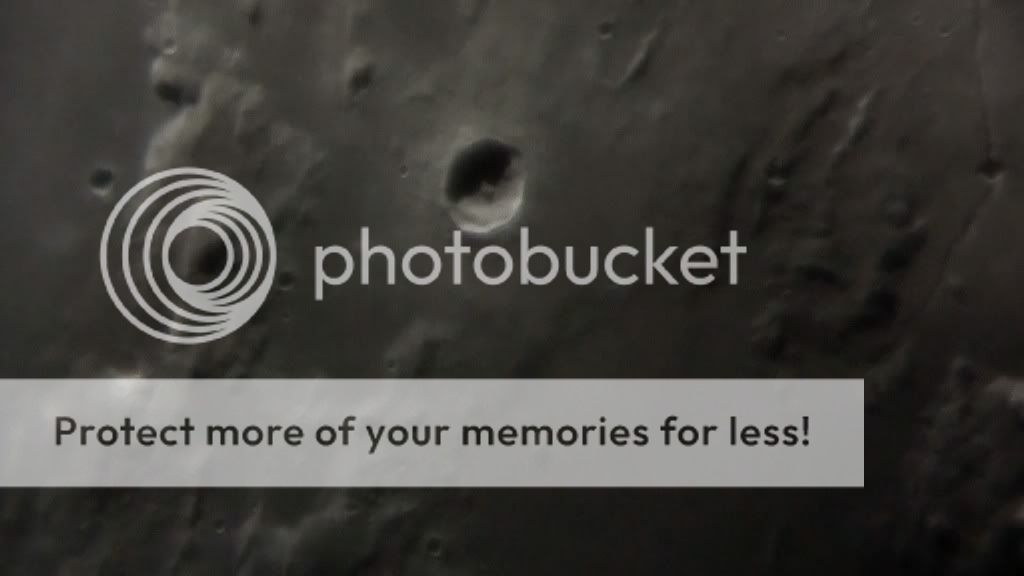
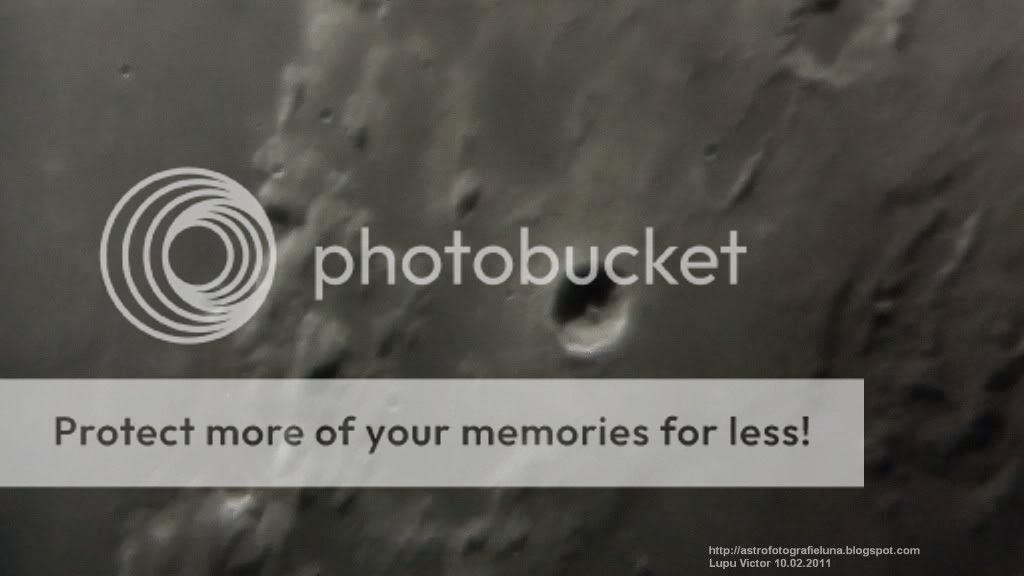
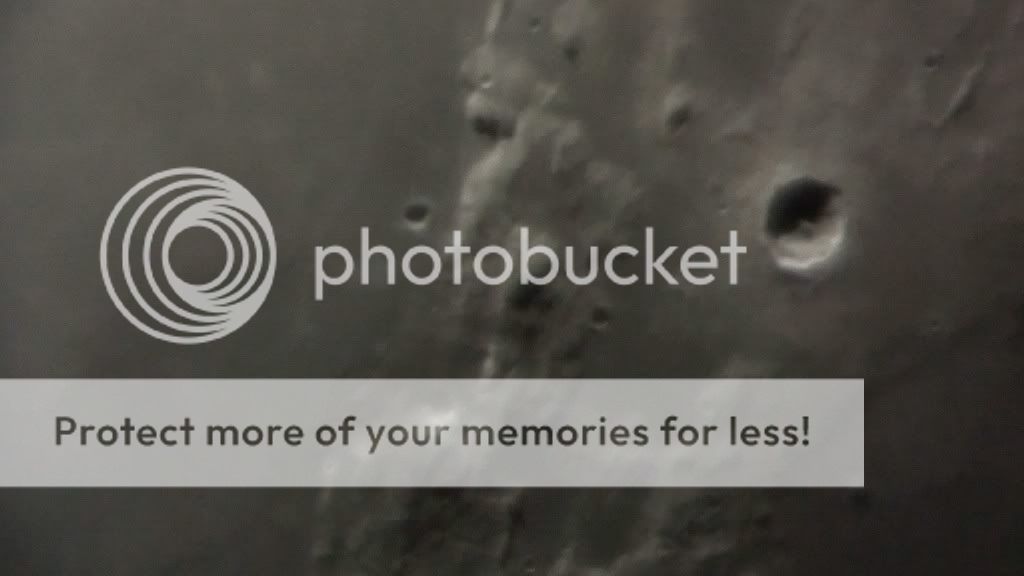
Manilius is a 39 km diameter crater and 3.1 km in depth, and Menelaus is 27 km in diameter and 3 km in depth.
In pictures through the telescope above, these craters are different than other posts because they are  not surrounded by gray, but color. The Moon, almost always when I film, at about 800x or more magnification, it turns gray, but at a smaller magnification the Moon has color, as in this post.
In the first two photos above are the north of Apenninus mountains and the left is Mare Serenitatis In the next two photos it is crater Manilius crater and in the next  two is Menelaus.
The images below are for guidance and are older.


Sunday, 19 June 2011

Manilius Moon crater

Photographer: Victor Lupu
Optics: Celestron C8-Newtonian telescope, plossl 20mm, 2x Barlow
Mount: CG5 (EQ5)
Device: Sony CX105
Filter: No
Date: 10/02/2011
Location: Baia Mare, Romania
Processing: 10 Sony Vegas, video captures

In these pictures are seen craters Manilius, Hyginus and Sulpicius Gallus (12 km), and part of the seas MareVaporum and Serenitatis.Central in photo is Lacus Doloris (110 km) and above are Montes Haemus .

          Manilius (39 km) is an impact crater located on the north-east of Mare Vaporum. The crater has a well-defined edge with an inclined inner surface towards a ring-shaped mound that is located in the center. In the inside, the crater has a higher albedo than the surroundings.Depth of this crater is 3.1 km.The crater has a ray that extends over a distance of 300 kilometers.
Marcus Manilius has the name of this crater . He was a roman poet, astrologer, and author of a poem in five books called Astronomica.

 
All images are © Copyright 2010-2015 Lupu Victor. All rights reserved.Images may not be reproduced, published, or copied in any form without written permission of the author. Thank you for respecting the intellectual property rights. ASTROFOTOGRAFIA | Lupu Victor Astronomy - Contact - About
Design by Free WordPress Themes | Bloggerized by Lasantha - Premium Blogger Themes | Online Project management