Visit Worldwide Topsites
Showing posts with label Equipment. Show all posts

Sunday, 2 September 2012

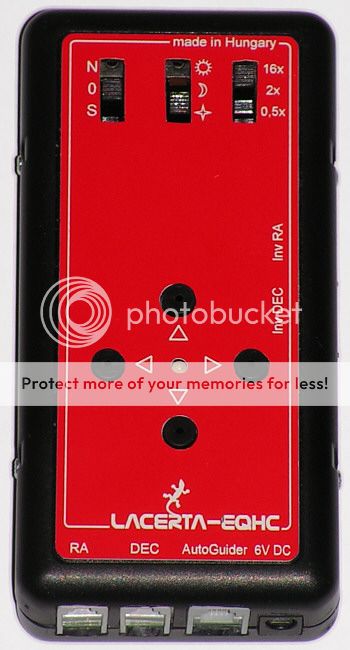
Celestron motor for tracking with Lacerta controller for CG4 mount EQ4 / 5


First , I start by saying that from 2008 when I buyed my telescope, so far, I have never mounted a motor tracking on it, until February 18, 2012.

I ordered a set of 2 motor drives for RA and DEC axis from Celestron, with variable tracking speed (1X, 2X, 4X, and 8X), wired control box, cables, power supply unit that works with 4 batteries. The set costed me 125 euros.

The mount worked very well, but I never got to try it with weights and the telescope tube mounted to see if it can support the weight, that I burned the controller. How? I've connected a wire from a Sauna Belt that goes to 12V and the motor drive only needed 6V.

I tried to fix it in an electronic repair workshop, but no results. So in April 2012, I called the shop where I bought the motor drives, and bought only another remote for it, Lacerta EQHC made ​​in Hungary, not Celestron. Works well and are proud of it.


Standard controllers for EQ3 and EQ5 mounts with dual driving axes (not GoTo versions) do not contain autoguider ports, but these mounts could be used for introduction in deepsky astrophotography. Lacerta EQHC controller solves the following problems:

- Fixed programmed speeds at 0.5 x-2x-16x sidereal speeds.

- Not only autoguider input, but also programmed speeds for the stars, moon and sun.

- At 6V power (voltage between 6V and 12V any can be used)

- An autoguider can be connected to the installed port.

So, I am using the Celestron motors, connected to Lacerta controller.

In the next article, I will show how the motor drives is mounted on a telescope mount.

Tuesday, 27 March 2012

Hyperion T ring HDT54/37 and extension for Sony CX 130


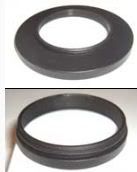
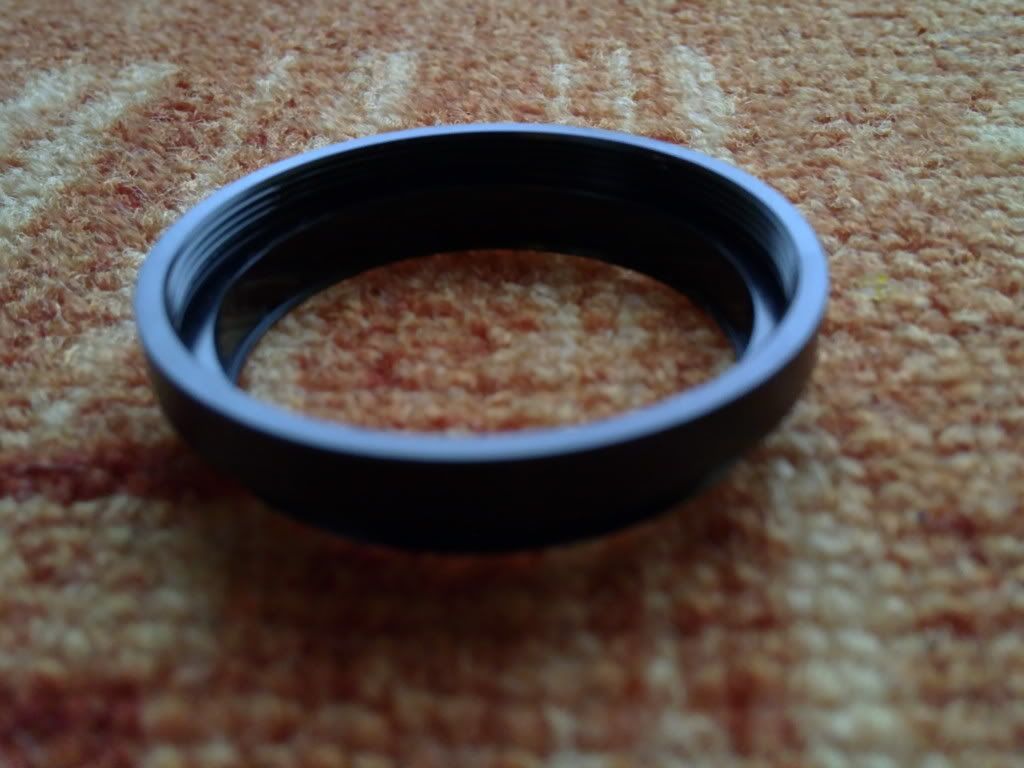
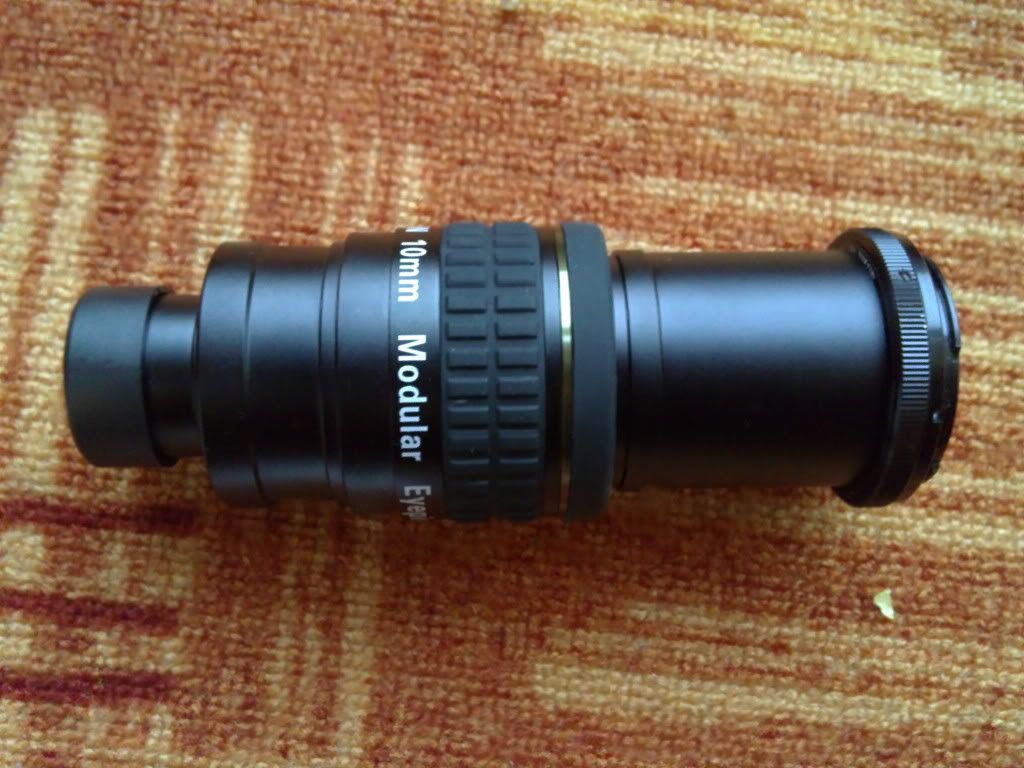
HDT54/37 Hyperion T Ring, 37mm (requires HEXT54)
HEXT54 Hyperion Extension Ring, SP54 (used Hyperion to extend the Hyperion SP54 thread).

First of all, I say I have Hyperion 10 mm eyepiece, and a Sony CX130 video camera.

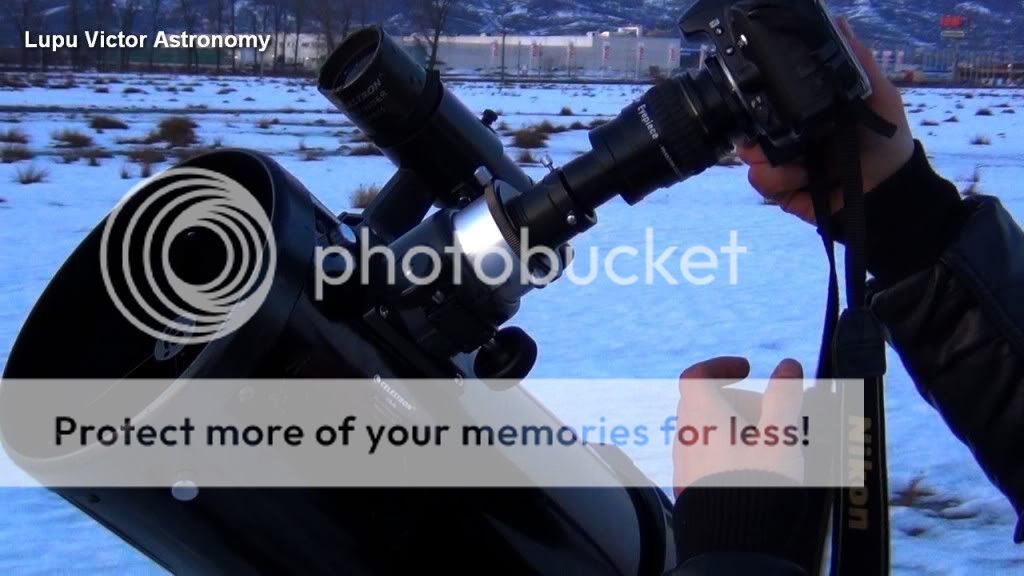
The two rings are useful for threading a camera that has a thread diameter of 37 mm, to the Hyperion eyepiece, which has a thread in front (exit pupil), of 54 mm (Hyperion also have a 42 mm thread). Ring about we talk abour here, is screwed on the thread of 54 mm Hyperyon eyepiece. Because 54 mm thread is not close to the edge of the eyepiece, it requires an extension ring, in order to achieve the necessary distance between the camera objective lens and the eyepiece lens. Otherwisewithout the extension ring, the Hyperion can not be screwed to the camera.

Below, I shot a video showing you how the Sony CX 130 camera is mounted on the 8-inch Newtonian reflector telescope from Celestron, with these two T rings, which are used to connect your telescope.


For those who like the pictures of my articles, would be nice to pay attention on advertising that appear in the blog by a click, because it is the only way I could buy one day a better telescope.

Sunday, 8 January 2012

Video and Astrophotography by telescope and Sony CX105. Digital Astronomy.


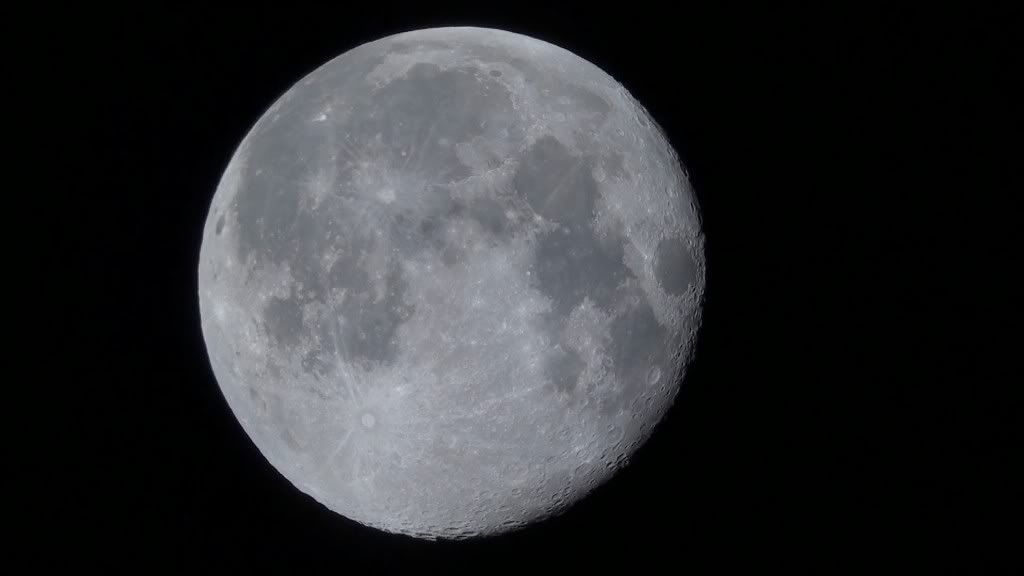
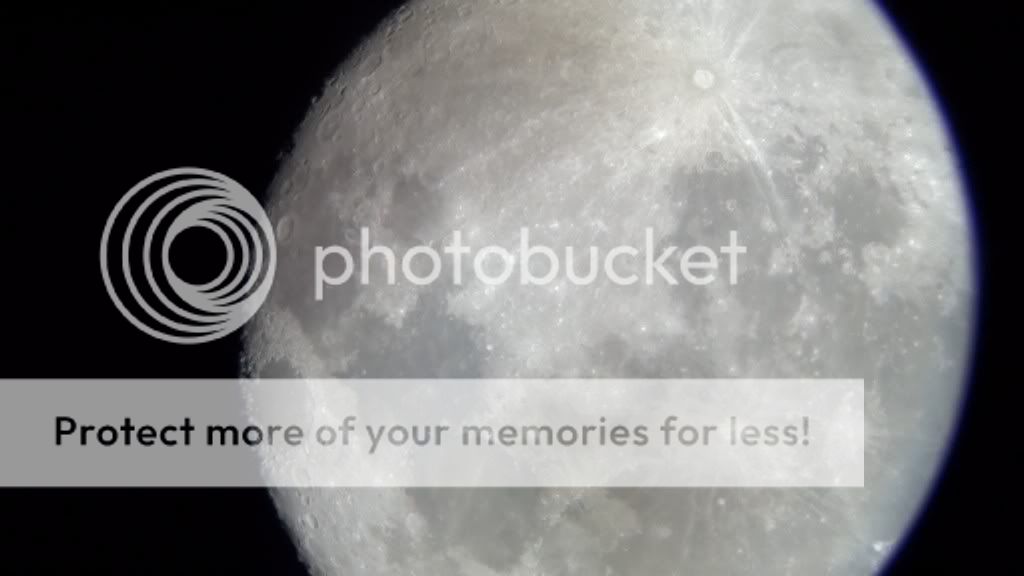
Most of the photos I make are made ​​from shooting, are video captures from Sony HDR CX-105 camera through my telescope reflector 8 ".
This article is about using my Sony CX105 to the telescope.
First to introduce the camera:


The camera has Carl Zeiss Vario-Tessar lens
10x optical zoom is perfect for craters of the Moon, or planets. If using 20mm Super Plossl eyepiece, the whole Moon disk is seen in the video (the camera with no optical zoom * no zoom, is 50x with 20 mm eyepiece).
The digital zoom is up to 120x, but do not use it at all, because you will only zoom your pixels.

 CX105 is filming 1920 x 1080i, high-definition resolution video, and recording in AVCHD format.

Vignetting of the image edges is present at up to 7x optical zoom. From this approach, vignetting begins to disappear * using 20mm Plossl and 2x Barlow lens.
With 2x Barlow lens and eyepiece of 20mm, each 1x, 2x, 3x... 9x camera zoom ...means hundreds of times, ie, 100x, 200x, 300x, 1000x ... to the maximum.
To better understand:
-telescope focal length 1000 mm
-eyepiece: 20 mm.
-Barlow-lens: 2x
-camera optical zoom: up to 10x
Calculation: 1000:20 = 50 (or 50x)
50 x 2 = 100 (or 100x with Barlow lens)
100 x 10 = 1000 (or 1000x at 10x optical camera zoom)
*  at 1000x power atmosphere must be good.


Examples of vignetting:
I used the telescope, 20mm Plossl eyepiece, 2x Barlow lens and camera CX105.


Video capture at a total magnification of 100X, no zoom in camera. The atmosphere was very bad, but this approach is not observed turbulent atmosphere.

Video capture at a total 300x zoom, zoom and 3x camera zoom. At this zoom, image is still not defocused because the camera is still forces to focus. Vignetting is higher.

Video capture at a total 500x zoomand 5x camera zoom. The image is already blurred, defocused, this time having to work by focusing the image from the telescope, resulted in the image below.

Video capture at a total 600x zoom with 6x zoom from the cameraI conducted focus of the telescope, but the image is only less improved, because the atmosphere was very bad, but vignetting is what interests us here.

Video capture at a total 700x zoom, from 7x camera zoom. Vignetting is reduced, black margins going to exreriors.

Video capture at a total 800x zoom, from 8x camera zoom. Visibility through the telescope in the evening of October 13, 2011 was so bad that I did not zoom further. But what is important is that you can see how black matgins begin to disappear, and the 10x optical zoom the camera (ie, total magnification 1000x), the image is completely devoid of it as shown below. At this zoom atmosphere should be very good.


Shooting focal and afocal through a telescope.
With this camera shooting is afocal only, meaning through the eyepiece. Mounting directly to the telescope and no eyepiece it's not possible, and even if it could, you would only see the secondary mirror.
Vignetting is caused by the physical dimensions of several lens elements. Elements from behind are shaded by the elements in front of them, which reduces the effective lens opening. The result is a gradual decrease in light intensity at the periphery of the image. Optical vignetting is sensitive to lens aperture.

Camera memory is 8 internal gigabytes and 8 external gigabytes on memory cardOn the telescope I only need 8 gigsbecause the battery lasts 8 gigs of recording. If I use the camera on the balcony.

LCD is 2.7 "and is rotating. It helps me to look at the film from several angles, without getting into an awkward bow with rotation telescope.

 The battery lasts almost an hour, a great coincidence because 8 gig is about 56 minutes of footage, and so it ends at the same time with the battery during shooting. I will have to buy another one, because especially at very low temperatures in winter battery lasts even less.

Camcorder HDR-CX105 high-definition from Sony is very compact. Weighs only 330g. It is easy enough to be placed in the telescope eyepiece with no weight problem.
Focal length of this camera is a 3.2-32 mm and the screw thread diameter is 30mm. Minimum exposure is 1/2s. Aperture is 1.8-2.2 mm.
* I have not yet found the 30 mm adapter ring on the market, but I use very wide adhesive band to mout the camera to the eyepiece of the telescope. The camera is very stable because of its weight.

 Minimum lumonosity is 5 lux, which is not too good for night shooting. As the minimum brightness that supports a sensor is smaller, the more the image is better at night. At deepsky this camera is useless, but for the Moon and planets is good in my opinion, especially if you catch a clean atmosphere. Optical sensor is Exmor ™ CMOS.

Sunday, 16 January 2011

Hyperion vs Plössl

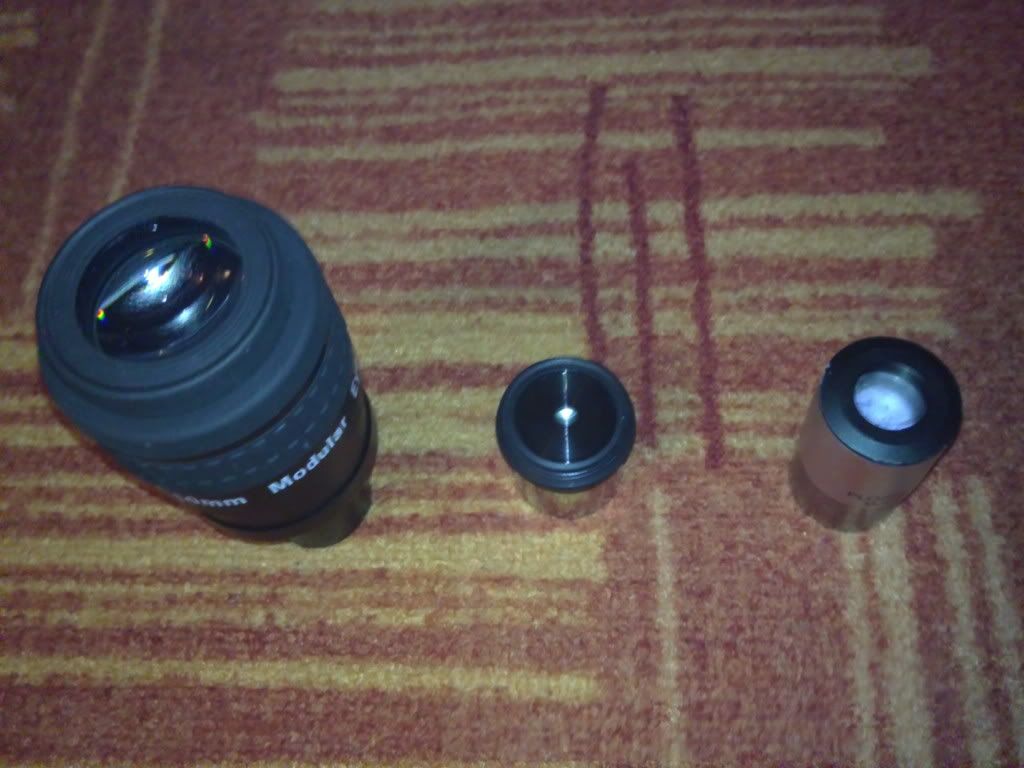
I decided to write an article about the difference between two eyepiecess. My Telescope, was delivered with an eye plossl 20 mm. Then I bought a Super Plossl 7.5 mm. With these two eyes I explored the sky for two years, although I knew the Baader Hyperion eyepieces, the budget does not allowed me to buy one until recently, its price is quite high for this time of crisis. here is a brief presentation of the specs between the two.
 Plossl:
Use on: 1.25 "
 Construction:
4 optical system with lenses in two groups
Apparent field of view: 50 degrees -6 Mm eye relief
 Baader Hyperion:
 Use both 1.25 "and the 2"
 Construction:
 8 elements in 5 groups
 Apparent field of view: 68 drade 20 mm eye relief

    So far I have seen only one celestial body with Hyperion eyepiece and 20-mm field of view, I was fascinated. Although I have a short focal length telescope with f / 4.9! with 7.5 mm plossl I struggled to see through it, because its very little eye relief. Astrophotography Not to mention that by plossl 7.5 mm is almost impossible. Hyperion has two threads (M54 and M43) can be mounted on different cameras, some models can be mounted directly, some with various T2 adapter rings.
 Another interesting thing is that the eyepiece is modular (can be used both in size 2 "and one 1.25" adapter using the standard.) Back off the lens can thus obtaining an eye field with magnitude small. The fine tuning rings 14 and 28 mm (which is sold separately) can change the Hyperion eyepieces focal lengths get smaller yet 3, so basically you have several different focal length eyepieces. For example, a 10mm as I got, attaching the fine tuning rings of  14 and 28, obtained a magnitude of about 5 mm. And if the lens field and torque out the format eyepiece 2 ", obtained 21 mm! Very versatile, a true super-ocular this Hyperion eye and of course are probably better than this (perhaps TeleVue Nagler, but won't  write of that, for not possessing) but at price / quality the hyperion is the best!

For those who like the pictures of my articles, would be nice to pay attention on advertising that appear in the blog by a click, because it is the only way I could buy one day a better telescope.

Saturday, 15 January 2011

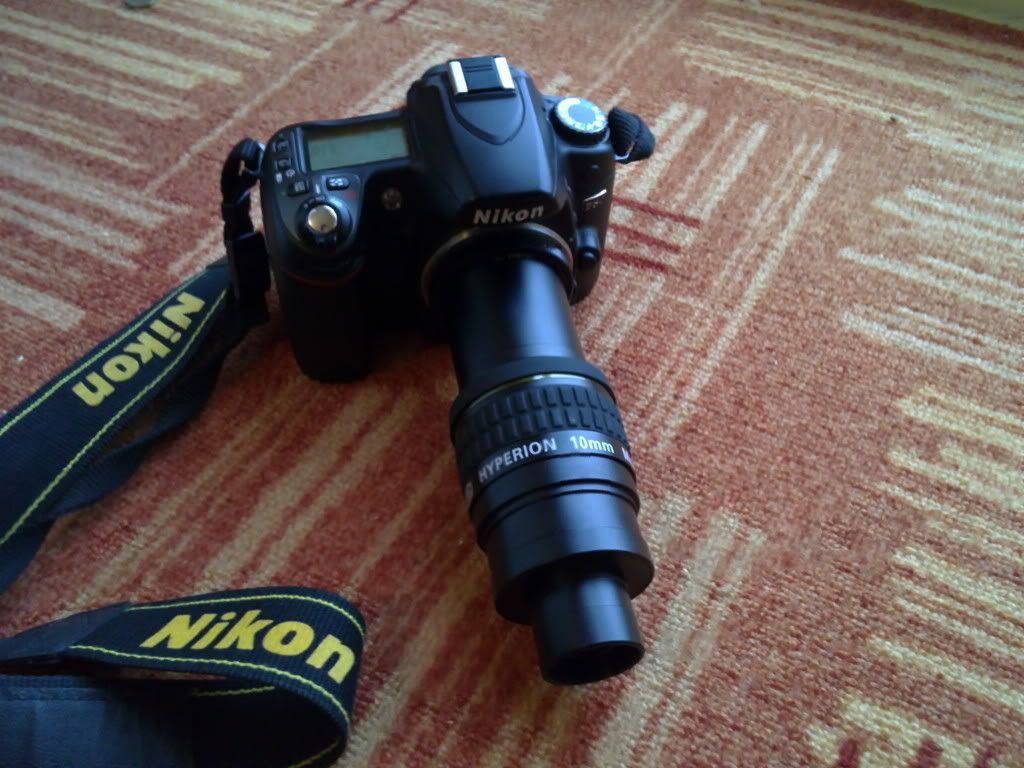
T adapters and rings for Hyperion eyepieces and Nikon DSLR

I bought some astrophotography accessories for my telescope CELESTRON 8 "Newtonian (C8-N). You are invited on Newtonian C8N new group created in the Yahoo Groups.You can see it in the top right of the page.
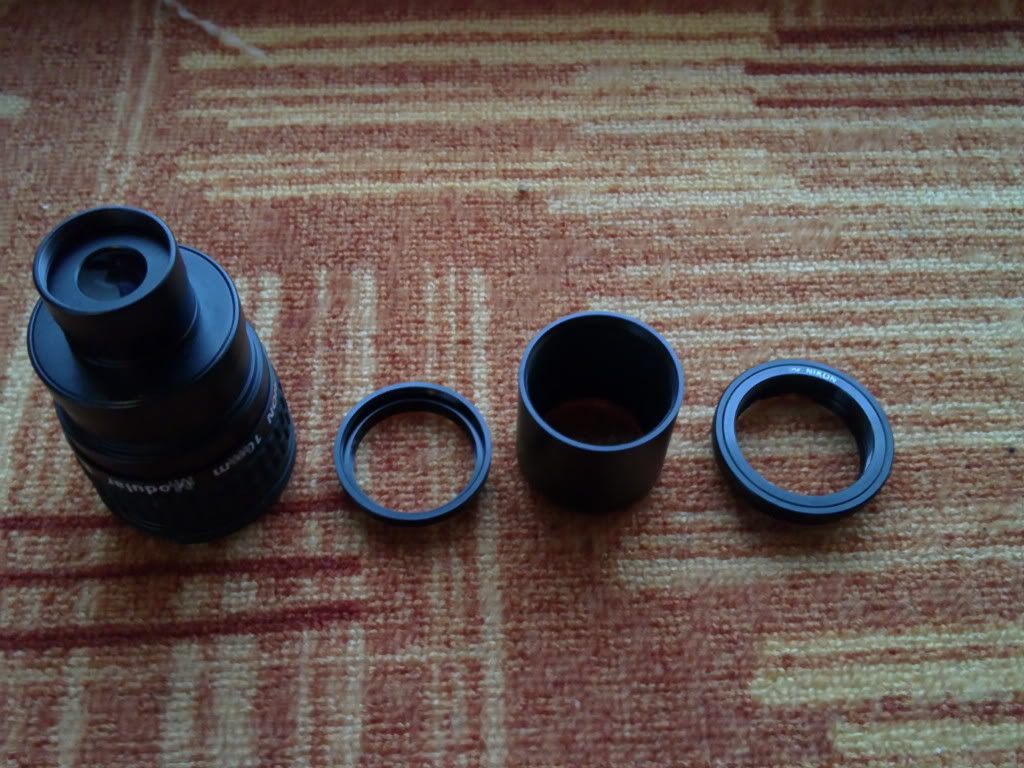
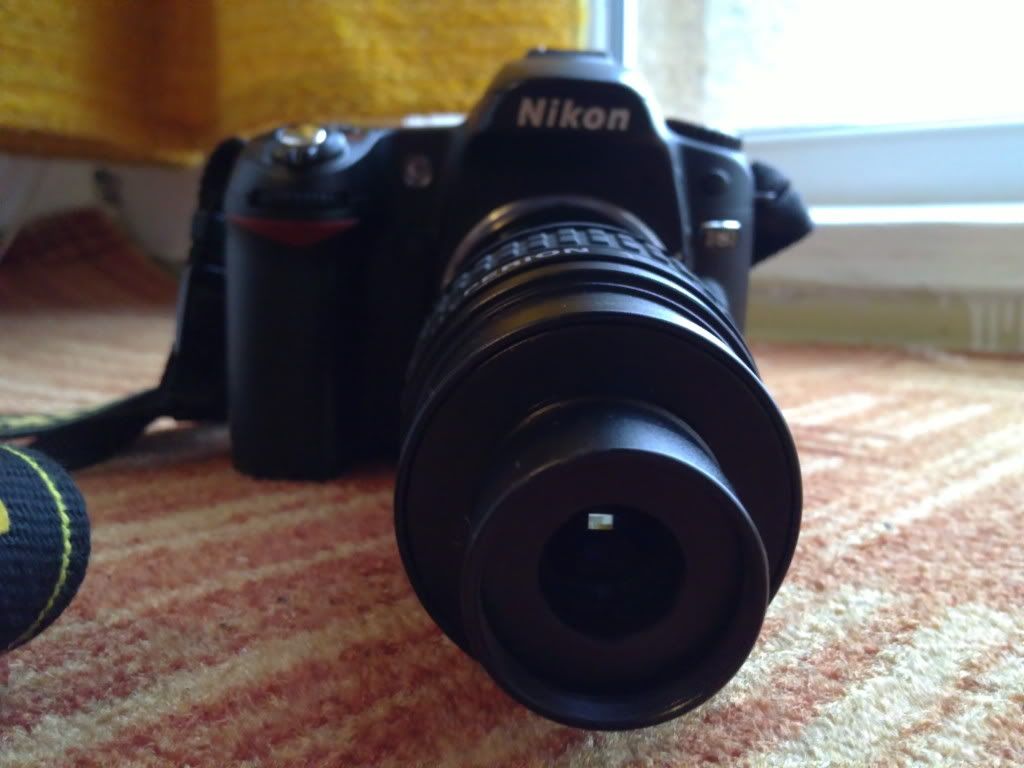
      These three accessories are purchased from Cluj,Romania, sent in the package to Baia Mare, and has cost them 234 RON.It's for afocal use, for connecting between Hyperion 10mm eyepiece and Nikon D80 DSLR. In their order will be screwed: the Hyperion-T-2 M43 adapter, on it T-2 Extension tube 7.5 mm, screwed on it, T-2 Extension tube 40mm ,Nikon T ring , and Nikon D80 camera.

Sunday, 26 December 2010

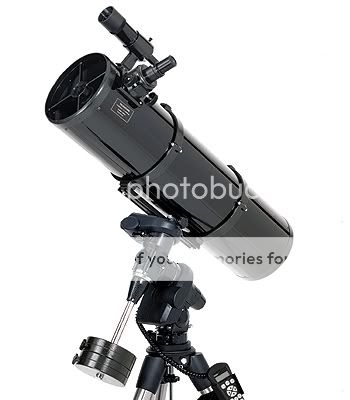
My telescope: C8-N (CELESTRON 8" NEWTONIAN)

C8-N telescope I bought in 2008 in Cluj.
    This telescope Celestron 8 "is a reflector telescope with a focal ratio high and rapid.Is an excellent scope for observing the solar system and performs well deepsky observations.Acest With the focal ratio f / 5 keeps moderate reasonably the light pollution. As with any telescope, Celestron C8N transportation in a region with a dark sky will significantly improve its performance of observations.


203mm-diameter, parabolic
Newtonian reflector optical design
Focal Length-1000mm
Report focal-f / 4.92
Theoretical maximum-480X Magnification
Magnitude top-14 star
Resolution (arcsec.) - 0.58
Size 55.88 mm-side mirror
Secondary mirror obstruction - 8%
Secondary mirror obstruction - 27.5%
9X50-searching telescope
-CG5 mount (EQ5)
-equatorial motion control
Support for accessories-yes
Tripod-Steel 2 "
2 "Adapter 1.25"
Eyepiece-25mm Omni Plossl
93.98 cm tube-size
Weight-30.39 kg


Sales of telescopes in Romania found online:
Astromagazin, or where I bought my telescope at Starmax, but it can buy the Telescop expert from Alcor or Astrofile.
From these stores you can buy binoculars, books and charts for children, CCD cameras, filters, mounts, Software, telescopes for beginners and for advanced, from famous companies which manufacture telescopes like Celestron, Meade, Skywatcher, Orion, eyepieces and barlows , Astro Imaging, accessories, microscopes.

 
All images are © Copyright 2010-2015 Lupu Victor. All rights reserved.Images may not be reproduced, published, or copied in any form without written permission of the author. Thank you for respecting the intellectual property rights. ASTROFOTOGRAFIA | Lupu Victor Astronomy - Contact - About
Design by Free WordPress Themes | Bloggerized by Lasantha - Premium Blogger Themes | Online Project management