Visit Worldwide Topsites
Showing posts with label Stars-Orion. Show all posts

Sunday, 29 December 2013

Astronomy Now: Orion Constellation/Nebula by DSLR/telescope

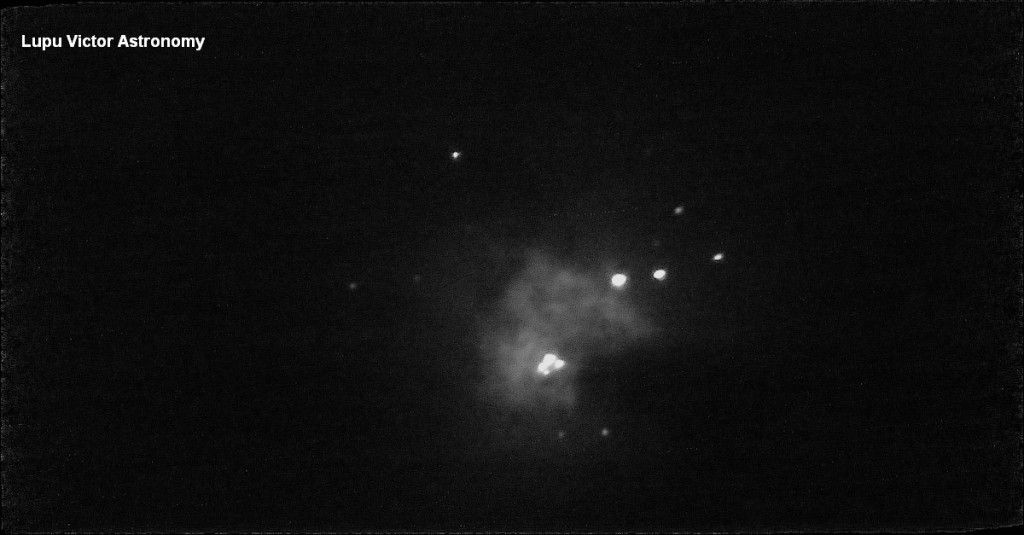
Below, I used the telescope to photograph the Orion Nebula. Stars have some tails. A more success image is the one shot on October 21, 2012.
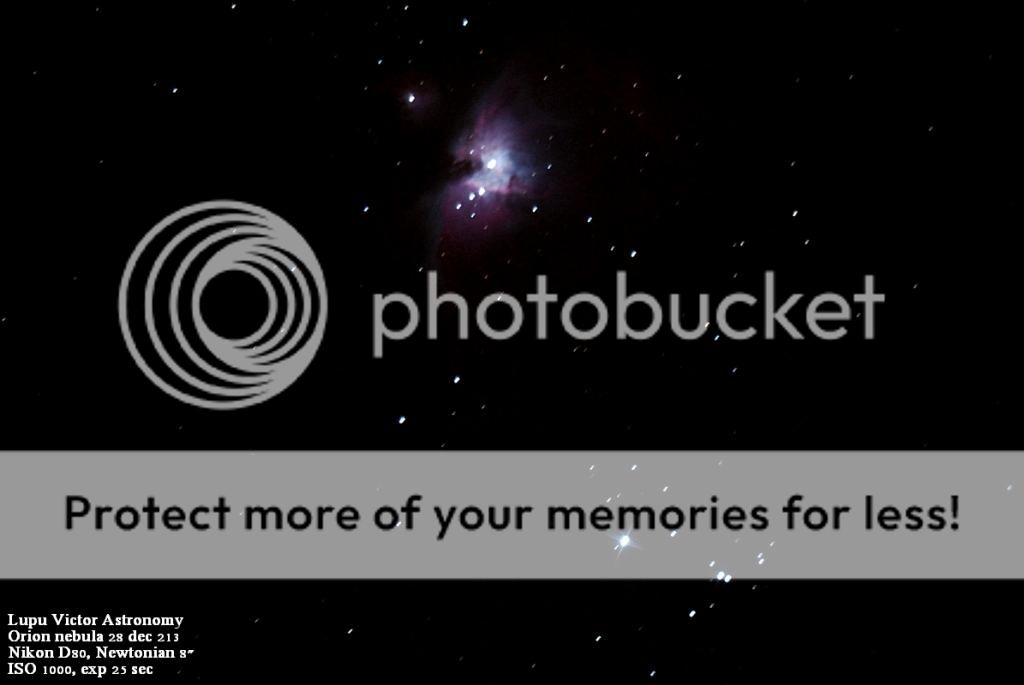

Above:
Name: Orion Nebula
Location: Baia Mare, Romania
Date: 28/12/2013
Time: 00:28:46
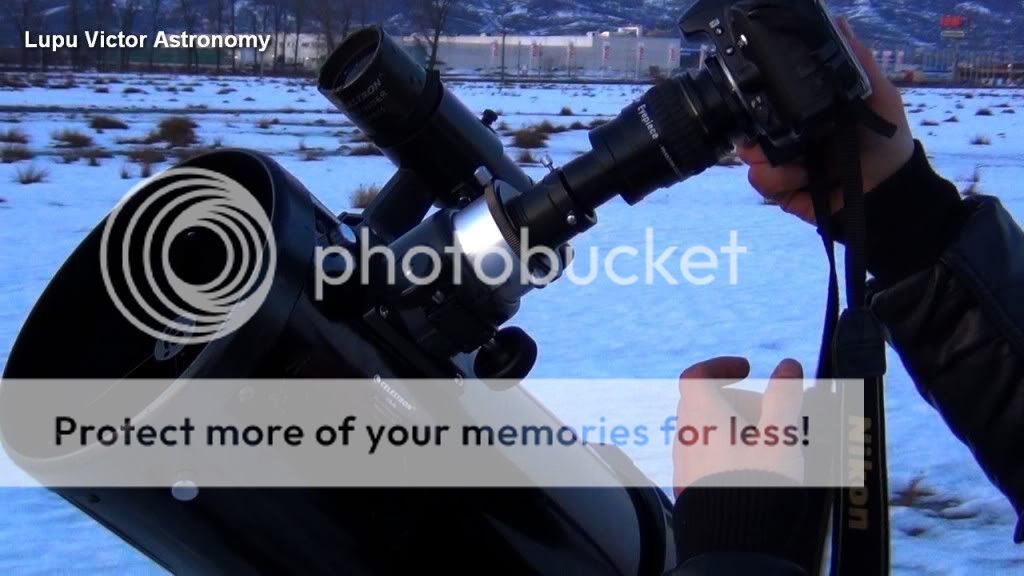
Telescope: Newtonian 8 "Celestron
Ocular: No
Camera: Nikon D80 body
Exposure: 25 sec
Aperture: F1
ISO 1000
Edit: FastStone


Edited: exposures of 20, 25 and 30 seconds.

Above are edited images.
Below are the original photos.
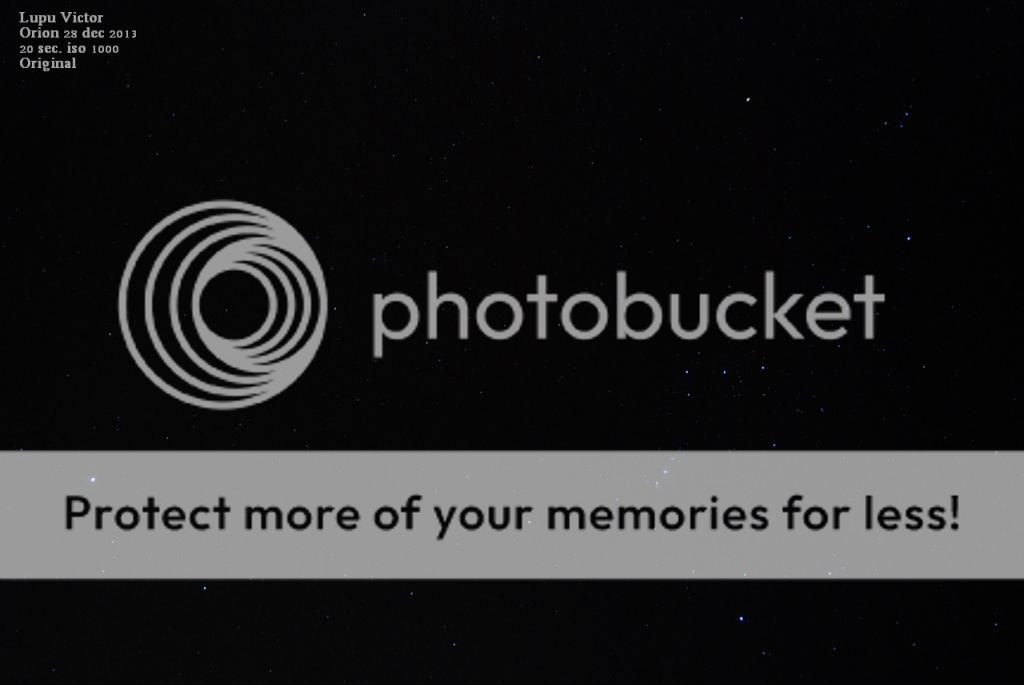
Originals: exposures of 20, 25 and 30 seconds.

Last night, I went out with the telescope on the outskirts of Baia Mare city. It was an acceptable temperature for this period of 5 degrees. The sky was completely clear. I can not say that this night was successful, but is my duty to post here what I have achieved with and without telescope.

Above are images of Orion constellation photographed without telescope. I've posted here the original images to see the difference for every more 5 seconds exposure in each image. Notice the light pollution in each of the three pictures. The level rises as the exposure is longer. At 30 seconds, the picture is already orange.


Above:
Name: Orion
Location: Baia Mare, Romania
Date: 28/12/2013
Time: 12:00 to 1:30
Telescope: No
Ocular: No
Camera: Nikon D80, 18-55mm
Exposures: 20, 25 and 30 sec
Aperture: F5.1
ISO 1000
Edit: FastStone


Sunday, 21 October 2012

Orion Nebula on Orionid's Night Telescope images


This is the first photo Orion Nebula and is my most successful ever, with a DSLR. I've edited almost nothing in it. I always thought the photos from the internet with nebulae and galaxies have added colours in Photoshop programs to be much beautiful. But apparently I was wrong.

I went at 3:30 am on the outskirts of the city to catch Orionids. It seems I have seen a lot of shooting stars, but unfortunately I got only a few in some pictures, which I will present in another article.
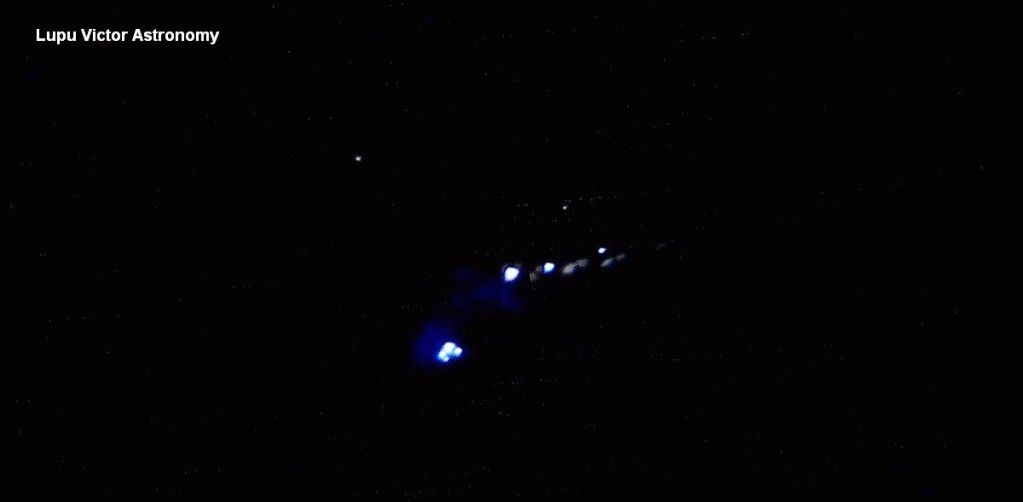
As an unusual feature of this morning, while watching the belt of Orion with the naked eye, I noticed a very bright light that went parallel to the belt, under it. The light diminished, with a slow speed, and to my surprise, did not faded at all, going across the sky at the same speed between the stars, to the horizon. If it was a meteor, had to have a high speed, and dissapear quickly, but it left me stunned, because it did not. Waiting for your comments, if someone can explain what it was.

Telescope: Celestron 8 inch Newtonian
C5/EQ5 motorized mount
Camera: Nikon D80 with T ring
Eyepiece: no (focal)
Filter: no
Date: October 21, 2012
Time: 05:27
Mode: manual
ISO: 640
Exposure time: 30 sec
Location: Baia Mare, Romania


Below, are 2 photos, without telescope, but with the same camera with a 18-55 mm kit.


Tuesday, 12 June 2012

Orion Nebula Telescope Images processed in Registax


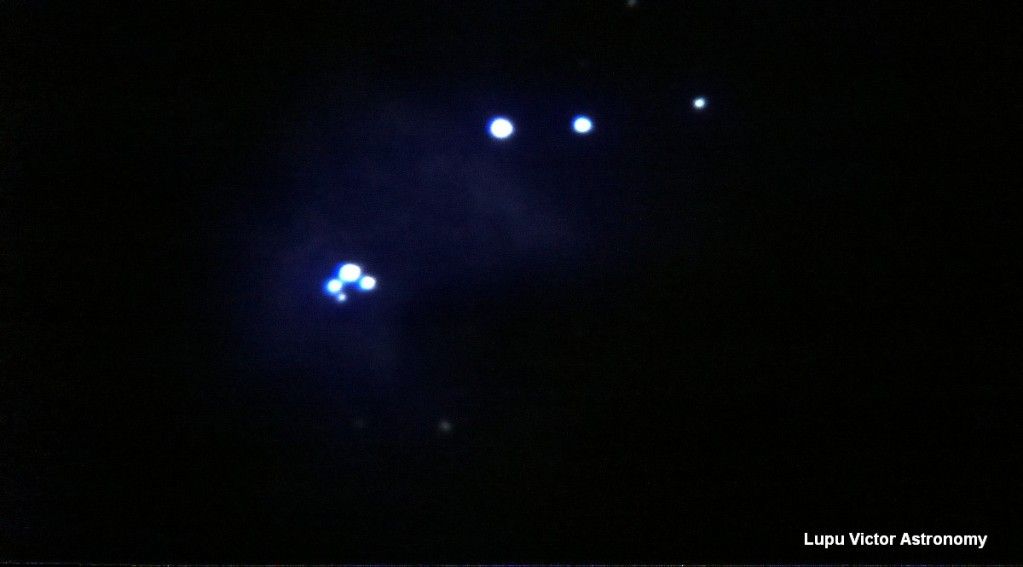
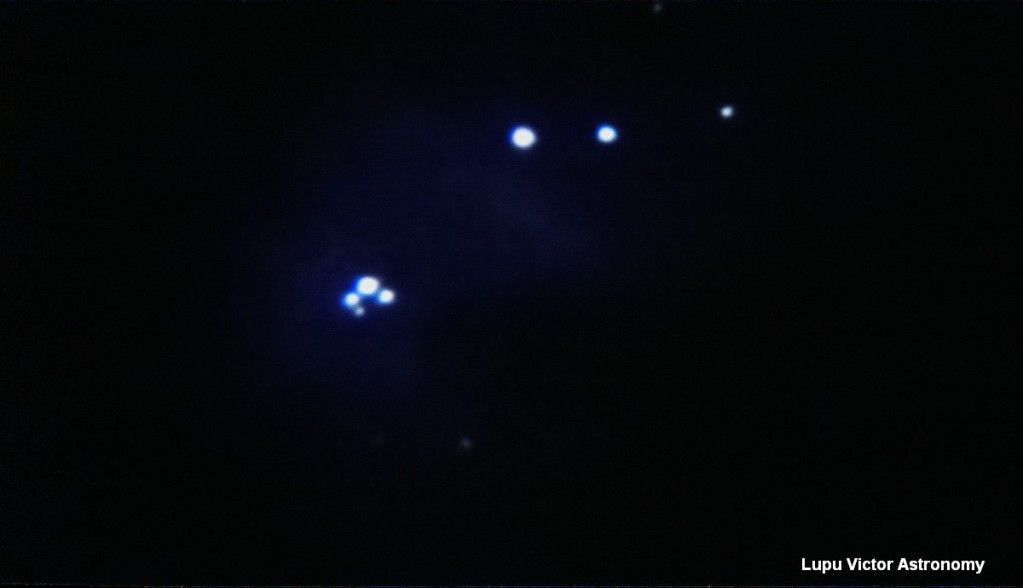
These images are processed in Registax 5. I never thought they would get more successful than the video captures presented in another article.

Orion Nebula, or M42, is the nearest group from our Solar System. In these regions, the vast majority of new stars are born in the galaxy. It forms interstellar clouds of molecular gas, that are producing thousands of new stars and then gradually dissipates. Many of these stars are surrounded by disks of dust and gas that have more than twice the diameter of our Solar System. Orion Nebula is located 1,600 light years from us and has 56 trillion km in diameter. It is the second point of light in the sword of Orion the Hunter.

The last images I zoomed the camera near the nebula center. The five main stars, young and massive, are responsible for all light in the Orion nebula. These stars were born with 15 to 30 times the mass of our sun. It is not seen 5 stars in photos, but only 4, and are located at the bottom of the photos. The images are not processed in Photoshop, so the bright colors, that most are used to see this nebula, are missing.

Image 1,2: 110 frames, 90% lowest quality
Image 3: 330 frames, 80% lowest quality
Image 4,5,6: 280 frames, 90% lowest quality
Image 7,8,9: 169 frames, 85% lowest quality
Image 10: 110 frames, 90% lowest quality
Image 11: 134 frames, 85% lowest quality
Image 12: 36 frames, 85% lowest quality
Image 13: 152 frames, 85% lowest quality
Image 14,15: 157 frames, 90% lowest quality
Image 16: 134 frames, 85% lowest quality
Image 17: 152 frames, 90% lowest quality

Photographer: Victor Lupu
Optics: Celestron C8-Newtonian telescope, plossl 20mm, 2x Barlow
Mount: CG5 (EQ5)
Device: Sony CX130 to 2x-5x optical zoom

Settings: auto, low lux
Total magnification: 200x-500x
Filter: no
Date: 29/01/2012
Location: Baia Mare, Romania
Processing: video captures, FastStone Image Viewer


Tuesday, 28 February 2012

Nikon D80 DSLR Orion Pictures Observational astronomy

Photo with name of stars, exposure 15 sec, F 5.66, ISO 400

Exposure 13 sec, F 5.6, ISO 400, edited, at 19:24:44

Original photo, no editing, exposure 15 sec, F 5.66, ISO 400, at 19:26:32

15 sec exposure, F 5.66, ISO 400, edited, at 19:24:44

Original photo. no editing, exposure 30 sec, F 5.6, ISO 400 at 19:30:14

Exposure 30 sec, F 5.6, ISO 400, edited, at 19:30:14

I made ​​these images with the constellation Orion on the night the Moon, Jupiter and Venus were close to each other. Images were taken with Nikon D80 DSLR. The device was screwed on the telescope tube, designed for piggyback.
It was not a motorized mount, but I moved the telescope manually with the Earth rotation. The longest exposure time that I managed to achieve without the stars leaving traces, was 30 ".

Name: Orion Constellation
Location: Baia Mare, Romania
Date: 26/02/2012
Time: 7:03 p.m. to 7:11 p.m.
Telescope: No (used only for piggyback)
Eyepiece: No
Camera: Nikon D80, 18-35mm kit
Exposure: 13 to 30 sec, manual
Aperture: F5
ISO: 400
Edit: FastStone


Name: Orion Constellation
Location: Baia Mare, Romania
Date: 26/02/2012
Time: 7:36 p.m.

Telescope: No (used only for piggyback)
Eyepiece: No
Camera: Nikon D80, 18-35mm kit
Exposure: 13 sec, manual
Aperture: F3,5
ISO: 1000
Edit: FastStone
Tuesday, 21 February 2012

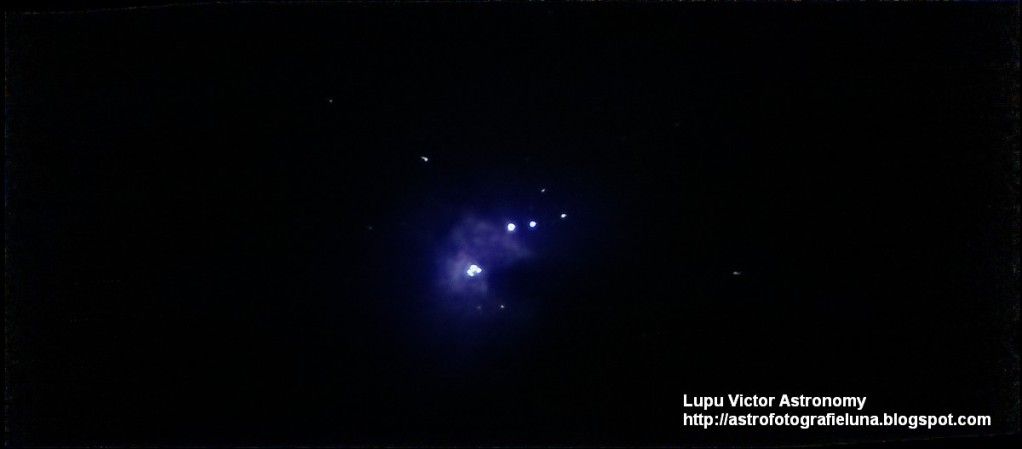
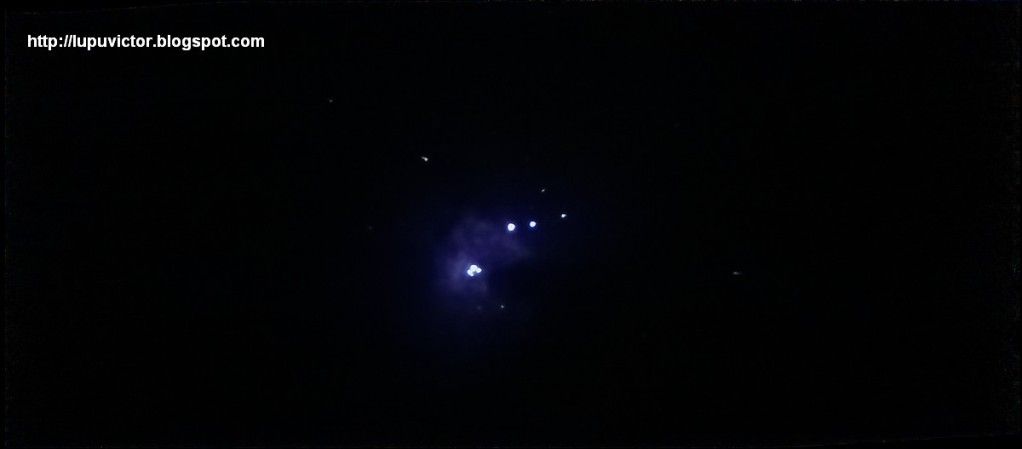
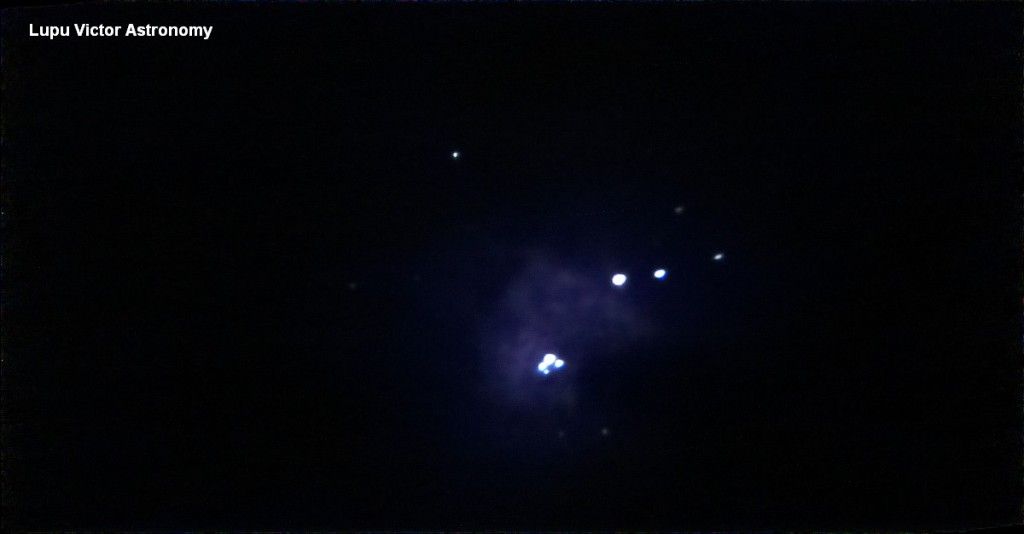
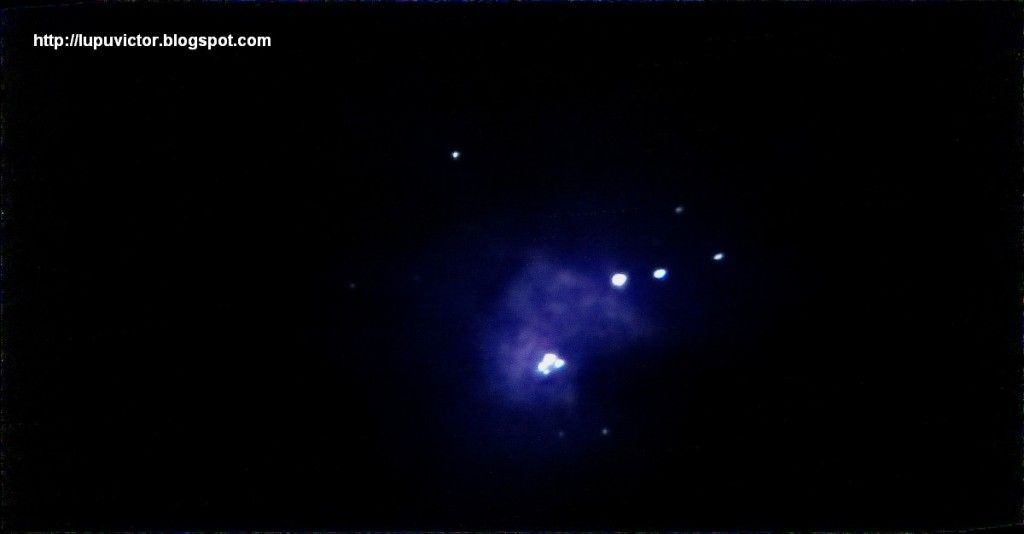
Deepsky Astrophotography Orion (M42) images by astronomical telescope


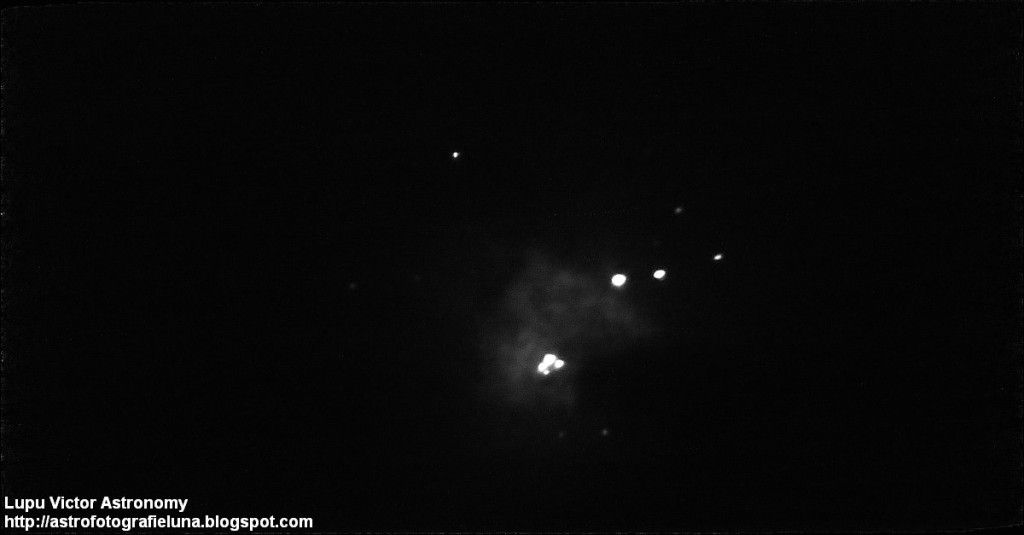
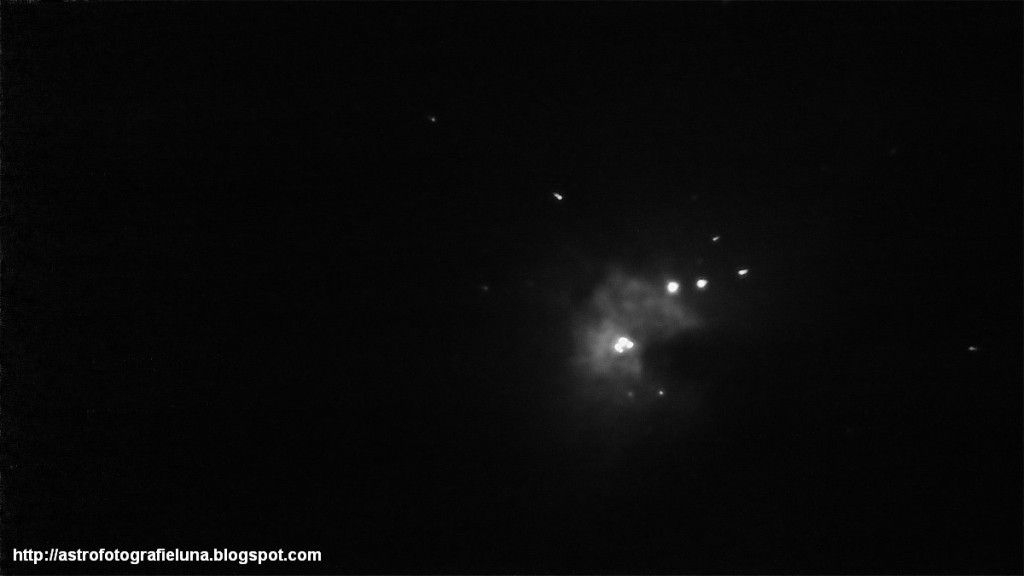
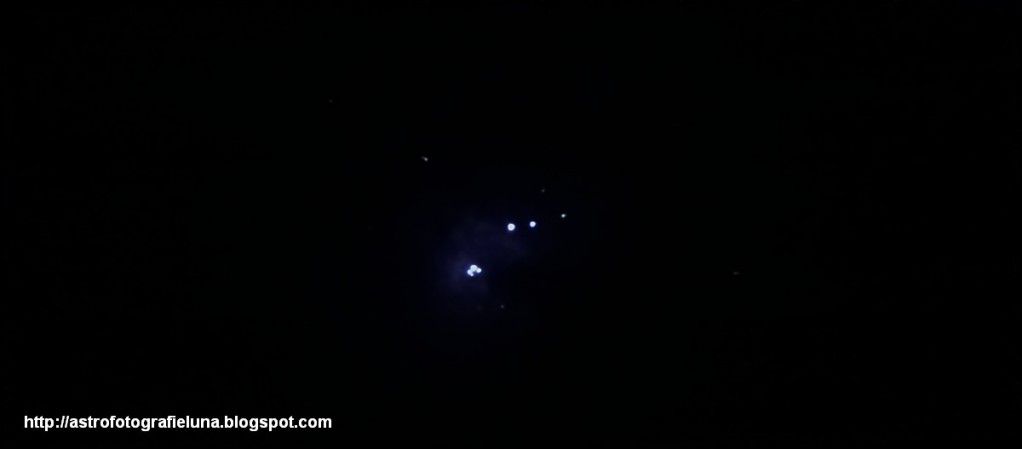
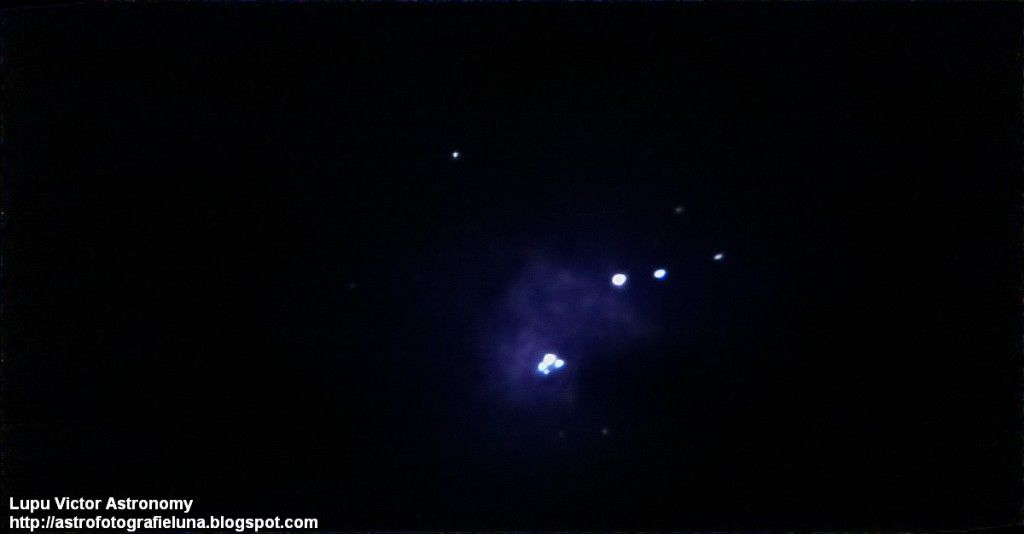
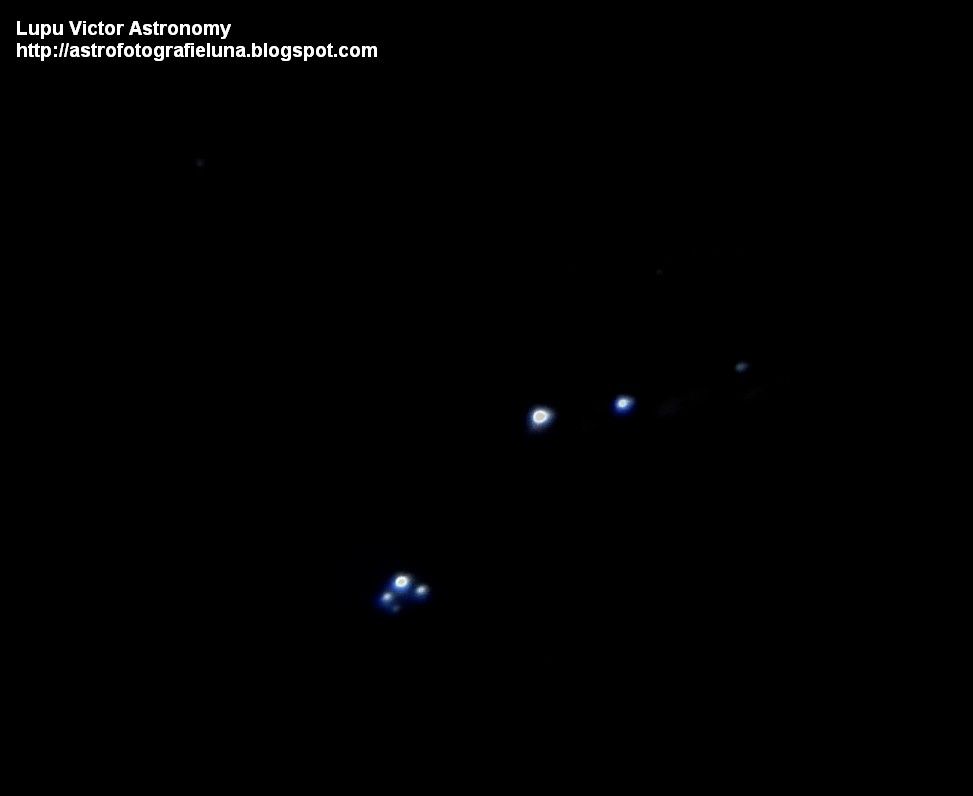
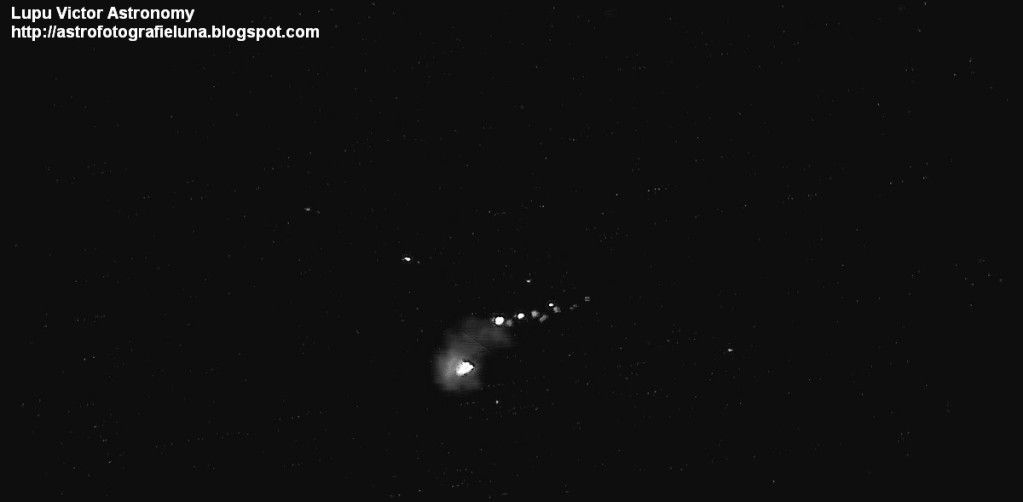
In these video captures is the visible Orion nebula without long exposure like on DSLR's. It's as seen through the telescope, or the human eye.

Orion Nebula (or M42), is visible to the naked eye even from areas affected by light pollution. It is the middle "star" of Orion's sword, sword represent the three stars located south of Orion's belt. Star appears fuzzy to the naked eye of the observer, but nebulosity is obvious through binoculars or a small telescope.

There are speculations that the Maya of Central America described the nebula in their myth, 'Three Hearth of Stone ". If so, the three would correspond to two stars from the bottom of Orion, Rigel and Saiph, and the third is, Alnitak.
Video in which I processed this picture is here: Deepsky Video Orion Nebula by astronomical telescope .


Photographer: Victor Lupu
Optics: Celestron C8-Newtonian telescope, plossl 20mm, 2x Barlow
Mount: CG5 (EQ5)
Device: Sony CX130 to 2x-5x optical zoom

Settings: auto, low lux
Total magnification: 200x-500x
Filter: no
Date: 29/01/2012
Location: Baia Mare, Romania
Processing: video captures, FastStone Image Viewer

Sunday, 5 February 2012

Deepsky Video Orion Nebula by astronomical telescope

Orion Nebula seen through my telescope reflector of 203 mm mirror, camcorder Sony CX 130. Photos and processing in Registax will come later. For now, I uploaded this video on Youtube. I am pleased with Sony CX 130, more than CX105, because it can shoot in the dark stars in a sensitivity greater, at 3 lux (CX105 is 5 lux).

In this video you can see well enough the white cloud of the nebula. Here, the Orion nebula is seen as seen with the naked eye, without additions of processing with different colors and other photoshop programs.

Orion Nebula (also known as Messier 42, M42, or NGC 1976) is a diffuse nebula situated south of Orion's Belt. It is one of the brightest nebulae, and is visible to the naked eye in the night sky. M42 is located at a distance of 1344 ± 20 light years and is the nearest region from Earth, with massive star formation. M42 nebula is estimated to be 24 light years in diameter. It has a mass about 2000 times the Sun's mass. In the old texts is commonly referred to as the Great Nebula in Orion.


Orion Nebula through telescope
Video: Victor Lupu
Optical CelestronC8"-Newtonian telescope, plossl 20mm, 2x Barlow
Mount: CG5 (EQ5)
Device: SonyCX130 at 3-5x optical zoom
Total magnification: 300x-500x
Filter: no
Date: 29/01/2012
Location: Baia Mare, Romania
Editing: Sony Vegas 10


For those who like my astro pictures or my articles, it woul be great if you could pay attention on advertising that appear in the blog by a click and maybe one day I could buy a better telescope.

 
All images are © Copyright 2010-2015 Lupu Victor. All rights reserved.Images may not be reproduced, published, or copied in any form without written permission of the author. Thank you for respecting the intellectual property rights. ASTROFOTOGRAFIA | Lupu Victor Astronomy - Contact - About
Design by Free WordPress Themes | Bloggerized by Lasantha - Premium Blogger Themes | Online Project management