Friday, June 05, 2015
 Unknown

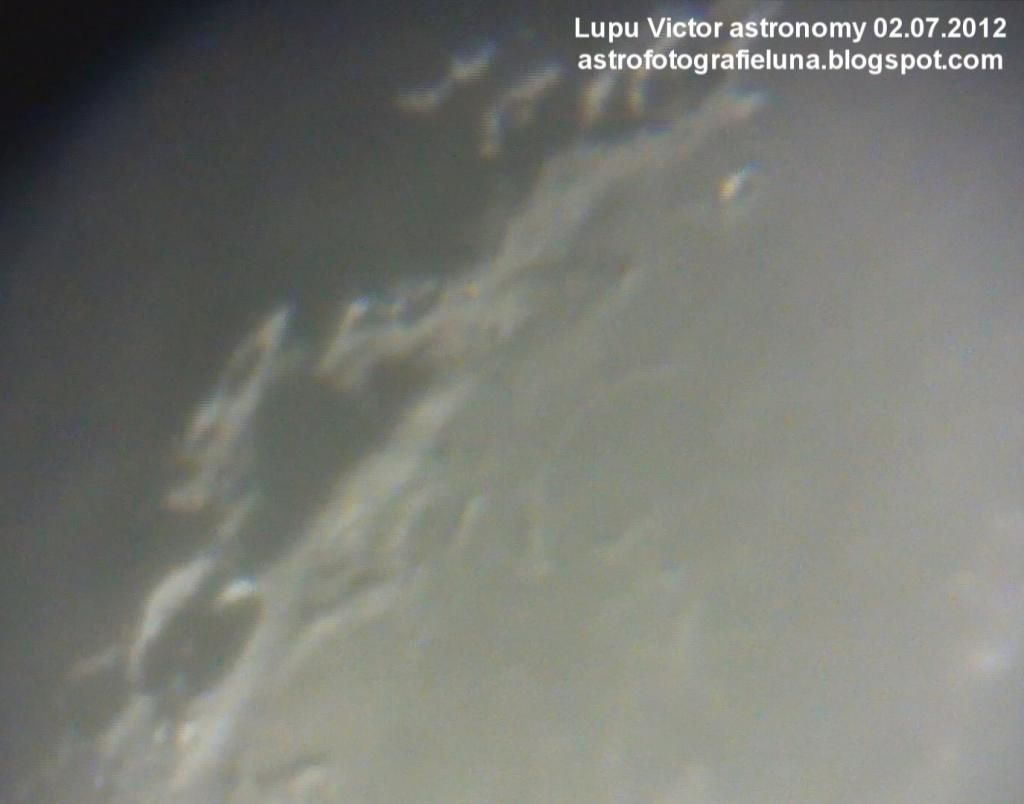
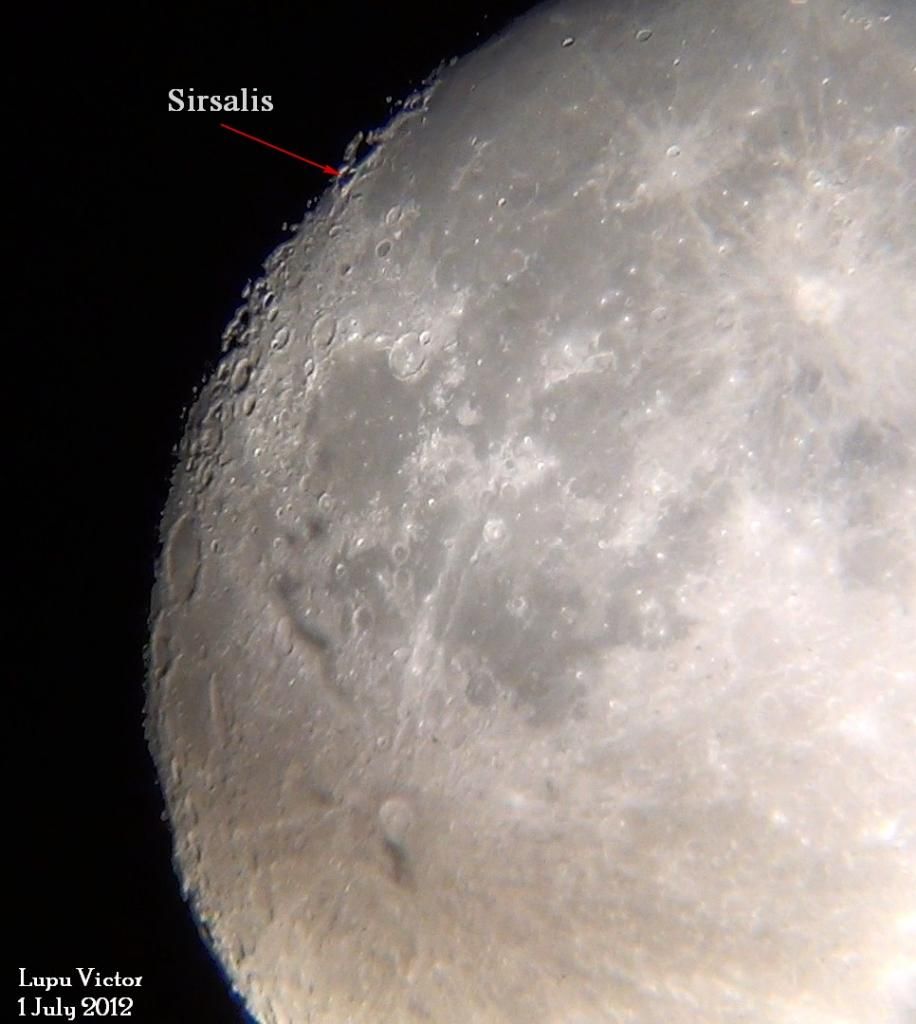
We note here craters like Darwin (130 km), Crüger flooded crater (46 km) of which has remained only its lip on the surface, Byrgius (87 km), Henry (41 km), Henry Freres (42 km), Cavendish (56 km) and Mersenius (84 km).
We also see in the images some deep grooves called Rimae Darwin and Rimae Sirsalis, named after nearby craters or craters which they cross.
The video was made with the camera mounted on the telescope, to be more exact on the telescope eyepiece. To protect the telescope from vibrations, I used a tracking motor from Lacerta, and thus the image was more stable.
However, even with this tracking device for celestial bodies, there were vibrations of the telescope tube, causing the image to be slightly unstable. For this, I used the video stabilization option in Sony Vegas editing software, so the video was 100% correct on this issue.
Unstable aspect of the image through the telescope is caused by a combination of turbulence in the Earth's atmosphere and increased streams of heat from the ground and buildings.
Images were obtained by attaching a camera directly into the eyepiece of an astronomical telescope of 8 inch Newtonian; For this reason the eyepiece visual field was increased.
This video was also used also for simple video captures.
We also see in the images some deep grooves called Rimae Darwin and Rimae Sirsalis, named after nearby craters or craters which they cross.
The video was made with the camera mounted on the telescope, to be more exact on the telescope eyepiece. To protect the telescope from vibrations, I used a tracking motor from Lacerta, and thus the image was more stable.
However, even with this tracking device for celestial bodies, there were vibrations of the telescope tube, causing the image to be slightly unstable. For this, I used the video stabilization option in Sony Vegas editing software, so the video was 100% correct on this issue.
Unstable aspect of the image through the telescope is caused by a combination of turbulence in the Earth's atmosphere and increased streams of heat from the ground and buildings.
Images were obtained by attaching a camera directly into the eyepiece of an astronomical telescope of 8 inch Newtonian; For this reason the eyepiece visual field was increased.
This video was also used also for simple video captures.
Moon Age: 1.00 days
Illuminated: 99.8% (0% = New, 100% = Full)
Magnitude: -12.20
Distance: 398.772 km
Optics (telescope or lenses): Celestron C8-Newtonian telescope, eyepiece 20mm Plossl, 2x barlow
Mount: CG5 (EQ5)
Camera: Sony CX130
Video mode: 1080p
Filter: no
Date: 14/03/2014
Location: Baia Mare, Romania
Processing: Sony Vegas HD Platinum 10.0
In the picture below are labeled craters and other lunar features in the region. To better understand this photo, you should note that the label with the name or the letter of larger craters could be found at their center, and on the small craters, you should find them around them, usually above.