Visit Worldwide Topsites
Showing posts with label Craters-Delambre Taylor and Dollond. Show all posts

Friday, 5 April 2013

Craters photographed by astronomical telescope Delambre and Taylor


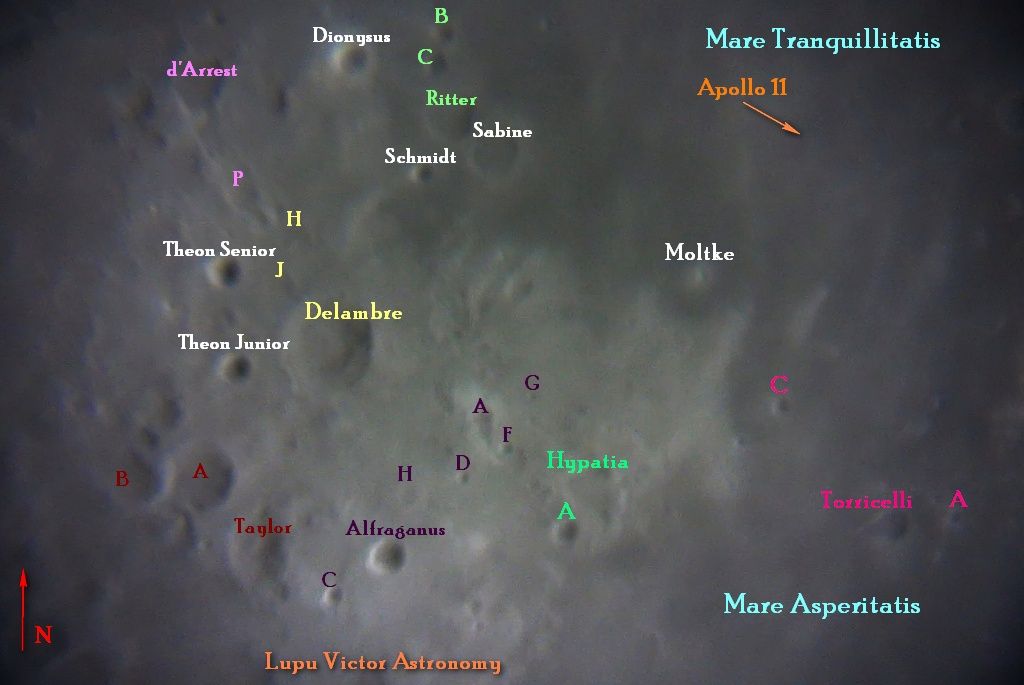
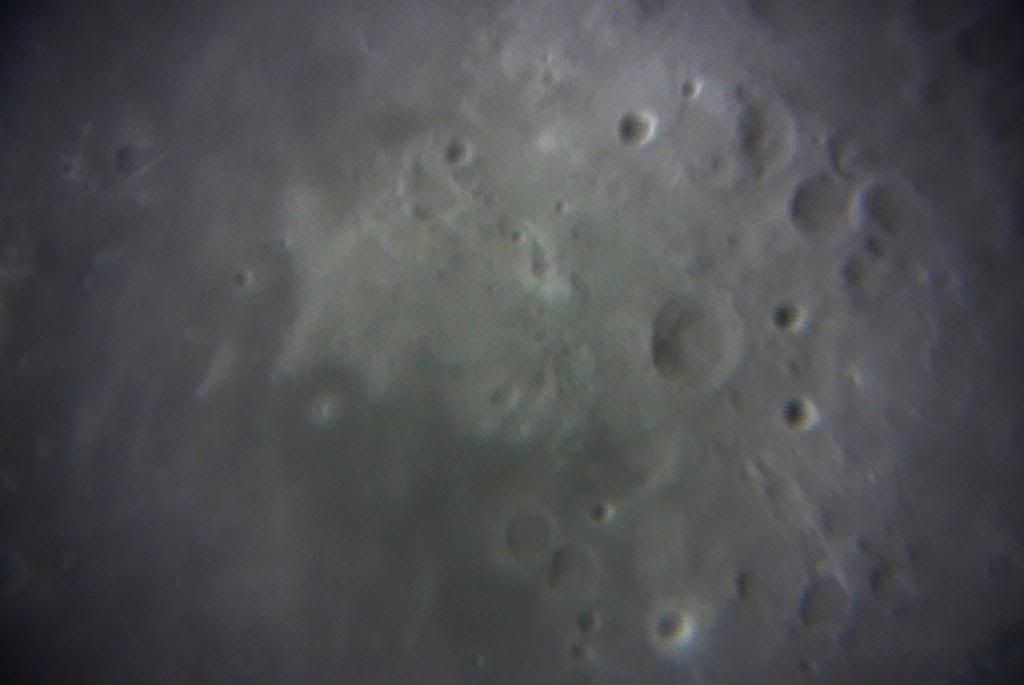
Delambre (52 km), is a crater near Mare Tranquillitatis to its west. Interior terraced walls, are stretching almost to its center, where are some central peaks. Taylor (41x34 km) instead, located at the south of Delambre, it has an abrupt inner edge to the floor, with a peak located in the center. At first glance, this crater resembles a mexican hat under certain lighting conditions.

The picture below is reversed, as seen through the telescope. In the right of the image, notice a large darker plateau. This is the Mare Tranquillitatis basin. On this basin Apollo 11 landed on the Moon at 198 kilometers east of Delambre, and Apollo 16, at 224 km south west of it.

Moon Age: 7 days
Phase: 51% (0% = New, 100% = Full)
Distance: 384.488 km


Optics: Celestron C8-Newtonian telescope, 20mm Plossl, 2x Barlow
Mount: CG5 (EQ5)
Camera: Sony CX130
Filter: no
Date: 29.04.2012
Location: Baia Mare, Romania
Processing: video capture, FastStone Image Viewer


Sunday, 6 January 2013

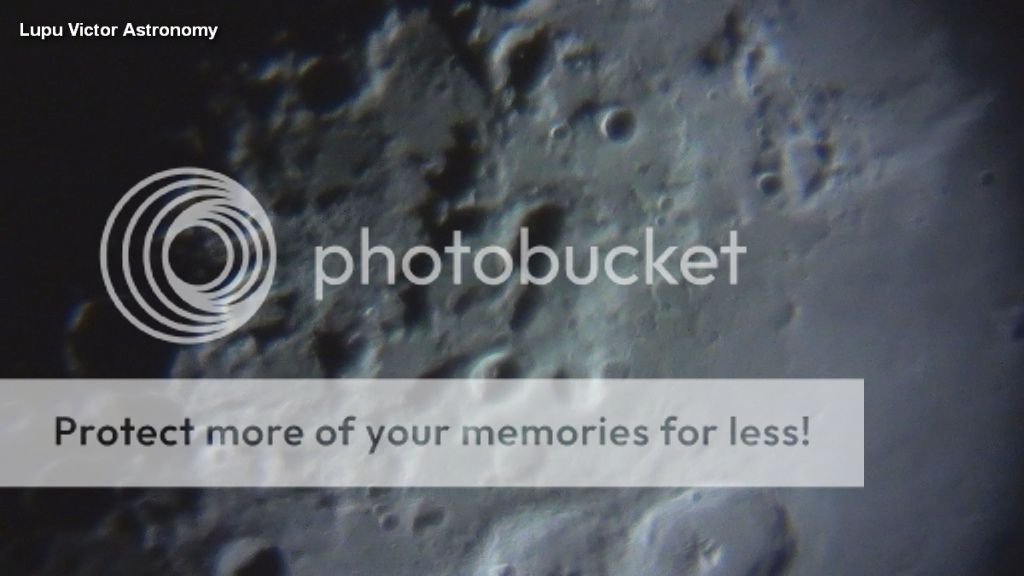
Delambre and Taylor Craters of the Moon in shadow


Taylor crater (41 km), is located on the east side of the Moon.

This crater has no area left to be smooth. Everything is steep, in and out of, although very worn around the edges and central peak.

Seen from above it, not oblique, Taylor is a circular crater, slightly elongated in the south. Its floor is very cratered with smaller holes. There are no other features that can be highlighted on the floor than they unevenness, which is widespread at all the craters in this area.

Taylor has several satellite craters, one of which, ironically, is bigger than Taylor, namely Taylor A. Among them we mention Taylor AB, A, and E, located on the south east of Taylor.

Not far from the crater, Apollo 16 mission took place at 116 Km of it.

Crater Delambre however, is bigger in diameter as Taylor. Delambre (52 km), has a sharp edge and is almost perfectly round. In the center show no central peak.  Viewed as a whole above it, there is a small crater right in the center. Its inner wall is stretched almost to the center. On the northern edge of the crater is a small satellite crater called Delambre D.

Optics: Celestron C8-Newtonian telescope, 20mm Plössl, 2x barlow
Mount: CG5 (EQ5)
Camera: Sony CX130
Filter: no
Date: 04/27/2012
Location: Baia Mare, Romania
Processing: video captures, FastStone Image Viewer


The image below is made in February 10, 2011.

Friday, 16 November 2012

Zollner crater on the Moon Astronomical telescope images


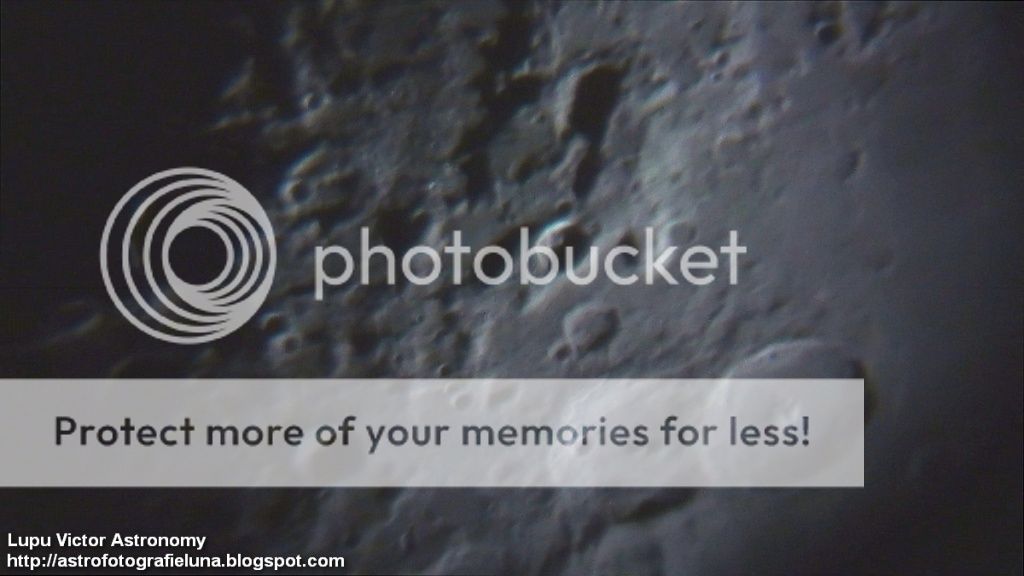
Zöllner (47 km), is a lunar impact crater located west of Sinus Asperitatis. North is Alfraganus (21 km) smaller crater and northwest is Taylor (41 km) oval in shape. Southeast of Zollner, is the small crater, Kant (32 km and 3.1 km depth).

Zollner's edge is oval, irregular shaped, more elongated in north-south direction. The wall is not tall of only 700 m. To the southeast there is a distorted crater like an attached depression, visible in the photos. The floor is narrow, and there is still a central peak inside.

Apollo 16 landing site was located about 80 kilometers southwest of Zollner's crater rim.


Optics: Celestron C8-Newtonian telescope, 20mm Plössl, 2x barlow
Mount: CG5 (EQ5)
Camera: Sony CX130
Filter: no
Date: 04/27/2012
Location: Baia Mare, Romania
Processing: video capture, FastStone Image Viewer
Saturday, 7 May 2011

Delambre Taylor and Dollond craters


Photographer: Victor Lupu
Optics: Celestron C8-Newtonian reflector telescope, plossl 20mm, 2x Barlow
Mount: CG5 (EQ5)
Device: Sony HDR CX105
Filter: No
Date: 10/02/2011
Location: Baia Mare, Romania
Processing: video captures


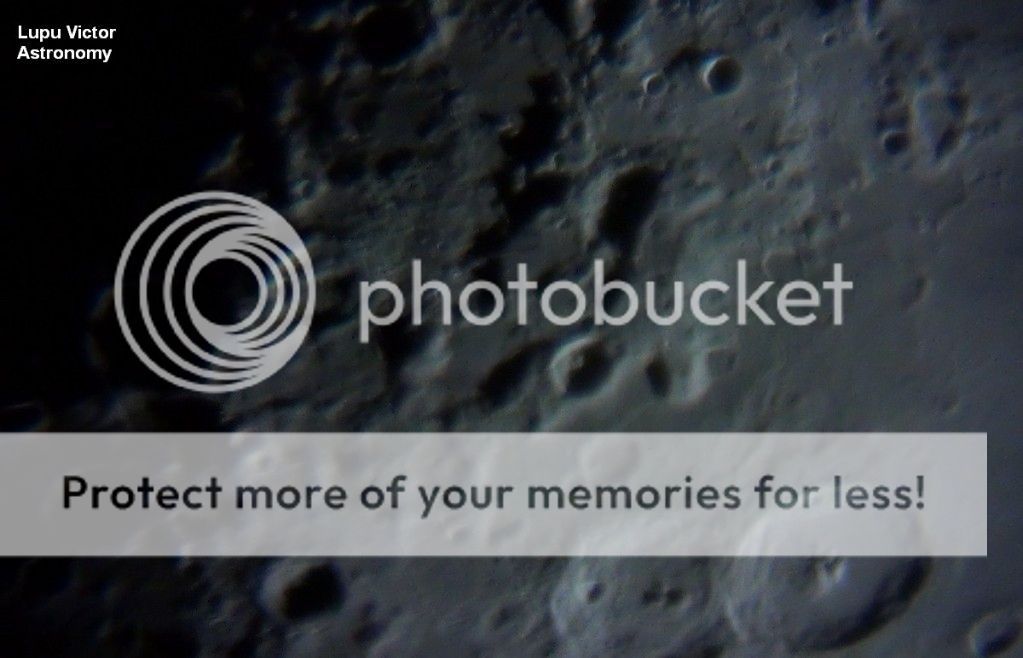
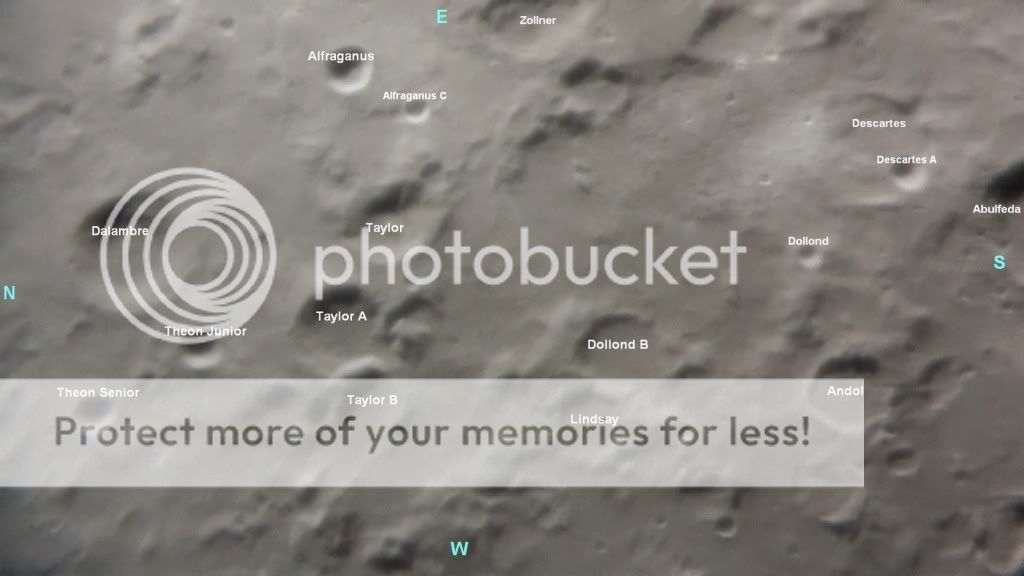
        Delambre (52 km), is a large-edged crater- left in the photo.The floor remains much smaller than the margins.The name is from a mathematician astronomer Delambre.West of Delambre crater (look on cardinal points of the photo), there are two craters of about the same size, Theon Senior (18 km) and Theon Junior (19 km).
        
Theon Theon Senior and Junior (18 km-19 km) craters are circular in shape like a bowl, with a low floor in its center and steep walls inside. Depth at the edge to the floor is up to 3470 meters on Theon Senior , and 3580 meters on Theon Junior. Theon Senior and Junior dates back to Eratosthenian era 3.2 - 1.1 billion years ago.
The name of Theon Senior comes from Theon of Smyrna who was a Greek philosopher and mathematician, whose works were heavily influenced by the Pythagorean school of thought.
The name of the crater Theon Junior comes from Theon of Alexandria, a Greek mathematician who lived in Alexandria, Egypt.
       
Taylor (41x34 km), is a lunar crater that is located south of the Delambre crater. To the east is Alfraganus (21 km) below, and south-east is Zöllner (47x36 km).
Taylor's outer edge is elongated in north and south, giving it an elliptical appearance. There is a gap in the north wall, forming a narrow valley and the south side is relatively low compared with the high margins along the east and west. Taylor A and B (38 and 29 km) craters,are located in the west of Taylor.The name comes from Brook Taylor (18 August 1685 - 30 November 1731), a mathematician best known for the Taylor's theorem.
       
Dollond (11 km), is a small crater north of the crater Abulfeda. West of Dollond is Andel. Dollond is circular and conical in shape, with a low floor, and the interior walls are inclined.
At about 50 km northeast of the crater was the site of the Apollo 16 mission.
John Dollond (June 10 1706 - 30 November 1761) has the name of this crater. He was an English optician, known for his business success in selling optical achromatic doublets.

        
Andel (35 km). The outer edge of the eroded crater Andel was distorted into a polygonal shape, almost nonexistent in the south, where Andel G intersects the perimeter. The interior is nearly flat, with some south-east elevation. The crater was named after Karel Andel (28 December 1884-17 Mar 1947) who was a czech astronomer and selenographer.


All images are © Copyright 2010-2015 Lupu Victor. All rights reserved.Images may not be reproduced, published, or copied in any form without written permission of the author. Thank you for respecting the intellectual property rights. ASTROFOTOGRAFIA | Lupu Victor Astronomy - Contact - About
Design by Free WordPress Themes | Bloggerized by Lasantha - Premium Blogger Themes | Online Project management