
 Monday, September 14, 2015
 Unknown

Aristarchus (40 km) is one of the most distinct craters on the lunar surface though it is small in size. That's because its brightness when in contact with sunlight. It makes a great pair with Herodotus (35 km), which is about the same size Aristarchus, but very different from it, since Herodotus is flooded.
We can easily see debris thrown around Oceanus Procellarum from Aristarchus, ending up at Kepler (32 km), another crater to the southeast of it.
Herodotus appears as a bright ring near Aristarchus and between the two we distinguish a curved westward channel called Vallis Schröteri. In the area of this channel, the terrain color is darker.
Towards the west of two, it is an isolated crater called Schiaparelli (24 km), and further, the terminator is a large crater which it is lit on the outer edge, called Seleucus (43 km).
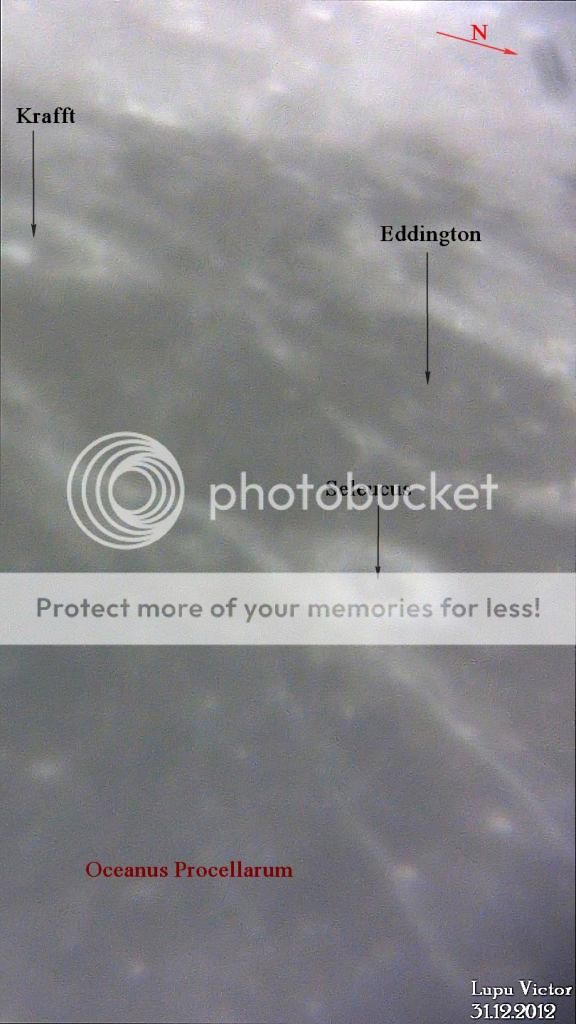
In the picture below are labeled craters and other lunar features in the region. To better understand this photo, you should note that the label with the name or the letter of larger craters could be found at their center, and on the small craters, you should find them around them, usually above.

Magnitude: -12.10
Phase: 0.96%
Distance: 402.464 km
Illuminated: 96% (0% = new, 100% = full)
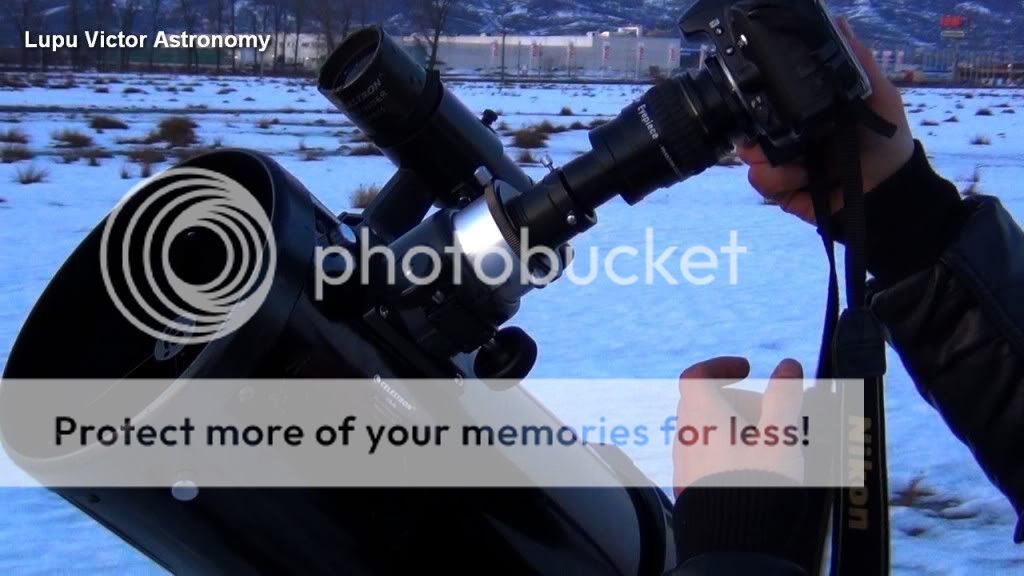
Astronomical Instrument: Celestron C8-Newtonian telescope
Eyepiece: plossl 20mm, 2x Barlow
Mount: CG5 (EQ5)
Camera: Sony CX105
Filter: no
Date: 08.11.2011
Location: Baia Mare, Romania
Processing: Registax 5 FastStone Image Viewer

We can easily see debris thrown around Oceanus Procellarum from Aristarchus, ending up at Kepler (32 km), another crater to the southeast of it.
Herodotus appears as a bright ring near Aristarchus and between the two we distinguish a curved westward channel called Vallis Schröteri. In the area of this channel, the terrain color is darker.
Towards the west of two, it is an isolated crater called Schiaparelli (24 km), and further, the terminator is a large crater which it is lit on the outer edge, called Seleucus (43 km).
 |
| 335 video frames in Registax. |
 |
| 276 video frames in Registax. |
 |
| 224 video frames in Registax. |
In the picture below are labeled craters and other lunar features in the region. To better understand this photo, you should note that the label with the name or the letter of larger craters could be found at their center, and on the small craters, you should find them around them, usually above.
Magnitude: -12.10
Phase: 0.96%
Distance: 402.464 km
Illuminated: 96% (0% = new, 100% = full)
Astronomical Instrument: Celestron C8-Newtonian telescope
Eyepiece: plossl 20mm, 2x Barlow
Mount: CG5 (EQ5)
Camera: Sony CX105
Filter: no
Date: 08.11.2011
Location: Baia Mare, Romania
Processing: Registax 5 FastStone Image Viewer