Photographer: Victor Lupu
Optics: Celestron C8-Newtonian telescope, plossl 20mm, 2x Barlow
Mount: CG5 (EQ5)
Device: Sony CX105
Filter: No
Date: 10/02/2011
Location: Baia Mare, Romania
Processing: 10 Sony Vegas, video captures
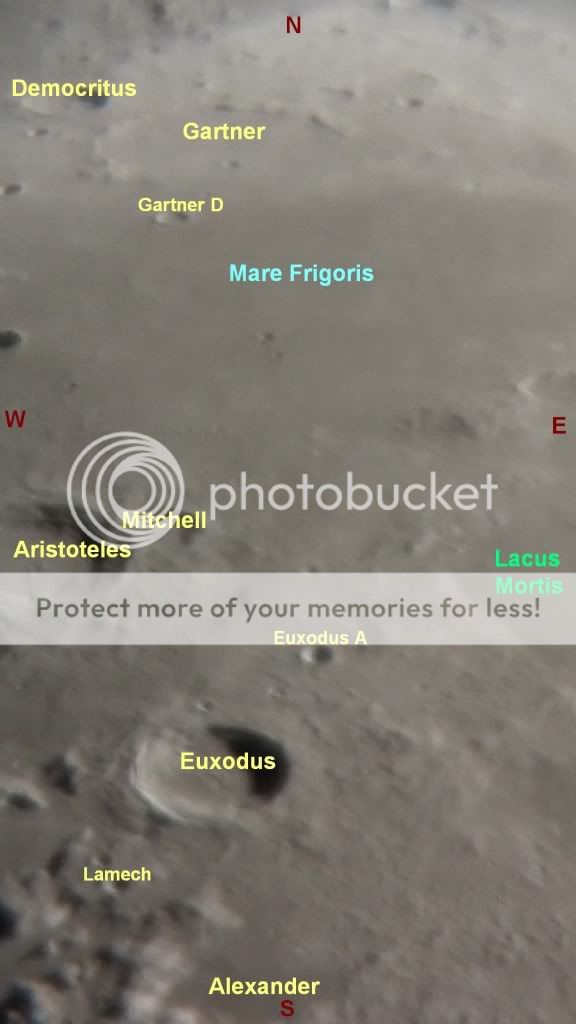
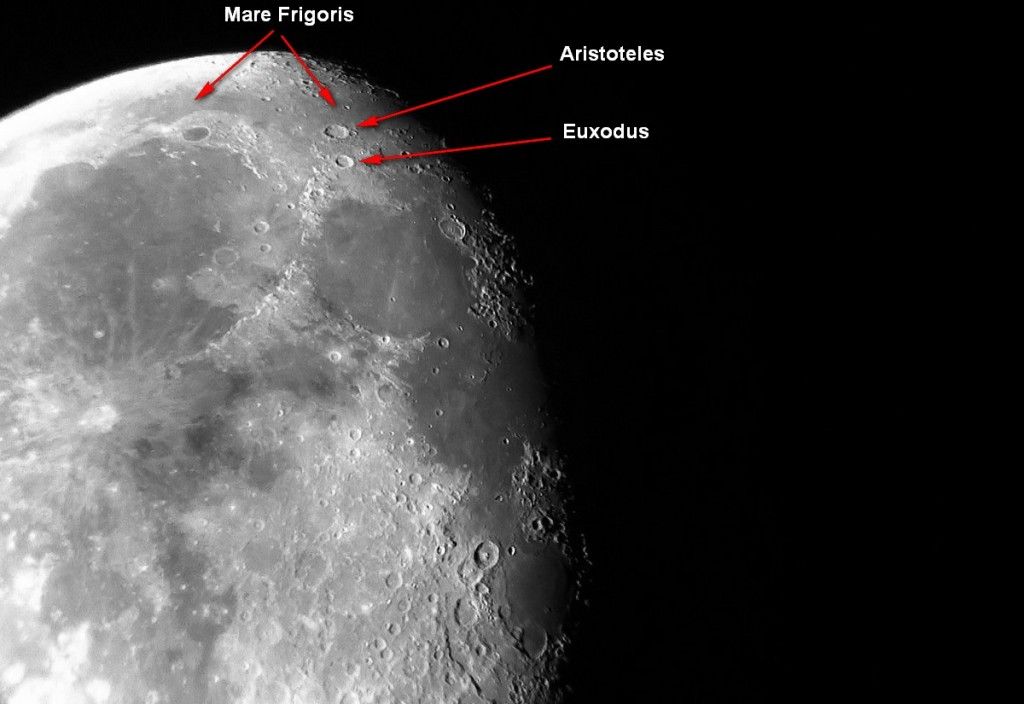
Aristoteles and Euxodus c
raters (87-67 km), are located in the northern hemisphere of the Moon. Above the two craters is Mare Frigoris. Mitchell (30 km) lies to the right of Aristoteles and they are close. Montes Caucasus starts from the south of Aristoteles crater and on south-west of this crater is Egede crater (37 km).
Mitchell (30 km), is a lunar crater named after Maria Mitchell, and is attached to the eastern edge of Aristoteles crater. Mitchell's floor is rough and irregular, with a small central rise. The west wall was completely absorbed by the edge of Aristotle.
Maria Mitchell (1.8.1818-28.6.1889) was an American woman astronomer who in 1847, using a telescope, discovered a comet which became known as "Miss Mitchell's Comet. "
Egede (37 km). is the remnant of a lunar crater that was flooded by lava, leaving only a
somewhat polygonal circumference protruding above the rim of the Mare. It is located at the south edge of Mare Frigoris and west of the crater Aristoteles. To the south are some low mountains forming an arc that curves between craters Aristoteles and Eudoxus. Egede's floor is flat and almost with
no characteristics. Surviving edge has a maximum altitude of 0.4 km above the surface.
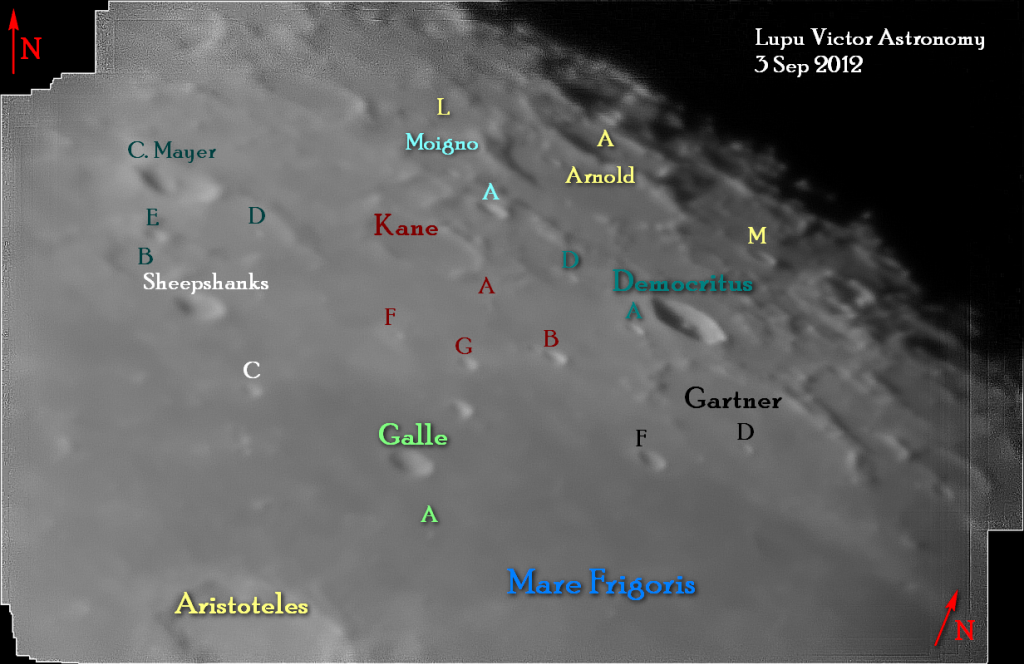
Above Mare Frigoris are Gärtner (102 km) and Democritus (39 km) craters.
Mare Frigoris (Sea of cold ) is an area located north of Mare Imbrium, and extends from the east of Mare Imbrium, to north of Mare Serenitatis . Mare Frigoris material around the north and east is from Imbrian era, and the material of the west is from Eratosthenian era .
Gartner (102 km) is the remnant of a lava flooded crater located in the north-east of the Moon. It is situated at the northern edge of Mare Frigoris. South half of the crater is completely missing, and form a semi-circular basin.The surviving part is heavily worn and eroded with notches formed by past impacts. The floor has several low elevation in the north. Gartner D (8 km), bowl-shaped, is located near the midpoint between the two ends of the crater rim. .
Name is given from Christian Gartner (1705 - 31 December 1782) which was known for making telescopes and he was a german astronomer, noted for observing the return of Comet Halley in 1758.
North of Gartner is Democritus crater.
Democritus (39 km), is an impact crater, which is located north of Mare Frigoris. South of Democritus is lava flooded crater Gartner.
Crater rim is generally angular and show little signs of erosion. It does not form a perfect circle with the outer edges giving it a slightly irregular shape. The interior walls have terraces that goes down to the interior floor that
is relatively flat. Near the middle of the floor is a small central peak.
Crater is the name given from Democritus (Greek: Δημόκριτος, Dēmokritos "the chosen of the people") (ca. 460 BC - about 370 BC) who was an ancient Greek philosopher born in Abdera, Thrace, Greece .
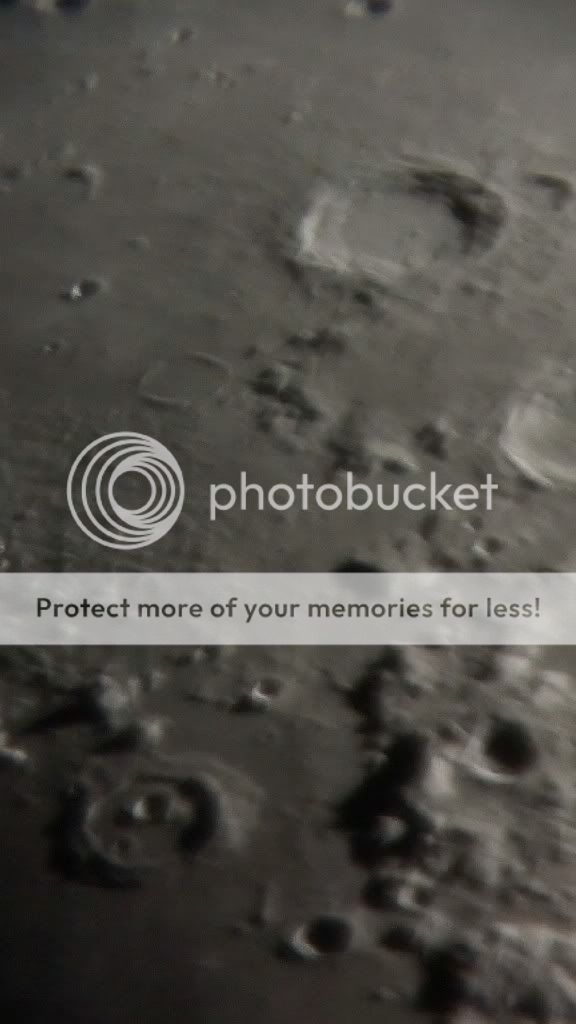
The image below is a video capture made on July 20, 2011.




 Wednesday, May 29, 2013
 Unknown