Visit Worldwide Topsites
Showing posts with label Craters-Messala and Geminus. Show all posts

Friday, 9 May 2014

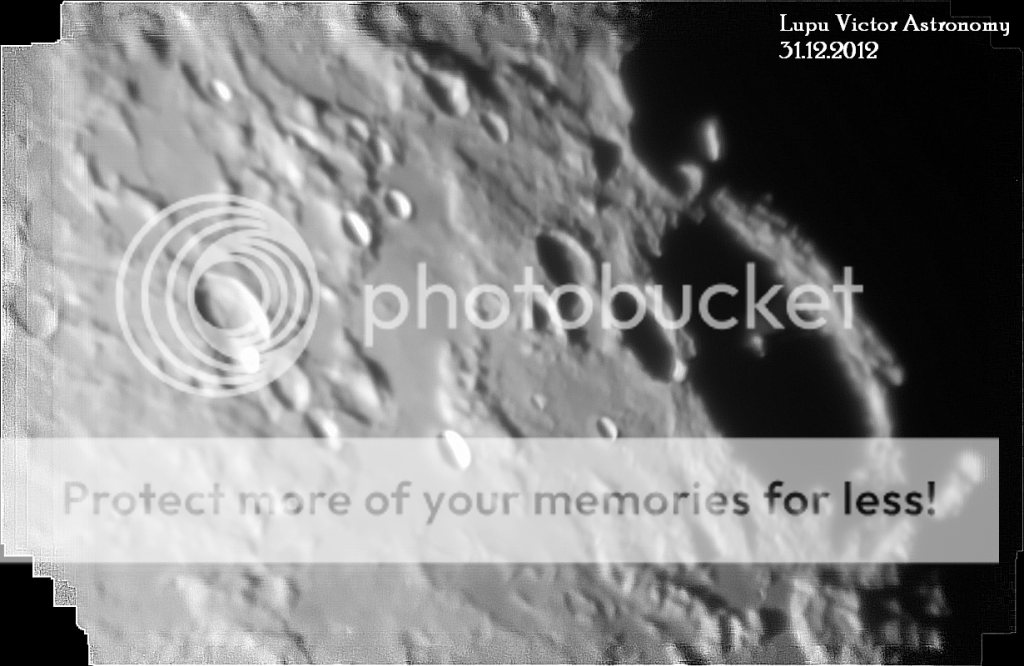
Moon craters: Franklin Cepheus and Geminus.


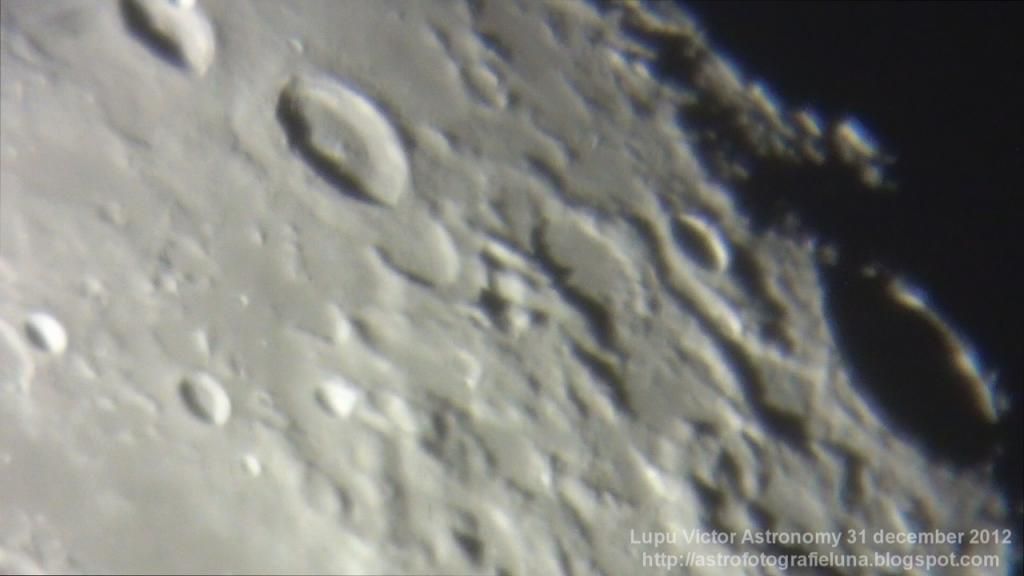
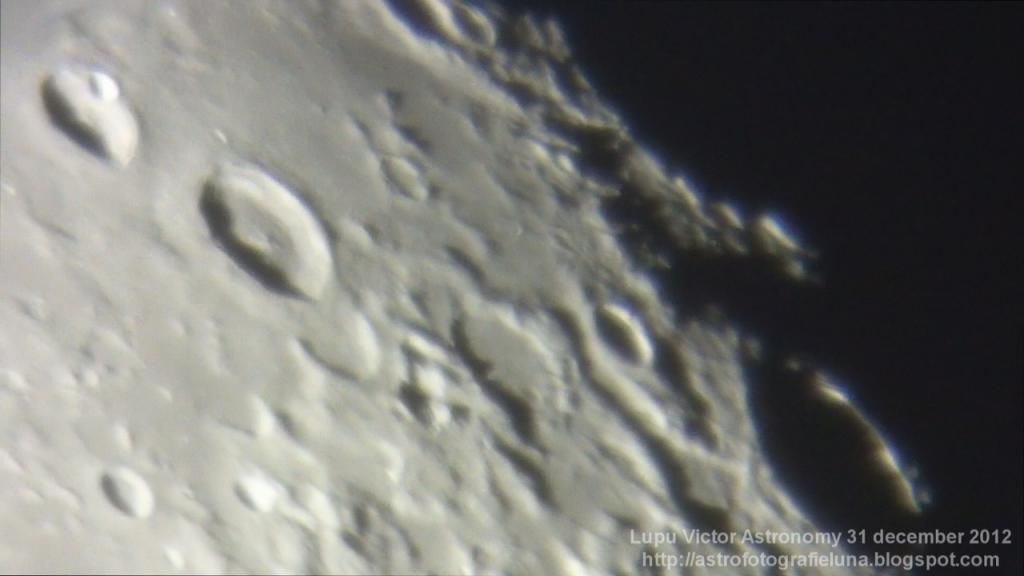
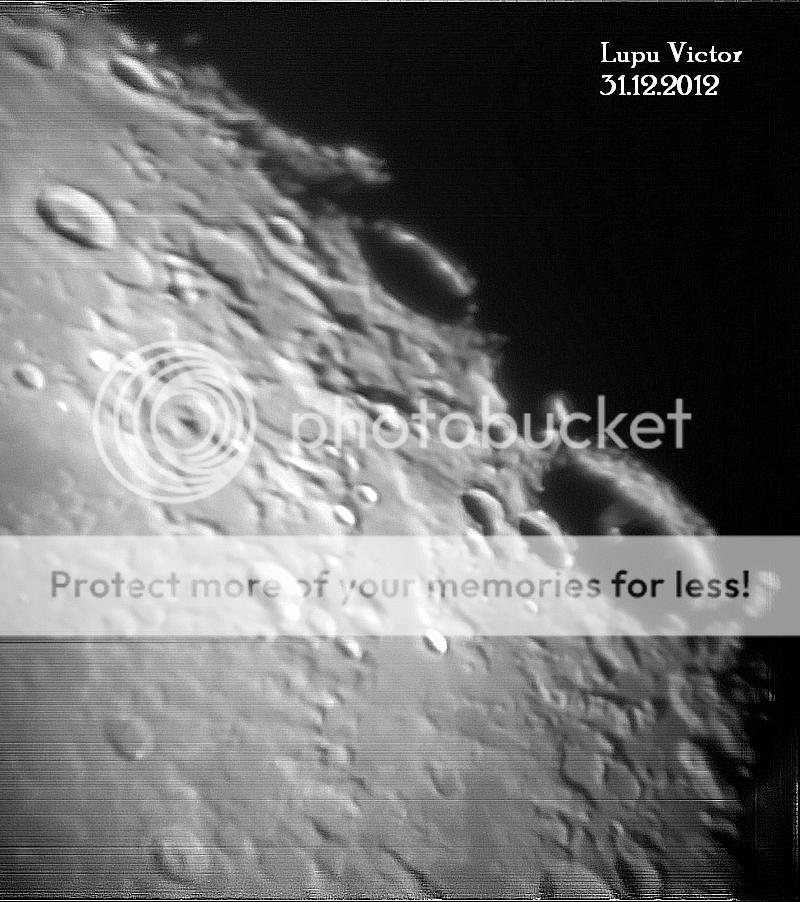
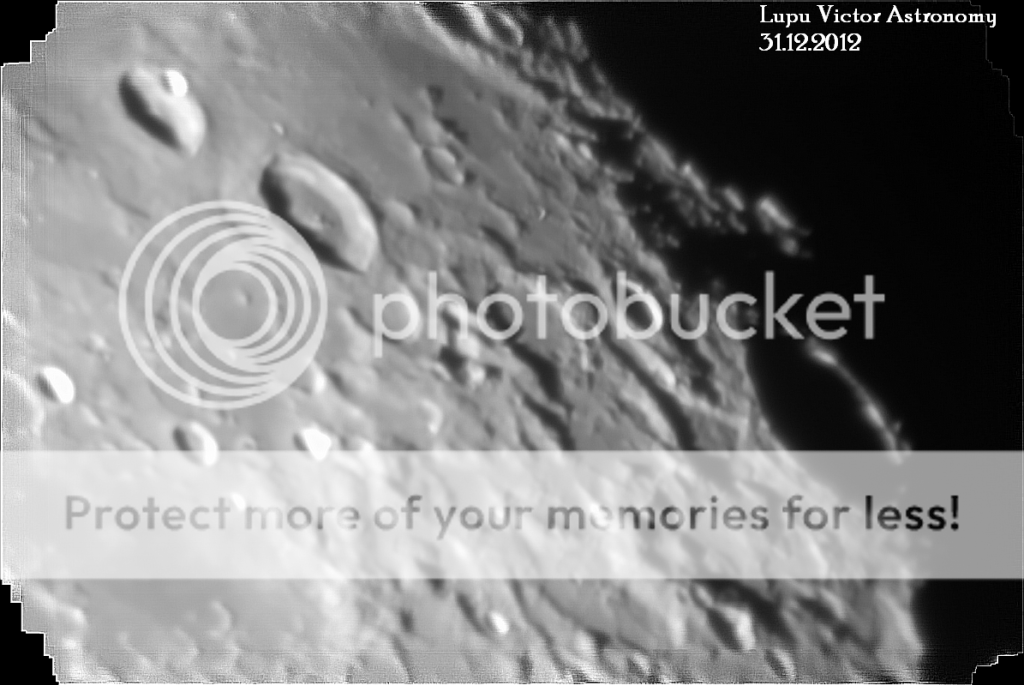
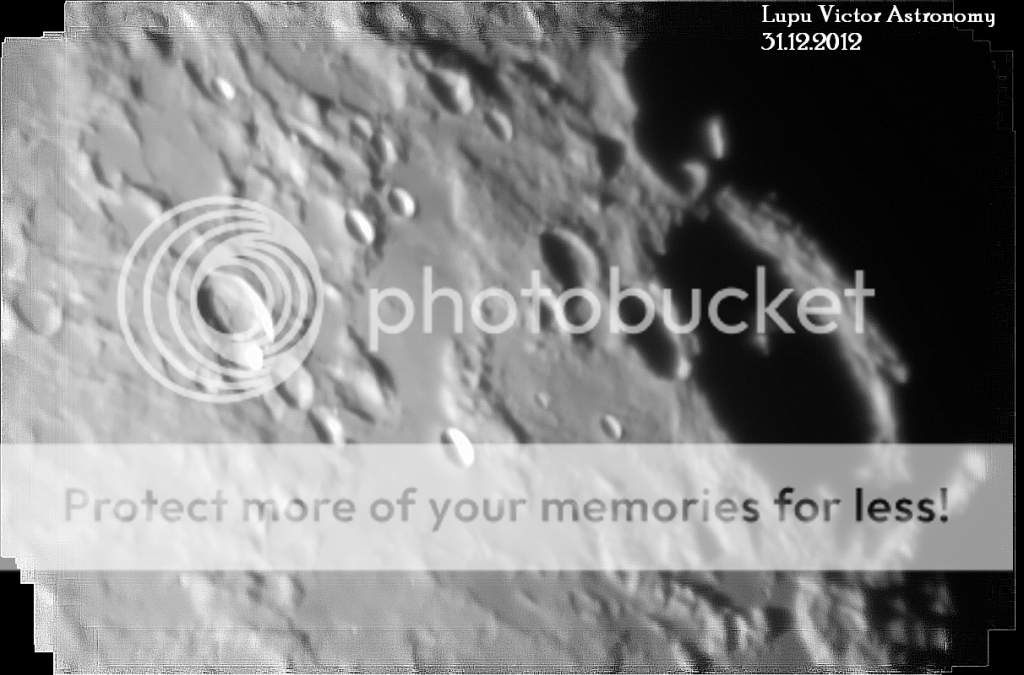
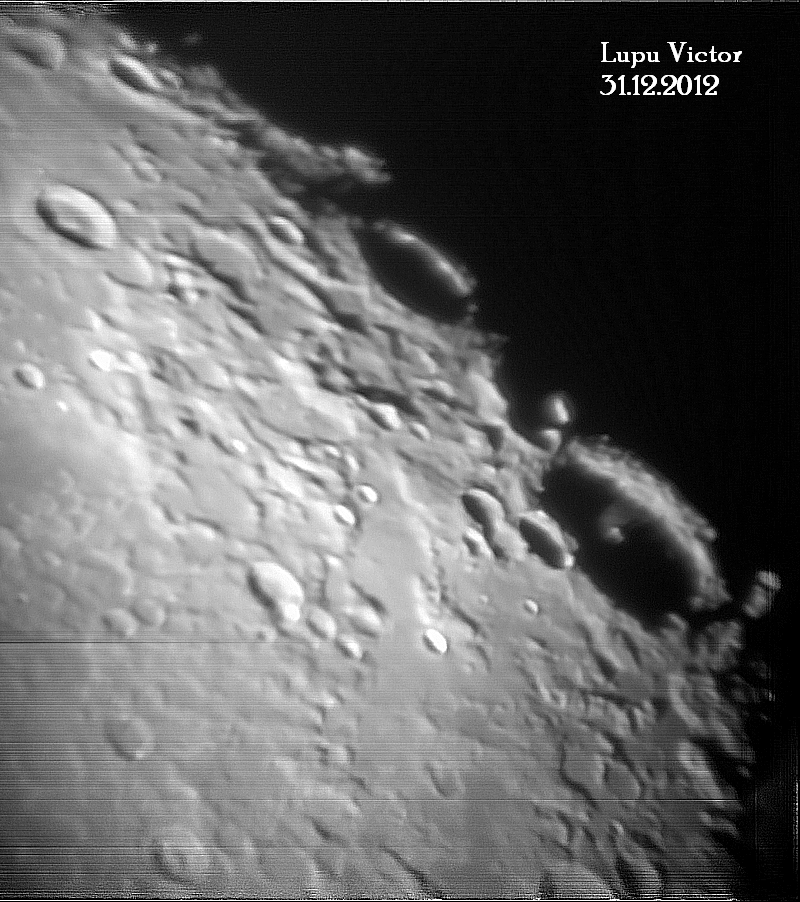
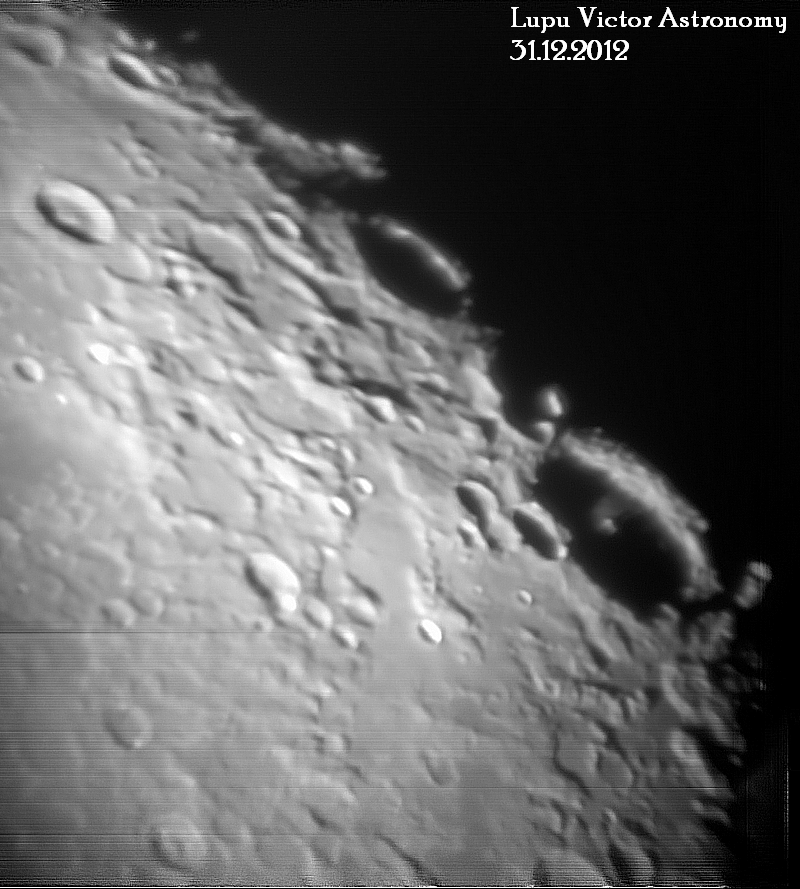
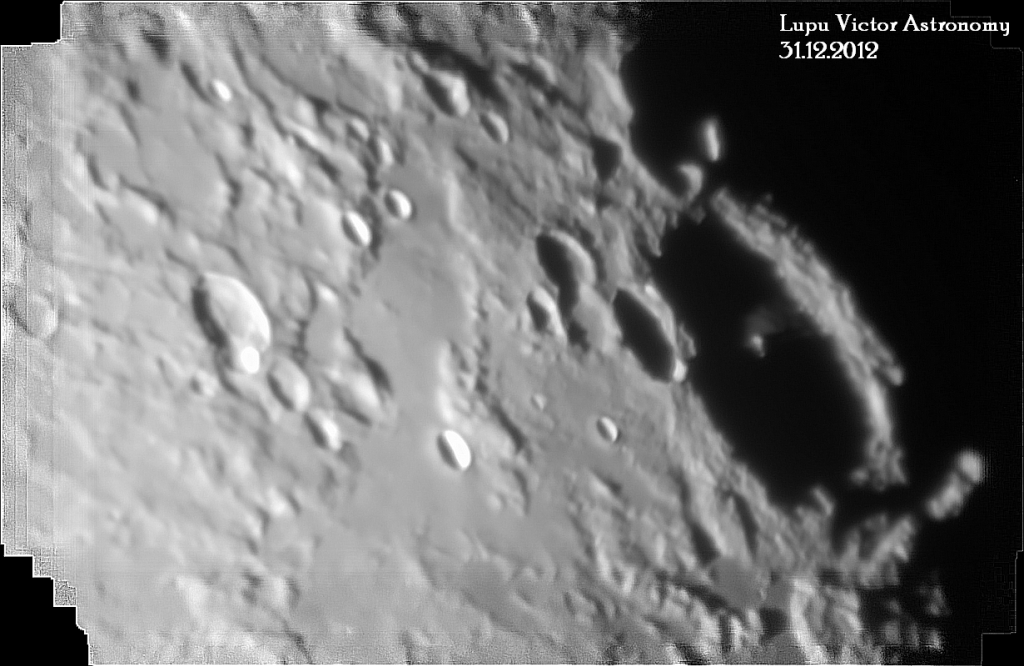
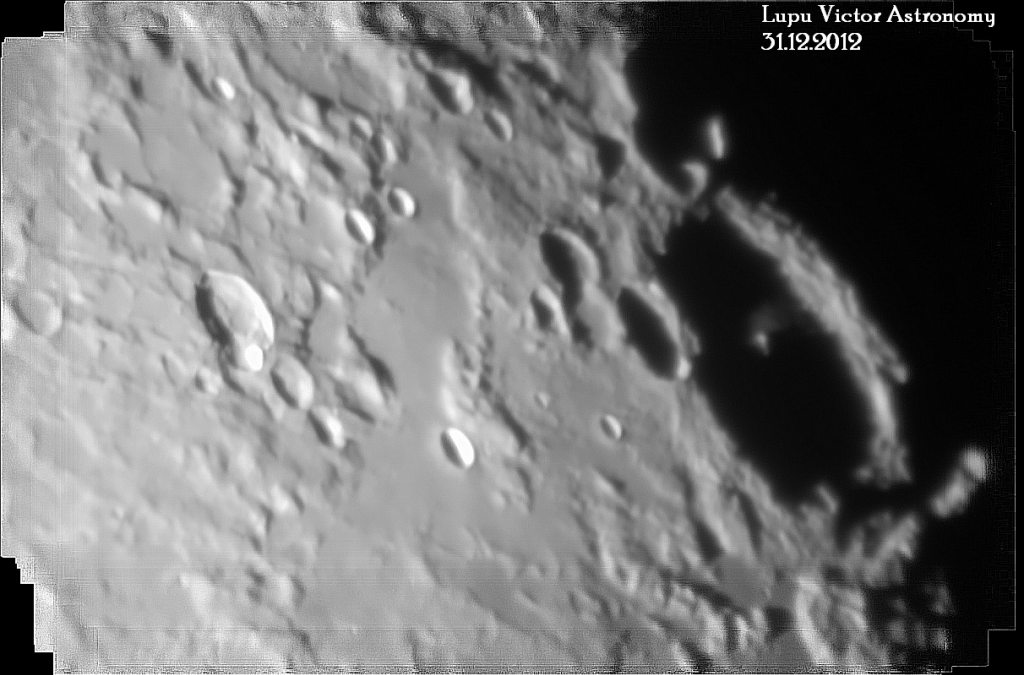
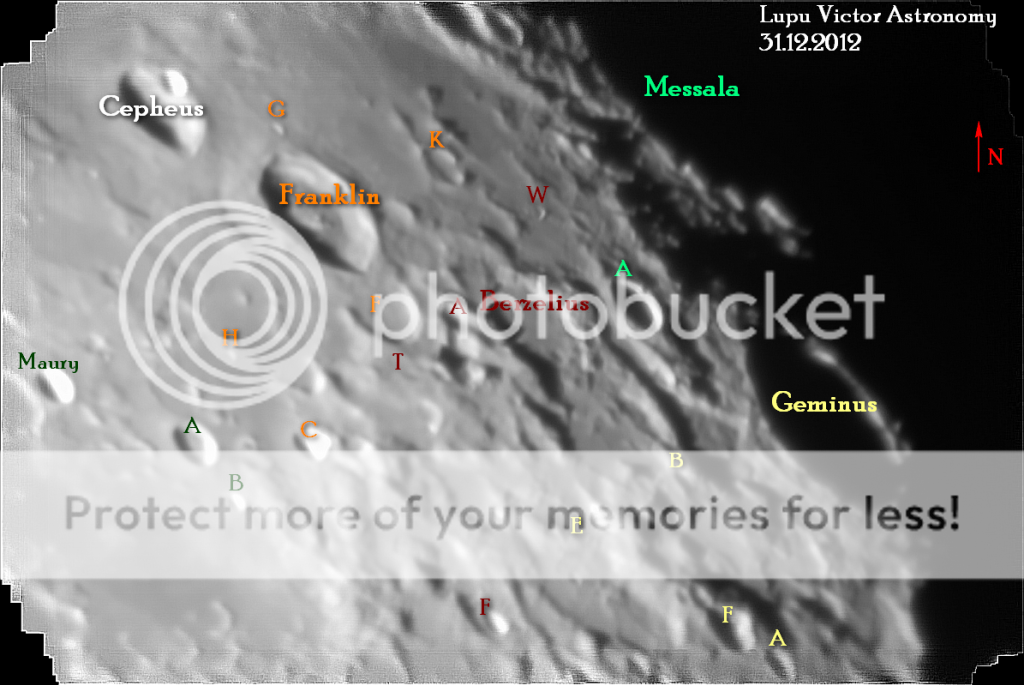
First of all, let me introduce you craters in this area: Cepheus, Franklin and Geminus (86 km). All are located on the northeast of the Moon, southeast of Hercules and Atlas.


About Geminus , we find him here in the shade, with the appearance of a "black hole", on which we distinguish only the outer edge. Franklin (56 km) on the other hand, we observe the peak of the center and the top edges of the flooded crater, Franklin F (38 km).


Cepheus (40 km), a smaller crater than those mentioned above, has a small satellite crater located on the eastern edge, Cepheus A (13 km).


Video of these images can be viewed here.


Age of the Moon: 17 days
Phase: 93% (0% = New, 100% = full)
Distance: 394.960 km


Optics: Celestron C8-Newtonian telescope, 20mm Plossl, 2x Barlow
Mount: CG5 (EQ5) motorized
Camera: Sony CX130
Filter: no
Date: 31/12/2012
Location: Baia Mare, Romania
Processing:  FastStone Image Viewer


Monday, 5 August 2013

Live Images Of The Moon In Stunning Detail Geminus and Franklin craters on the Moon

HD Video by astronomical telescope Lunar Craters Geminus and Franklin. To view the video from which I have extract these images, access , where you can find more information about the craters in the area.

Dark crater on the right is Geminus. The filmed region is one of the east of the Moon, north of Mare Crisium. The atmosphere was acceptable.


Video by Lupu Victor
Optics: CelestronC8 "-Newtonian telescope, plossl 20mm, 2x Barlow
Mount: CG5 (EQ5) motorized
Device: Sony CX-130
Video mode: Full HD progressive 1920x1080
Filter: no
Date: 31/12/2012
Location: Baia Mare, Romania
Processing and editing: Sony Vegas 10


Wednesday, 17 July 2013

Moon craters by astronomical telescope Geminus and Franklin

Cleomedes the terminal crater, 647 frames, 75% best quality in Registax


Crater GEMINUS and Franklin, 642 frames, 80% best quality in Registax


In these images, on the Moon's terminal on its east side, there are some pretty big craters in size, but are immersed in darkness. Crater Messala (124 km), lies north of Geminus. Its characteristics can not be observed being shrouded in shadow. Only the outer edge of the west is seen, hinting that there is a crater.

At Geminus (86 km), we can observe in the light only a little of its east inner edge.

Continuing westward (to the left of the image), craters begin to be away from the darkness, and we start from Berzelius (51 km), which has a flooded floor, and Franklin (56 km), with a mountanous floor and terraced inner edges. Cepheus (40 km), lies northwest of Franklin.

Images are processings in Registax of a video that have taken a various number of shots, merged to form a single image.

Age of the Moon: 17 days
Phase: 93% (0% = New, 100% = full)
Distance: 394.960 km


Optics: Celestron C8-Newtonian telescope, 20mm Plossl, 2x Barlow
Mount: CG5 (EQ5) motorized
Camera: Sony CX130
Filter: no
Date: 31/12/2012
Location: Baia Mare, Romania
Processing: Registax, FastStone Image Viewer


Friday, 28 June 2013

Crater Cleomedes at terminal. Telescope images processed in Registax


Cleomedes crater at terminal 647 frames at 75% best quality in Registax


Cleomedes crater at terminal 618 frames at 90% best quality in Registax


 Cleomedes crater at terminal 473 frames at 80% best quality in Registax


Moonscape of these pictures, captures Cleomedes crater (126 km), as I have not never seen it like that on this phase of the Moon. Where in total darkness begins, right there is not the edge of the Moon, but the terminal, the border between light and shadow.

Cleomedes, is also in darkness, but are visible many features that I have not seen before. Notice the eastern edge of the crater interior, with irregular terraces, and also the peak of the center, being lit only the top of it, peak which is surrounded by total darkness.


   Northwest of Cleomedes, are two cratersin the dark here, called Tralles (43 km) (who is "riding" on the edge of Cleomedes), and Debes (31 km) farther northwest. North of Cleomedes, notice Buckhardt crater (57 km), which overlaps Buckhardt E (39 km) is smaller, which remained only half a crater.


Further up north (in the first two pictures in the article) is another dark "pit" situated at the terminal. This is Geminus (86 km), a circular crater with beautiful terraced inner edges.


In the center of photos, notice a vertical line as a smooth plateau with irregular shape, which I guess is an extension of Lacus Bonitatis, located in the bottom of images. On the left in the picture, notice a crater though not large in size, stands out among other small craters. This is called Newcomb (39 km), and to its south is Newcomb J (23 km). Newcomb's floor is very mountainous. On the floor, stuck on the southern edge, is Newcomb A (19 km), a small but deep crater.


Images are Registax processings of a video that have taken a variety of frames, at several levels of quality, merged to form a single image.

If the the images are broken, see them on these links :

http://i1215.photobucket.com/albums/cc517/lupuvictor1/Registax%20pictures/31122012n647fr75sugausa_zps558b2b89.png

http://i1215.photobucket.com/albums/cc517/lupuvictor1/Registax%20pictures/31122012n647fr75sugauss_zps00ce4f4c.png

http://i1215.photobucket.com/albums/cc517/lupuvictor1/Registax%20pictures/31122012g618fr90su_zps1aa1d49b.png

http://i1215.photobucket.com/albums/cc517/lupuvictor1/Registax%20pictures/31122012g473fr80sugauss_zps6aa6ed3e.png

Age of the Moon: 17 days
Phase: 93% (0% = New, 100% = full)
Distance: 394.960 km


Optics: Celestron C8-Newtonian telescope, 20mm Plossl, 2x Barlow
Mount: CG5 (EQ5) motorized
Camera: Sony CX130
Filter: no
Date: 31/12/2012
Location: Baia Mare, Romania
Processing: Registax, FastStone Image Viewer


Friday, 31 May 2013

Video by astronomical telescope, Moon east craters.

This area was more complicated for me. Moon Phase at this time, has made this area to be unrecognizable because of the angle at which sunlight shone, so I did not know how to locate the region.

It seems that in the video is an eastern region of the Moon, from northwest of Crisium basin. Seems to be a very high and mountainous region, but this is due to the Moon phase.

 Image is upside down. In the center-top video is Newcomb crater (39 km) and on the left, to the terminal, we observe a mountainous area. Many craters in this video are hidden by shadows, though distorted, but there are for sure Geminus's satellite craters (86 km), which is in shadow. We can observe also Berzelius crater (51 km) and its many satellite craters as well.


Optics: CelestronC8 "-Newtonian telescope, plossl20mm, 2x Barlow
Mount: CG5 (EQ5)
Device: Sony CX-130
Video mode: Full HD progressive 1920x1080
Filter: no
Date: 03/09/2012
Location: Baia Mare, Romania
Processing and editing: Sony Vegas 10

Sunday, 15 January 2012

Digital astronomy: Video Cleomedes lunar crater by telescope.

Video images of the lunar crater Cleomedes on the east of the Moon through the telescope, are somewhere on here. The images were stabilized, and the athmosphere quality was acceptable.
Cleomedes is a crater wich have a shovel shape. It has this form because of its position on the Moon seen from Earth. But it has a nearly circular shape.
Above Cleomedes is Burckhardt (57 km), smaller, and Geminus (86 km), bigger. In the southern extension of Cleomedes is Mare Crisium. Last crater that appears at the top of the clip is Messala (124 km).


Cleomedes crater lunar crater by telescope
Video: Victor Lupu
Optics: CelestronC8 "-Newtonian telescope, plossl20mm, 2x Barlow
Mount: CG5 (EQ5)
Device: SonyCX105 at 7x optical zoom
Total Magnification: 700x
Filter: no
Date: 16/08/2011
Location: Baia Mare, Romania
Processing and editing: Sony Vegas 10

 
All images are © Copyright 2010-2015 Lupu Victor. All rights reserved.Images may not be reproduced, published, or copied in any form without written permission of the author. Thank you for respecting the intellectual property rights. ASTROFOTOGRAFIA | Lupu Victor Astronomy - Contact - About
Design by Free WordPress Themes | Bloggerized by Lasantha - Premium Blogger Themes | Online Project management