Visit Worldwide Topsites
Showing posts with label Craters-Scoresby. Show all posts

Thursday, 15 May 2014

Astronomical telescope video captures of lunar craters: Goldschmidt and Anaxagoras


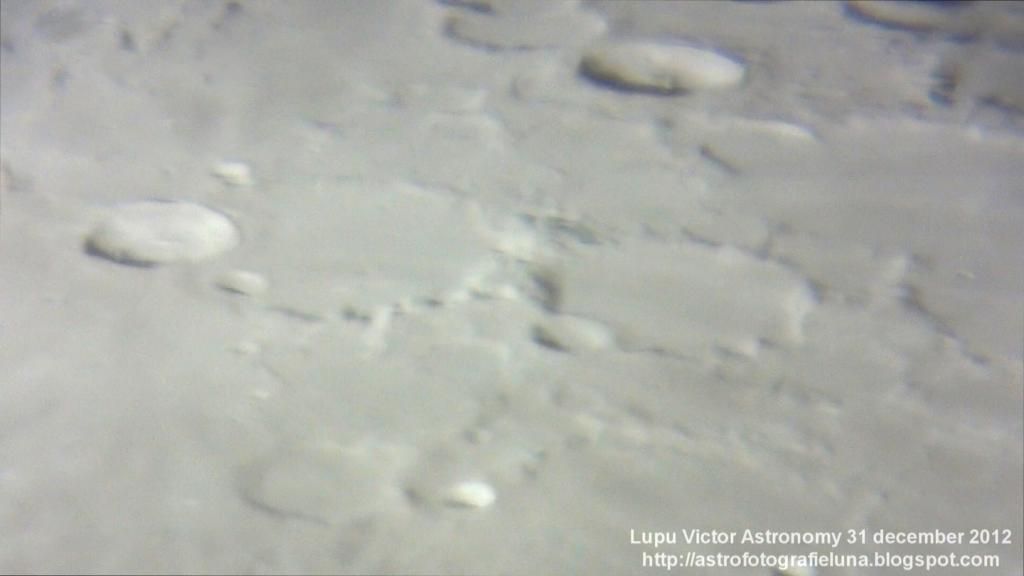
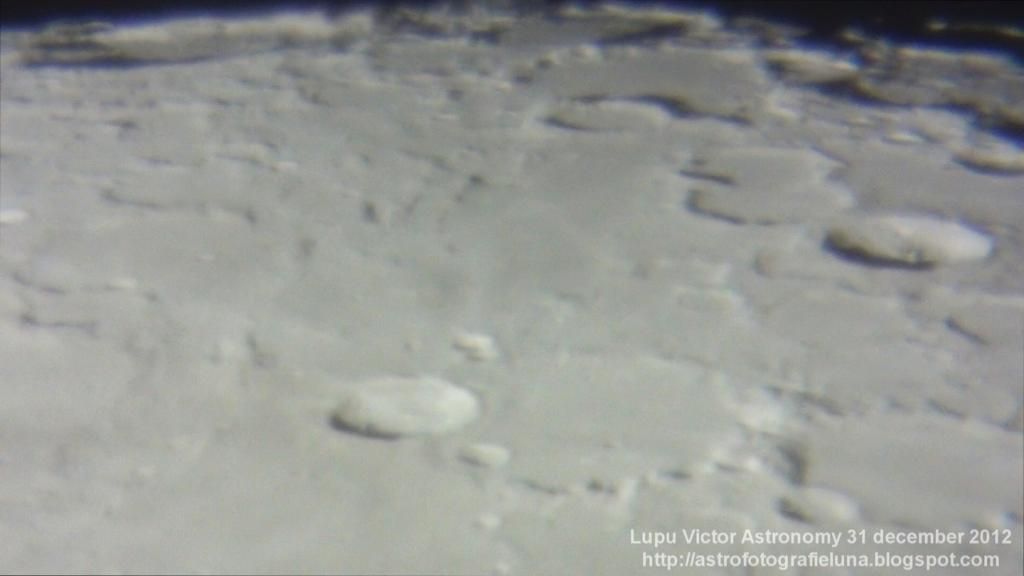
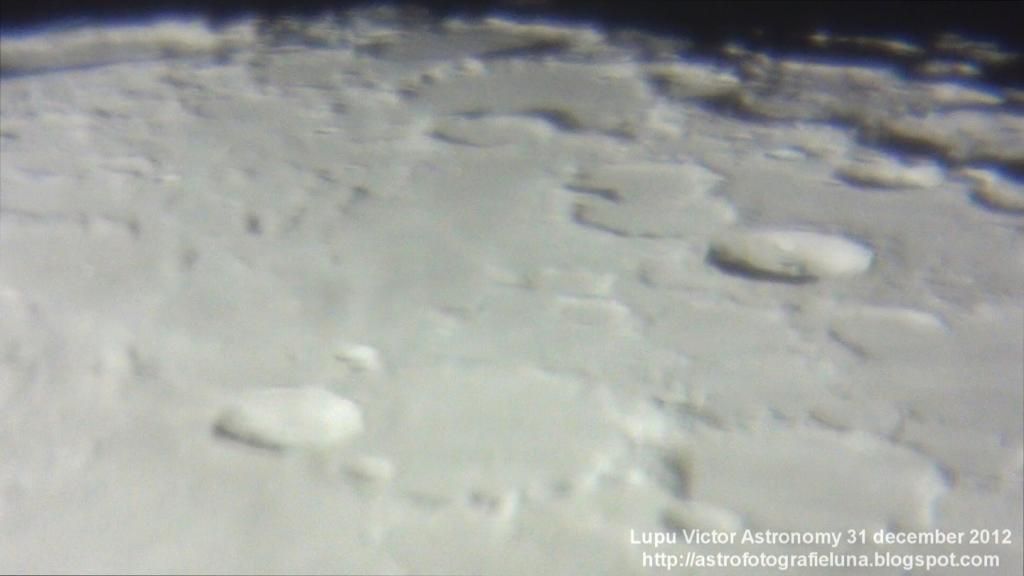
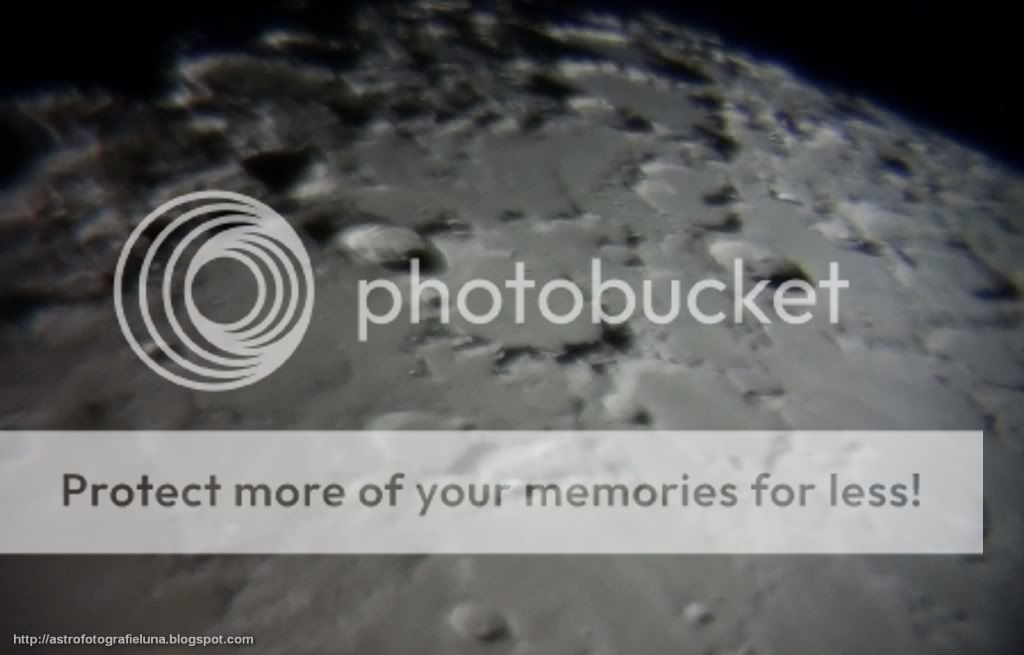
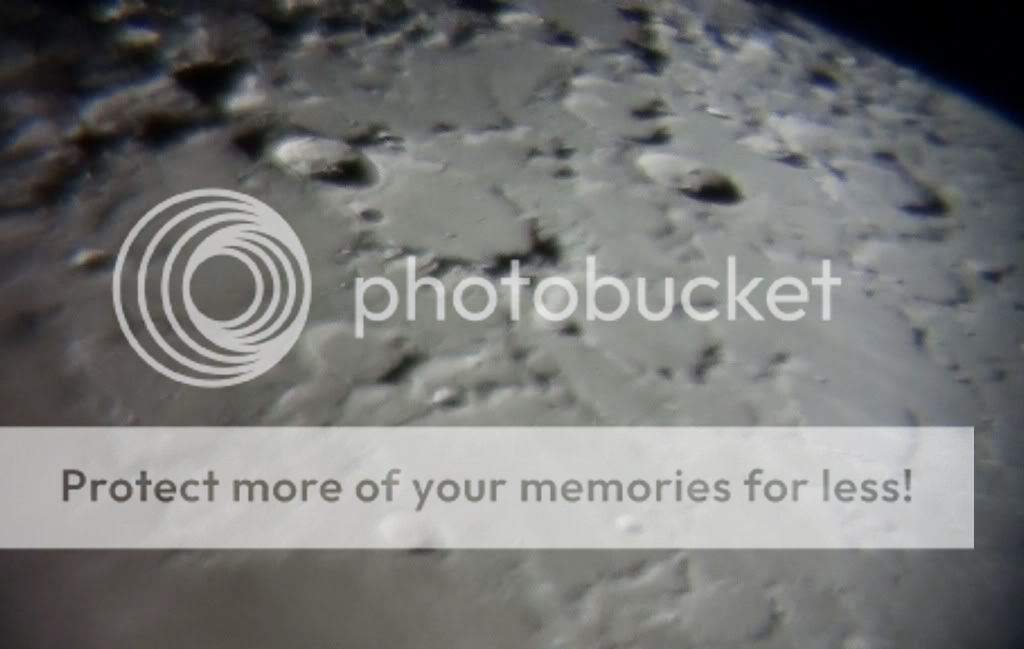
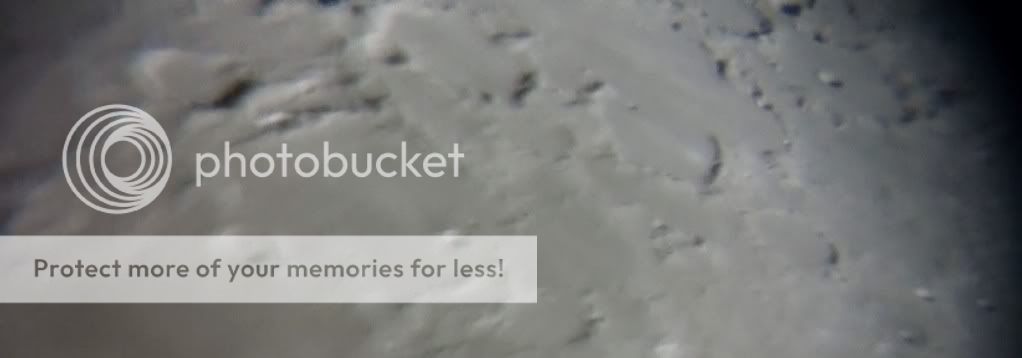
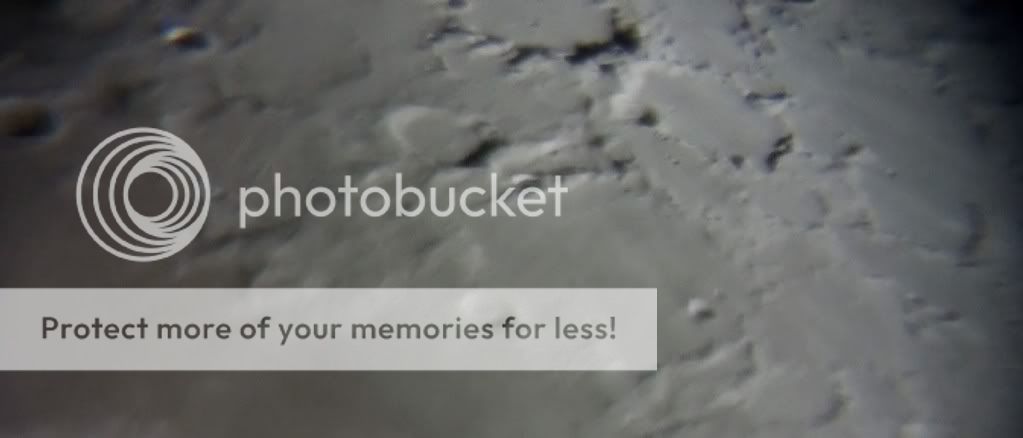
Here is the area north of the Moon with well known craters like Goldschmidt and Anaxagoras (120/51 km) in most images located in the center, and Scoresby (56 km).

Is the "quiet" side of the Moon, not like southern emisphere that is heavily bombed and diverse. Nothing new in this lunar phase. I got this landscape in a similar light on other times. However, this area remains of particular interest to me in observing through my astronomical telescope.

Age of the Moon: 17 days
Phase: 93% (0% = New, 100% = full)
Distance: 394.960 km


Optics: Celestron C8-Newtonian telescope, 20mm Plossl, 2x Barlow
Mount: CG5 (EQ5) motorized
Camera: Sony CX130
Filter: no
Date: 31/12/2012
Location: Baia Mare, Romania
Processing:  FastStone Image Viewer


Image above is made on April 13, 2011.


Thursday, 25 July 2013

Goldschmidt lunar crater by telescope (Registax)

Goldschmidt crater, 22 frames, at 90% best quality in Registax.

Goldschmidt crater, 2 frames, at 100% best quality in Registax


Goldschmidt crater4 frames, at 90% best quality in Registax


Goldschmidt crater, 22 frames, at 90% best quality in Registax.
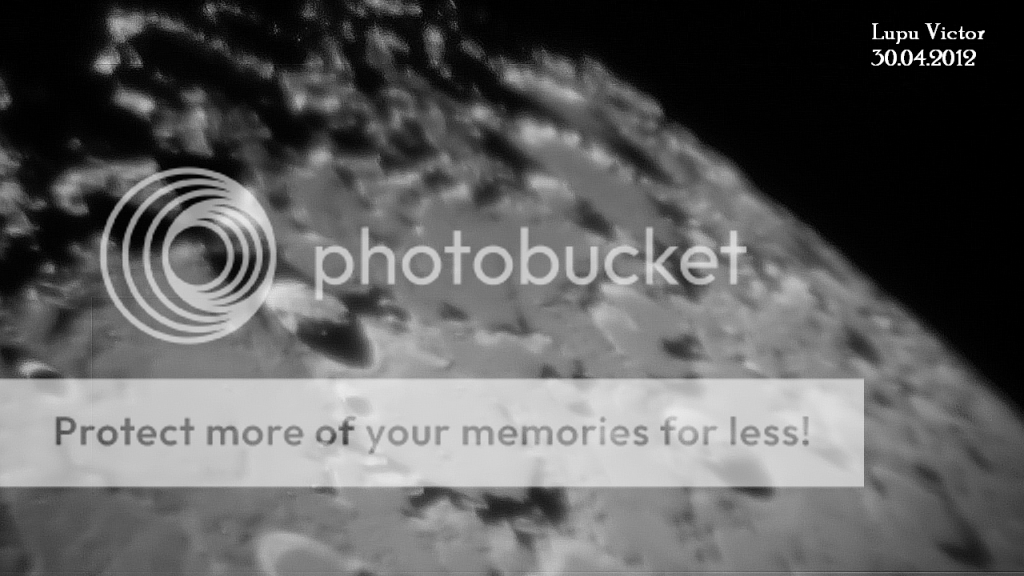
Goldschmidt (120 km) is part of the northern lunar craters. It has a nice edge, especially the laced south wall, which is waved, and has a depth of 2 km.

This crater eponymous is Hermann Goldschmidt is known for the discovery of the asteroid Lutetia. It was both astronomer and painter, born in Germany in the 18th century, but the rest part of his life he spent in France.

Anaxagoras (51 km) is attached to Goldschmidt, in the west of it. It doesn't look like the one we've discussed earlier, having a circular shape, sharp edges and a floor full of rugged mountain ranges, with a depth of 3 km. Its floor can not be seen in these images, because is covered by shadow, but we can see the inside western wall in the sunlight.

   Due to the phases of the Moon, in these photoswe  do not notice the ray system that starts from Anaxagoras, but when the Moon it's full, it becomes very prominent. It spans at a great distance around it, 900 km, reaching the crater Plato (101 km), to the south. For the albedo radiation is intense, we indicate that Anaxagoras crater is young.

Images are processings from Registax, of a video from which were taken a variety of shots, merged to form a single image.

Age of the Moon8 days
Phase: 59% (0% = New, 100% = full)
Distance: 381,110 km


Optics: Celestron C8-Newtonian telescope, 20mm Plossl, 2x Barlow
Mount: CG5 (EQ5) motorized
Camera: Sony CX130
Filter: no
Date: 30/04/2012
Location: Baia Mare, Romania
Processing: Registax, FastStone Image Viewer


Image above is made on April 13, 2011.


Sunday, 21 July 2013

HD Video by astronomical telescope Crater Meton on the Moon

The video presented here refers to another article Amazing detail of Crater Meton Pictures of Moon, in which I have presented images extracted from the video in Registax.
 Clarity of the atmosphere was quite acceptable on the day before New Year, but it was very cold, only managing to stay out for a few moments with hot tea in my thermos, but the wind was quite strong especially between the blocks where the wind is more powerful.

Video below, is focused on the north side of the Moon, ie the crater Meton, over which it is observed that some albedo rays traversing. These rays come from the new crater, Anaxagoras (51 km), the ejection being scattered over a large part of the region.
The image is inverted, upside down, as seen through a telescope.

Meton (122 km), which is a crater observed skew from Earth through a telescope due to its northern position of the Moon, and is easily distinguished due to its flower shape like petals. Actually it consists of several craters that were united by lava in the past.

On the first impression is about five craters, but we can not know how many others were in the central area under the hardened lava.

Meton has neighbors many craters: northwest is Scoresby (56 km), northwest Euctemon (62 km), southeast Neison (53 km), south C. Mayer (38 km), and to the west is the crater Barrow (93 km).

In some moments, according to Moon libration, the crater is seen better, so that is not oval, but inclined towards the observer, and thus its characteristics are distinguished better.

The western part of Meton is irregular, its edge being interrupted here and there, and the floor in general is riddled with countless other small craters, which are distinguished only by an 8-inch telescope.

Age of the Moon: 17 days
Phase: 93% (0% = New, 100% = full)
Distance: 396.848 km


Video by Lupu Victor
Optics: CelestronC8 "-Newtonian telescope, plossl 20mm, 2x Barlow
Mount: CG5 (EQ5) motorized
Device: Sony CX-130
Video mode: Full HD progressive 1920x1080
Filter: no
Date: 31/12/2012
Location: Baia Mare, Romania
Processing and editing: Sony Vegas 10


Friday, 19 July 2013

Amazing detail of Crater Meton Pictures of Moon

Crater Meton2 frames at 100% best quality


Crater Meton, 186 frames at 90% best quality


I find this area as one of the "quietly" areas on the Moon, although it is full of craters. Most of them were flooded by lava in the past, leaving only the upper parts of their walls visible. For this reason, no crater here has their mountain peaks in the center as in other areas of the moon.

Observe the clover shaped crater in the center of images, because it has several lava-flooded craters rings. This is the crater Meton (122 km), and "leaves" are named in counterclockwise direction: Meton C, D, E and F. As a distinguishing feature of Meton C, see a small whitish spot on its floor, in the center of which is a tiny crater, but it is noticed due to the lighter ejection of material.

Meton, takes its name from Meton of Athens, who lived in the 5th century BC. He was a Greek mathematician, astronomer and engineer.

Scoresby crater (56 km) is located northwest of Meton. Other craters visible in images: Barrow (93 km), Challis (56 km) and Main (46 km), Euctemon (62 km), Nelson (53 km), Baillaud (90 km), C. Mayer (38 km) and Moigno (37 km).

Image processing in Registax of a video that have taken 186 shots, merged to form a single image.


Age of the Moon: 17 days
Phase: 93% (0% = New, 100% = full)
Distance: 394.960 km


Optics: Celestron C8-Newtonian telescope, 20mm Plossl, 2x Barlow
Mount: CG5 (EQ5) motorized
Camera: Sony CX130
Filter: no
Date: 31/12/2012
Location: Baia Mare, Romania
Processing: Registax, FastStone Image Viewer


Thursday, 8 September 2011

Scoresby crater-Moon crater images through telescope

In the photo above, the crater that is completely under the shadow,is Philolaus, which has an area of 71 km. (click on link to see it in light). Mouchez crater of 82 km, is the right of Philolaus.

        About crater Scoresby (56 km), I have not talked, but I mentioned it in other articles, but now I've captured it when the Moon is inclined forward, which makes the crater floor to be more visible.
Scoresby is a Moon impact crater located on the north side. Crater is nearly attached to Challis (56 km) along the northwestern edge (crater Main-56 km, is united with Challis to the north), and is located just north of Meton crater (122 km). Because of its location, this crater appears oval when viewed from Earth, appearing in elliptical shape. It is, however, very circular when seen on top of it.
Scoresby has a depth of 2.4 km, and has an outer wall with sharp edges. It is not marked by other impacts.
Inside is a prominent central peak formation consisting of three mountainous ridges, visible in the photos above.
Other craters in the images below are Goldschmidt and Anaxagoras, W. Bond, Epigenes, and bottom  begins Mare Frigoris.


Photographer: Victor Lupu
Optics: Celestron C8-Newtonian telescope, plossl 20mm, 2x Barlow
Mount: CG5 (EQ5)
Device: Sony CX105 at 7x optical zoom
Total magnification: 700x
Filter: No
Date: 12/05/2011
Location: Baia Mare, Romania
Processing: Sony Vegas 10, video captures

 
All images are © Copyright 2010-2015 Lupu Victor. All rights reserved.Images may not be reproduced, published, or copied in any form without written permission of the author. Thank you for respecting the intellectual property rights. ASTROFOTOGRAFIA | Lupu Victor Astronomy - Contact - About
Design by Free WordPress Themes | Bloggerized by Lasantha - Premium Blogger Themes | Online Project management