Visit Worldwide Topsites
Showing posts with label Craters-Strabo and Thales. Show all posts

Tuesday, 26 July 2016

Thales and Strabo lunar craters

The largest part of this image occupies the eastern Mare Frigoris embodied in darker stain in the lower half of it. The edge of the moon begins higher ground and we distinguish some craters such as Thales (32 km) and Strabo (55 km).
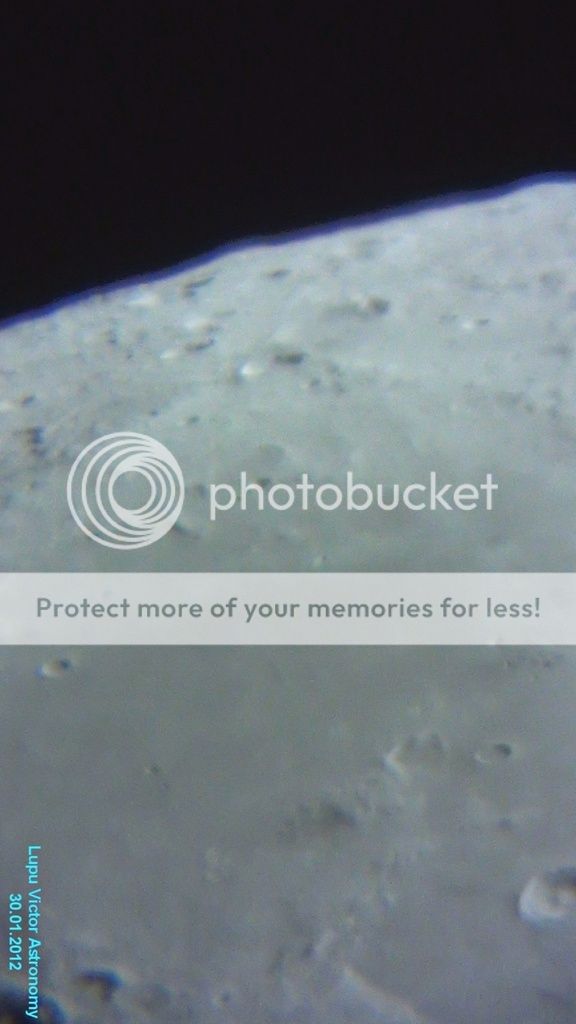
Magnitude: -10.82
Phase: 0.46
Distance: 399.283 km
Illuminated: 45.6% (0% = New, 100% = Full)


Astronomical instrument: Celestron C8-Newtonian telescope,
Eyepiece: Plossl 20mm, 2x Barlow
Mount: CG5 (EQ5)
Camera: Sony CX130
Filter: no
Date: 30.01.2012
Location: Baia Mare, Romania
Processing: FastStone Image Viewer


In the picture below are labeled craters and other lunar features in the region. To better understand this photo, you should note that the label with the name or the letter of larger craters could be found at their center, and on the small craters, you should find them around them, usually above.
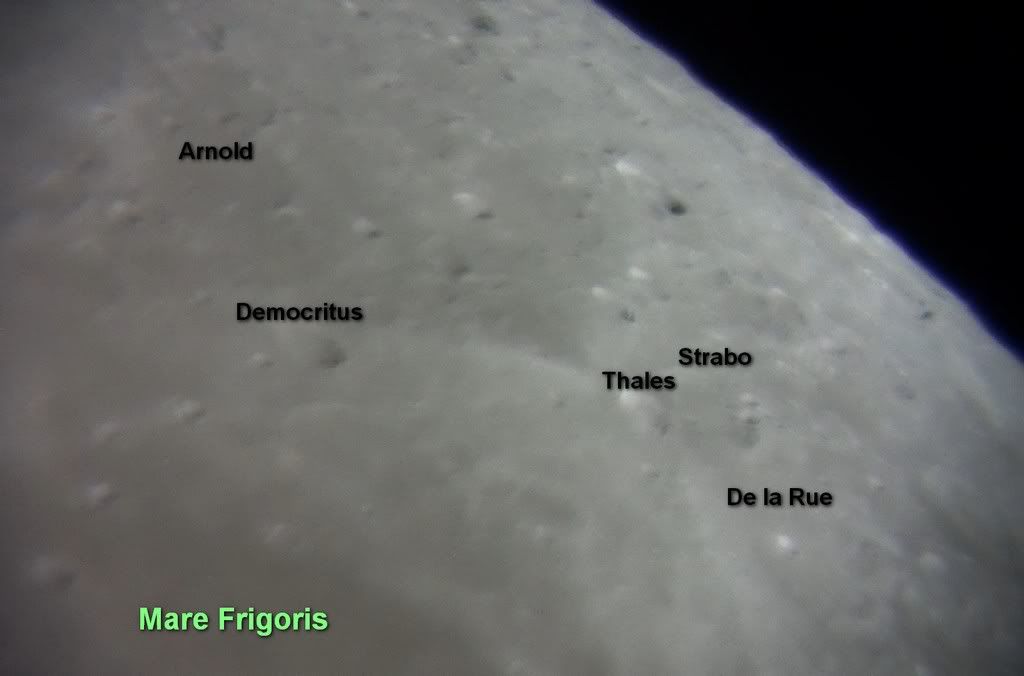
Date: 12.05.2011

Thursday, 24 July 2014

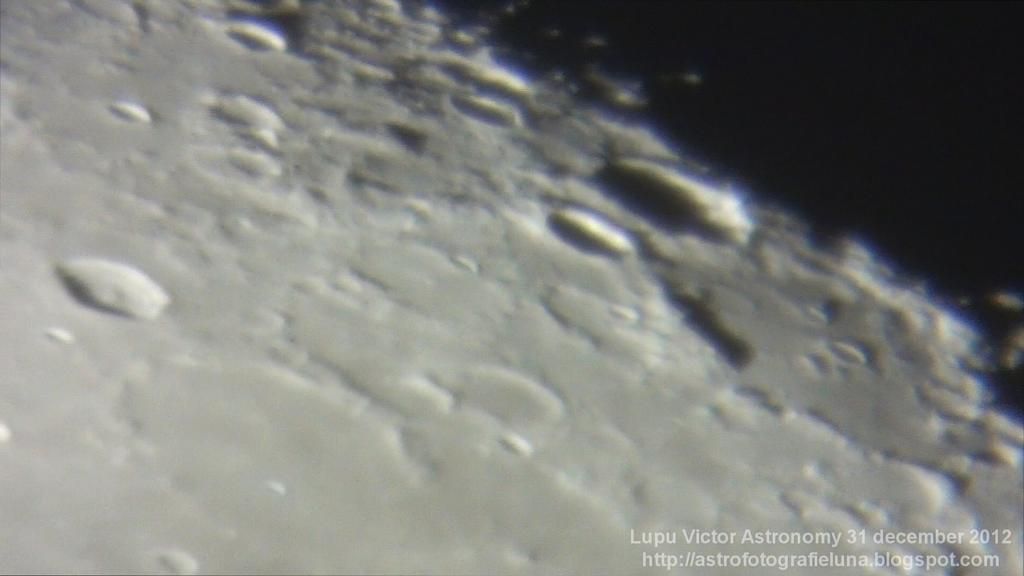
De La Rue and Strabo craters on the Moon.


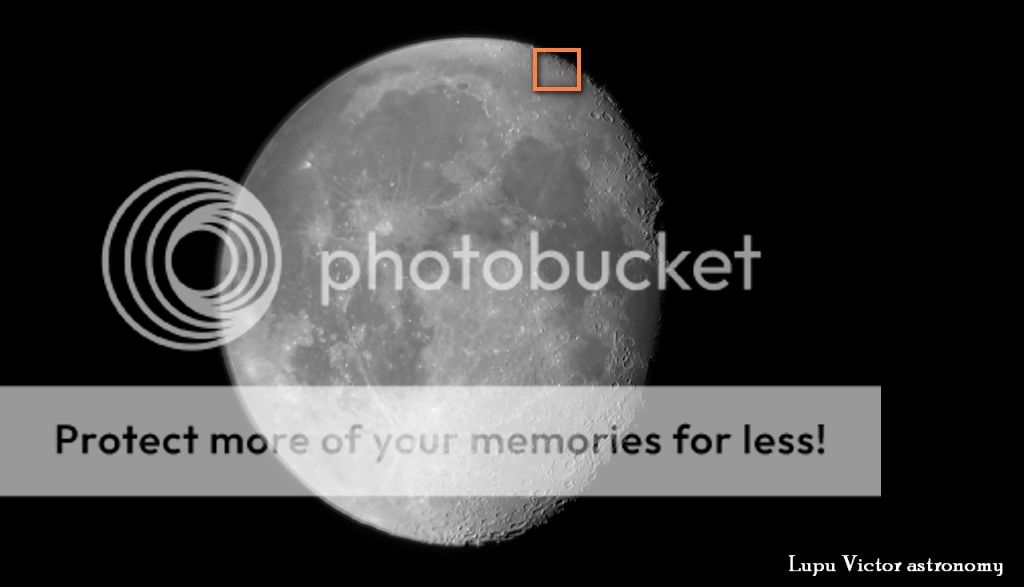
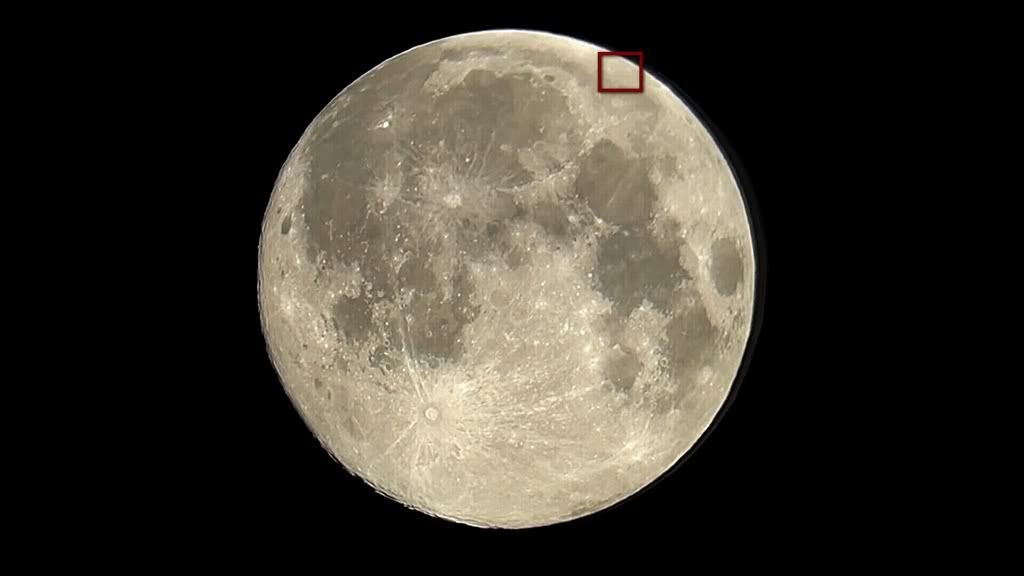
Observed in these images a little north-east of the Moon. In the center is a crater that we rarely discussed until now, namely De La Rue (136 km). It does not appear to be circular, but this is due to the phase that gives this aspect. However, the southwest wall is entirely absent, but continues down the west side, looking like an extension.

Its edge is very destroyed. On the floor, there are three small but distinct satellite craters. One is isolated and larger, called De La Rue J (14 km), and the other two are joined, located on the eastern floor.

Northeast of De La Rue, is the crater Strabo (55 km), now flooded by darkness and northwest is Thales (32 km).

It is difficult to see De La Rue with binoculars, although it is not small, but this is due to the position on the Moon, and because it is a crater edge affected, even destroyed, which makes it the best to be located through an astronomical telescope.


Age Moon: 17 days
Phase: 93% (0% = New, 100% = full)
Distance: 394.960 km


Optics: Celestron C8-Newtonian telescope, 20mm Plossl, 2x barlow
Mount: CG5 (EQ5)
Camera: Sony CX130
Filter: no
Date: 31/12/2012
Location: Baia Mare, Romania
Processing: FastStone Image Viewer


Thursday, 1 December 2011

Craters Strabo and Thales-astronomical images

Photographer: Victor Lupu
Optics: Celestron C8-Newtonian telescope, plossl 20mm, 2x Barlow
Mount: CG5 (EQ5)
Device: Sony CX105 at 8x optical zoom
Total Magnification: 800x
Filter: no
Date: 12/05/2011
Location: Baia Mare, Romania
Processing: Sony Vegas 10 video captures


         Strabo (55 km), is a lunar crater that is located near the northeastern edge of the Moon. At this angle the crater appears oval due to its position. It is attached to the northern edge of De La Rue (136 km). On the west is the smaller crater Thales (32 km) and on north is a chain of three similar craters called Strabo L, Strabo B, and Strabo N.

 Inner edge of, Strabo is terraced, with a small crater along the east wall. The interior has been flooded by lava in the past and is now relatively flat. The crater has a depth of 3.8 km.

         Thales (32 km) has a ray system that extends over 600 kilometers. An area northwest of the crater has no rays, indicating that the crater could be formed by a low-angle impact from this direction.
The interior wall has several terraces, particularly along the south. The edges have a higher albedo than the surrounding terrain. Thales has a depth of 1.8 km.


All images are © Copyright 2010-2015 Lupu Victor. All rights reserved.Images may not be reproduced, published, or copied in any form without written permission of the author. Thank you for respecting the intellectual property rights. ASTROFOTOGRAFIA | Lupu Victor Astronomy - Contact - About
Design by Free WordPress Themes | Bloggerized by Lasantha - Premium Blogger Themes | Online Project management