Visit Worldwide Topsites
Showing posts with label Craters-Archytas and Timaeus. Show all posts

Tuesday, 16 April 2013

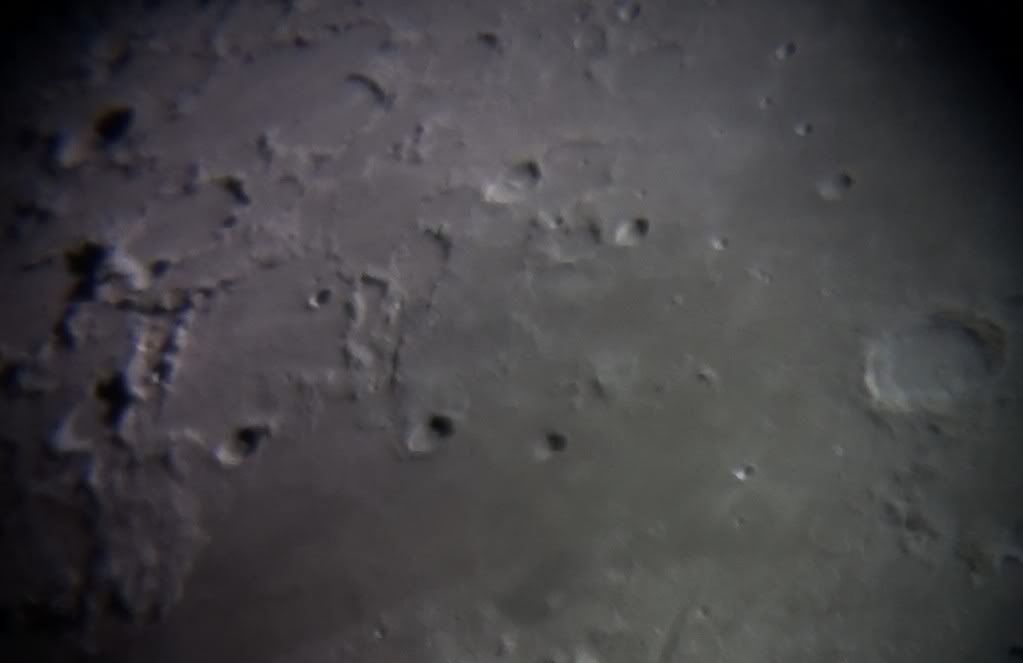
Region between Plato and Aristotle craters Images by Telescope


In these photographs, the crater Plato (101 km), is close to the terminal, the boundary between light and darkness. Shadow of the eastern edge, is covering nearly half of the crater floor, projecting the sharp peaks in some aggressive forms on the smooth plateau of the crater.

In these photos, note Montes Alpes, separated by a cut, a valley called Vallis Alpes. It has a length of 166 km. If you start with a car at one end, you will get to the other in about 2h 30m-3h.

In the upper region, is a part of Mare Frigoris, which lies to the north of these mountains, and which are scattered by a few craters. These are the Timaeus (33 km), Archytas (32 km) and Protagoras (22 km).

  Egede flooded crater (37 km), is located right of the Alpes mountains, on which remained visible just the upper edge, having a ring aspect. Aristoteles (87 km), is the largest crater in the photos, which you can see on right in the images.

Age of the Moon: 7 days
Phase: 51% (0% = New, 100% = Full)
Distance: 384.488 km


Optics: Celestron C8-Newtonian telescope, 20mm Plossl, 2x Barlow
Mount: CG5 (EQ5)
Camera: Sony CX130
Filter: no
Date: 29.04.2012
Location: Baia Mare, Romania
Processing: video captures, FastStone Image Viewer

Monday, 28 November 2011

The Chain of craters on Mare Frigoris caused by a single asteroid? - Telescope images

Photographer: Victor Lupu
Optics: Celestron C8-Newtonian telescope, plossl 20mm, 2x Barlow
Mount: CG5 (EQ5)
Device: Sony CX105 at 8x optical zoom
Total: 800x
Filter: no
Date: 11/05/2011
Location: Baia Mare, Romania
Processing: Sony Vegas 10 video captures


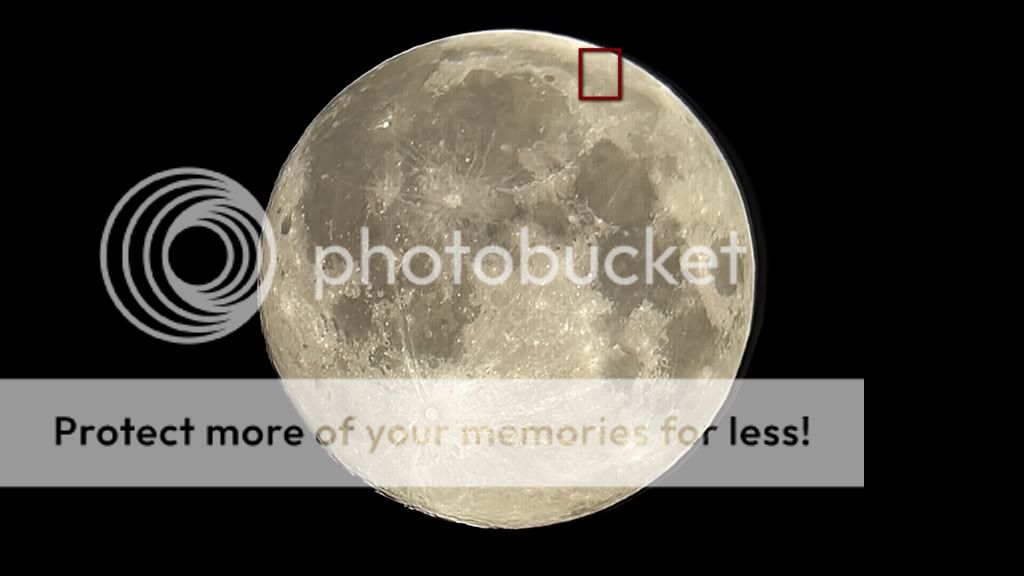
A chain of craters that pass near the west of the giant crater W. Bond is seen in video capture images in this article. The chain of craters (see photo below to see where it is), starts with large craters and ends with the smallest one (Aristoteles A).

When I see these chain craters which diminishes in size, I wonder if they have a single source, a single body that disintegrated before touching the lunar surface.


 A good example is the comet Comet Shoemaker-Levy 9 (D/1993 F2 official), a the comet that disintegrated before reaching Jupiter (crashed in July 1994, providing the first direct observation of an extraterrestrial collision of solar system objects).


So these lunar craters below, that I listed from largest to smallest, I think that comes from the impact of a single body that disintegrated, causing a chain:
-Anaxagoras (51 km) attached to the western edge of Goldschmidt
-Epigenes (55 km) located northwest of W. Bond
-Timaeus (33 km) which is located at the southwest edge of W. Bond, on Mare Frigoris
-Archytas (32 km) which is on Mare Frigoris

-Protagoras (22 km) which is on Mare Frigoris
-Aristotle A It is the small crater in the chain, and that on Mare Frigoris

Anaxagoras and Epigenes craters in my opinion, could be caused from the impacts of individual asteroids, although I do not think so, but these have as source a single fireball that disintegrated before meeting with the lunar surface.


Wednesday, 6 July 2011

On Mare Frigoris-Archytas Protagoras and Timaeus craters

Photographer: Victor Lupu
Optics: Celestron C8-Newtonian telescope, plossl 20mm, 2x Barlow
Mount: CG5 (EQ5)
Device: Sony CX105
Filter: No
Date: 11/05/2011
Location: Baia Mare, Romania
Processing: Sony Vegas 10 video
captures


Mare Frigoris is occupying most of these captures, on which are craters such as Aristoteles, Egede, W. Bond, Barrow, Meton, Protagoras, Archytas and Timaeus.
          Archytas (32 km) is an impact crater , which is on the northern edge of Mare Frigoris. To the northwest is the Timaeus (33 km), comparable in size to Archytas, and Protagoras (22 km), which is smaller,in the opposite direction to the southeast.
Archytas's rim has sharp edges and presents aspects of erosion due to subsequent impacts. Outer wall is nearly circular, with a slight passive bulge southeast. The interior is rough, and has a pair of central peaks.

 
All images are © Copyright 2010-2015 Lupu Victor. All rights reserved.Images may not be reproduced, published, or copied in any form without written permission of the author. Thank you for respecting the intellectual property rights. ASTROFOTOGRAFIA | Lupu Victor Astronomy - Contact - About
Design by Free WordPress Themes | Bloggerized by Lasantha - Premium Blogger Themes | Online Project management