Visit Worldwide Topsites
Showing posts with label Craters-Geber Abenezra and Azophi. Show all posts

Wednesday, 2 March 2016

Moon craters in darkness. Pictures by telescope.

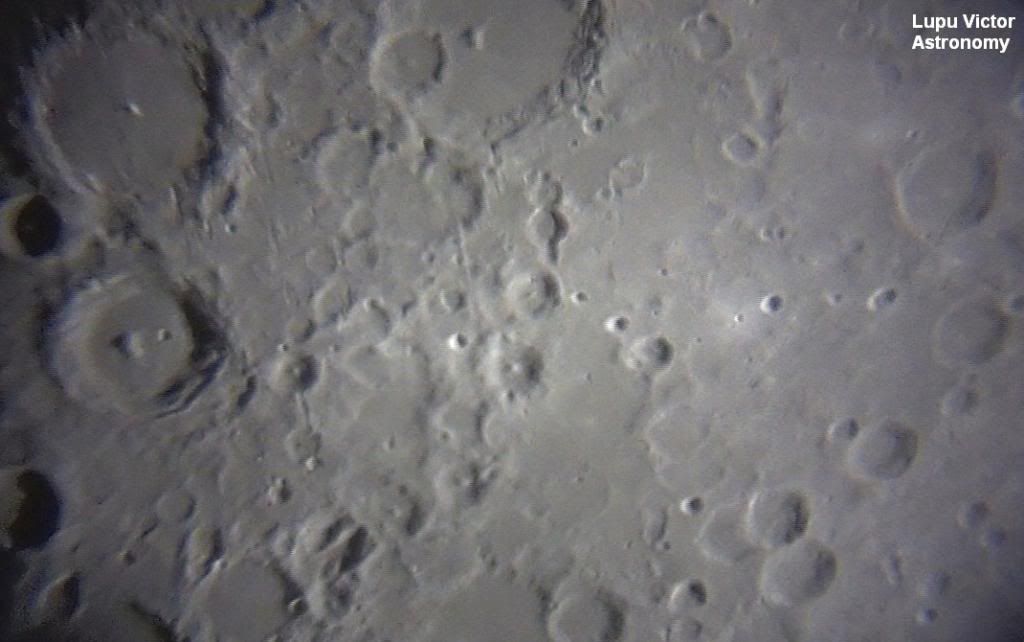
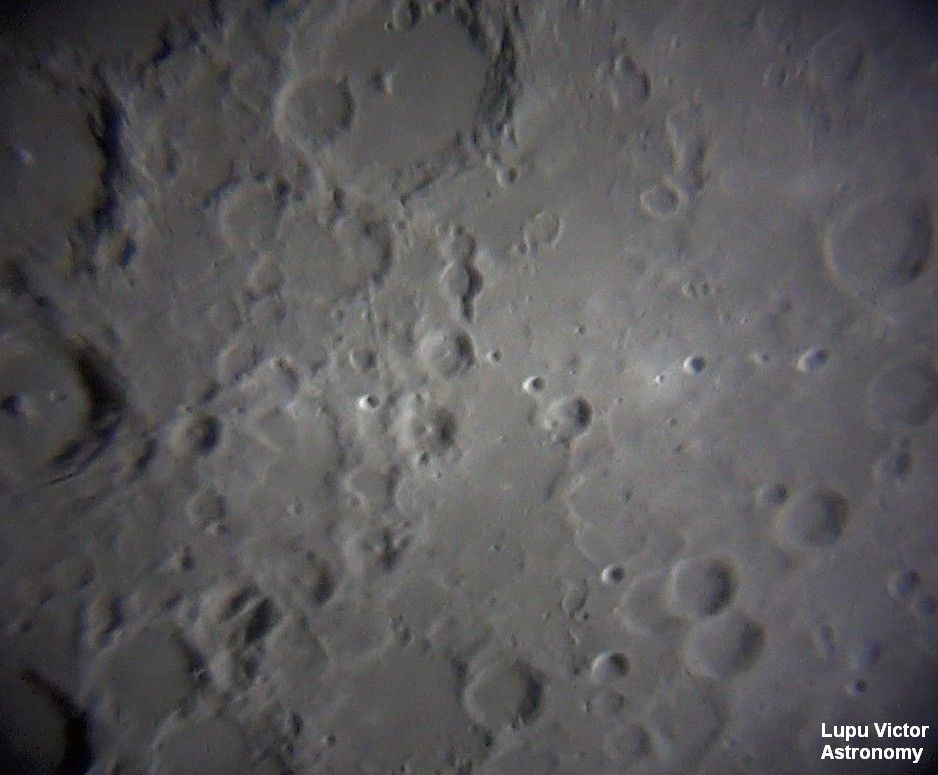
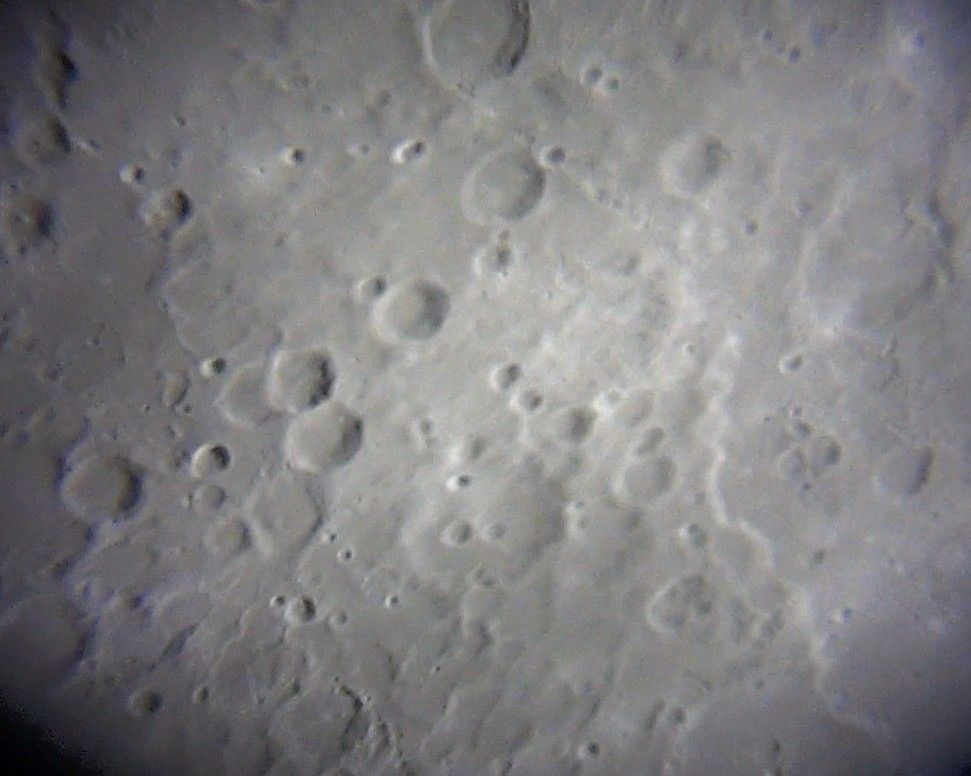
It is not the first time I introduce you these craters, identical in sizes and shapes. Abenezra (42 km), Azophi (48 km) and Geber (45 km) form a cute trio, located in the center of the lunar disk, specifying that Abenezra is overlaying Abenezra C (44 km), an older crater but if it would have had remained whole, would still have had the same size and shape as the others mentioned above.

Sacrobosco (98 km), is also present in the images. It has frayed edges but it kept its circular shape. Inside are three small craters on the floor: Sacrobosco A (17 km), B (14 km) and C (13 km).


Magnitude: -10.82
Phase: 0.46
Distance: 399.283 km
Illuminated: 45.6% (0% = New, 100% = Full)


Astronomical instrument: Celestron C8-Newtonian telescope,
Eyepiece: Plossl 20mm, 2x Barlow
Mount: CG5 (EQ5)
Camera: Sony CX130
Filter: no
Date: 30.01.2012
Location: Baia Mare, Romania
Processing: FastStone Image Viewer


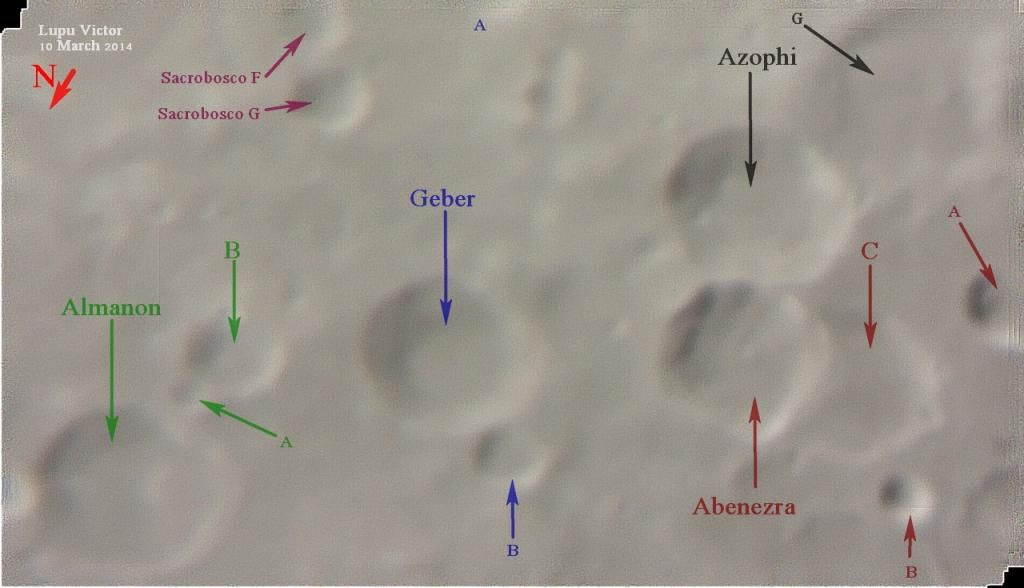
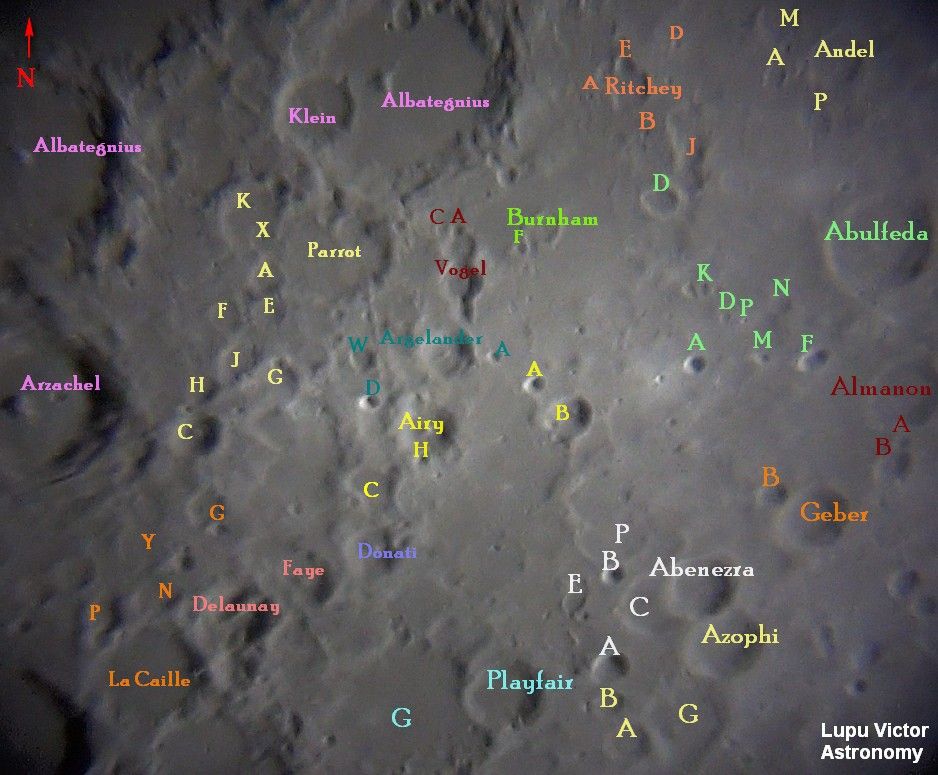
In the picture below are labeled craters and other lunar features in the region. To better understand this photo, you should note that the label with the name or the letter of larger craters could be found at their center, and on the small craters, you should find them around them, usually above.


Friday, 23 January 2015

Craters filmed by astronomical telescope. Geber, Abenezra and Azophi.


The video was also used in Registax program to process images with higher quality, but also for simple video captures.

It's a bit more light on these images, but here are distinguished craters close to one another like Geber, Abenezra and Azophi (45/42/48 km) .

The video was made with the camera mounted on the telescope, to be more exact on the telescope eyepiece. To protect the telescope from vibrations, I used a tracking motor from Lacerta, and thus the image was more stable.

However, even with this tracking device for celestial bodies, there were vibrations of the telescope tube, causing the image to be slightly unstable. For this, I used the video stabilization option in Sony Vegas editing software, so the video was 100% correct on this issue.

Unstable aspect of the image through the telescope is caused by a combination of turbulence in the Earth's atmosphere and increased streams of heat from the ground and buildings.

Images were obtained by attaching a camera directly into the eyepiece of an astronomical telescope of 8 inch Newtonian; For this reason the eyepiece visual field was increased.

Images processed in Registax, here.
Unprocessed images (video captures), of craters Heraclitus / Licetus are here.


250 video frames in Registax.


Moon Age: 9.05 days
Phase: 70.5% (0% = New, 100% = Full)
Distance: 399.221 km


Optics (telescope or lenses): Celestron C8-Newtonian telescope, eyepiece 20mm Plossl, 2x barlow
Mount: CG5 (EQ5)
Camera: Sony CX130
Filter: no
Date: 10/03/2014
Location: Baia Mare, Romania
Processing: Sony Vegas HD Platinum 10.0


Wednesday, 21 January 2015

Astrophotography Registax. Craters by telescope: Abenezra and Azophi.

120 video frames, in Registax.
Moon craters telescope astronomy geber abenezra azophi
1 video frames, in Registax.
Moon craters telescope astronomy geber abenezra azophi
20 video frames, in Registax.

The images capture some craters on the face of Moon, similar in shape and size. Almost like you could tell at first glance, that were formed all at the same time. The inner edges of these craters are opened at an open angle, like brioche molds.

These are Geber, Abenezra, Azophi (45/42/48 km) and Almanon (49 km). Abenezra C (44 km) is obviously older than Abenezra because Abenezra is superimposed over half of it.

The area is very bright, and so the land has a milky appearance, which I like very much.

We can also watch the video of which I took these pictures in another article, but also simple video captures. In this article are presented images processed in Registax of that video.

Moon craters telescope astronomy geber abenezra azophi
250 video frames, in Registax.

Moon Age: 9.05 days
Phase: 70.5% (0% = New, 100% = Full)
Distance: 399.221 km


Optics (telescope or lenses): Celestron C8-Newtonian telescope, eyepiece 20mm Plossl, 2x barlow
Mount: CG5 (EQ5)
Camera: Sony CX130
Filter: no
Date: 10/03/2014
Location: Baia Mare, Romania
Processing: Registax,  FastStone Image Viewer


Wednesday, 22 October 2014

Telescope Astrophotography Sony CX130. Digital Astronomy. Crater Abenezra.


It's a bit more light on these images, but here are distinguished craters close to one another like Geber, Abenezra and Azophi (45/42/48 km)  . These craters are similar in size, but not on the features within them. Abenezra has a rippled floor on the east side (the images are inverted) showing nine dunes from center to edge that open like a fan. Azophi has a flooded floor, with small craters on it.


Moon Age: 9.05 days
Phase: 70.5% (0% = New, 100% = Full)
Distance: 399.221 km


Optics: Celestron C8-Newtonian telescope, 20mm Plossl, 2x barlow
Mount: CG5 (EQ5)
Camera: Sony CX130
Filter: no
Date: 10/03/2014
Location: Baia Mare, Romania
Processing: FastStone Image Viewer


Image from 10 february 2011.


Tuesday, 24 June 2014

Lunar craters filmed through a telescope: Abenezra, Azophi and Geber.


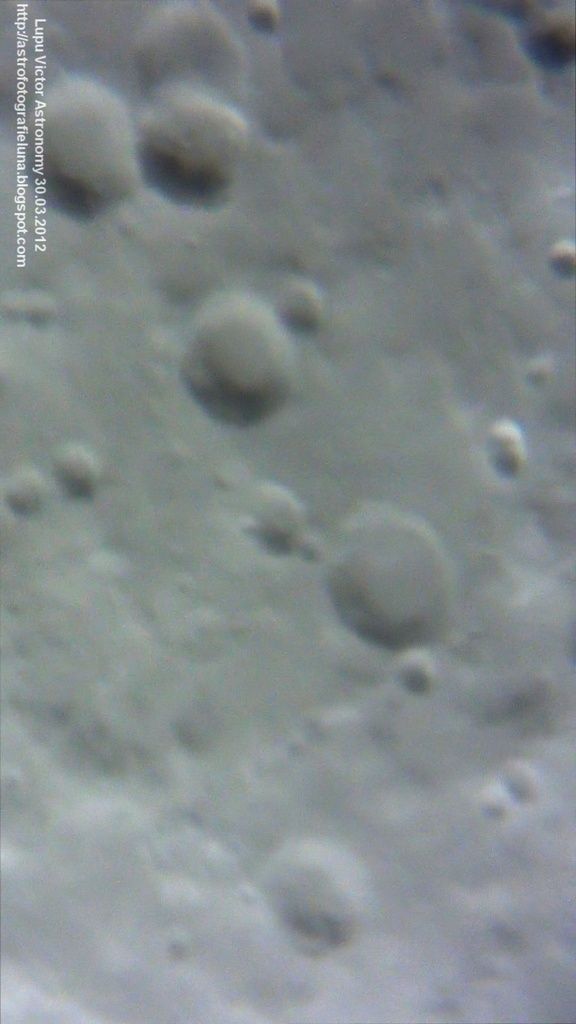
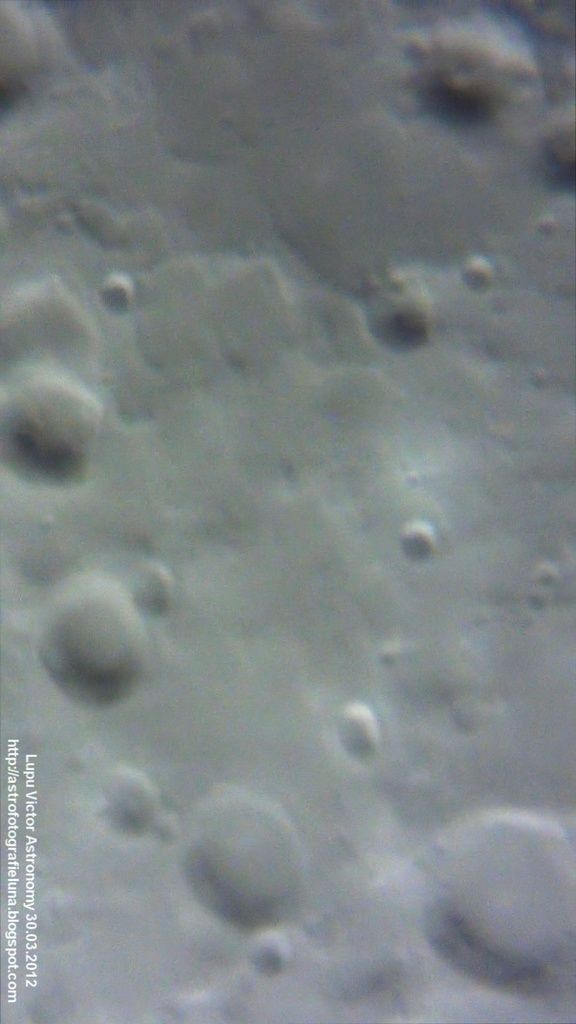
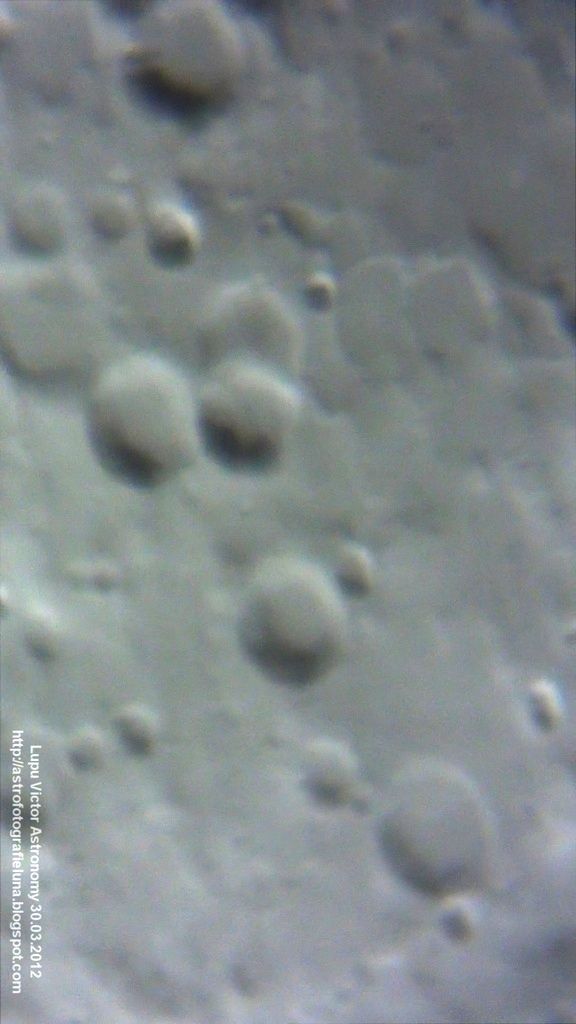
Abenezra (42 km), Azophi (48 km), Geber (45 km), Abulfeda and Almanon (49 miles) are just a few craters seen in these images taken by the astronomical telescope, images that landmark south-central area of the Moon .

Many of these craters resemble each other in size, some are straddling each other, as Abenezra over Abenezra C (44 km).

We note here Almanon crater with its satellite craters Almanon A (10 km) and B (25 km) south of it, and C (16 km) stuck to east edge.

Crater that I like to watch here, is Geber, which is the most ordered of all, having the floor free of other small craters and lacks a central peak and its edge is almost perfectly circular.


Optics: Celestron C8 "-Newtonian telescope, 20mm Plossl, 2x Barlow
Mount: CG5 (EQ5)
Device: Sony CX-130
Video Mode: Full HD 1920x1080 progressive
Filter: no
Date: 30/03/2012
Location: Baia Mare, Romania
Processing and editing: Sony Vegas 10 FastStone


Image from 12 mai 2011.


Wednesday, 3 April 2013

Parrot Airy Abenezra and Azophi craters. Images by astronomical telescope


Abenezra and Azophi (42 and 47 km), are two craters similar in size, but not on other features. Abenezra's floor is very hilly on north, east and south, and on west is smoother. Seen from above, it is circular, but beveled on north. To the west, Abenezra is superimposed over another crater called Abenezra C (44 km). It is older than Abenezra because it has edge and floor worn by time, but also because Abenezra is over it, meaning that Abenezra C is older.


The same can be said about Azophi G (53 km), which is much older than Azophi and which is even larger in size. Azophi G has the same features as the area around it and the only distinction, is that the crater is very eroded, but its edge keeps a circular shape. Azophi is very distinct, with clear a floor and sharp edges.

Vogel crater (27 km) is interesting because forms an interesting duo with crater Vogel B. Other craters small in size are Argelander (34 km), Airy (37 km), Donati (36 km) and Delaunay (46 km). All these craters, are forming a chain from north to south-west, as seen in the picture below.


Moon age: 7 days
Stage: 51% (0% = New, 100% = Full)
Distance: 384.488 km


Optics: Celestron C8-Newtonian telescope, 20mm Plössl, 2x barlow
Mount: CG5 (EQ5)
Camera: Sony CX130
Filter: no
Date: 29/04/2012
Location: Baia Mare, Romania
Processing: video captures, FastStone Image Viewer


Above is an image from 10 February 2011.

Sunday, 12 June 2011

Geber Abenezra and Azophi Moon craters

Photographer: Victor Lupu
Optics: Celestron C8-Newtonian telescope, plossl 20mm, 2x Barlow
Mount: CG5 (EQ5)
Device: Sony CX105
Filter: No
Date: 10/02/2011
Location: Baia Mare, Romania
Processing: 10 Sony Vegas, video captures

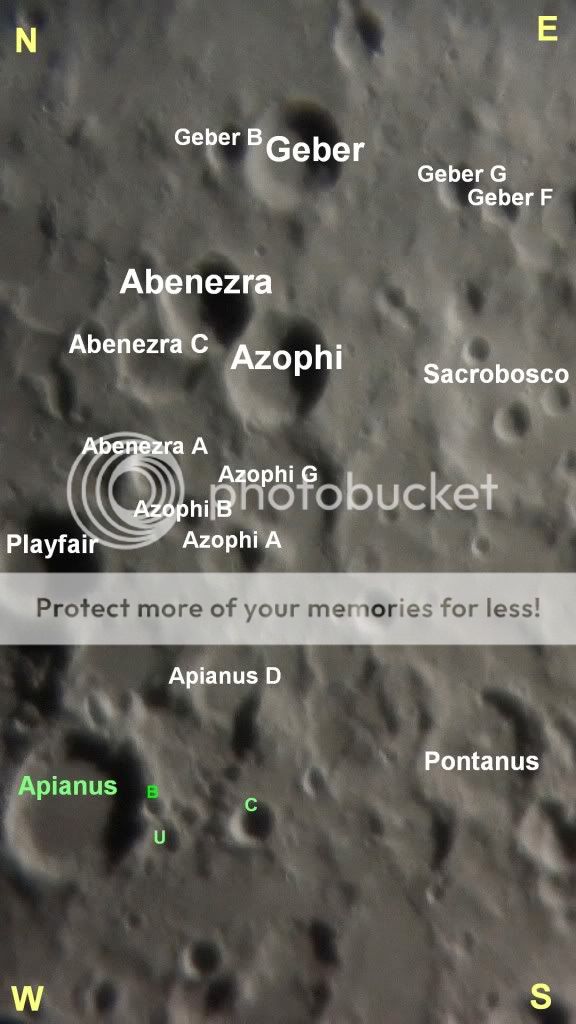
         Geber (45 km), is a Moon crater located in the rugged south-central regions of the Moon. It lies midway between the crater Almanon at north-east and Abenezra and Azophi at south-west. Further south-east is Sacrobosco. Geber is 45 kilometers in diameter and 3510 meters deep.
The name of the crater  comes from Abu Muhammad Jabir ibn Aflaḥ (Arabic: أبو محمد جابر بن أفلح, Latin: Geber / Gebir, 1100 in Seville, Spain - 1150), who was a muslim astronomer and mathematician of the 12th century.

         Abenezra (42 km), is attached along the southeast edge of the crater Azophi. In the northeast are Geber crater, and further south-east is Sacrobosco (98 km), which is bigger.
Abenezra crater has a polygonal shape, with segments of unequal walls. The interior walls are terraced, and the floor has irregular striations. These ridges form unusual patterns. Abenezra is 3.7 km.deep. On the east,the crater overlaps with another one: Abenezra C (44 km).

        Azophi (47 km). This crater shape is polygonal with rounded corners. Edge is relatively sharp and split and is not significantly affected by craters, except Azophi C, which is located on the north-east wall, inside. Interior floor has no central peak and is marked by a few small craters. It is named after the Persian astronomer Abd Al-Rahman Al Sufi, who lived in the 10th century.

 
All images are © Copyright 2010-2015 Lupu Victor. All rights reserved.Images may not be reproduced, published, or copied in any form without written permission of the author. Thank you for respecting the intellectual property rights. ASTROFOTOGRAFIA | Lupu Victor Astronomy - Contact - About
Design by Free WordPress Themes | Bloggerized by Lasantha - Premium Blogger Themes | Online Project management