Visit Worldwide Topsites
Showing posts with label Craters-Heinsius. Show all posts

Tuesday, 12 May 2015

Heinsius and Wilhelm lunar craters (video through astronomical telescope)


Visible craters in this video are: Wilhelm (107 km), Heinsius (64 km), Wurzelbauer (88 km) and Tycho (85 km).

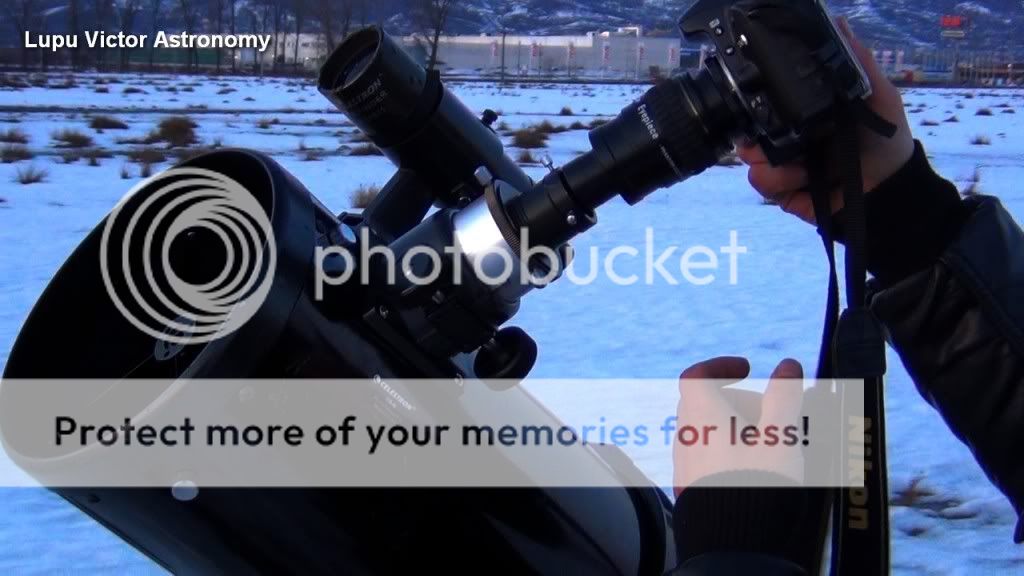
The video was made with the camera mounted on the telescope, to be more exact on the telescope eyepiece. To protect the telescope from vibrations, I used a tracking motor from Lacerta, and thus the image was more stable.

However, even with this tracking device for celestial bodies, there were vibrations of the telescope tube, causing the image to be slightly unstable. For this, I used the video stabilization option in Sony Vegas editing software, so the video was 100% correct on this issue.

Unstable aspect of the image through the telescope is caused by a combination of turbulence in the Earth's atmosphere and increased streams of heat from the ground and buildings.

Images were obtained by attaching a camera directly into the eyepiece of an astronomical telescope of 8 inch Newtonian; For this reason the eyepiece visual field was increased.

The video was also used also for simple video captures.

Moon Age: 9.05 days
Phase: 70.5% (0% = New, 100% = Full)
Distance: 399.221 km


Optics (telescope or lenses): Celestron C8-Newtonian telescope, eyepiece 20mm Plossl, 2x barlow
Mount: CG5 (EQ5)
Camera: Sony CX130

Video mode: 1080p
Filter: no
Date: 10/03/2014
Location: Baia Mare, Romania
Processing: Sony Vegas HD Platinum 10.0


Tuesday, 30 September 2014

West of Tycho craters through telescope. Heinsius and Wurzelbauer


This area is very close to the terminal and craters are more difficult to recognize. However, we can see that we are close to the southern area of the Moon, where craters are more numerous. Here we observe craters like Wurzelbauer (88 km) and Gauricus (79 km), two closer craters and similar in size, south of Pitatus (97 km), but with different floor characteristics and their edges.

Wurzelbauer has a floor full of swamps and hills, low margins, with a depth of 2.2 kilometers, compared to Gauricus which has a depth of 2.7 km, with a smoother floor strewn with small craters on it and the interior edge.
Wurzelbauer's south, are observed only Heinsius crater (64 km) and its satellite craters. These images may be located at the top, because it is upside-down as viewed through a telescope. Heinsius is flooded crater by darkness.


Moon Age: 9.05 days
Phase: 70.5% (0% = New, 100% = Full)
Distance: 399.221 km


Optics: Celestron C8-Newtonian telescope, 20mm Plossl, 2x barlow
Mount: CG5 (EQ5)
Camera: Sony CX130
Filter: no
Date: 10/03/2014
Location: Baia Mare, Romania
Processing: FastStone Image Viewer


All images are © Copyright 2010-2015 Lupu Victor. All rights reserved.Images may not be reproduced, published, or copied in any form without written permission of the author. Thank you for respecting the intellectual property rights. ASTROFOTOGRAFIA | Lupu Victor Astronomy - Contact - About
Design by Free WordPress Themes | Bloggerized by Lasantha - Premium Blogger Themes | Online Project management