Visit Worldwide Topsites
Showing posts with label Craters-Hevelius and Cavalerius. Show all posts

Friday, 17 July 2015

Registax images of Grimaldi and Hevelius craters on the Moon.

I have published images of the same area of the Moon from the same evening in other articles such as here, but those have not been processed in Registax.

Region which is about here is the West, where we see a large crater named Grimaldi (430 km). This is known as a basin rather than a crater, and is located on western Oceanus Procellarum, and in these images we see a fairly large part of it.

This small basin is known for transient lunar phenomena (or TLP), which involves occasional flashes of light, color patches and areas of vague vision. In this area have been detected also gas emissions using spectroscopy.

 Craters that are visible here: Grimaldi (430 km), Hevelius (106 km), Lohrmann (31 km), Damoiseau (37 km) and Hermann (16 km).

Video from which were extracted these images are here.
Simple video captures (snapshots) are here.

1711 video frames, in Registax.
201 video frames, in Registax.

2397 video frames, in Registax.

267 video frames, in Registax.

155 video frames, in Registax.

1 video frames, in Registax.


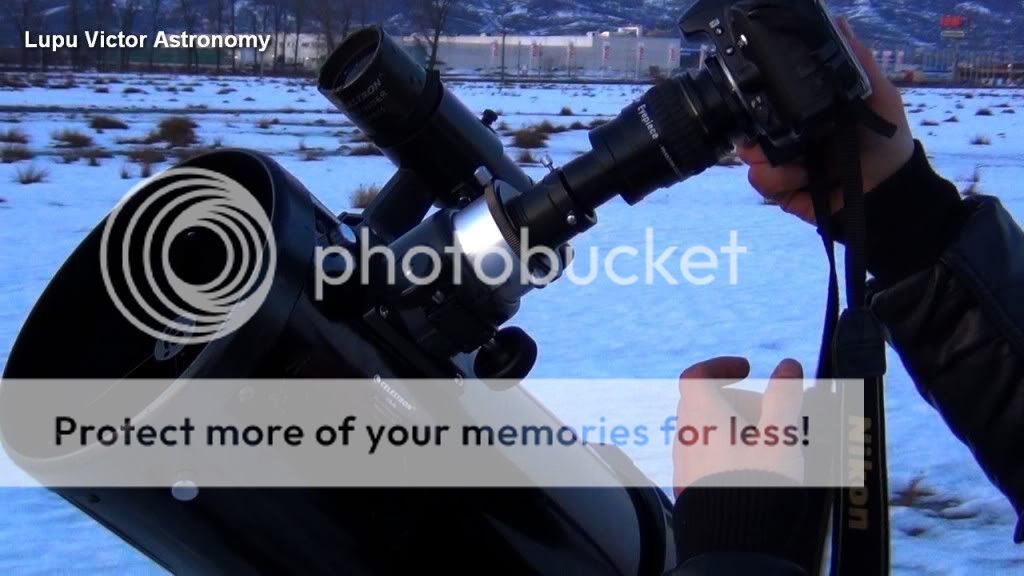
Craters were filmed with a video camera attached to an astronomical 203 mm Newtonian telescope.

In the picture below are labeled craters and other lunar features in the region. To better understand this photo, you should note that the label with the name or the letter of larger craters could be found at their center, and on the small craters, you should find them around them, usually above.


Magnitude: -12.03
Phase: 70.5% (0% = new, 100% = full)
Distance: 398.311 km
Sidereal Period: 27.32 days
Illuminated: 92.2%


Optics: Celestron C8-Newtonian astronomical telescope 
Eyepiece: Plossl 20mm, 2x Barlow
Mount: CG5 (EQ5)
Camera: Sony CX130
Filter: no
Date: 14/03/2014
Location: Baia Mare, Romania
Processing: Registax, FastStone Image Viewer


Friday, 19 June 2015

Grimaldi crater HD video through the telescope.


This video was also used for simple video captures. Photo images are here.
Craters that are visible here: Grimaldi (430 km), Hevelius (106 km), Lohrmann (31 km), Damoiseau (37 km) and Hermann (16 km).

Grimaldi
(430 km) is rather a basin flooded by lava, not a crater, and has a round not oval shape as seen from Earth because it is located on the edge of the Moon. Its margins has not ordinary walls like other craters, but is so destroyed that was transformed into hills and irregular peaks.

Hevelius
(106 km) has a low affected rim, and has a shallow depth of 1.8 km, in contrast with its size.
At the northern edge is a small but prominent crater, Cavalerius. At the south of Hevelius is Lohrmann crater (31 km) and to the south is Grimaldi (430 km). Because of their positions on the Moon, craters are oval when viewed from Earth.


The video was made with the camera mounted on the telescope, to be more exact on the telescope eyepiece. To protect the telescope from vibrations, I used a tracking motor from Lacerta, and thus the image was more stable.

However, even with this tracking device for celestial bodies, there were vibrations of the telescope tube, causing the image to be slightly unstable. For this, I used the video stabilization option in Sony Vegas editing software, so the video was 100% correct on this issue.

Unstable aspect of the image through the telescope is caused by a combination of turbulence in the Earth's atmosphere and increased streams of heat from the ground and buildings.

Images were obtained by attaching a camera directly into the eyepiece of an astronomical telescope of 8 inch Newtonian; For this reason the eyepiece visual field was increased.

In the pictures below are labeled craters and other lunar features in the region. To better understand this photo, you should note that the label with the name or the letter of larger craters could be found at their center, and on the small craters, you should find them around them, usually above.


Magnitude: -12.03
Phase: 70.5% (0% = new, 100% = full)
Distance: 398.311 km
Sidereal Period: 27.32 days
Illuminated: 92.2%


Optics: Celestron C8-Newtonian astronomical telescope 
Eyepiece: Plossl 20mm, 2x Barlow
Mount: CG5 (EQ5)
Camera: Sony CX130
Filter: no
Date: 14/03/2014
Location: Baia Mare, Romania
Processing: FastStone Image Viewer


Thursday, 28 May 2015

Craters of the Moon's west: Hevelius and Cavalerius. Lunar Astronomy.


Moon area of these images is the West, where we see the vast region of Oceanus Procellarum, on the edge of the lunar disk and identify some large craters to the north of Grimaldi, called Hevelius (106 km) and Cavalerius (58 km).

Hevelius has a
low affected edge, and has a shallow depth of 1.8 km, in contrast with its size.
The northern boundary is together with small but prominent crater, Cavalerius. At the south of Hevelius is Lohrmann crater (31 km) and to the south is Grimaldi (430 km). Because of their positions on the Moon, craters are oval when viewed from Earth.


On the "open ocean" are some small craters as Galilaei (16 km), Marius (41 km), Suess (9 km), Reiner (30 km) and Reiner Gamma.

Hevelius, has its name after the astronomer Johannes Hevelius (January 28, 1611 - January 28, 1687). He was a mayor of GdaƄsk. As astronomer and has earned a reputation as "the founder of lunar topography" and described 10 new
constellations, 7 of which are still recognized by astronomers.

Craters were filmed with a video camera attached to an
astronomical 203 mm Newtonian telescope.

In the picture below are labeled craters and other lunar features in the region. To better understand this photo, you should note that the label with the name or the letter of larger craters could be found at their center, and on the small craters, you should find them around them, usually above.


Magnitude: -12.03
Phase: 70.5% (0% = new, 100% = full)
Distance: 398.311 km
Sidereal Period: 27.32 days
Illuminated: 92.2%


Optics: Celestron C8-Newtonian astronomical telescope 
Eyepiece: Plossl 20mm, 2x Barlow
Mount: CG5 (EQ5)
Camera: Sony CX130
Filter: no
Date: 14/03/2014
Location: Baia Mare, Romania
Processing: FastStone Image Viewer


Sunday, 13 April 2014

Craters Hevelius Cavalerius Lohrmann video captures by telescope.


We're talking here about craters located on the western edge of the Moon, we have not discussed before. The images are a bit dark, but acceptable for a description. These seizures were rotated right.

Hevelius (106 km) large crater in the center is one very affected and flooded. Its edge is nearly destroyed. At its north and south are two smaller craters called Cavalerius (58 km) and Lohrmann (31 km).

Distance: 361125 km
Phase: 98.8% (0% = New, 100% = Full)


Optical Telescope CelestronC8 "Newtonian, plossl20mm, 2x Barlow
Mount: CG5 (EQ5)
Device: Sony CX-130
Video Mode: Full HD 1920x1080 progressive
Filter: no
Date: 02/07/2012
Location: Baia Mare, Romania
Processing and editing: Sony Vegas 10 video captures


All images are © Copyright 2010-2015 Lupu Victor. All rights reserved.Images may not be reproduced, published, or copied in any form without written permission of the author. Thank you for respecting the intellectual property rights. ASTROFOTOGRAFIA | Lupu Victor Astronomy - Contact - About
Design by Free WordPress Themes | Bloggerized by Lasantha - Premium Blogger Themes | Online Project management