Visit Worldwide Topsites
Showing posts with label Lacus Mortis. Show all posts

Monday, 2 May 2016

Where is Burg crater on the Moon? Astronomy images.

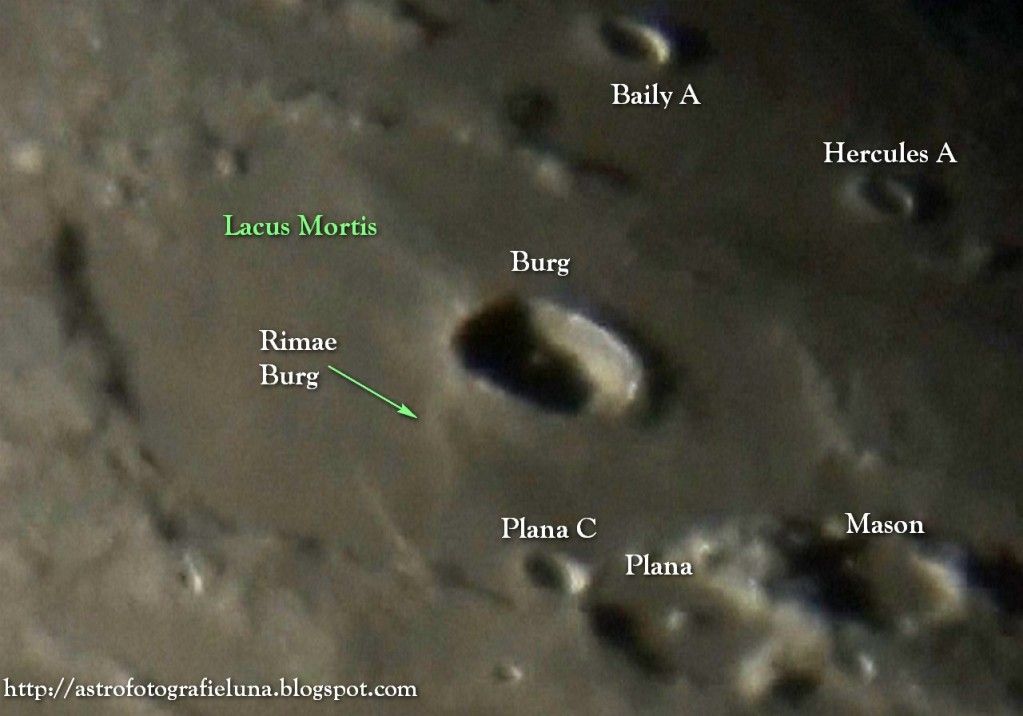
Burg crater (40 km) is located in the midst of Lacus Mortis. Due to its position, it is easy to locate but only through an astronomical telescope. This is a circular crater with a distinct central peak and beautiful terraced inner edge.

On the south-east of Lacus Mortis, notice two close craters, nearly flooded by lava in the past, called Mason (33x43 km) and Plana (44 km). Plana C (14 km), is attached Plana to the northwest.


Magnitude: -10.82
Phase: 0.46
Distance: 399.283 km
Illuminated: 45.6% (0% = New, 100% = Full)


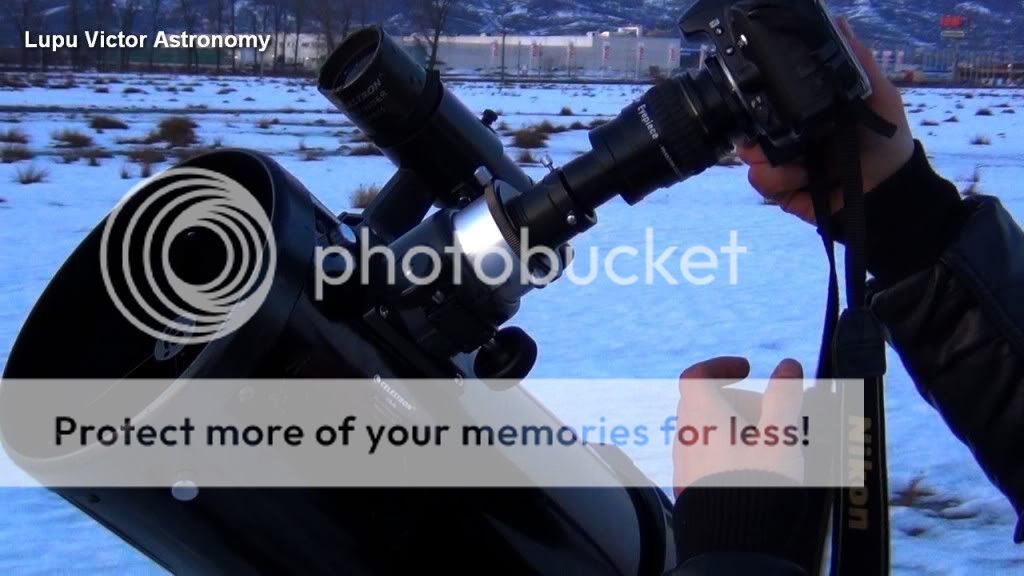
Astronomical instrument: Celestron C8-Newtonian telescope,
Eyepiece: Plossl 20mm, 2x Barlow
Mount: CG5 (EQ5)
Camera: Sony CX130
Filter: no
Date: 30.01.2012
Location: Baia Mare, Romania
Processing: FastStone Image Viewer


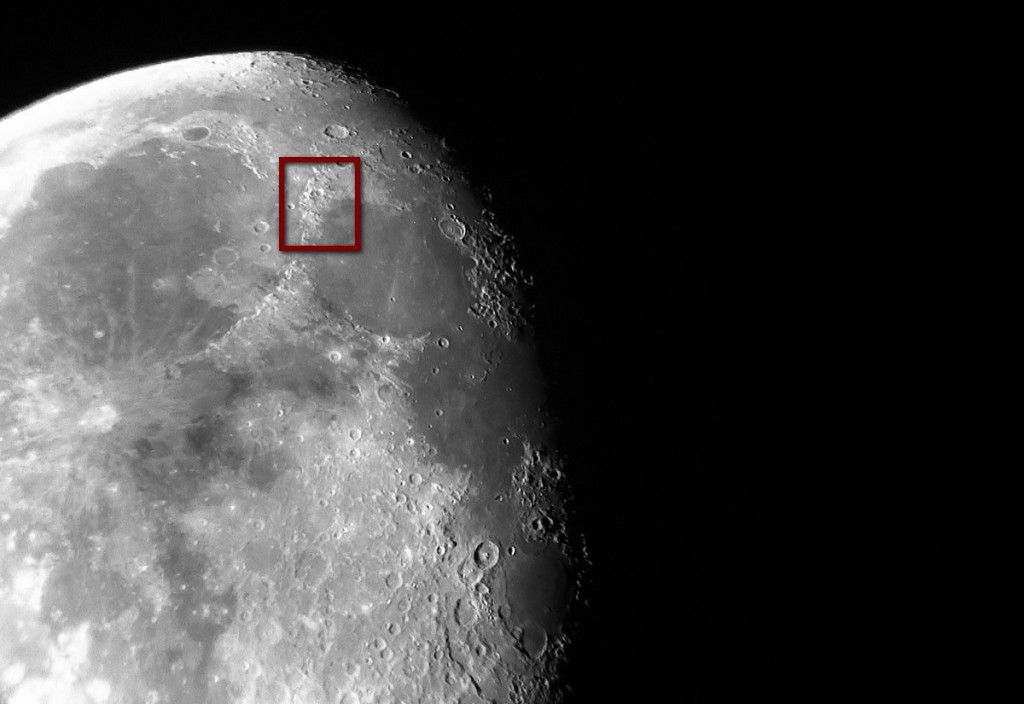
In the picture below are labeled craters and other lunar features in the region. To better understand this photo, you should note that the label with the name or the letter of larger craters could be found at their center, and on the small craters, you should find them around them, usually above.

Image from July 20, 2011.


Sunday, 31 August 2014

Astronomy. Burg and Lacus Mortis in sunlight.


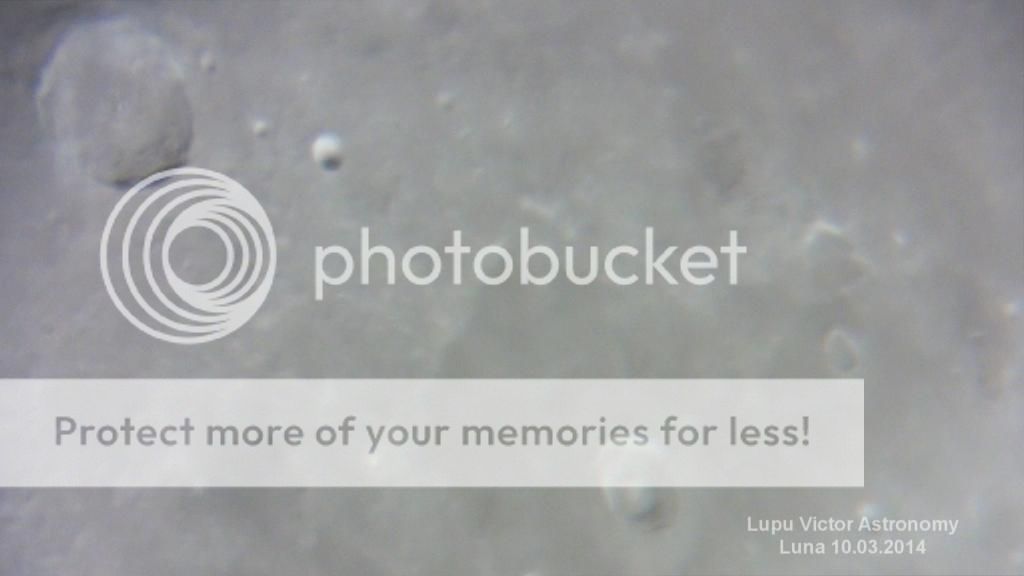
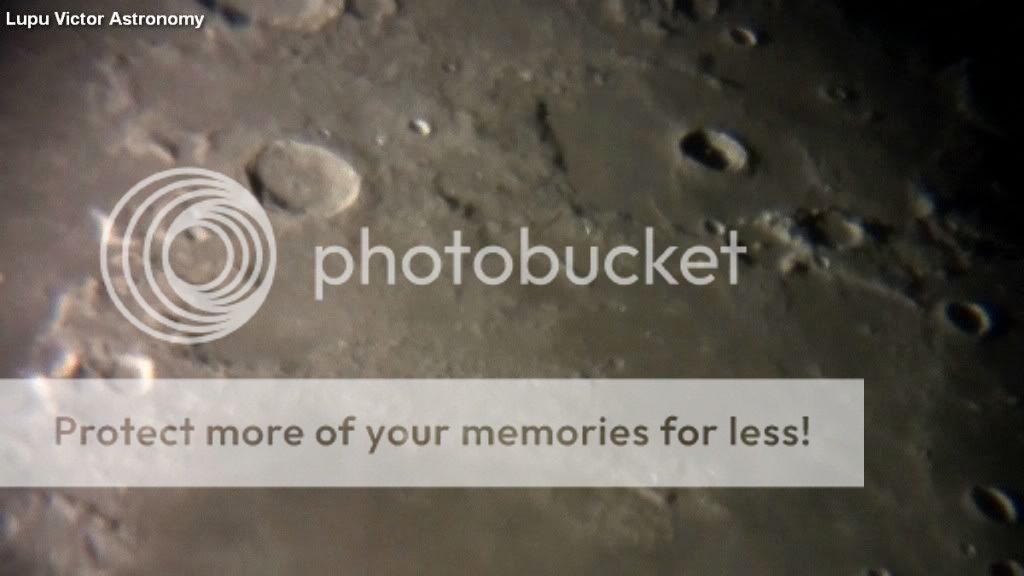
There is not too much shade in these pictures, but craters in sunlight, including Burg at the lower right and Euxodus on the top left image.

Burg (40 km) is located near the center of the dry expanses of lava in a circular shape, known as Lacus Mortis. This crater is impossible to see with the naked eye, but only with an astronomical telescope. One thing I have not noticed by now, and I have not given importance, are Burg's rays, which are material ejected from the impact as seen in these pictures.

Burg has a diameter of 40 km and a depth of 1.8 km. It bears the name of Johann Tobias Burg (24 December 1766 -15 November 1835), which was an Austrian astronomer.

Born in Vienna, he worked as a teacher and astronomer in Klagenfurt, in Carinthia. He worked as an assistant at the astronomical observatory in Vienna in 1792 and became its director in 1817, after the death of Triesnecker which also it has a crater on the Moon named after him.


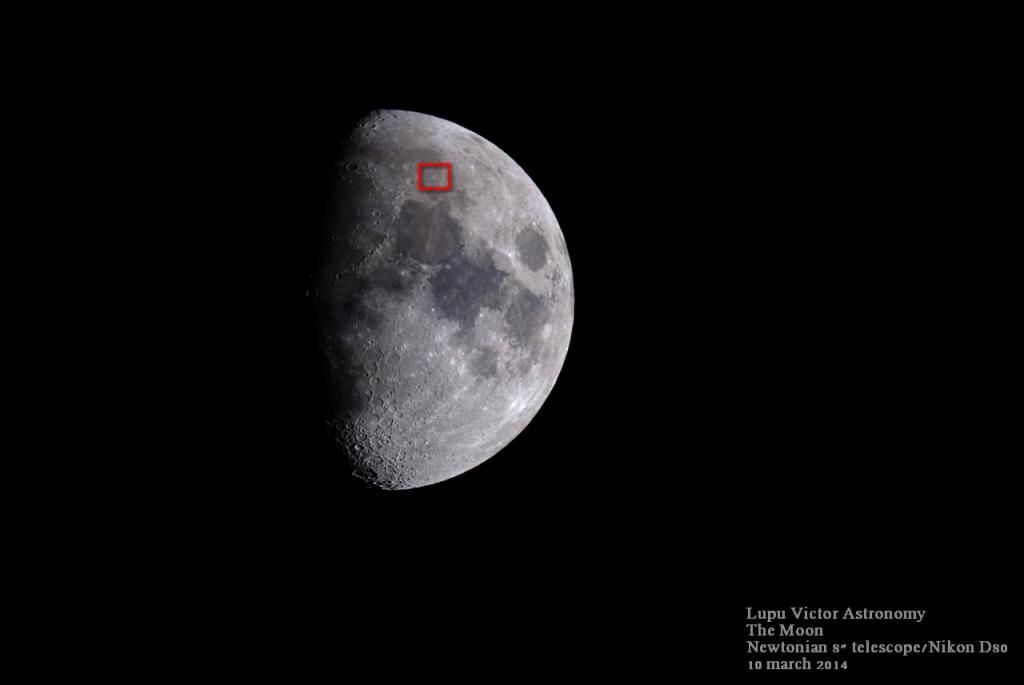
Imagine pentru orientare din 20 iulie 2011.


Moon Age: 9.05 days
Phase: 70.5% (0% = New, 100% = Full)
Distance: 399.221 km


Optics: Celestron C8-Newtonian telescope, 20mm Plossl, 2x barlow
Mount: CG5 (EQ5)
Camera: Sony CX130
Filter: no
Date: 10/03/2014
Location: Baia Mare, Romania
Processing:  FastStone Image Viewer


Johann Tobias Bürg


Sunday, 26 August 2012

Lacus Mortis and the surroundings Burg Plana si Mason


Lacus Mortis, or "Lake of Death" is an eroded remnant of an ancient crater, lava flooded and has
almost a hexagonal shape with a diameter of 150 km.

Note the prominent crater Burg (40 km) from the center, its deep walls and the central peak, which in pictures is seen only the highest region in sunlight.

Southeast of Lacus Mortis are two craters: Plana and Mason, which are not as deep as Burg, and it has in its center a central peak, observed in these pictures through the telescope.

Lacus Somniorum, "Lake of Dreams", us south of the two craters.

Rima Burg, an impressive feature, is located in the west on Lacus Mortis.


Optical Reflector Telescope Celestron C8-Newtonian inch, 20mm Plössl, 2x Barlow
Mount: CG5 (EQ5)
Camera: Sony HDR CX105 to 8x optical zoom

Total Magnification: 800x
Filter: No
Location: Baia Mare, Romania
Processing: video captures


Sunday, 22 July 2012

Montes Caucasus telescope images of the Moon


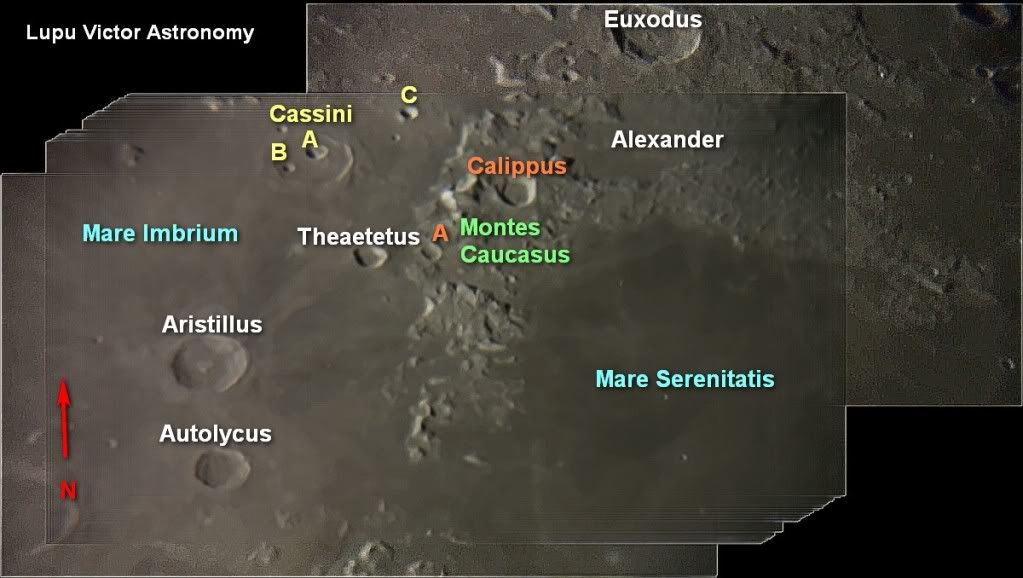
Montes Caucasus, are a continuation of Montes Apenninus, and part of the rim of Mare Imbrium impact basin. Alexander crater (82 km), which looks like a canker in the Caucasus Mountains, is their right, not far from Calippus crater (33 km), which is located in the middle of the mountains.
   In the second photo above, is central crater Burg, in the middle of Lacus Mortis.

 The image below with the names of features of this area, is processed in Registax. All Registax pictures are found here: Registax: Alexander Crater and Montes Caucasus Images through the telescope.


Photographer: Victor Lupu 
Optics: Celestron C8-inch reflector telescope-Newtonian, plossl 20mm, 2x Barlow
Mount: CG5 (EQ5)
Camera: Sony HDR CX105
Filter: No
Date: 20/07/2011 
Location: Baia Mare, Romania
Processing: Video captures

Thursday, 12 July 2012

Aristoteles Euxodus and Burg craters on the Moon


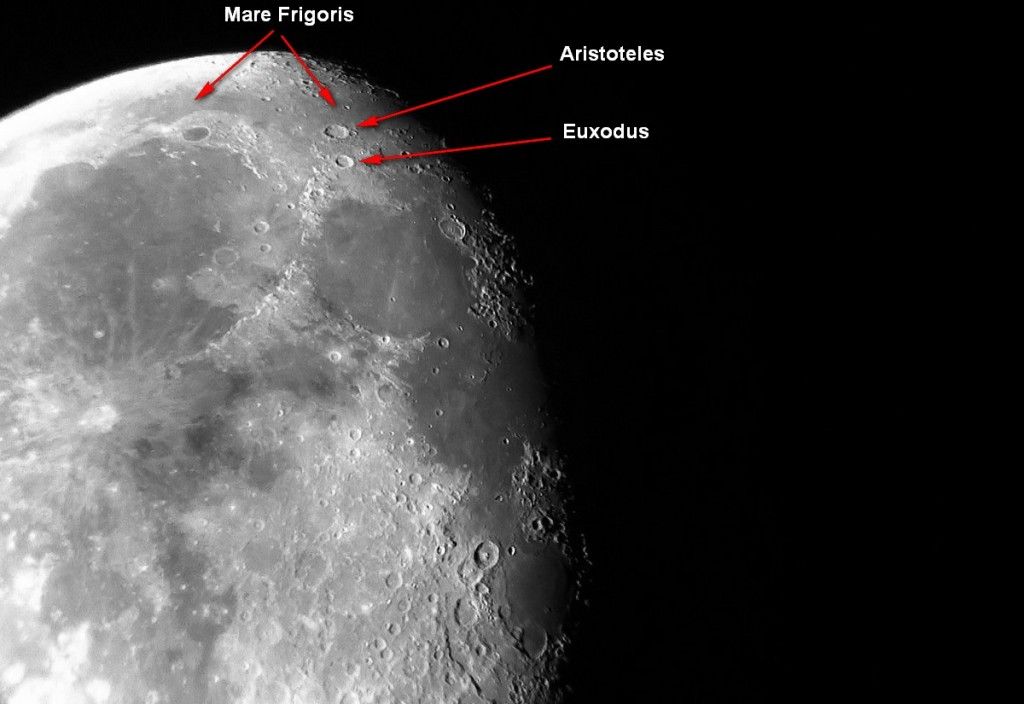
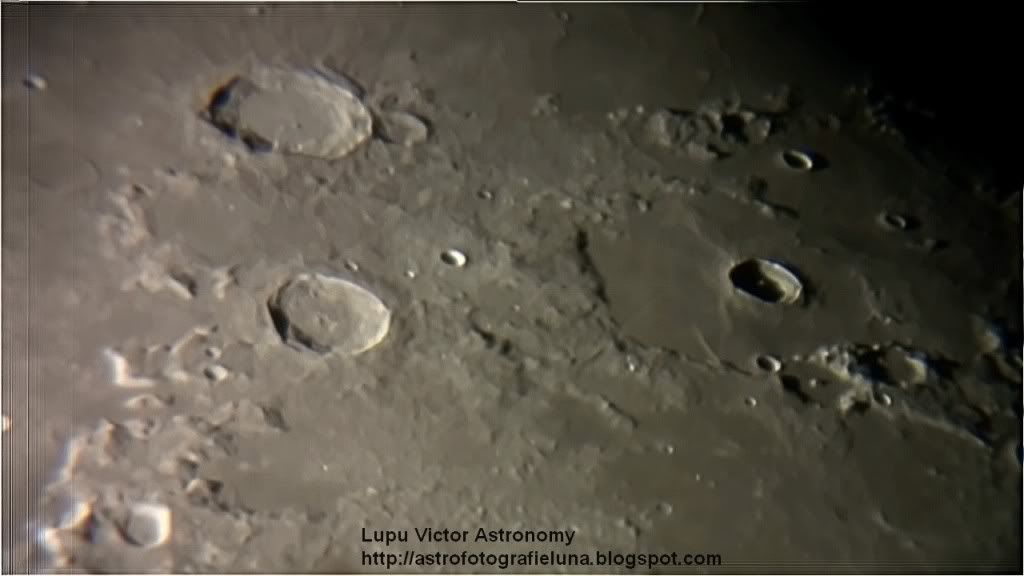
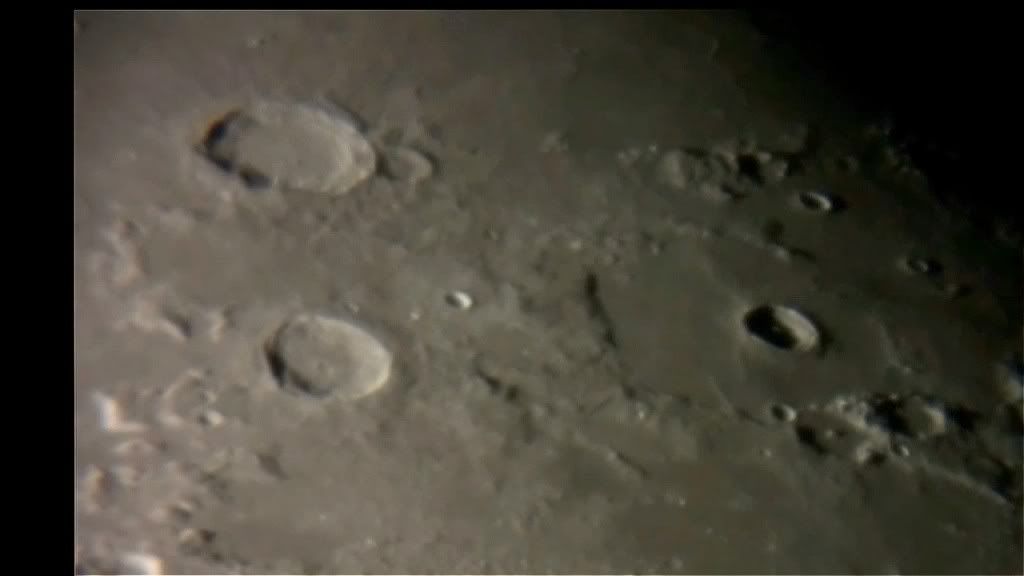
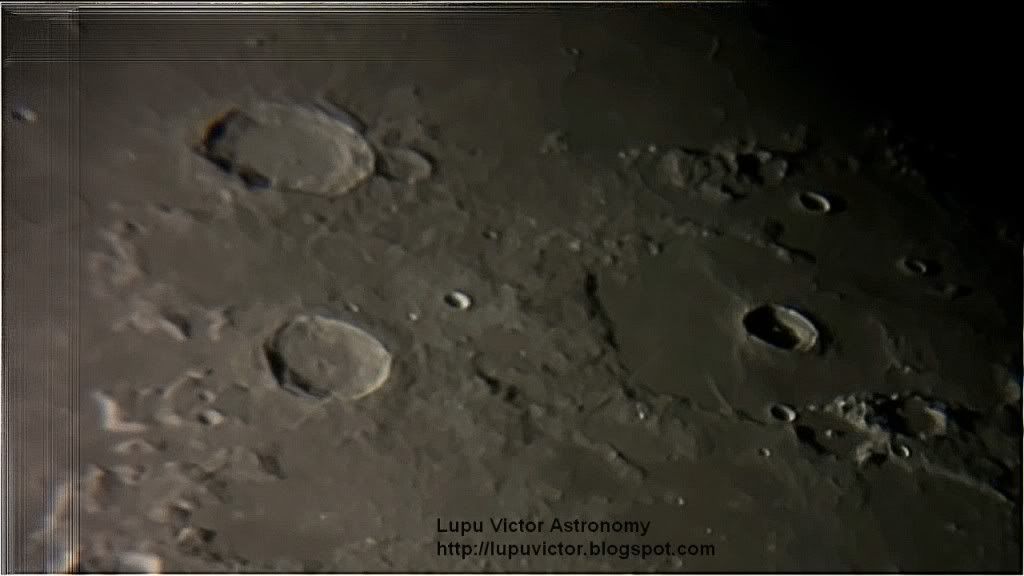
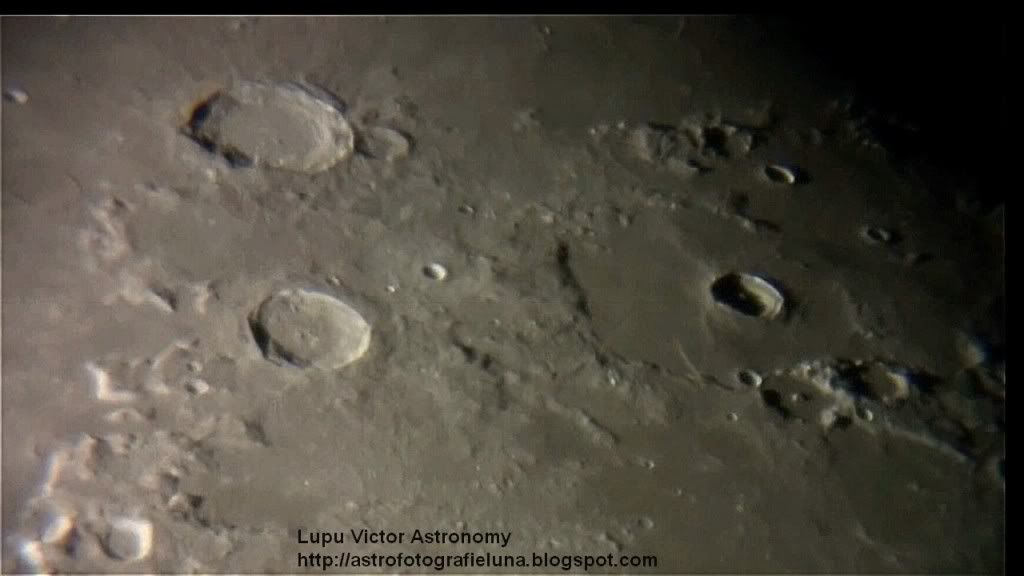
     In the video captures above, are Euxodus and Aristoteles craters, which are located on the north side of the Moon, the on the head of Caucasus mountains. Montes Caucasus are 500 km long, located south of Aristoteles (87 km) and Eudoxus (67 km), and marks a part of the northwestern border of Serenitatis Sea. On their right, is crater Burg, located in the center of Lacus Mortis
These are video captures. Processed images of this area, can be found here:
Registax: Lacus Mortis and crater Burg: Images by astronomical telescope.


Photographer: Victor Lupu
Optics: Celestron C8-inch reflector telescope-Newtonian, plossl 20 mm, 2x Barlow
Mount: CG5 (EQ5)
Camera: Sony HDR CX105
Filter: No
Date: 20/07/2011
Location: Baia Mare, Romania
Processing: Faststone


Friday, 9 March 2012

Registax: Lacus Mortis and crater Burg: Images by astronomical telescope.


Figure 1: 179 frames, 90% Lowest quality
Figure 2: 179 frames, 90% Lowest quality
Figure 3: 2 frames, 100% Lowest quality
Figure 4: 111 frames, 90% Lowest quality
Figure 5: 2 frames, 100% Lowest quality

Lacus Mortis, in Latin "Lake of Death", is 151 km in diameter, and is a plain of basaltic lava flows, located on the north-east of the Moon. It lies south of Mare Frigoris, being separated from the sea, by a thin arm terrain. South is Lacus Somniorum.

  Visible east of the midpoint, is the crater Burg. The west of Lacus Mortis, contains an extensive system of cracks in zig-zag, called Rimae Burg, spanning a distance of approximately 100 kilometers.


Burg (Bürg) -40 km in diameter is located at the center of Laus Mortis. To the south and southeast are the pair craters Plana and Mason (44 and 43km). To the west, beyond the edge of Lacus Mortis, is the prominent crater Eudoxus.
Burg's edge is nearly circular, and the interior is bowl-shaped, and there is a high mountain situated in the center. Over the crest of the mountain, some observers have noted a small crater, like a pit.

Aristotle and Euxodus are two craters to the left in photo, below each other.


Photographer: Victor Lupu
Optics: Celestron C8-inch reflector telescope-Newtonian, plossl 20mm, 2x Barlow
Mount: CG5 (EQ5)
Camera: Sony HDR CX105 to 8x optical zoom
Total Magnification: 800x
Filter: No
Date: 20/07/2011
Location: Baia Mare, Romania
Processing: Registax


The image below is a video capture made ​​on July 20, 2011.


All images are © Copyright 2010-2015 Lupu Victor. All rights reserved.Images may not be reproduced, published, or copied in any form without written permission of the author. Thank you for respecting the intellectual property rights. ASTROFOTOGRAFIA | Lupu Victor Astronomy - Contact - About
Design by Free WordPress Themes | Bloggerized by Lasantha - Premium Blogger Themes | Online Project management