Visit Worldwide Topsites
Showing posts with label Montes Jura. Show all posts

Friday, 8 November 2013

Great video of Sinus Iridum

In this video is surveilled all region around Sinus Iridum bay. Clarity is acceptable and therefore more interesting features are observed, much better than other times.

We start with Montes Recti on Mare Imbrium, the elongated hill, and continue with craters like Maupertuis, on east of the bay (46 km) and Bianchini (38 km). To the north, on Mare Frigoris, notice a dark crater, named Harpalus (39 km), and to its north is a large canker crater, named South (108 km), which makes its appearance at 0:12 second.

Montes Jura, are the surrounding mountains of Sinus Iridum, shaped with an arc shape.

Age of the Moon: 11 days
Distance: 386 658
Phase: 85% (0% = New, 100% = full)


Optical Telescope Celestron C8 "-Newtonian plossl 20mm, 2x Barlow
Mount: CG5 (EQ5)
Device: Sony CX-130
Video Mode: Full HD 1920x1080 progressive
Filter: no
Date: 23/03/2013
Location: Baia Mare, Romania
Processing and editing: Sony Vegas 10


Image for guidance from January 17, 2011.


Wednesday, 1 May 2013

East of Sinus Iridium Bay Registax pictures


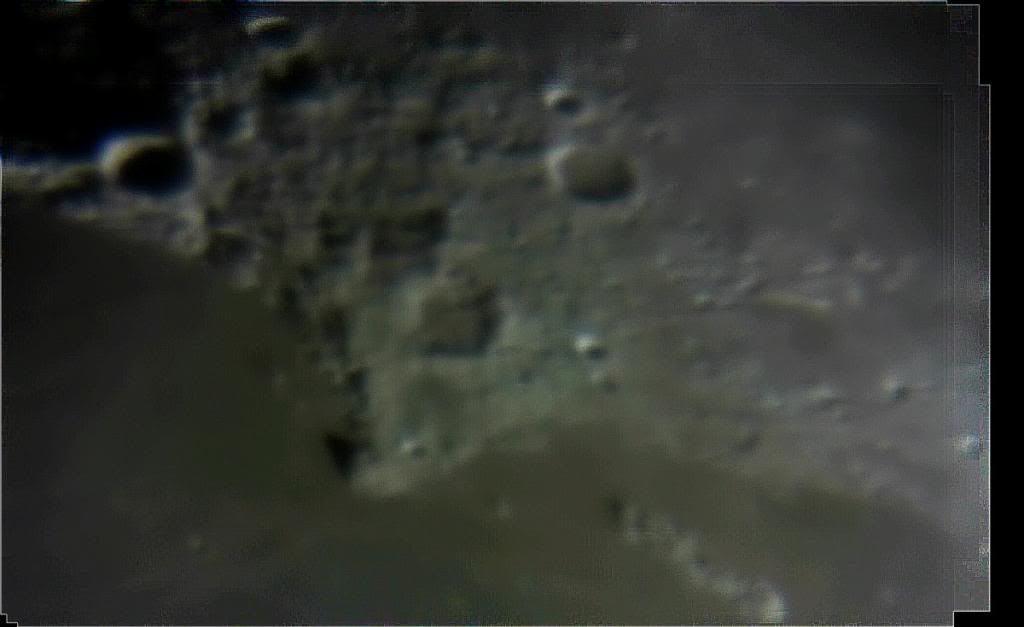
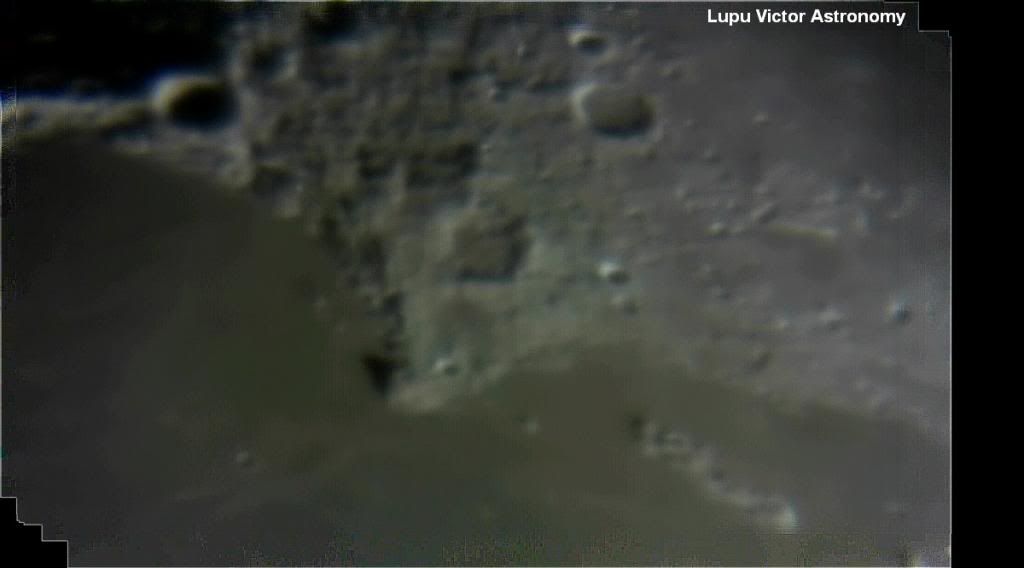
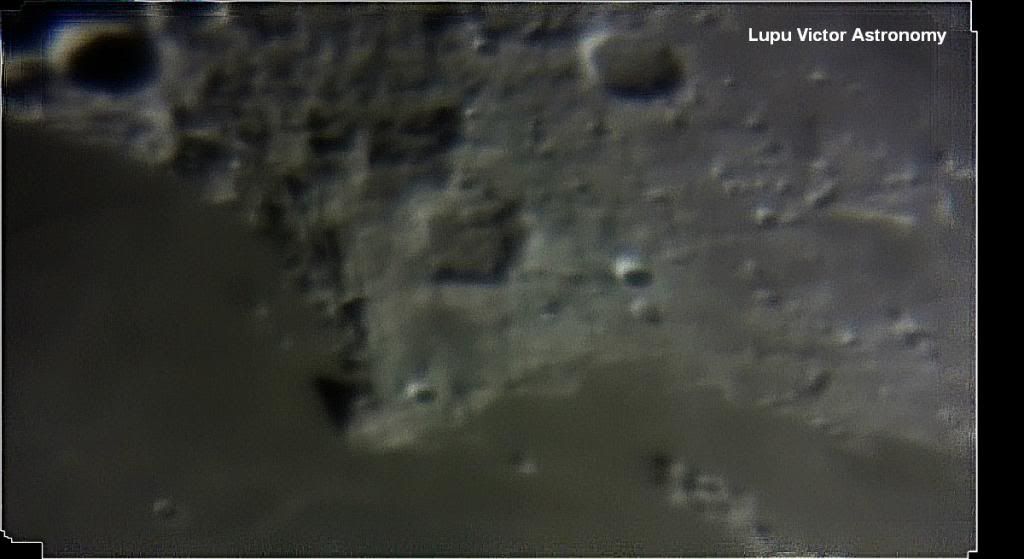
Sinus Iridium, located on Mare Imbrium, is a bay on the northern Moon. In these pictures above processed in Registax, we see more of it's eastern part. Mountains belt surrounding it, is actually the northwestern edge of a crater that has survived the floods of Mare Imbrium lava, and is called Montes Jura.

Bianchini crater (38 km), is near the northern edge of the bay. In photos, it is filled by darkness and only the inner wall of the western edge is illuminated by the Sun.

Maupertuis (46 km), however, is another crater that was more enlightened at that time, which is situated at east corner of the Jura Mountains (central in image), near Promotorium Laplace. Maupertius has an irregular shape with a very hilly and rugged floor.

All Montes Jura, is full of high peaks but dull, small craters and larger, as those mentioned above, easily observable by an 8-inch telescope. La Condamine crater, is observed to the north.

Going forward, east of Sinus Iridium, on Mare Imbriumis a mountain range called Montes Recti, which is like a solitary island in the sea. These mountains taken together have an elongated horizontally shape, like a caterpillar.

Video images were processed in Registax software, video from which were used 11 to 15 frames, with a setting to select only those with 95 percent quality.

Moon Age: 9 days
Phase: 75% (0% = New, 100% = Full)
Distance: 392.049 km


Optics: Celestron C8-Newtonian telescope, 20mm Plossl, 2x Barlow
Mount: CG5 (EQ5)
Camera: Sony CX130
Filter: no
Date: 03/03/2012
Location: Baia Mare, Romania
Processing: Registax, FastStone Image Viewer


Thursday, 17 May 2012

Video by telescope Between Plato and Sinus Iridium through a telescope

In this 3:51 minute long video of the North of the Moon, is presented a region called Sinus Iridium. The image is upside down as seen through the telescope.
Bay of Rainbows, or Sinus Iridium, consists of Montes Jura mountains, forming a bay. It is actually the remnants of the walls of a large crater.
 Isolated and elongated mountain from Mare Imbrium, is Montes Rectum.
On Imbrium sea are visible two different colour shades that divides the sea in two. This highlights shows in fact that there are two types of soil found in this area.
Helicon and Le Verrier are two isolated craters located "offshore", visible in the region where the lunar surface color is darker.


Video: Victor Lupu
Optics: Celestron C8 "-Newtonian telescope, plossl 20mm, 2x Barlow
Mount: CG5 (EQ5)
Device: Sony CX-130
Video mode: Full HD 1080p (1920x1080) progressive
Filter: no
Date: 03/03/2012
Location: Baia Mare, Romania
Processing and Editing: Sony Vegas 10

Tuesday, 20 December 2011

Montes Jura (astronomical telescope Video)

Two clips through my telescope Sinus Iridium on the Moon, or so-called "Bay of Rainbows". The clips are stabilized to eliminate the image shakes.
Golf is almost flooded with sunlight.

Mountain formation surrounding the Gulf (Sinus Iridium), it's called Montes Jura.

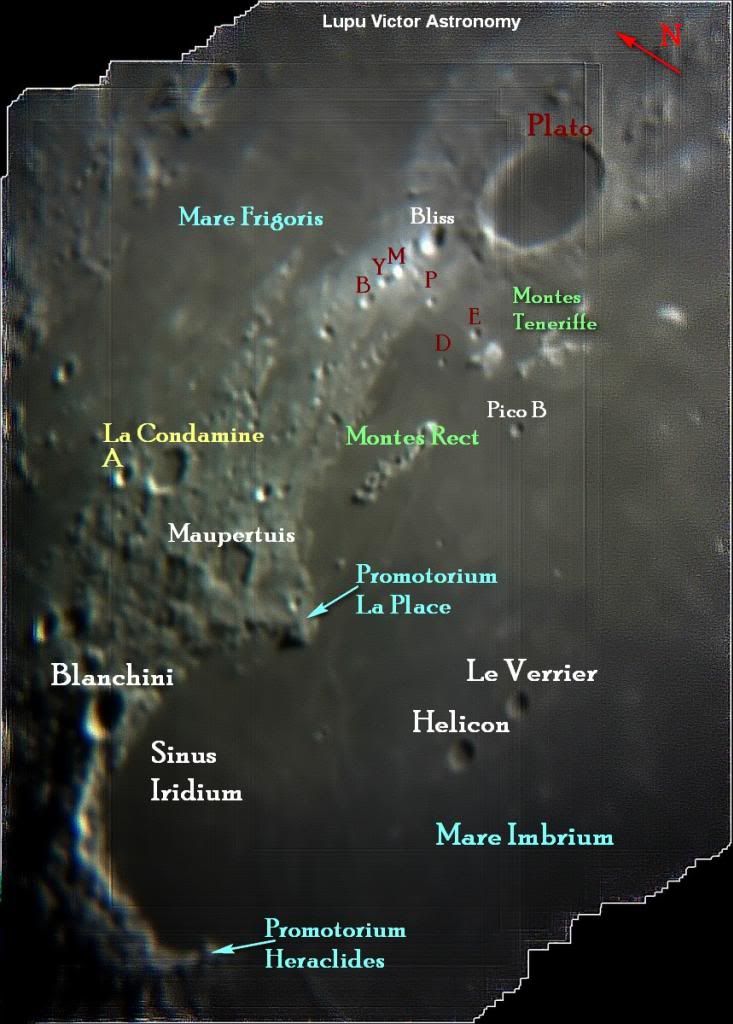
End of the southwest mountains is called Heraclides Promontorium, while the north-east end is called Laplace Promontorium. Peaks of these mountains are caught in sunlight, producing a series of bright dots, and that effect have been described as "jewels".

In the distant past Montes Jura formed the outer wall of a crater about 260 km in diameter. Southeast of the crater was later destroyed and flooded with basaltic lava inside , from Mare Imbrium.

The Jura mountain range, are craters of which I mention Bianchini, who is in the north-western mountains curve. A little further west is Sharp crater and to the northeast is Maupertuis, a ruined crater.


Video: VictorLupu
Optics: CelestronC8 "Newtonian telescope-, plossl20mm, 2x Barlow
Mount: CG5 (EQ5)
Device: at 7x optical zoom SonyCX105
Total Magnification: 700x
Filter: no
Date: 14/05/2011
Location: Baia Mare, Romania
Processing and Editing: Sony Vegas


                     Picture above serves for orientation and I made ​​it on January 17, 2011

Sunday, 20 March 2011

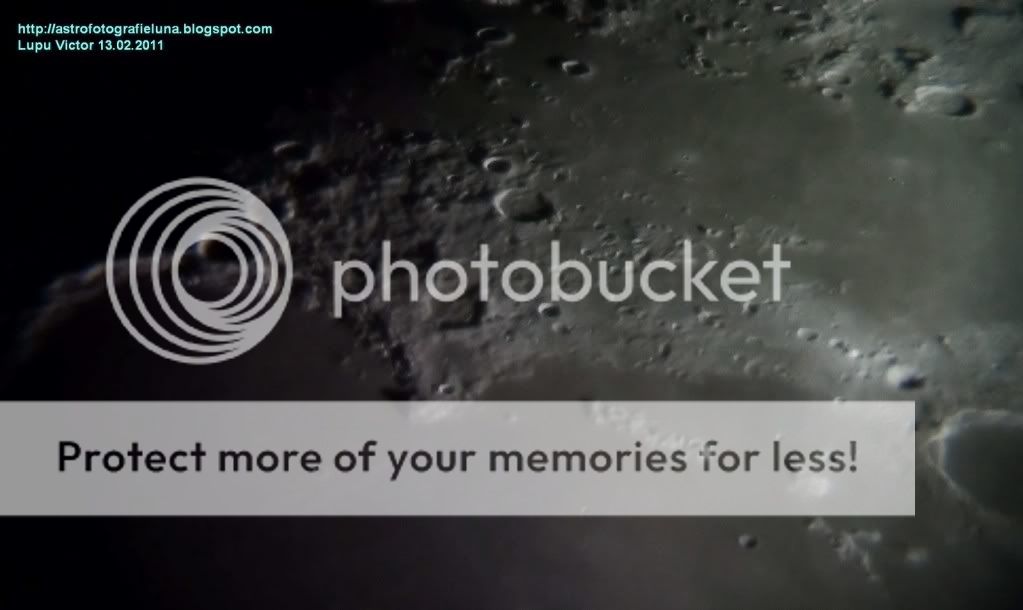
Sinus Iridium-Moon imagery

Photographer: Victor Lupu
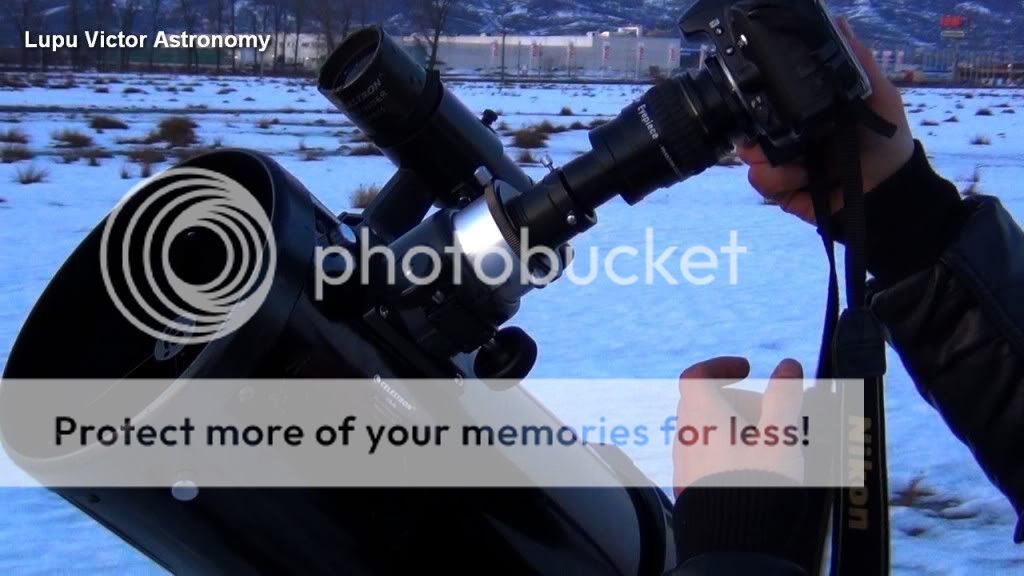
Optics: Celestron C8-Newtonian reflector telescope, plossl 20mm, 2x Barlow
Mount: CG5 (EQ5)
Device: Sony HDR CX105
Filter: No
Date: 13/02/2011
Location: Baia Mare, Romania
Processing: video capture
Bay of Rainbows or Sinus Iridium, sits on top of Mare Imbrium.Sinus Iridium resembles Mickey Mouse's left ear.
It is surrounded by a mountain range called the Montes Jura mountains after the Earth's mountains to the border between France and Switzerland. Unlike terrestrial mountains, created by plate tectonics and erosion, lunar mountains are instead huge rims of impact craters.
. After Sinus Iridium formed, a much larger impact created a basin called Mare Imbrium .The missing half of Sinus Iridium, was probably destroyed in the impact. About 3.1 billion years, long after the impact, lava flooded within Imbrium basin and filled the remaining half of the Sinus Iridium.


Below is a image processed in Registax, 20 frames at 90% Highest quality, made ​​on the same date 13.02.2011. The video from wich I processed this image is HERE.

 
All images are © Copyright 2010-2015 Lupu Victor. All rights reserved.Images may not be reproduced, published, or copied in any form without written permission of the author. Thank you for respecting the intellectual property rights. ASTROFOTOGRAFIA | Lupu Victor Astronomy - Contact - About
Design by Free WordPress Themes | Bloggerized by Lasantha - Premium Blogger Themes | Online Project management