Visit Worldwide Topsites
Showing posts with label Craters-Wolf. Show all posts

Saturday, 26 July 2014

Crater Wolf on the Moon. Images by telescope.


We see an area of the Mare Nubium on which we distinguish some small but distinct craters through a telescope. They are Wolf (25 km), Nicollet (15 km) and Birt (17 km). Of the three, Wolf is interesting. The flooded crater has a heart shaped drawing aspect. Its edge is not continuous, but is interrupted south.

You have to keep in mind, that the images are inverted, as seen through a telescope. So the cardinal points are also reversed.

East of Wolf, is Nicollet (left), a funnel-shaped crater as Birt, which is east of Nicollet.

In this area there are several craters almost completely covered by lava that can be seen only through an astronomical telescope.

For example, the West's Wolf, observe a crater, like I drew a circle on the Moon. It's a satellite crater of Wolf, Wolf T (27 km). It has such an aspect was almost completely covered by lava (Gould (34 km) and Opelt (49 km) are two other similar craters south of Wolf).

And to the west, is the terminal, the boundary between light and darkness, where we find Bullialdus (61 km) crater and Bullialdus A (26 km) and B (21 km). All are filled with darkness.


Moon Age: 9.05 days
Phase: 70.5% (0% = New, 100% = Full)
Distance: 399.221 km


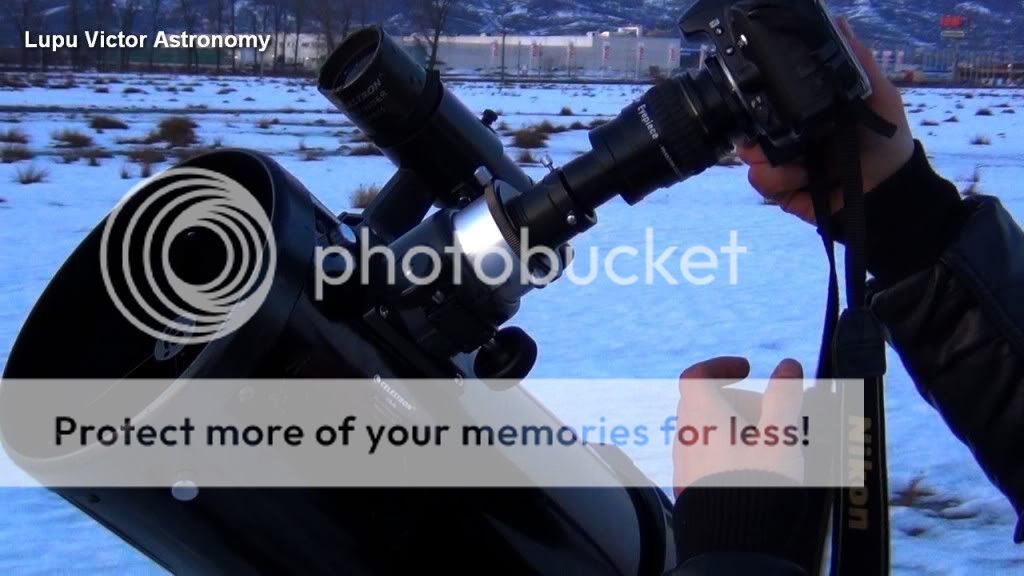
Optics: Celestron C8-Newtonian telescope, 20mm Plossl, 2x barlow
Mount: CG5 (EQ5)
Camera: Sony CX130
Filter: no
Date: 10/03/2014
Location: Baia Mare, Romania
Processing: FastStone Image Viewer





Saturday, 9 April 2011

Wolf crater


Photographer: Victor Lupu
Optics: Celestron C8-Newtonian reflector telescope, plossl 20mm, 2x Barlow
Mount: CG5 (EQ5)
Device: Sony HDR CX105
Filter: No
Date: 13/02/2011
Location: Baia Mare, Romania
Processing: video capture


       Wolf Crater (25 km) is on Mare Nubium on the center-west of the Moon-in center of first photo.It is a heart shaped crater in my opinion.The interior of this crater has been completely flooded by lava, leaving only an irregular broken edge of 700 m. high walls above the surface.
   Other craters in the first photo are Nicollet (15 km) above the north-west of Wolf and the two craters in the bottom right are Bullialdus A and B.
        Crater is the name is from Maximilian Franz Joseph Cornelius Wolf (21.6.1863-3.10.1932), which was a german astronomer and a pioneer in the field of astrophotography. He was chairman of astronomy at the University of Heidelberg and Director of the Observatory Heidelberg-Königstuhl Landessternwarte 1902-1932.

P.S. -My name Lupu (romanian language),is translated in english Wolf. :)

 
All images are © Copyright 2010-2015 Lupu Victor. All rights reserved.Images may not be reproduced, published, or copied in any form without written permission of the author. Thank you for respecting the intellectual property rights. ASTROFOTOGRAFIA | Lupu Victor Astronomy - Contact - About
Design by Free WordPress Themes | Bloggerized by Lasantha - Premium Blogger Themes | Online Project management