Visit Worldwide Topsites
Showing posts with label Sinus Lunicus. Show all posts

Monday, 19 March 2012

Registax: Archimedes Autolycus and Aristillus through astronomical telescope.


Picture 1-3: 259 frames, 90% Lowest quality.

In these pictures of the Moon's surface, are craters located on the northern hemisphere. Craters are apparently close to each other.
Aristillus, unlike the Autolycus, that is smaller, below Aristillus, shows the center of some central peaks. An interesting feature of Aristillus, is the north-east wall, on which sis seen two channels, forked on the outside and down the crater to its floor, they are joined. Most likely, in this channel, lava once flowed.

On the floor of the crater Archimedes, it seems that someone has gone over it with a  broken bag of flour. The horizontal white stripes in the crater, can be only be ejection soil  that spread from onother crater  afterviolent impact.
Region between the three craters, is called Sinus Lunicus.

 Montes Spitzbergen is a high formation north of Archimedes, a distance of a crater, and they are solitary mountains located on Mare Imbrium.


Photographer: Victor Lupu
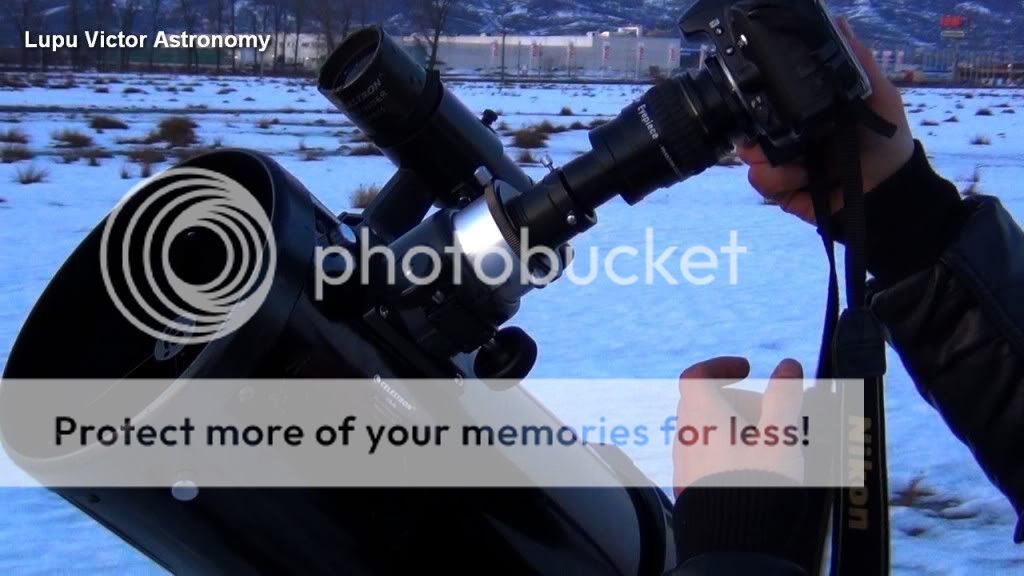
Optics: Celestron C8 inch reflector telescope-Newtonian, plossl 20mm, 2x Barlow
Mount: CG5 (EQ5)
Camera: Sony HDR CX105 to 8x optical zoom
Total Magnification: 800x
Filter: No
Date: 20/07/2011
Location: Baia Mare, Romania
Processing: Registax

Thursday, 23 February 2012

VideoAstro Sinus Lunicus and Aristillus Autolycus and Archimedes lunar craters through the telescope.

The three craters Aristillus, Autolycus and Archimedes are close to each other on the north central Moon seen from Earth, and forms a triangle in the center of which is a depression called Sinus Lunicus.

      Sinus Lunicus-de 126 km (in Latin "Lunik Bay"), is a large lunar area, along the southeast edge of Mare Imbrium. It consists of the area bounded by the southwest craters Archimedes southwest, Autolycus southeast, and Aristillus at northeast. Golf is open to the northwest, and meet Montes Spitzbergen, a small mountain range.

This gulf was called Bay of Lunik by International Astronomical Union (IAU) in 1970 to honor the landing of the first space probe that has made contact with another interplanetary body. Luna 2 landed between Archimedes and Autolycus craters on September 14, 1959.


Video: Victor Lupu
Optics: CelestronC8 "-Newtonian telescope, plossl20mm, 2x Barlow
Mount: CG5 (EQ5)
Device: SonyCX105 at 7x optical zoom
Total Magnification: 700x
Filter: no
Date: 20/07/2011
Location: Baia Mare, Romania
Processing and editing: Sony Vegas 10

 
All images are © Copyright 2010-2015 Lupu Victor. All rights reserved.Images may not be reproduced, published, or copied in any form without written permission of the author. Thank you for respecting the intellectual property rights. ASTROFOTOGRAFIA | Lupu Victor Astronomy - Contact - About
Design by Free WordPress Themes | Bloggerized by Lasantha - Premium Blogger Themes | Online Project management