Visit Worldwide Topsites
Showing posts sorted by relevance for query birt. Sort by date Show all posts

Friday, 8 February 2013

Hidden crater under Mare Nubium?


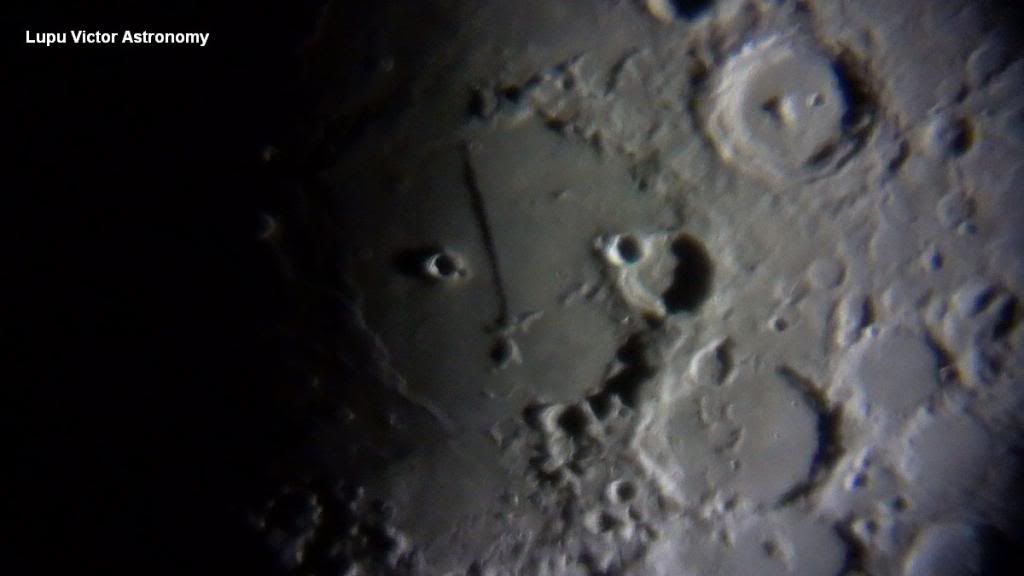
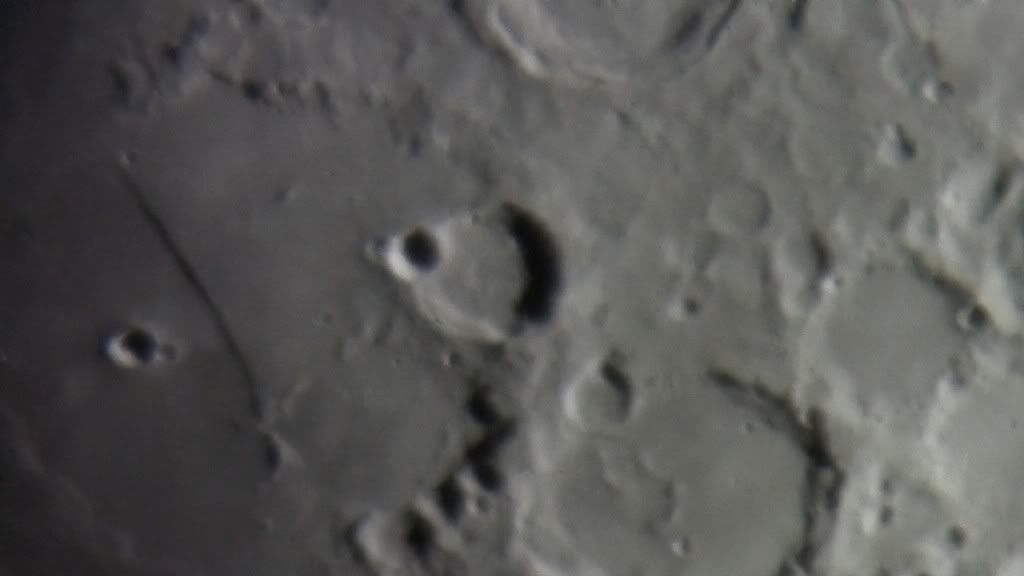
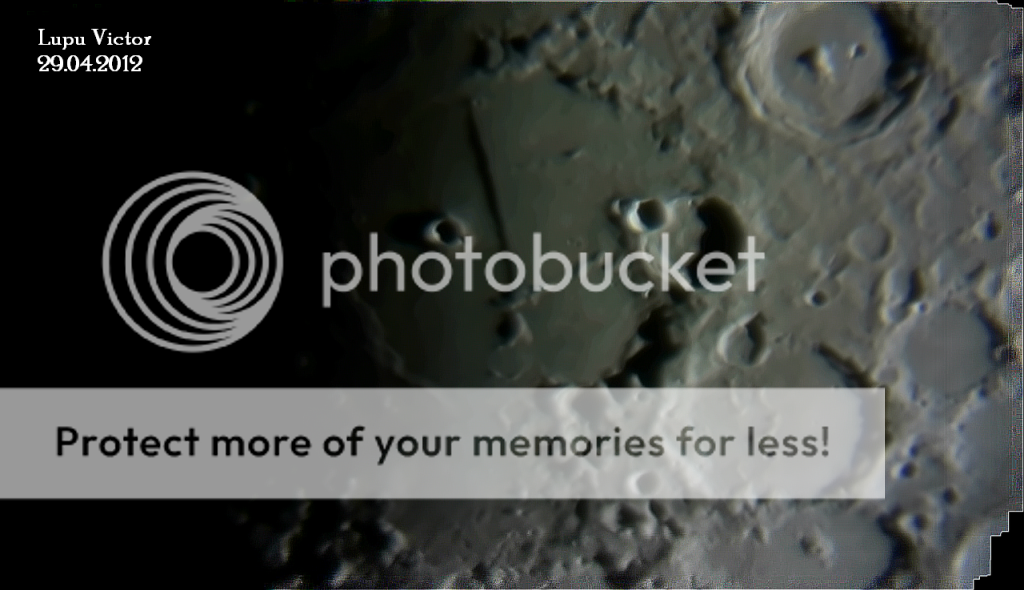
Birt (17 km), is a small crater, as the length of it's name by the way, located left of the Rupes Recta wall. This as shownis a circular, cone-shaped crater. South East, superimposed on the edge, is even a smaller crater, called Birt A (7 km). Birt's floor is very small, if you imagine a cone (the floor is not visible in images because it is in the dark). At the northwest of the crater, is Rima Birt, a "ditch" that starts at one end with the crater Birt F (3 km), and ends at the other end with Birt E (5 km).

Rupes Recta in these images, is very distinct, because the Moon phase at that time, that makes this wall very clear. Observed overall, it gives the impression that there are two tectonic plates, and one yielded and became lower than the right one. Rupes Recta resembles as a fencing sword, especially in these lighting conditions.


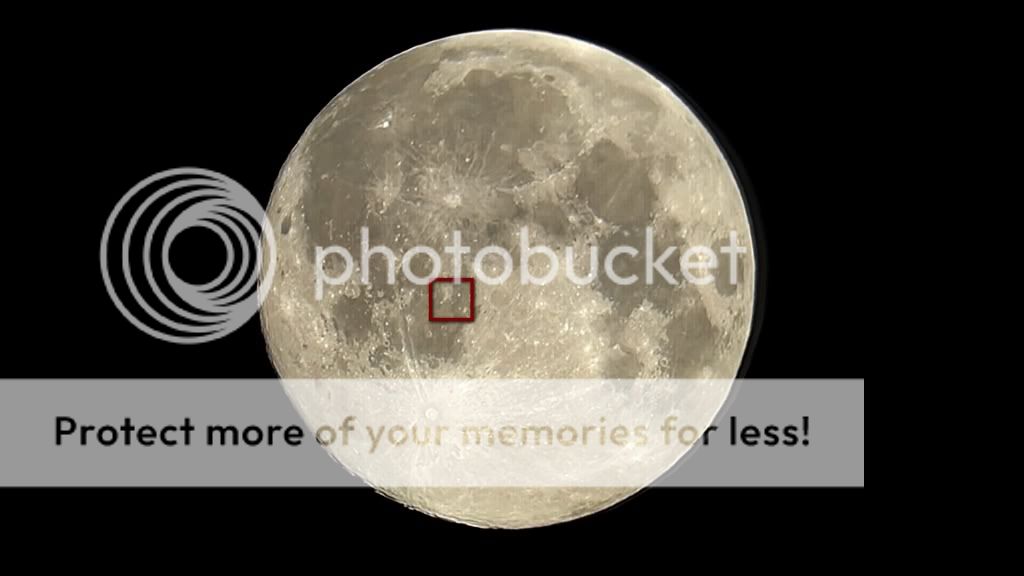
This area seen in photo, is rich in features. It is an area that shows craters mountain regions and "Rupes". The Moon, has regions that have to be careful observed if you want to analyze it. What I find interesting here, is the "hidden" region of Nubium basin. This is a possible large crater in size, bigger even than the crater Ptolemaeus (Ptolemy), and which it fits even craters like Thebit (57 km), Birt (17 km), and Rupes Recta. I do not know if it was discussed about the possibility that in this area to be a hidden crater underneath Mare Nubium, but as shown by relief features, they fit with my hunch. In the picture below, notice what area it is. The eastern rim of the fictional crater, is high, mountainous, and on it is located the crater Thebit. In contrast to the wall, to the west there is a higher chain, which seems to continue the circle, giving the suspect, that this is a huge crater, which would have a size of approx. 200 km.

Moon age: 7 days
Phase: 51% (0% = New, 100% = Full)
Distance: 384.488 km


Optics: Celestron C8-Newtonian telescope, 20mm Plössl, 2x barlow
Mount: CG5 (EQ5)
Camera: Sony CX130
Filter: no
Date: 29/04/2012
Location: Baia Mare, Romania
Processing: video capture, FastStone Image Viewer


Photo above is made in April 13, 2011.


LinkedIn comments for this article:

Kevin Read (FRAS)I have always assumed that the crater outlined by you was a crater because it seems so obvious. As for the crack I believe that this is a fault caused by the shrinkage of the Moon as it gets colder. There are many shrinkage features in the form of anticlines in some of the larger craters known as 'wrinkle ridges'.

Wednesday, 17 August 2011

Craters on the Moon Purbach Thebit and Rupes Recta


Photographer: Victor Lupu
Optics: Celestron C8-Newtonian telescope, plossl 20mm, 2x Barlow
Mount: CG5 (EQ5)
Device: Sony CX105 at 10x optical zoom
Total magnification: 500x
Filter: No
Date: 13/04/2011
Location: Baia Mare, Romania
Processing: Sony Vegas 10 video captures
This region of the Moon from the southeast edge of the Mare Nubium I find interesting because of the relief.
Rupes Recta is a straight wall 110 km. in lenght and is 240 meters high on the Mare Nubium. This is a favorite area on the Moon for amateur astronomers.
Isolated crater Birt (17 km), is on the right of Rupes Recta also on Mare Nubium, and has a depth of 3.5 km.Birt is shaped bowl and is intersected with the edge of the smaller crater Birt A (7 km).
I've posted photos of Thebit crater (57 km), but it was in sunlight and not have seen some features. Here you can see better the crater floor which has no central peak.The depth of Thebit is 3.3 km.
Purbach (118 km), is part of a trio of craters with Walther (128 km) and Regiomontanus (110 km) aligned from south to north, and Purbach is the northernmost.

Saturday, 26 July 2014

Crater Wolf on the Moon. Images by telescope.


We see an area of the Mare Nubium on which we distinguish some small but distinct craters through a telescope. They are Wolf (25 km), Nicollet (15 km) and Birt (17 km). Of the three, Wolf is interesting. The flooded crater has a heart shaped drawing aspect. Its edge is not continuous, but is interrupted south.

You have to keep in mind, that the images are inverted, as seen through a telescope. So the cardinal points are also reversed.

East of Wolf, is Nicollet (left), a funnel-shaped crater as Birt, which is east of Nicollet.

In this area there are several craters almost completely covered by lava that can be seen only through an astronomical telescope.

For example, the West's Wolf, observe a crater, like I drew a circle on the Moon. It's a satellite crater of Wolf, Wolf T (27 km). It has such an aspect was almost completely covered by lava (Gould (34 km) and Opelt (49 km) are two other similar craters south of Wolf).

And to the west, is the terminal, the boundary between light and darkness, where we find Bullialdus (61 km) crater and Bullialdus A (26 km) and B (21 km). All are filled with darkness.


Moon Age: 9.05 days
Phase: 70.5% (0% = New, 100% = Full)
Distance: 399.221 km


Optics: Celestron C8-Newtonian telescope, 20mm Plossl, 2x barlow
Mount: CG5 (EQ5)
Camera: Sony CX130
Filter: no
Date: 10/03/2014
Location: Baia Mare, Romania
Processing: FastStone Image Viewer


Monday, 8 October 2012

Video by astronomical telescope Rupes Recta on the Moon.

This video shows the Moon upside down, as seen through the telescope.

Rupes Recta 22.0 S, 7.0 W, is a fracture, resulted from crustal extension on the point of resulted fracture. Cracks happens when two parallel faults are side by side and a block of crust between them is falling. The term "abrupt" or "straight wall" is also used for this type of feature.

The famous "straight wall" Rupes Recta located on the Nubium sea, is certainly one of the most interesting feature of the Moon. Note Rupes Recta in this video, which is a vertical slope that rises to 2.5 km. It is much better to see it when the sun is at a low angle.

Well-defined crater Birt of 17 km, is located to the west and at east is Thebit.


Optics: CelestronC8 "-Newtonian telescope, plossl20mm, 2x Barlow
Mount: CG5 (EQ5)
Device: Sony CX-130
Video mode: Full HD progressive 1920x1080
Filter: no
Date: 29/04/2012
Location: Baia Mare, Romania
Processing and editing: Sony Vegas 10


The image above is made on April 13, 2011.

Tuesday, 13 September 2011

Video-craters on the center of Moon through the telescope

         Craters shown in this video are in sunlight and are located on the center of the Moon.
         At second 06 of the video, is Frisius crater (88 km) and at the second 11 starts to see Aliacensis and Werner. Further, from second 20, are starting out the three huge craters, Walther (128 km), Regiomontanus (110 km), and Purbach (118 km). The image ends with the Rupes Recta and the small crater Birt (17 km) on Mare Nubium.
         In the next image,at second 43 of the video, there are craters near to each other Pallas (50 km) and Murchison (58 km).
         Notable in this video through the telescope, are the rays of Tycho, passing over most of the craters, and coming from the bottom up.
The video has stabilized images in Sony Vegas 10.


Video: Victor Lupu
Optics: Celestron C8 "-Newtonian telescope, plossl 20mm, 2x Barlow
Mount: CG5 (EQ5)
Device: Sony CX105 in 7x optical zoom
Total Magnification: 700x

Eyepiece adapter: 1.25"
Filter: No
Date: 12/05/2011
Resolution: 1920x1080
Location: Baia Mare, Romania
Edit: Sony Vegas Video stabilized video

Saturday, 23 July 2011

Guericke Parry craters and Mare Nubium


Photographer: Victor Lupu
Optics: Celestron C8-Newtonian telescope, plossl 20mm, 2x Barlow
Mount: CG5 (EQ5)
Device: Sony CX105
Filter: No
Date: 11/05/2011
Location: Baia Mare, Romania
Processing: video captures


         Guericke (58 km), is the remnant of a lunar crater on the northern Mare Nubium. To the northwest is Fra Mauro formation, with Bonpland and Parry craters. To the east are craters Kundt  (11 km) and Davy (35 km).
Guericke's surviving edge was damaged and partially submerged in basalt lava covering the floor. The wall is now little more than some circular increases. The remnant flooded crater  Guericke F (21 km) is attached outside, to the southwest.
Crater name is given from Otto von Guericke (20 November 1602-11 May 1686), which was a german scientist, politician and inventor.


        Parry crater (48 km), have about the same features,being flooded with lava. The crater name is not written in the photo below because I forgot, but is north of Guericke and you can see only the light  edges, the bottom of the crater being in dark.Name of the crater comes from Sir William Edward Parry (19 December 1790-8 July 1855), which was an English admiral and Arctic explorer, and who in 1827 tried one of the first expedition to the North Pole.

        Mare Nubium ("sea of clouds") -715 km diameter ,it is located in Nubium Basin,on the southeast of Oceanus Procellarum. The basin is considered to be pre-Nectarian, the material around the mare being from lower Imbrian era and the basin material,from upper Imbrian era. First images ever made ​​by Lunar Reconnaissance Orbiter was from Mare Nubium.
Other craters in these photos are : Arzachel,Alphonsus,Alpetragius,Thebit,Davy (35 km),Lassel (23 km),but also Rupes Recta and Rima Birt.


Friday, 18 October 2013

Rupes Recta " the straight wall " or " the sword " on the Moon.

120 frames at 90% best quality, Gaussian, in Registax.
5 frames at 100% best quality, in Registax.
I am sure that features which captivates the viewer's attention in these images are Rupes Recta and Thebit (57 km) crater . The terminal , the boundary between light and dark on this Moon phase , it is left in images , and gets extremely close to the small crater Birt (17 km) , located on the Mare Nubium, west of Rupes Recta .

I said in another article , that the region surrounding Rupes Recta, could be a flooded crater that still preserves its vaguely circular shape after lava penetration in it . We can realize that my opinion is true, by looking at Thebit P (78 km), crater which is in the same measure flooded too that we can barely distinguish its edge .

Rupes Recta , or as it is also called " the straight wall " has a length of 110 km and reaches a height of 300 m In these images , the shadow of this wall is beautifully projected on Mare Nubium , highlighting this characteristic of the Moon hunted by many amateur observers . If the Sun would shine on the opposite side of this wall, would have been appeared as a stright white stripe as a shining sword . Anyway you look at this wall under any lighting conditions , it is a pleasure for any observer whether amateur or advanced.

This sword , viewed as a whole, is made up of several features that make it look like this . The blade of the sword is the " straight wall " after that, the the handle of the sword is made of some mountains, and a flooded crater which has left only half edge. I suspect that it is true after I have analyzed several photos of the area taken by NASA.

Captured video images : Hidden crater under Mare Nubium?

Age of the Moon: 7 days
Phase: 51% (0% = New, 100% = Full)
Distance: 384.488 km


Optics: Celestron C8-Newtonian telescope, 20 mm Plossl, 2x Barlow
Mount: CG5 (EQ5)
Camera: Sony CX130
Filter: no
Date: 29.04.2012
Location: Baia Mare, Romania
Processing: Images in Registax, FastStone Image Viewer


Video capture

 
All images are © Copyright 2010-2015 Lupu Victor. All rights reserved.Images may not be reproduced, published, or copied in any form without written permission of the author. Thank you for respecting the intellectual property rights. ASTROFOTOGRAFIA | Lupu Victor Astronomy - Contact - About
Design by Free WordPress Themes | Bloggerized by Lasantha - Premium Blogger Themes | Online Project management