Visit Worldwide Topsites
Showing posts with label Craters-Aliacensis and Werner. Show all posts

Monday, 29 February 2016

Lunar craters through astronomical telescope. Apianus, Alascensis and Playfair.

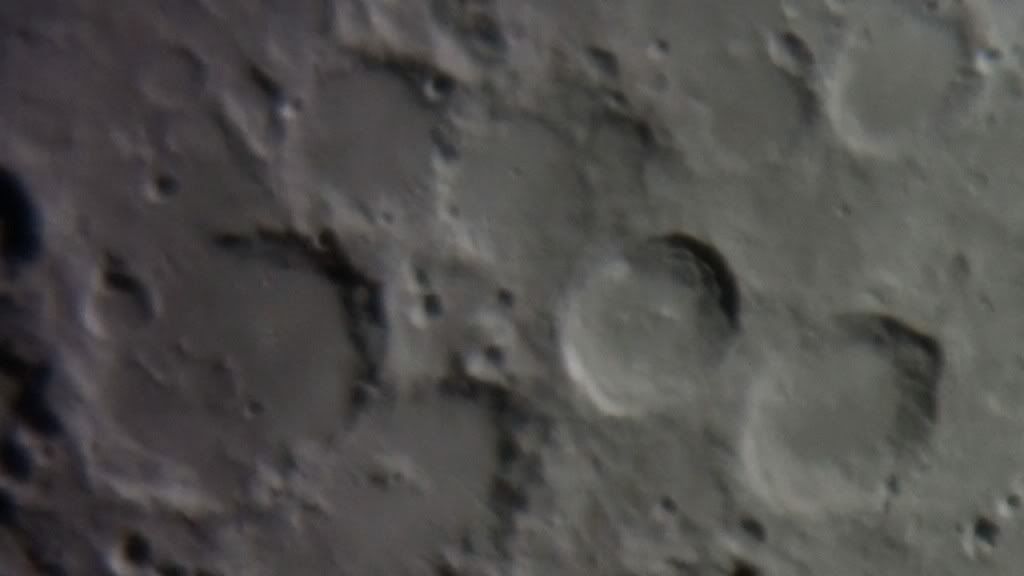
I caught in these images craters in dim light located at the terminator. Most important in size, are Playfair G (94 km), Apianus (63 km), Aliacensis (80 km) and Playfair (48 km), the rest being smaller satellite craters of them. Located closest to the terminator is Aliacensis, and therefore its bottom is not available for observation being immersed in shadow. In the same situation is the crater Krusenstern (47 km) south of Playfair G.

Playfair G's floor is barely visible to the south of its inner south walls are illuminated by the sun, revealing small craters on them.
Lunar terminator, makes to be distinguished out more clearly how much Playfair crater is superimposed over Playfair G's east.

Apianus, it is also shady and about 3 quarters of its eastern wall, and what remains in light reveals a smooth floor. On the southeastern edge of the crater we can distinguish the small satellite crater, Apianus B (10 km).


Magnitude: -10.82
Phase: 0.46
Distance: 399.283 km
Illuminated: 45.6% (0% = New, 100% = Full)


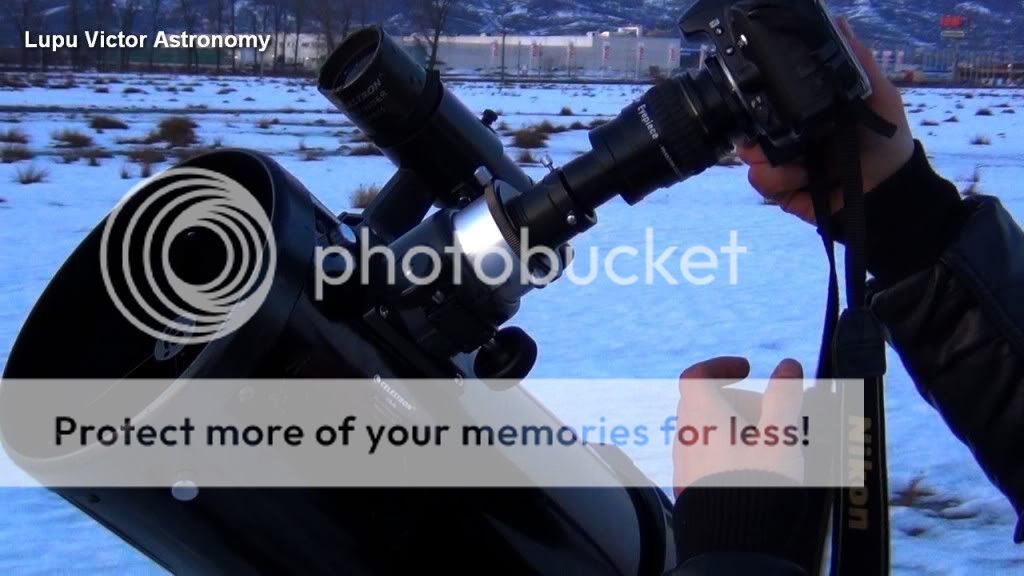
Astronomical instrument: Celestron C8-Newtonian telescope,
Eyepiece: Plossl 20mm, 2x Barlow
Mount: CG5 (EQ5)
Camera: Sony CX130
Filter: no
Date: 30.01.2012
Location: Baia Mare, Romania
Processing: FastStone Image Viewer


In the picture below are labeled craters and other lunar features in the region. To better understand this photo, you should note that the label with the name or the letter of larger craters could be found at their center, and on the small craters, you should find them around them, usually above.


Thursday, 17 July 2014

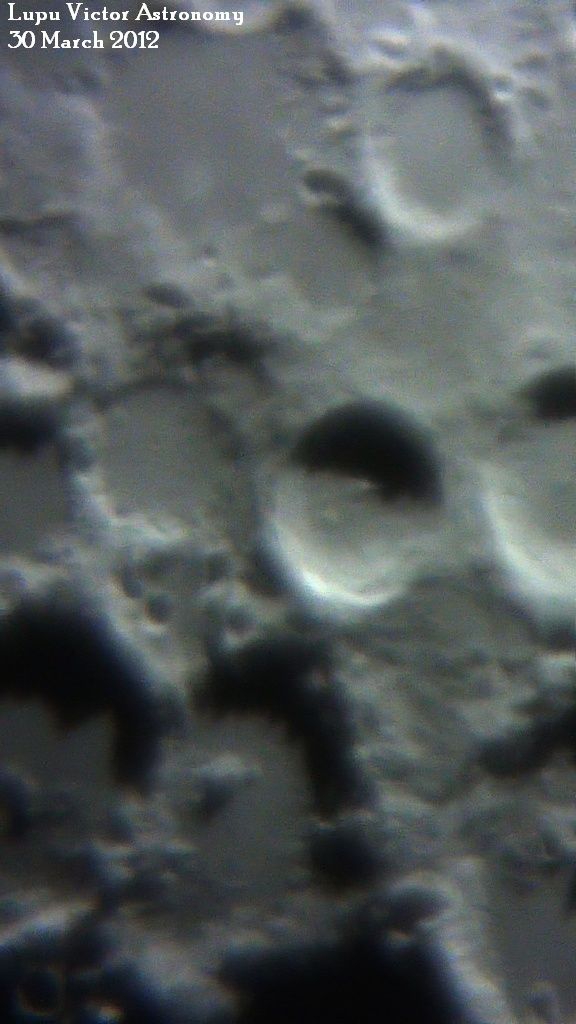
Reflector telescope images of Aliacensis and Werner.


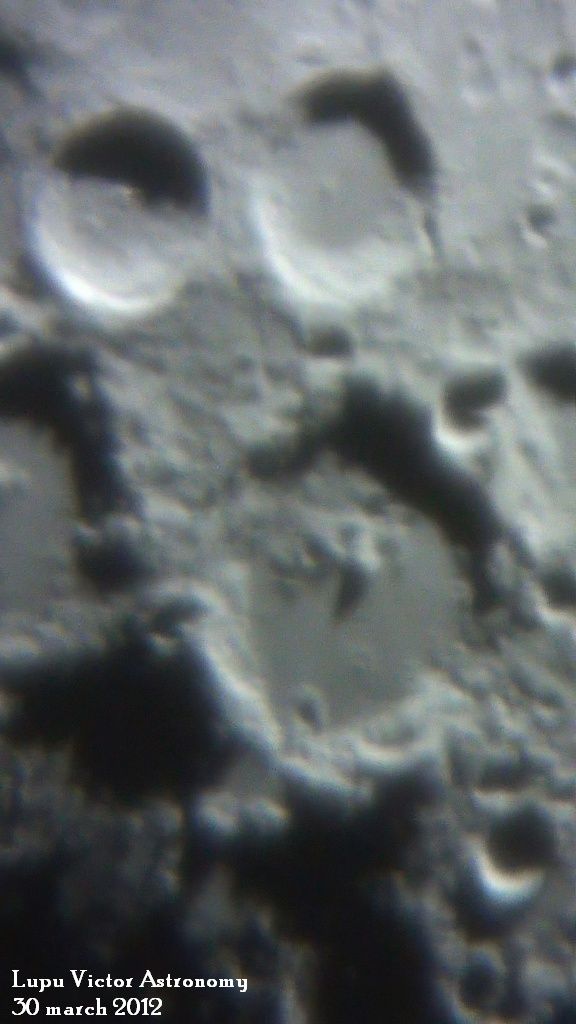
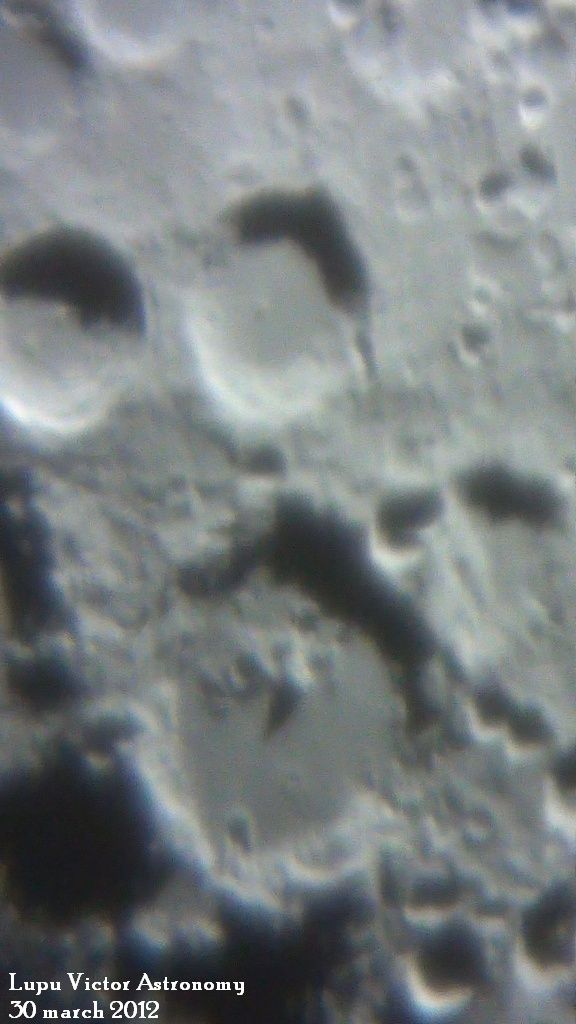
Aliacensis and Werner craters (80/70 km), not only are close to each other, but are among the few craters in the area who have a well-defined circular shape and sharp edges, not bombarded as others nearby.
 

Even if they share these characteristics, however, they are distinguished by interior walls. Aliacensis has terraces thru the floor, and Werner, not.
 

Aliacensis's north is Bianchinus (56x68 km), a crater that is so destroyed, that can hardly be recognized. East of Aliacensis, notice an ordered crater called Apianus (63 km).

Aliacensis's name, is from Pierre d'Ailly, in Latin Aliacensis. It was an astrologer and cardinal priest, and lived between 13th and 14th centuries. His papers were printed only in the 15th century. Aliacensis, inspired Christopher Columbus to approximate how big is the Earth.


Optics: Celestron C8 "-Newtonian telescope, 20 mm Plossl, 2x Barlow
Mount: CG5 (EQ5)
Device: Sony CX-130
Video Mode: Full HD 1920x1080 progressive
Filter: no
Date: 30/03/2012
Location: Baia Mare, Romania
Processing and editing: Sony Vegas 10 FastStone


Monday, 7 July 2014

Lunar craters filmed through telescope: Walther.


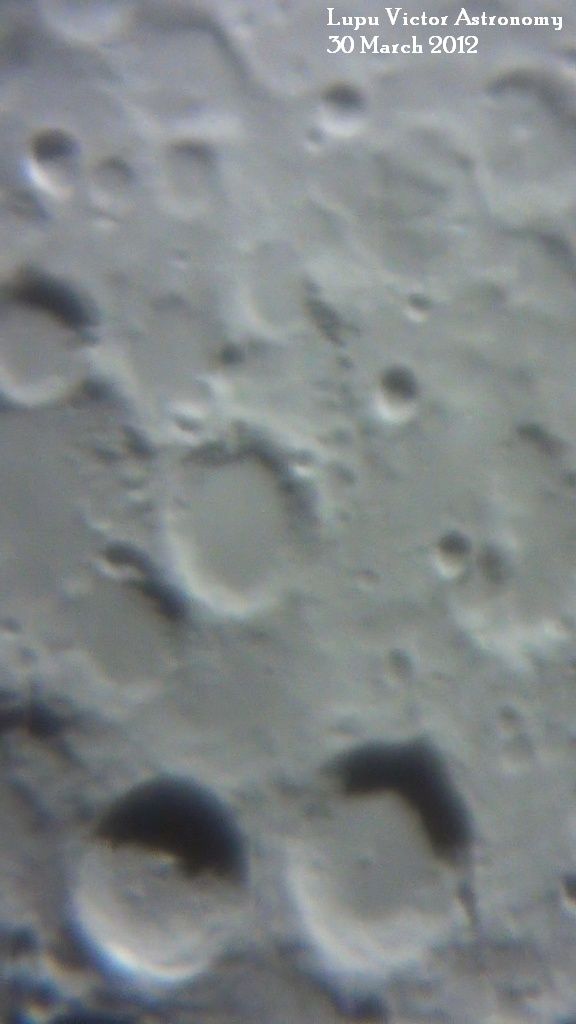
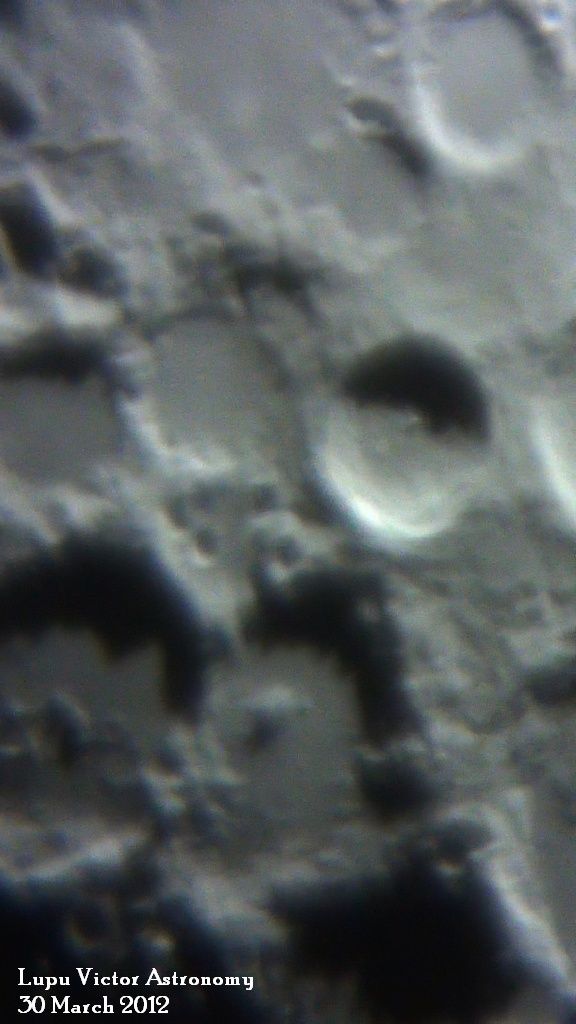
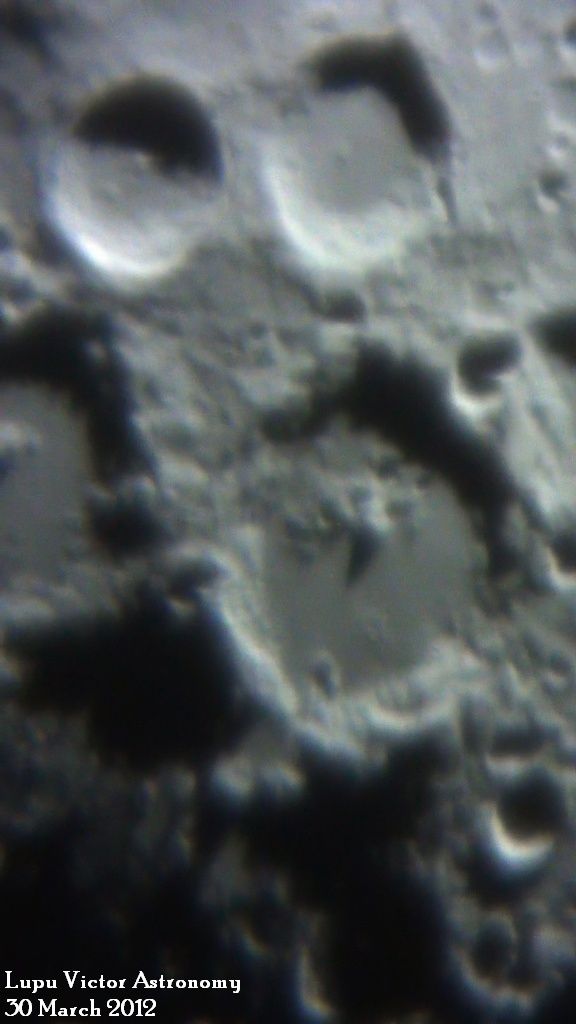
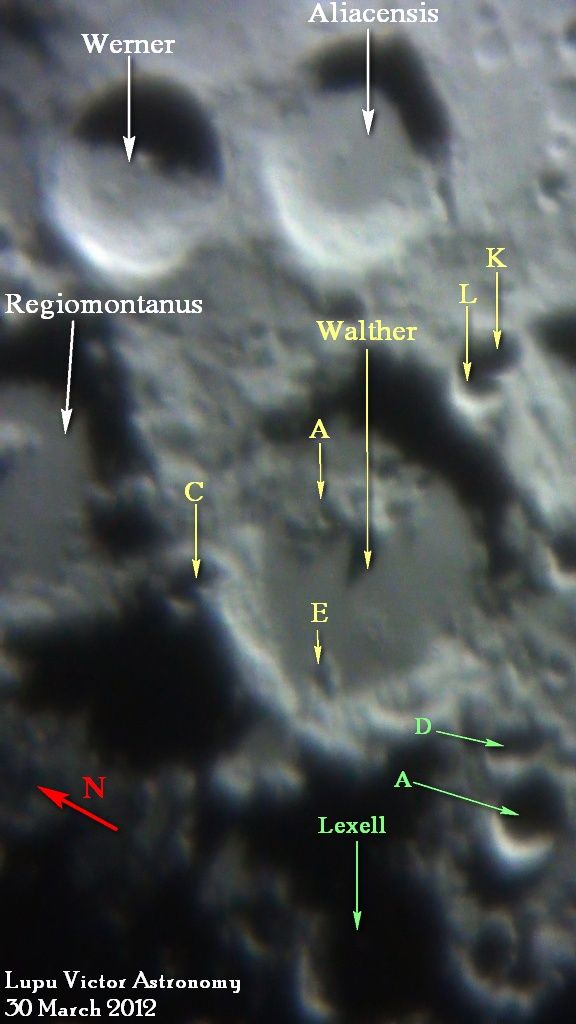
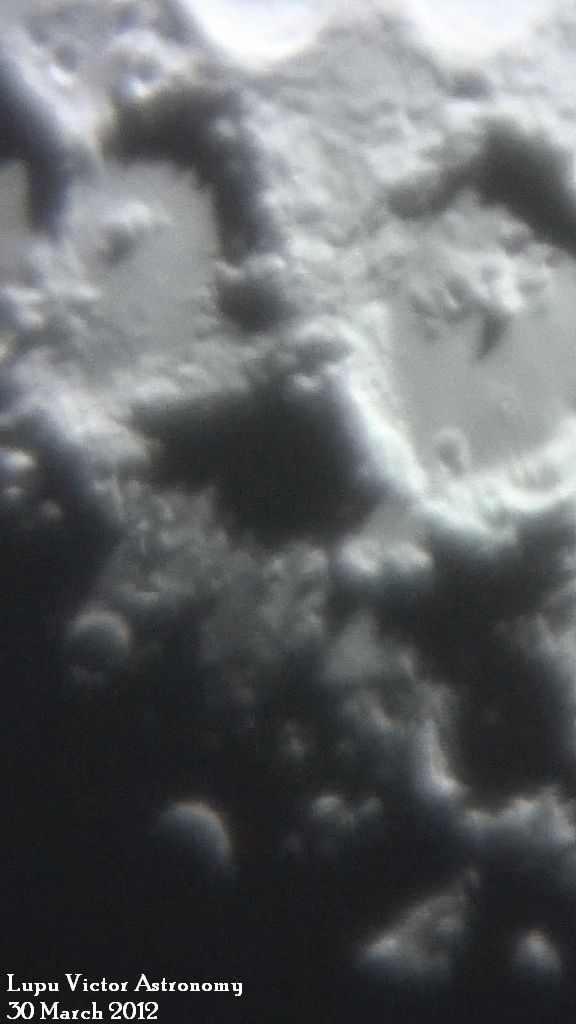
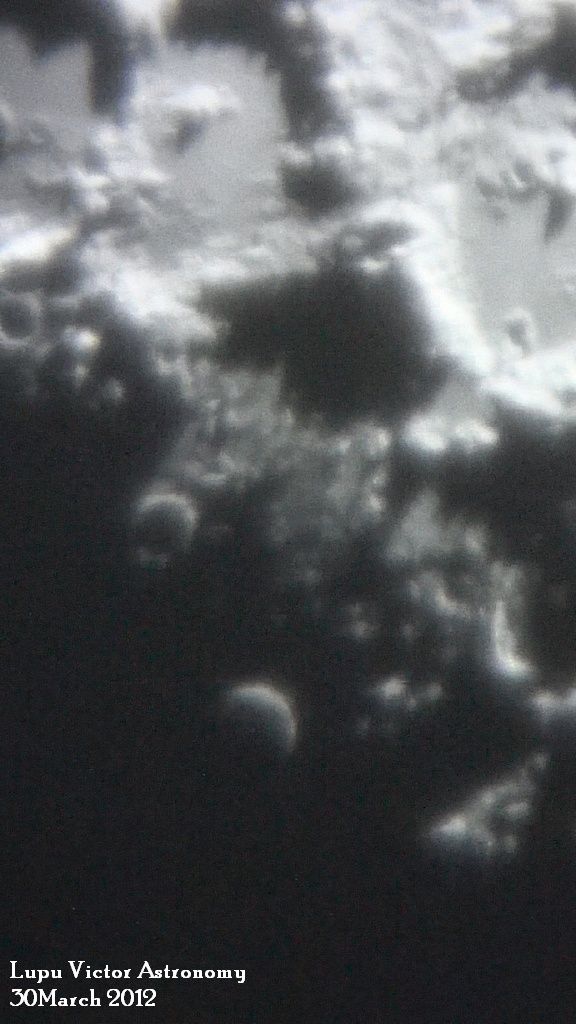
This area is not one that if you observe it will make a good impression to you, given that it is so troubled by serious impacts. Walther (128 km), is one of these craters resulted from these impacts. Its floor is low and smooth to the west, and high with hills to the east.
 

Although the edge is easily distinguished through a telescope, it is highly affected by other smaller impacts and besides this, is irregular from the beginning, when it was created.
 

This crater is filled both inside and outside by its satellite craters.
 On Walther and all his neighboring craters are scattered ejected materials from the crater Tycho (85 km), which have a white colour, making it to shine only on the intense sunlight.
 

Because in these pictures the sun does not illuminate this area from a high angle, we observe on the crater more "disorder" in its appearance, fueled by the shadows of its edge.
Other craters seen here are: Aliacensis and Werner (80/70 km), Purbach and Regiomontanus (118/126 km).


Optics: Celestron C8 "-Newtonian telescope, 20mm Plossl, 2x Barlow
Mount: CG5 (EQ5)
Device: Sony CX-130
Video Mode: Full HD 1920x1080 progressive
Filter: no
Date: 30/03/2012
Location: Baia Mare, Romania
Processing and editing: Sony Vegas 10 FastStone


Imagine pentru orientare din 29 aprilie 2012.


Wednesday, 2 November 2011

Aliacensis and Werner-Lunar images of craters from the center

Photographer: Victor Lupu
Optics: Celestron C8-Newtonian telescope, plossl 20mm, 2x Barlow
Mount: CG5 (EQ5)
Device: Sony CX105 to 8x optical zoom
Total magnification: 800x
Filter: no
Date: 12/05/2011
Location: Baia Mare, Romania
Processing: FastStone, video captures


The floors of both lunar craters Werner and Aliacensis are totally visible because they are filled by sunlight. Other craters seen in the first photo, are Walther, Purbach and Regiomontanus.

The image below is made ​​on November 14, 2010.

Wednesday, 13 July 2011

Walther Purbach Aliacensis and Werner lunar craters

Photographer: Victor Lupu
Optics: Celestron C8-Newtonian telescope, plossl 20mm, 2x Barlow
Mount: CG5 (EQ5)
Device: Sony CX105
Filter: No
Date: 11/05/2011
Location: Baia Mare, Romania
Processing: Sony Vegas 10 captures video
Walther, Purbach ,Regiomontanus , Aliacensis and Werner are neighboring craters, but also with Deslandres and Blanchinus. The area they are in is full of huge craters. A tourist would certainly not be bored when he gets there .At least for climbing the "mountains" that separate craters between them.

Sunday, 6 March 2011

Apianus G, Aliacensis and Warner craters

Photographer: Victor Lupu
Optics: Celestron C8-Newtonian reflector telescope, 20mm plossl, 2x Barlow
Mount: CG5 (EQ5)
Device: Sony HDR CX105
Filter: No
Date: 09/02/2011
Location: Baia Mare, Romania
Processing: Sony Vegas 10 Registax

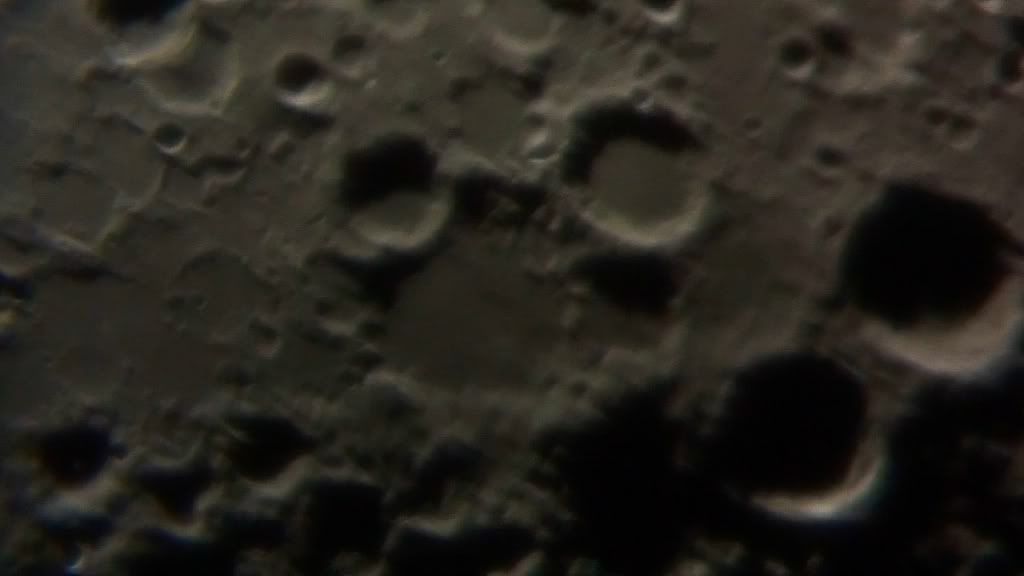
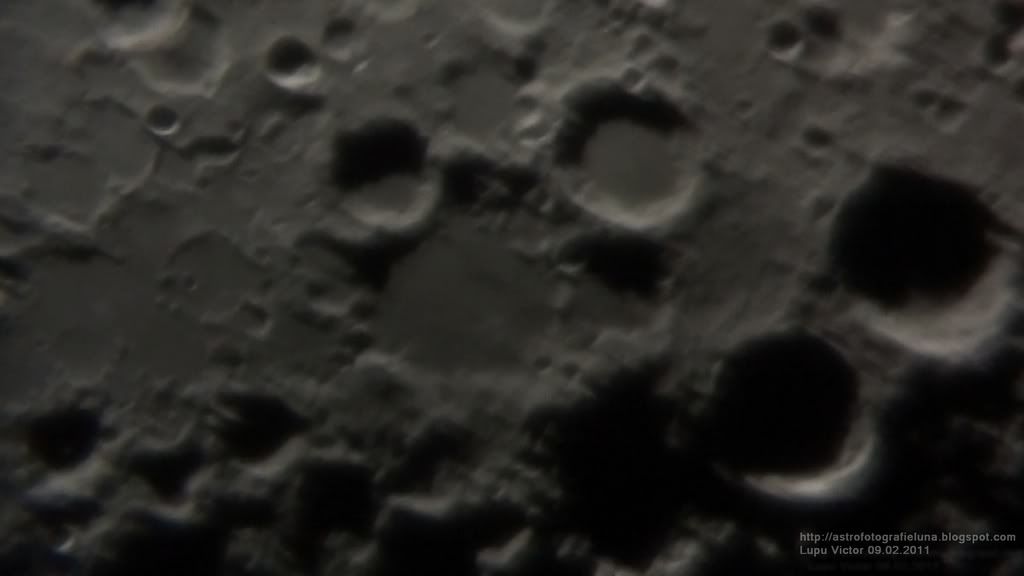
       Apianus G -center in photo, is a crater which is located a high area in south-central part of the Moon. It is also located on south-west of the crater Aliacensis.The wall has been eroded by subsequent impacts.At east is attached Krusenstern (47 km.) to the outer edge of the crater 
      Crater Apianus ( not Apianus G we talked about before), is 63 kilometers in diameter and 2080 meters deep.In photo is above and to the right of Apianus G. On the north side see a small crater,called Apianus B, which is a member of a group that includes craters Apianus T and U. Apianus's inner floor is relatively smooth and does not have a central peak, although the floor is formed in somewhat convex shape.The crater dates from Nectariana now 3.92 - 3.85 billion years ago,like all other craters we will talk about.


The name of Apianus crater comes from Petrus Apianus (16.04.1495-21.04.1552), known as Peter Apian, who was a German humanist, known for his work in mathematics, astronomy and cartography.
    

     Aliacensis Crater (80 km.) is a crater which is located in the highlands-in photo is the largest on the right.
The name Aliacensis is after the french geographer and theologian of the 14th century, Pierre d'Ailly.
     Werner (70 km.) south-west is Aliacensis in photo.
The name of the crater comes from Johannes Werner (02.1468-05.1552), a german mathematician and priest in Nuremberg. His work has been in astronomy, mathematics and geography.

 
All images are © Copyright 2010-2015 Lupu Victor. All rights reserved.Images may not be reproduced, published, or copied in any form without written permission of the author. Thank you for respecting the intellectual property rights. ASTROFOTOGRAFIA | Lupu Victor Astronomy - Contact - About
Design by Free WordPress Themes | Bloggerized by Lasantha - Premium Blogger Themes | Online Project management