Visit Worldwide Topsites
Showing posts with label Craters-Posidonius. Show all posts

Wednesday, 2 October 2013

Lunar Photo - Posidonius

158 frames at 90% best quality in Registax.

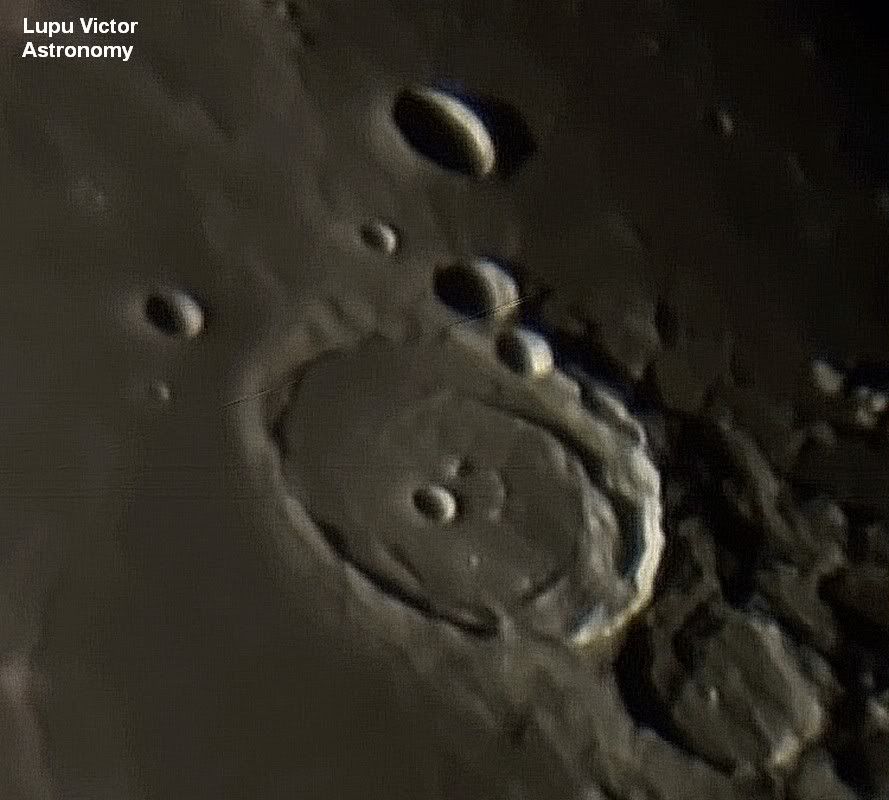
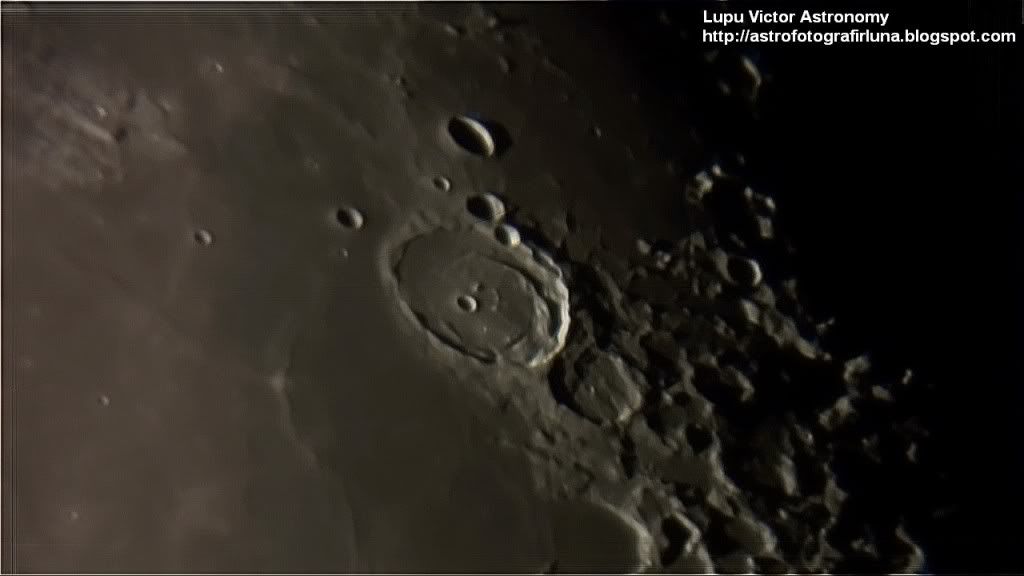
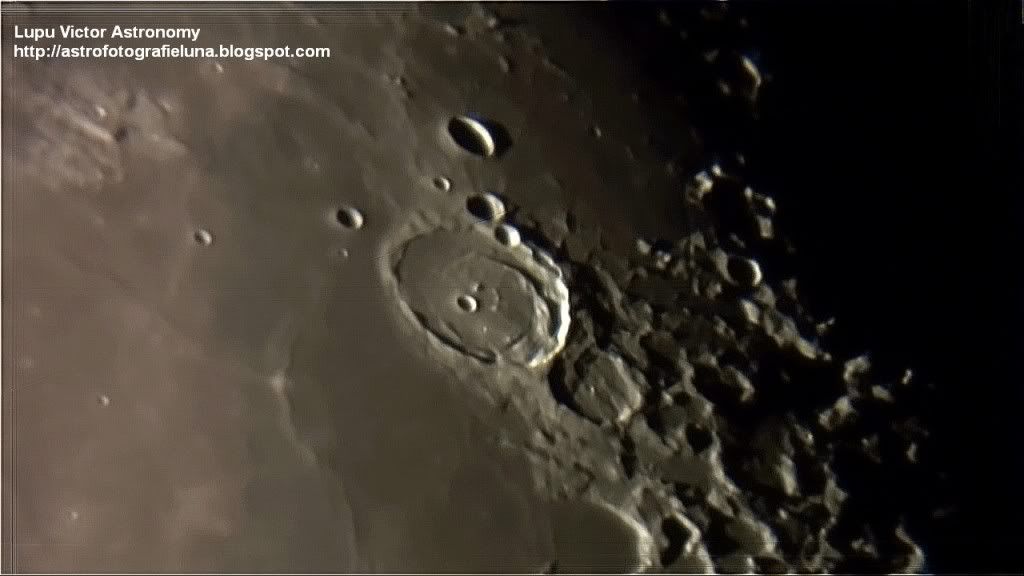
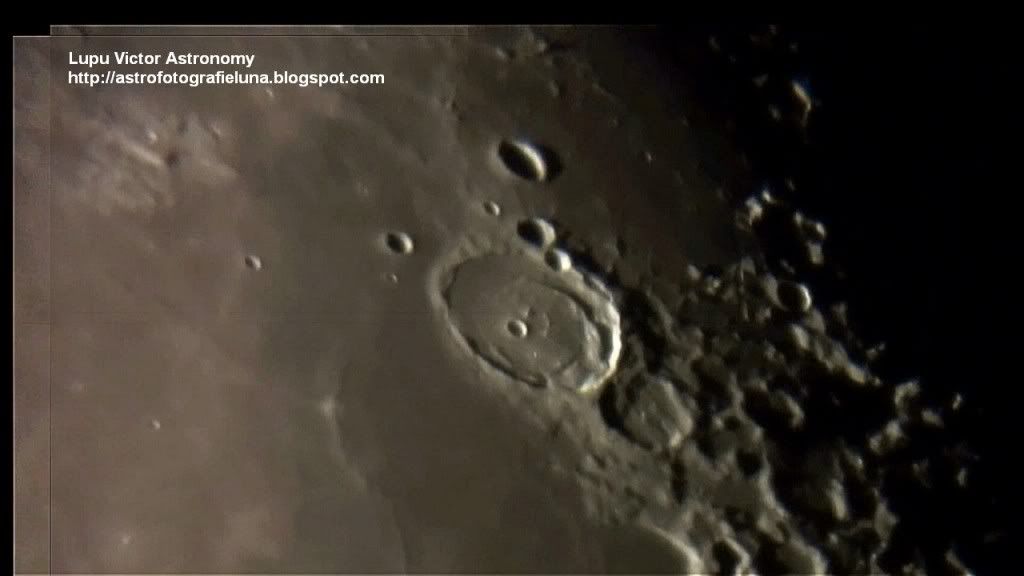
At eastern basin Mare Serenitatis, there is an interesting crater named Posidonius (95 km). This crater is deep compared to its size, but this is because the flooded region has various basins.

As a special feature that this region has, we see that the right is different from the left area of the crater. In  Posidonius's right are landforms which are high, and on the left is a smooth basin called Mare Serenitatis.

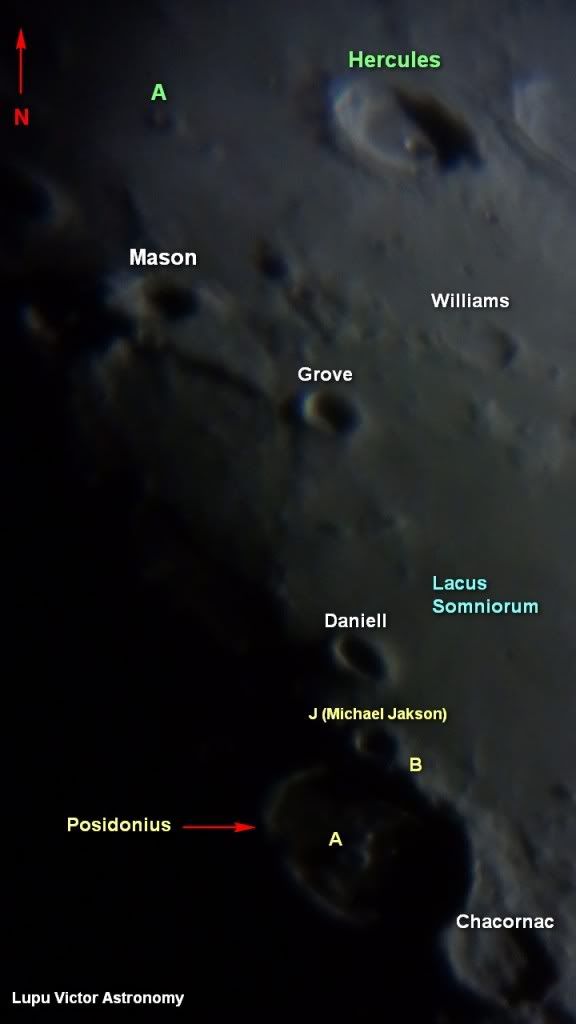
Other craters around Posidonius that can be highlighted here, are its satellite craters, A (11 km), B (14 km) and M (10 km), and Chacornac (51 km), Michael Jackson (22 km) and Daniell (30x23 km).

Video captures are here: Pictures by astronomical telescope crater Posidonius in light.


Age of the Moon: 7 days
Phase: 51% (0% = New, 100% = Full)
Distance: 384.488 km


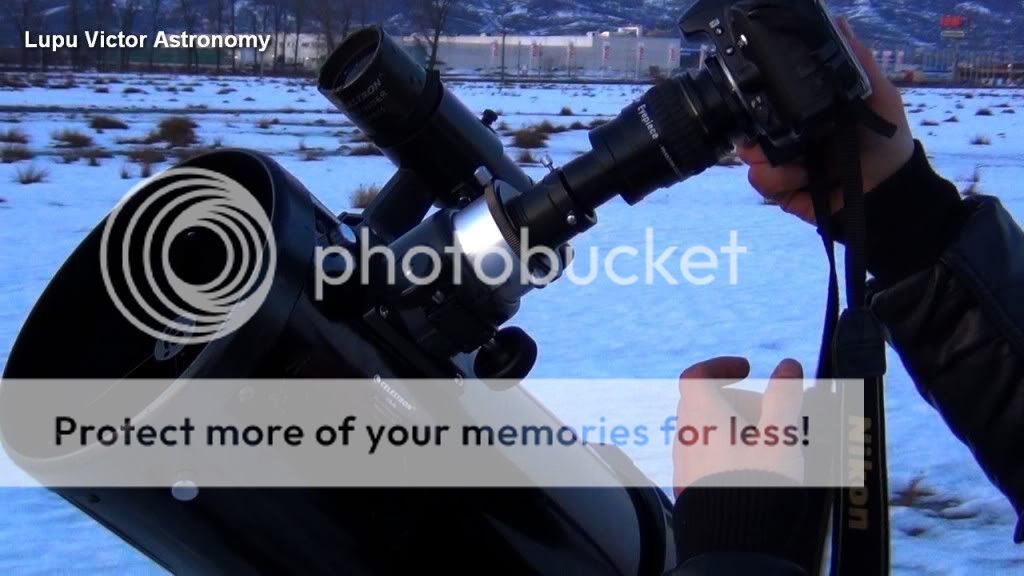
Optics: Celestron C8-Newtonian telescope, 20mm Plossl, 2x Barlow
Mount: CG5 (EQ5)
Camera: Sony CX130
Filter: no
Date: 29.04.2012
Location: Baia Mare, Romania
Processing: Images in Registax, FastStone Image Viewer


Above is Posidonius under different lighting conditions, photo made ​​in July 19, 2012.


Wednesday, 6 March 2013

Pictures by astronomical telescope crater Posidonius in light


Posidonius crater (95 km) from the photo above is a video capture. Together with Chacornac crater, (51 km), Posidonius is forming a gorgeous duo on this relatively flat area, surrounded by Mare Serenitatis basin and Lacus Somniorum. To the south, however, is a higher region, called Montes Taurus.

Another crater, famous for its name but not for its size, is Michael Jackson crater (22 km), probably named so because the "moonwalk" dance invented by the famous pop artistIt was called before Posidonius J, and can be located in the photo below, in which I labeled all the craters in the vicinity of Posidonius.

Posidonius is a relative small crater, but creates the illusion that it is larger as it is in a smooth region and in the absence of other craters with which to compare it, it seems to be a big one.

With a 6-inch telescope, the crater can be seen easily, and with 8-inch telescope and a video camera or photo attached, this crater can be seen in detailwhen the sun is at a perfect angle.

Moon age: 7 days
Stage: 51% (0% = New, 100% = Full)
Distance: 384.488 km


Optics: Celestron C8-Newtonian telescope, 20mm Plössl, 2x barlow
Mount: CG5 (EQ5)
Camera: Sony CX130
Filter: no
Date: 29/04/2012
Location: Baia Mare, Romania
Processing: video captures, FastStone Image Viewer


Above, Posidonius under a different lighting conditions, made ​​in July 19, 2012.

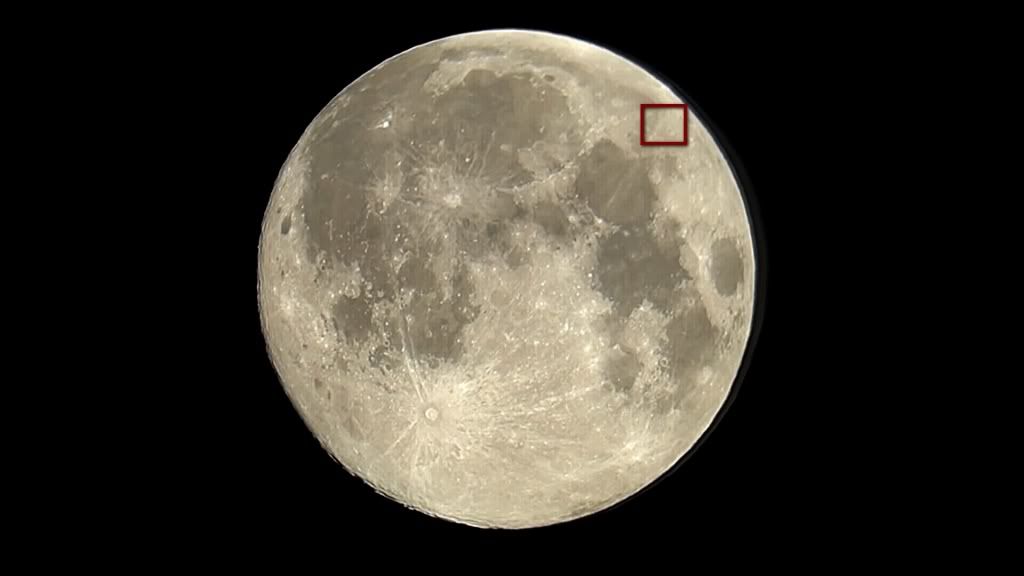
Location of Posidonius crater on the eastern Moon.

Tuesday, 28 August 2012

Video by telescope Hercules Atlas and Posidonius craters

The video below begins with crater Posidonius. A 203 mm telescope will reveal the complex nature of the floor of Posidonius. The clear prominent bowl-shaped crater Posidonius A (12 km), is west of the center. To the east, there are a number of rivulets (rilles), called Rima Posidonius, the most prominent of which is the 50 km one, that passes over the center of the floor, and perpendiculary cut over itself to a smaller rille.

Atlas (87 km) and Hercules (67 km) are prominent craters and at a distance of 30 km between each other, located on the northern border of Lacus Somniorum. Atlas has a sharp edge and a wide inner wall, showing terraces. Through a 203 mm reflector telescope you can see the floor with five narrow rilles. Under high light of the sun, Atlas's edge is clearly discernible, and the two well-known, well-defined circular dark spots, each about 10 km in diameter, can be seen inside. A ray of light, coming from the crater Thales passes between these two dark spots.

Joined north, is an ancient crater, more eroded which is called Hercules which also has a sharp edge and is terraced inside. It shows a prominent crater, 12 km in diameter, south of its center and a small isolated hill located centrally, occupying the flat floor, darker in north.

The two craters are a magnificent landscape, especially when are at the terminator (between shadow and light).


Video images are upside down, as seen through the telescope.


Video: Victor Lupu
Optics: CelestronC8 "-Newtonian telescope, plossl20mm, 2x Barlow
Mount: CG5 (EQ5)
Device: Sony CX-130
Video mode: Full HD progressive 1920x1080
Filter: no
Date: 29/04/2012
Location: Baia Mare, Romania
Processing and editing: Sony Vegas 10


Thursday, 9 August 2012

In Posidonius crater on the Moon people began a civil war


Posidonius, is a flooded crater located on Mare Serenitatis, dating from Imbrian era. Inner ring is higher than the Moon's average surface height, in the east, and has a very uneven terrain. In this crater, exists hills that may be of volcanic origin. Note that there are more than five separate rilles on its floor. Probably, the impact that formed Posidonius, which occurred on the basin, was already affected.
  Posidonius A is located slightly west of the center on the floor of Posidonius and Chacornac is located south-east.

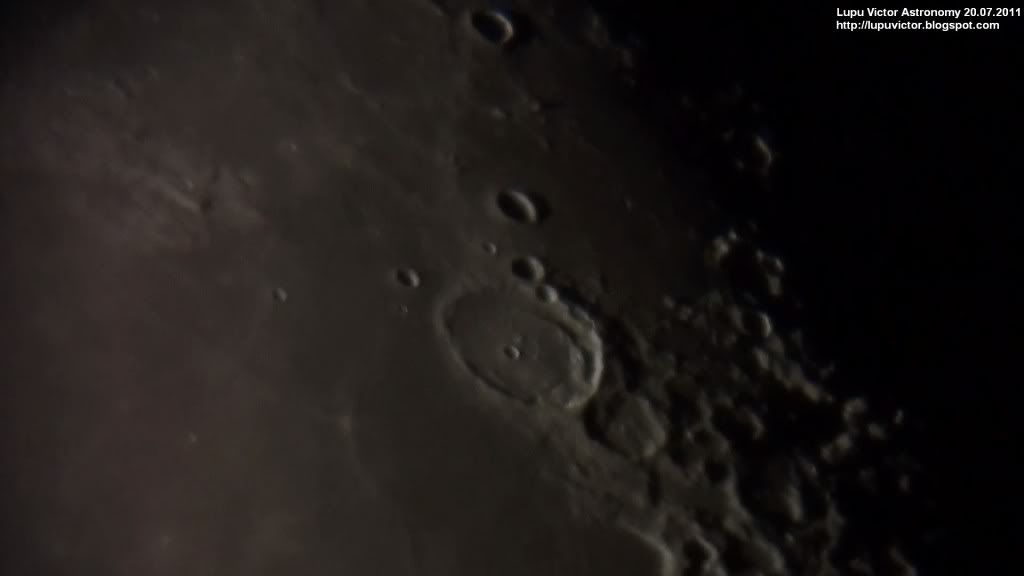
As an imaginative guy, I can not help wondering what would happen if the Moon were suddenly populated by people. I wonder, because now the world is not interested in Moon craters, the names, location, their size, but if suddenly they would start to travel to the Moon, people would begin to be curious about these things instantly. Why? To buy land, to do business (helium-3, or who knows what other resources they would find there). For example the subject of this article is the crater Posidonius. Is a what? It is a crater, a hole in the Moon, that people are not interested to know at least for example where it is . In future this ctater of 95 km, can turn into a city full of lights, which would be seen even from Earth when is New Moon.

The Moon, is even now in the second millennium not an important goal for the world's population, not just for science. We see it in the sky as people of the past saw it, with the same foreign feeling to us. Some of us do not even know is there anymore. Only if it were some rumors that there would be some aliens, people would be curious.

If you put the title of this article "Presidential election takes place in Crater Posidonius", or "In Posidonius crater on the Moon people began a civil war", you'll see what the difference is in the interest of people, curious how crazy is who wrote that article, unless I write "Posidonius crater on the Moon. Description and location." when people would not even bother to read the title to the end. And because I am very curious by nature, I will do it.


Photographer: Victor Lupu 
Optics: Celestron C8-inch reflector telescope-Newtonian, plossl 20mm, 2x Barlow 
Mount: CG5 (EQ5) 
Camera: Sony HDR CX105 to 8x optical zoom
Total Magnification: 800x
Filter: No
Date: 20/07/2011
Location: Baia Mare, Romania
Processing: video captures

Wednesday, 28 March 2012

Astronomical telescope Images Posidonius crater in shadow.


This is Posudonius crater, and some of these images have been discussed in the article: Posidonius crater optical illusion Pictures through the telescope .


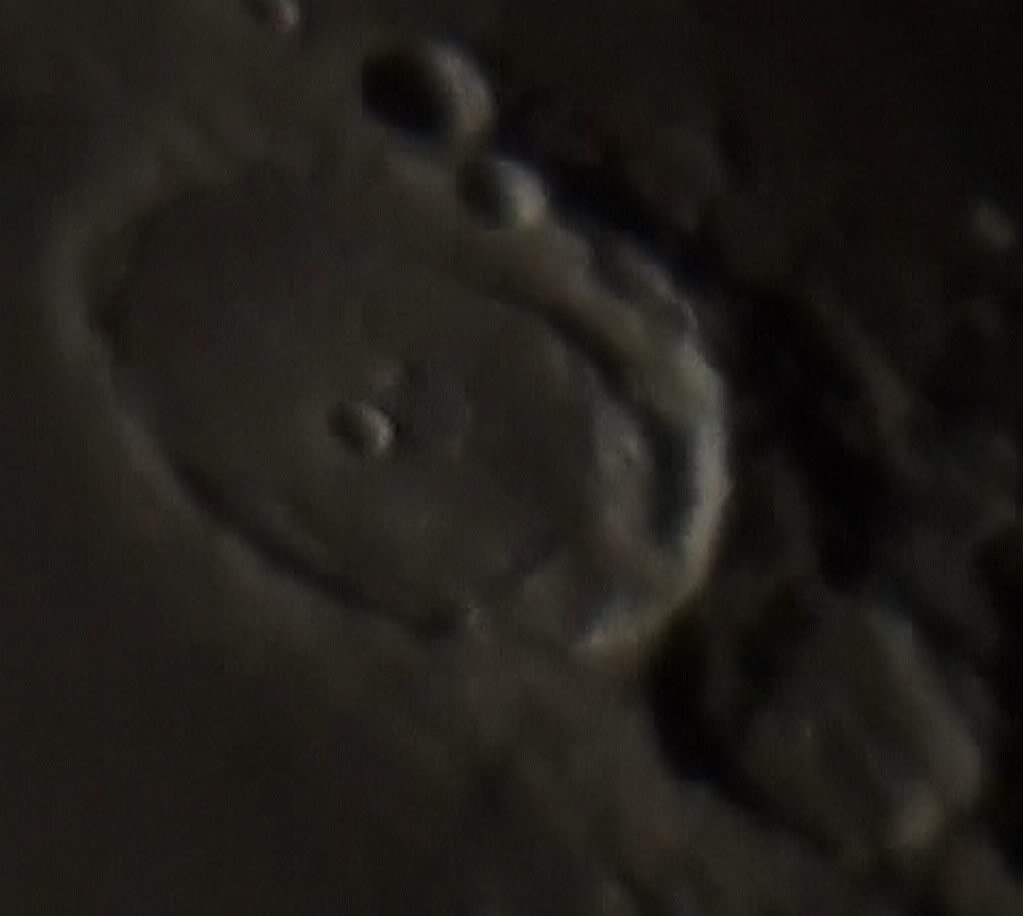
Posidonius crater on the Moon, here is caught in a dim light. In these pictures we can estimate the height of the crater walls by the light of the interior side of them. This crater is reaching its depth of 2.5 km and 95 km diameter.
Little bright ring at the center, is Posidonius A.
 I also presented photographs of the crater made on another day, but it was filmed with another camera (Sony CX105), in which it was more illuminated by the Sun, as viewed in the photo below.

Photographer: Victor Lupu
Optics: Celestron C8-Newtonian telescope, plossl 20mm, 2x Barlow
Mount: CG5 (EQ5)
Device: Sony CX130 to 8x optical zoom
Total Magnification: 800x
Filter: no
Date: 01/28/2012
Location: Baia Mare, Romania
Processing: video capture, FastStone Image Viewer


Crater Posidonius, photography through the telescope, made ​​on 19 July 2011.

Sunday, 4 March 2012

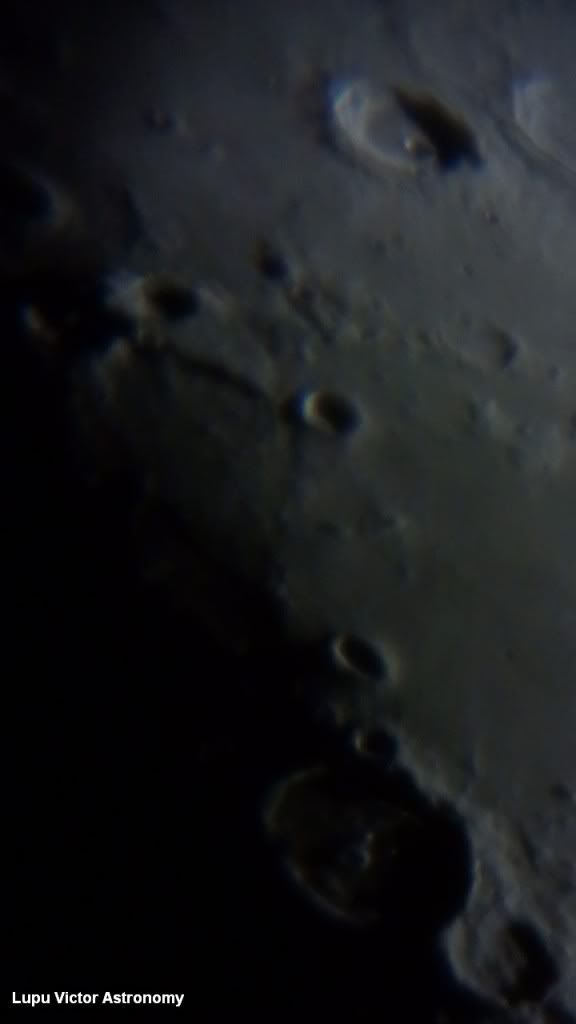
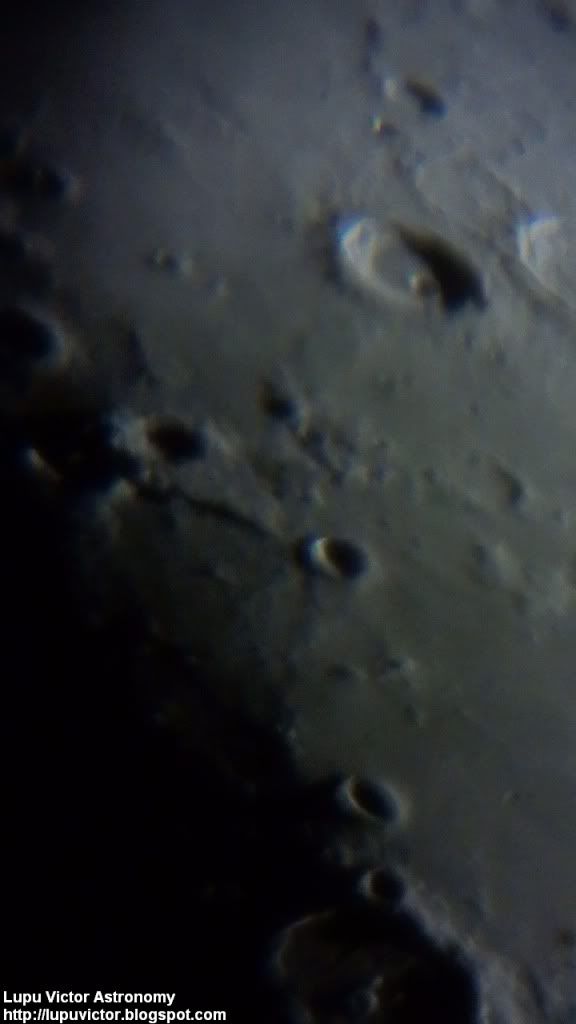
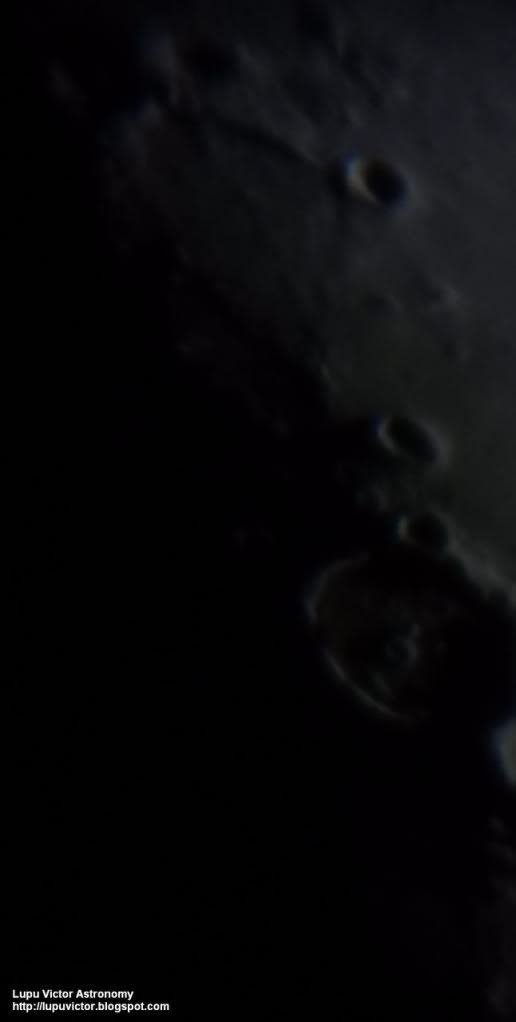
Registax: crater Posidonius astronomical images.


Posidonius crater is beautiful. These images presents many interesting features. The most interesting of these is a semi-circular wall of the inside floor of the east. Posidonius A, with a diameter of 11 km, is located near the center of the floor. Notice that the eastern edge is higher than the west, which suggests that in this crater when was first flooded, the lava entered in the northwest.

Inside the crater, at west, there is another wall that doubles the main wall. This is called Rima Posidonius.

Other interesting craters near Posidonius, are:
Chacornac, 51 km north whose wall, stuck to Posidonius was not visible as much as in these pictures. That wall is thicker than the rest of it, and has a height of about 1.5 km.
Posidonius B, 6 km, and J, which are located at north, over the first wall of Posidonius, and the second is north of B. Also, Posidonius J, is now called Michael Jackson, after the artist with the same name, who sang and composed pop music.
Lacus Somniorum plateau in the dim light located north of Posidonius.
On the right in the pictures, there are some mountains that are lit partly by the Sun. They belong to the larger mountains, which stretch more than the photos, called Montes Taurus.
The pictures above are images processed in registax.

Picture 1-4: 95 frames to 90% Lowest quality
Figure 5: 2 frames 100% Lowest quality


Below are video captures. The difference between video captures and images processed in Registax is very obvious.


Photographer: Victor Lupu
Optics: Celestron C8-Newtonian telescope, plossl 20mm, 2x Barlow
Mount: CG5 (EQ5)
Device: Sony CX105 to 7x optical zoom
Total Magnification: 700x
Filter: no
Date: 19/07/2011
Location: Baia Mare, Romania
Processing: Registax , video captures, FastStone Image Viewer


The video from wich I processed these images, is here: Video astro Saturn planet in my Newtonian telescope .
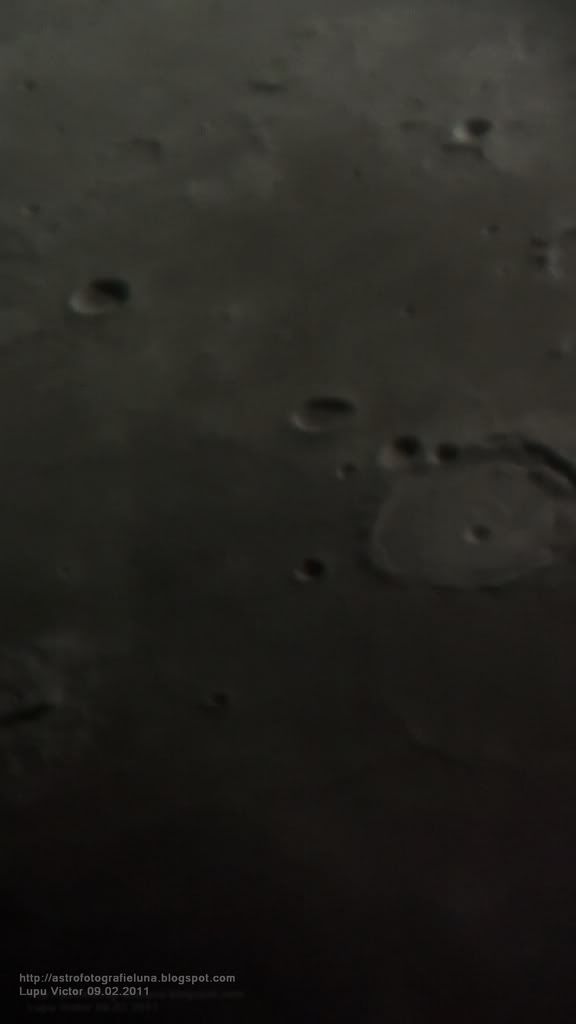
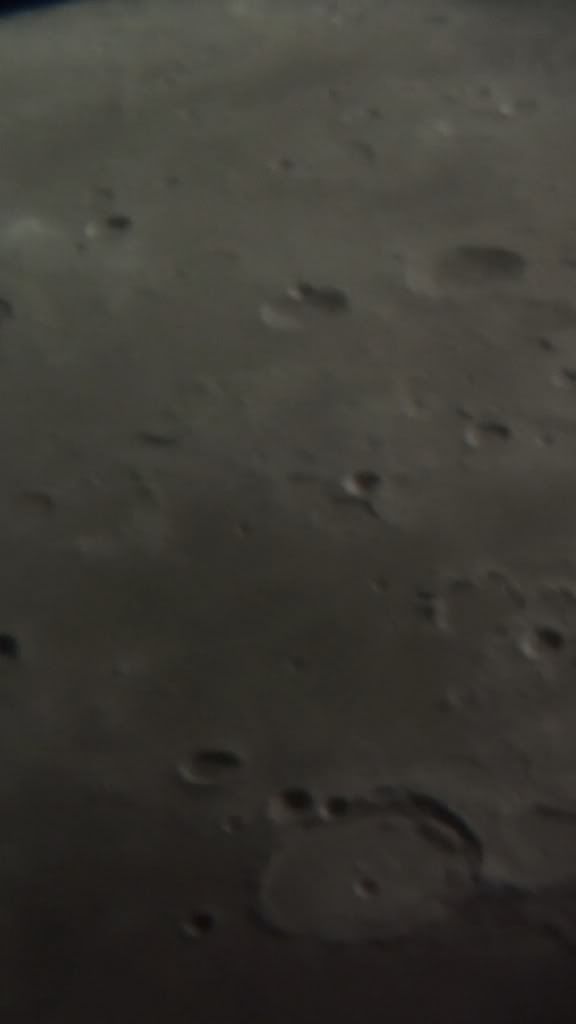
Below the picture was made ​​on February 9, 2011, and presents Posidonius crater in the distance.


Wednesday, 29 February 2012

Video lunar crater Posidonius by astronomical telescope.

In this stabilized video of crater Posidonius on the north-east of the Moon, has many moments of clarity.
In the first half of the film, the Moon is filmed from far away, at 500x, and vignetting is present. In the next half are images I like it most, because it shows crater Posidonius with mote details. For example, the western edge of the crater is clearly visible as a double edge which extends over the entire eastern side of the inner crater.
Near the southern edge of the crater is another crater, Chacornacand above, to the north, is the crater Daniell.


Video: Victor Lupu
Optics: CelestronC8 "-Newtonian telescope, plossl20mm, 2x Barlow
Mount: CG5 (EQ5)
Device: SonyCX105 at 7x optical zoom
Total Magnification: 700x
Filter: no
Date: 20/07/2011
Location: Baia Mare, Romania
Processing and editing: Sony Vegas 10

Thursday, 2 February 2012

Posidonius crater optical illusion Pictures through the telescope


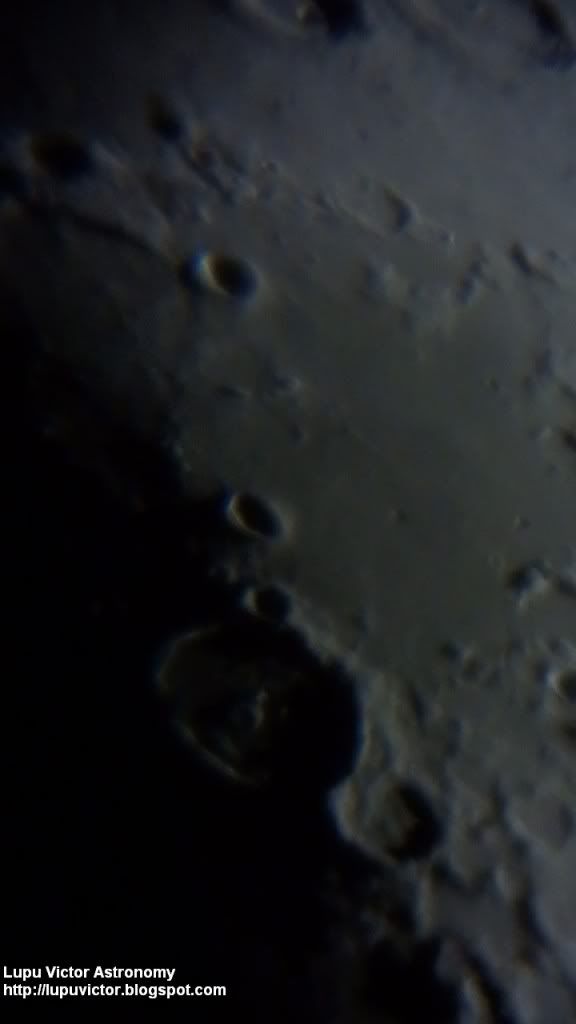
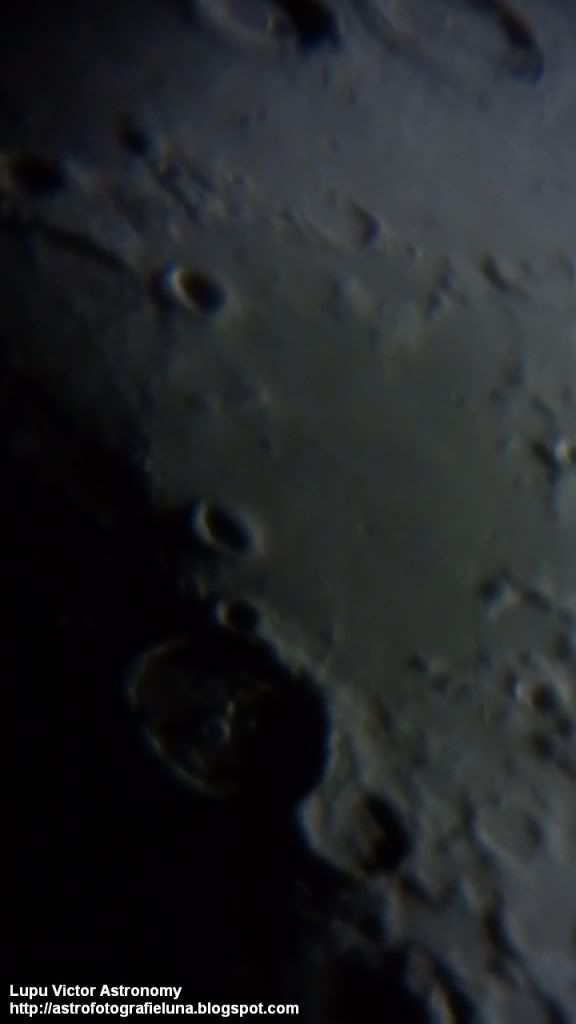
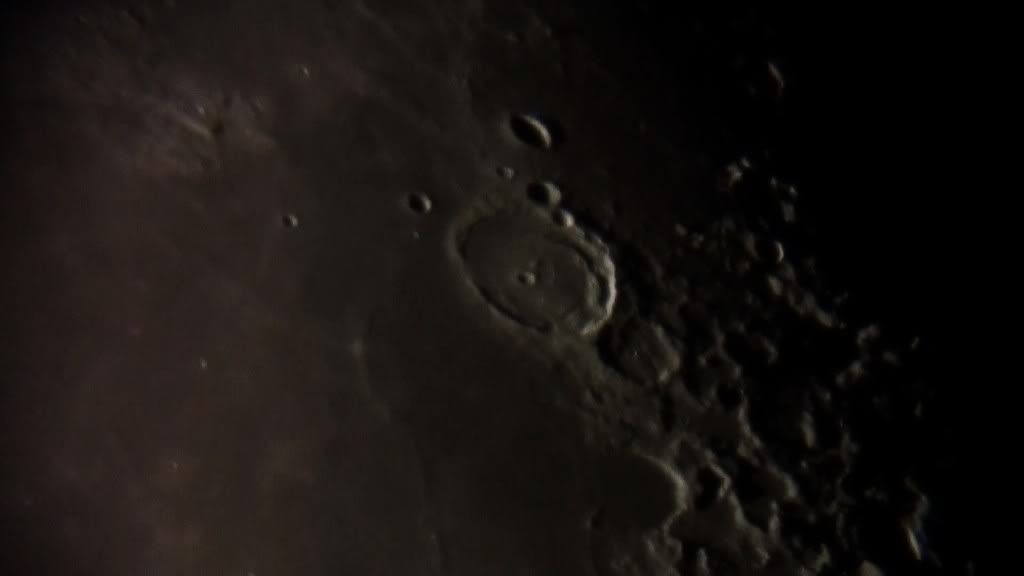
Posidonius crater (95 km), is located on the north-east of the Moon. In the middle of the crater floor is another crater called Posidonius A (11 km). Photographs of  Moon craters viewed near, through  amateur astronomical telescopes, are tricky. If we tip over the picture, we see a different picture of those craters, without realizing that what we see are dimples, not heights, as in the article of the crater Copernicus optical illusion.

Another type of illusion, the craters in the normal position image, and one wich is overturned. In picture below, the small crater Posidonius A found in the large crater Posidonius in the first picture below is placed west of Posidonius's center point, and in the second picture, Posidonius A is on east of the center point. People used to see craters through a telescope are misled at first sight, because on Earth, craters on the Moon can be viewed only in a single position. Unless you look a whole Moon, from afar, you can figure out where that crater is.

At first impression, craters in the first photo below are located on the southwest quadrant of the Moon. In fact, if you look the above picture, you realize that they are on the northeast quadrant, but only if you look from afar. This illusion does not occur in other conditions when shadow of craters are positioned differently.

Figure 1 - normal
Figure 2 - overturned


Saturday, 12 March 2011

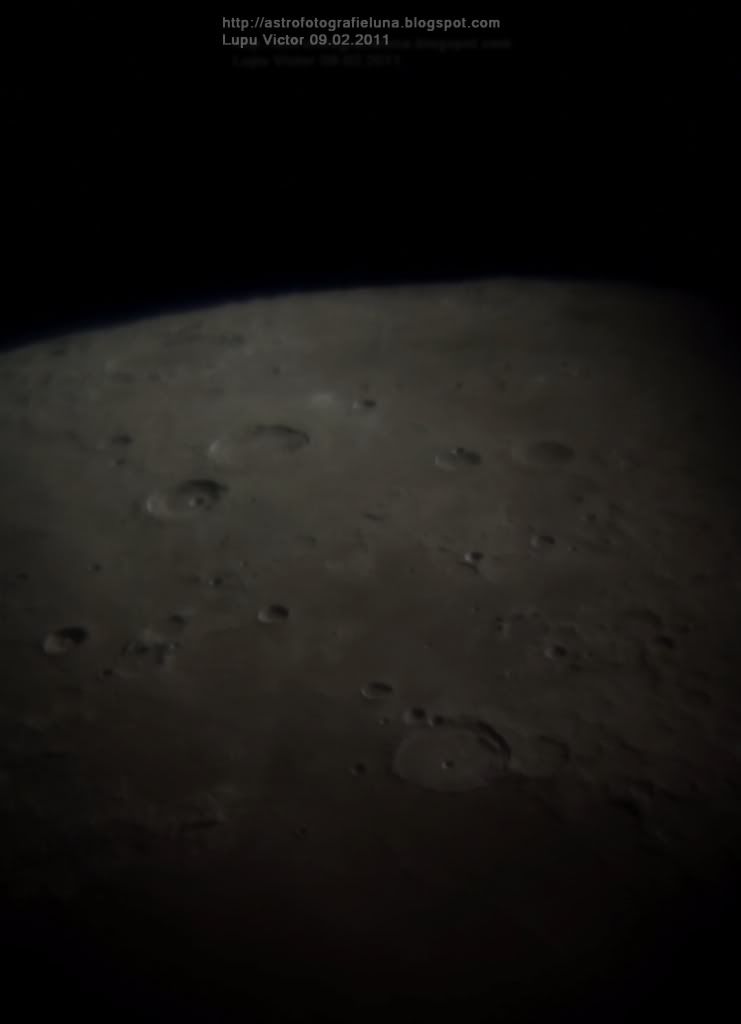
Posidonius crater and Lacus Somniorum Photos by telescope

Posidonius crater (95 km.) in the center-lower.Mare Serenitatis plateau is below.Crater Hercules si Atlas (69-87 km.) are on the left corner up.
        Posidonius is an impact crater , which is located on the western edge of Mare Serenitatis, south of Lacus Somniorum.Crater Chacornac (51 km.) is attached to the eastern edge in photo, Daniell (30 km.) is on northwest .Also at the north-west close to the edge of Posidonius,is the crater Michael Jackson (former Posidonius J). Crater Burg (40 km.)-on the left of photo ,who is sitting on Lacus Mortis.
The rim of Posidonius is superficial and hidden, especially on the southern edge and the interior was covered by a lava flow in the past.
The name of the crater is from Posidonius that
was a Greek philosopher, politician, astronomer, geographer, historian and professor at Apamea, Syria.


Lacus Somniorum. Latin name is Lake of Dreams, a name that was given by Riccioli. This lake has an irregular shape with undefined boundaries.The surface has the same low albedo as the surrounding terrain, and its surface was formed by basaltic lava flooding. The area is 334 km, and joins Mare Serenitatis at the Southwest.


Photographer: Victor Lupu
Optics: Celestron C8-Newtonian reflector telescope, plossl 20mm, 2x Barlow
Mount: CG5 (EQ5)
Device: Sony HDR CX105
Filter: No
Date: 09/02/2011
Location: Baia Mare, Romania

 
All images are © Copyright 2010-2015 Lupu Victor. All rights reserved.Images may not be reproduced, published, or copied in any form without written permission of the author. Thank you for respecting the intellectual property rights. ASTROFOTOGRAFIA | Lupu Victor Astronomy - Contact - About
Design by Free WordPress Themes | Bloggerized by Lasantha - Premium Blogger Themes | Online Project management