Visit Worldwide Topsites
Showing posts with label Mare Insularum. Show all posts

Tuesday, 28 January 2014

Serving some Astronomy. Kepler telescope images.

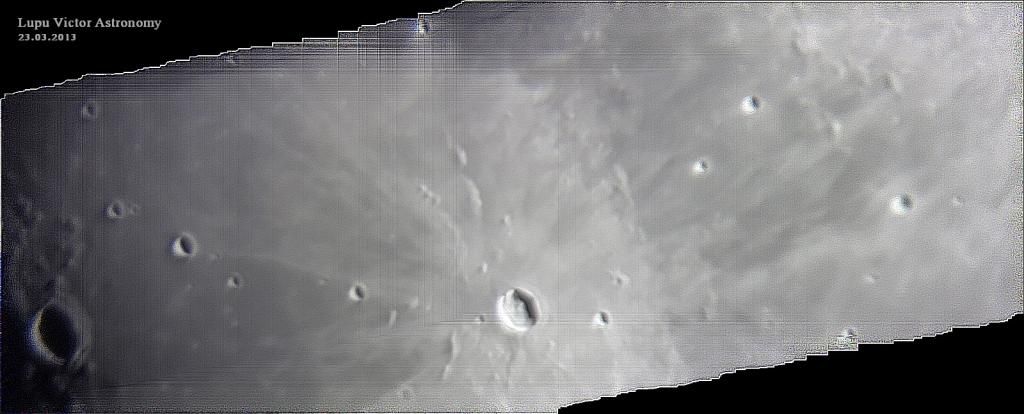
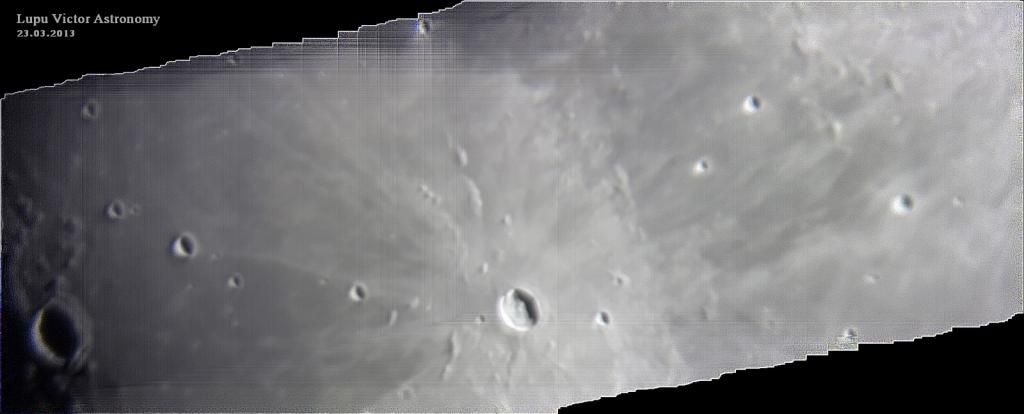
110 frames at 85% best quality in Registax.
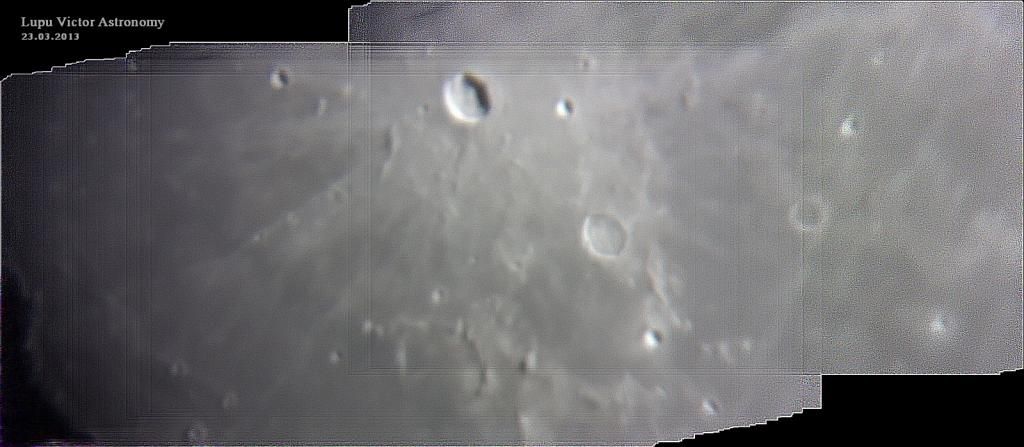
59 frames at 85% best quality in Registax.

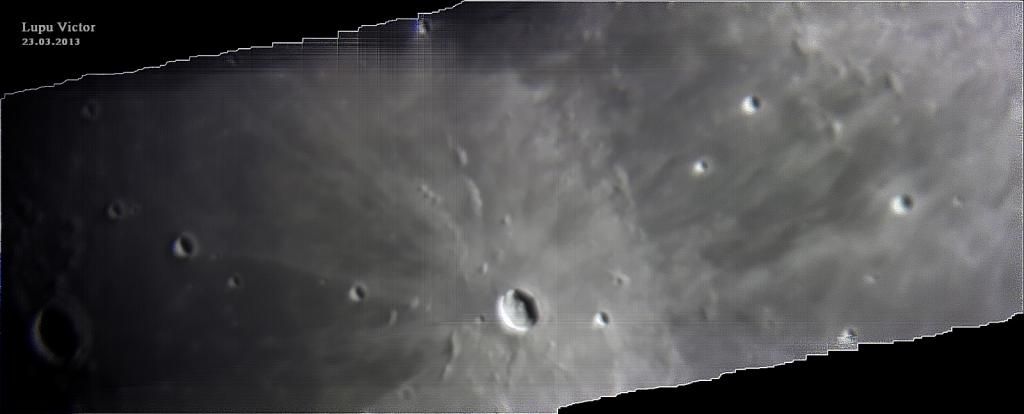
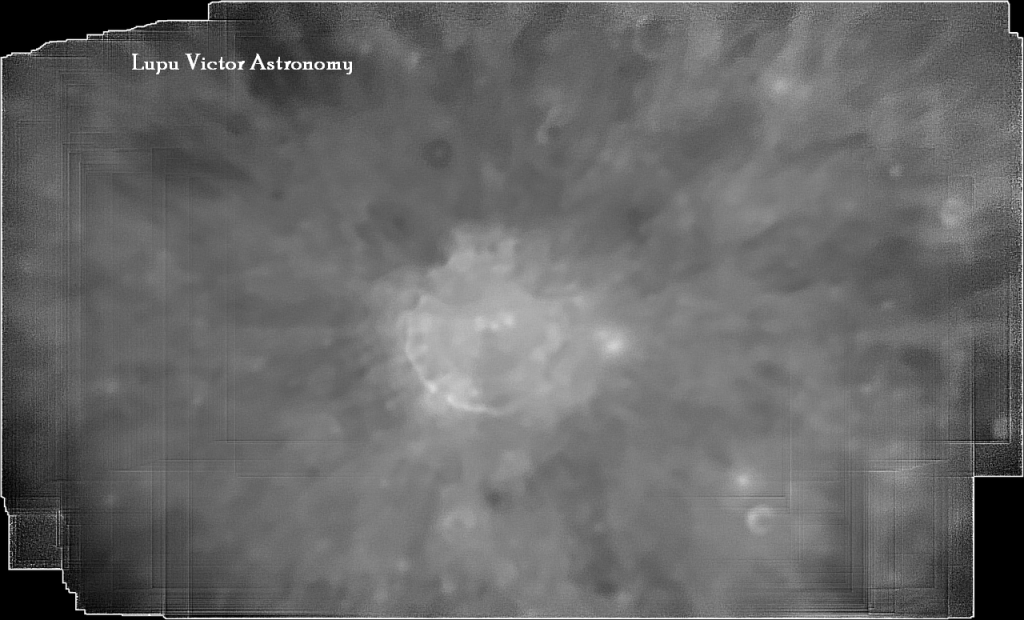
Here is an overview of the area of the west center of the Moon, on which is found Kepler crater, a small one but which quickly makes his presence visually because of the increased albedo in its its rays, that covers a very large lunar area.

Kepler (32 km) is located on Oceanus Procellarum. On Southeast we find another crater almost identical, but less deep. This is the crater Encke (28 km), with a depth of 800 m (Kepler has 2,6 km depth), and around it are its satellite craters. Between the two craters is a distance of 114 km.

East of Kepler, is Mare Insularum on which we see the small crater named Milichius (13 km). West of Kepler, left in image, notice Marius (41 km) crater whose floor is not visible, being in darkness.
The images are clear. There have been several frames of a video to create each image.

Video can be seen here: Video crater Kepler and Marius in darkness through telescope.


Age of the Moon: 11 days
Distance: 386 658
Phase: 85% (0% = New, 100% = complete)

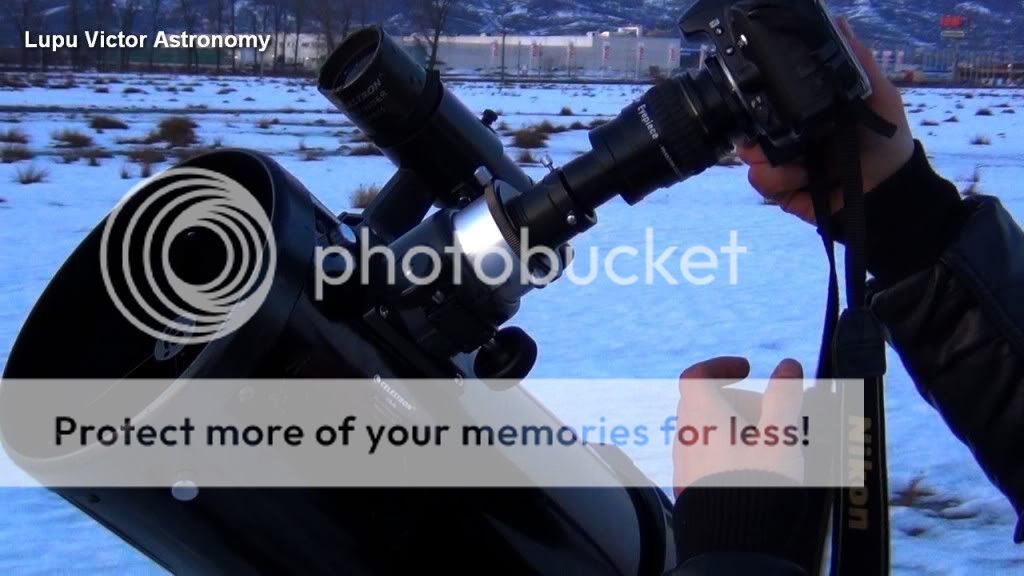
Optical Telescope Celestron C8 "Newtonian, plossl 20mm, 2x Barlow
Mount: CG5 (EQ5)
Device: Sony CX-130
Video Mode: Full HD 1920x1080 progressive
Filter: no
Date: 23/03/2013
Location: Baia Mare, Romania
Processing and editing: Sony Vegas 10
Saturday, 16 November 2013

Video by astronomical telescope crater Copernicus.

Video by astronomical telescope. Crater Copernicus.

Age of the Moon: 11 days
Distance: 386658 km
Phase: 85% (0% = New, 100% = full)


Optics: Celestron C8 "-Newtonian, 20mm Plossl, 2x Barlow
Mount: CG5 (EQ5)
Device: Sony CX-130
Video Mode: Full HD 1920x1080 progressive
Filter: no
Date: 23/03/2013
Location: Baia Mare, Romania
Processing and editing: Sony Vegas 10


Tuesday, 7 May 2013

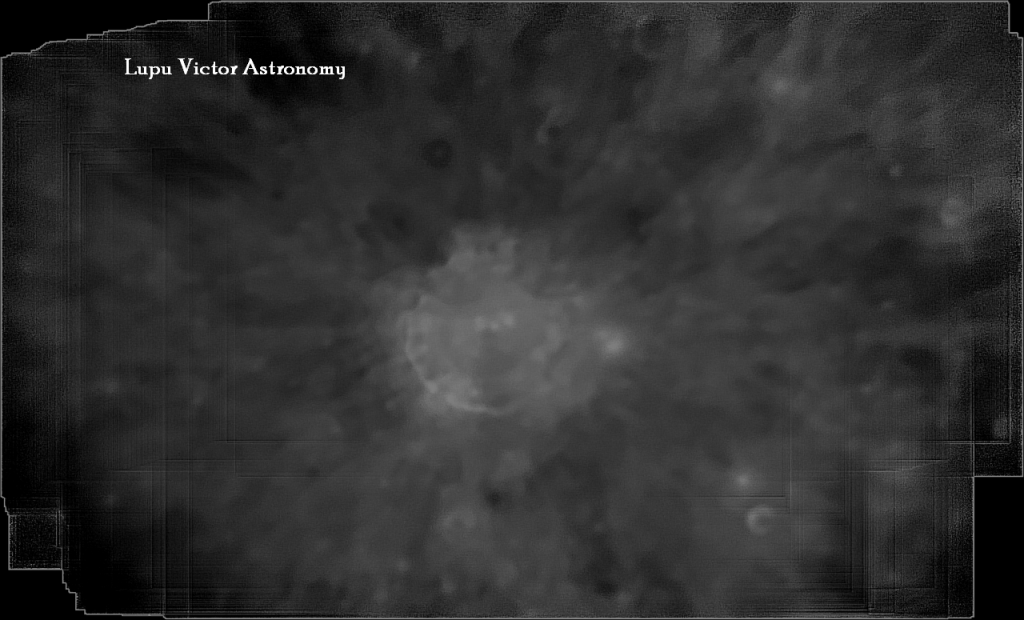
Copernicus crater rays. Telescope Images processed in Registax

43 frames at 85% best quality


363 frames at 85% best quality


363 frames at 85% best quality


363 frames at 85% best quality


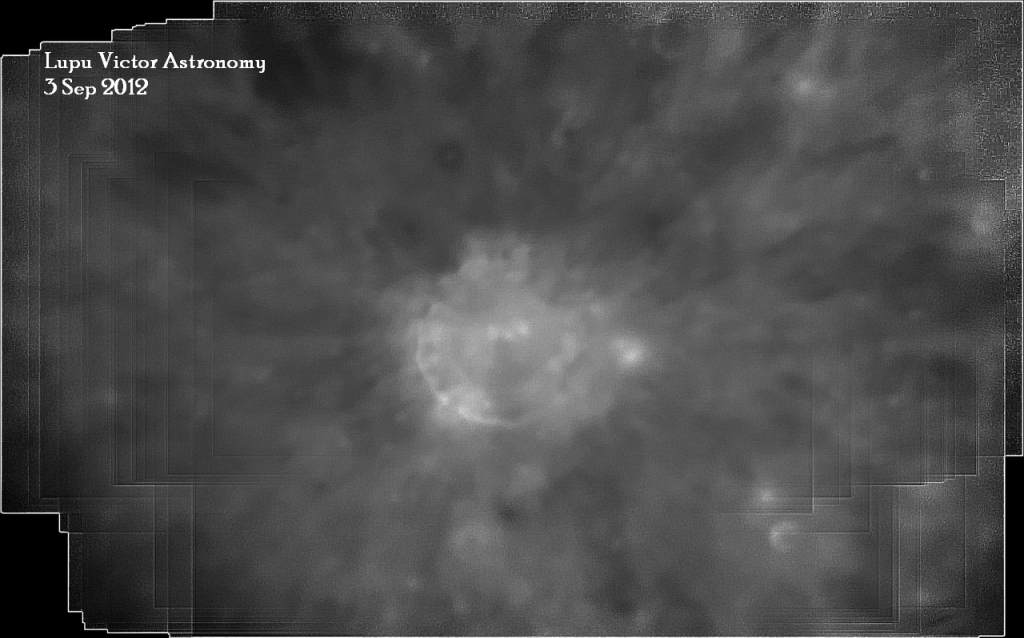
It is likely that this crater rays once have been more whitish , as was proven that they become paler with age. Rays starting from craters, are the material ejected upon impact that produce the crater, carried by the solar wind around that crater.

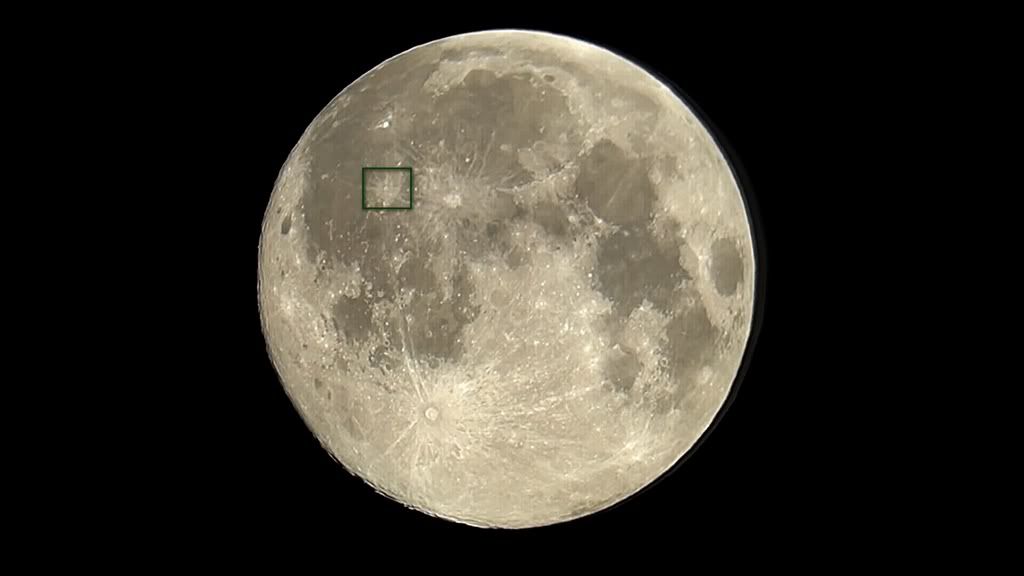
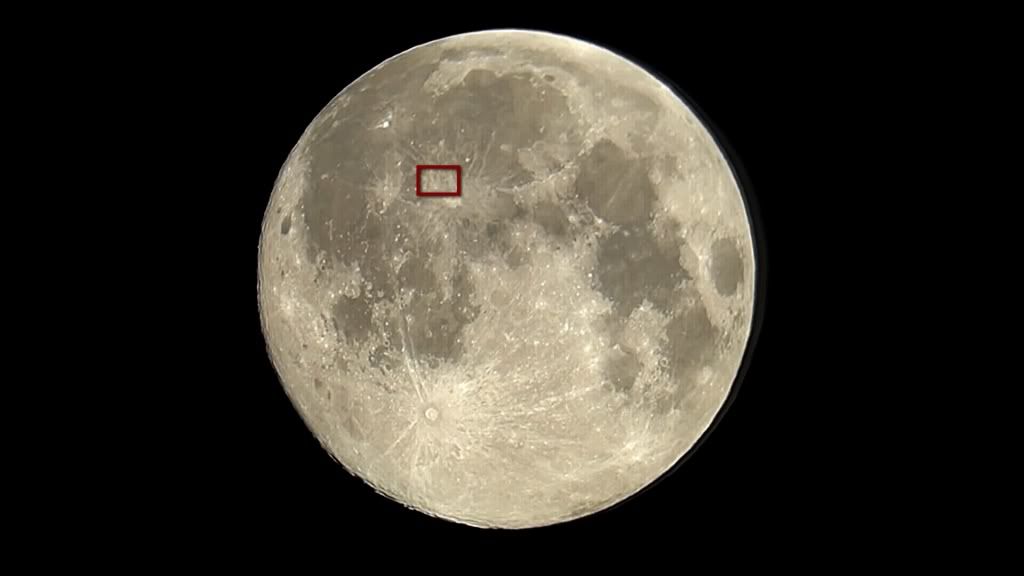
Notice the rays that start from Copernicus crater. These are not as common as on the other craters, like Tycho for example. Copernicus's rays are "tangled" together, disordered. My guess is that this is due to the kind of soil that has been on the impact, which is a low area on a lava basin, near Mare Insularum, unlike the Tycho, whose impact has been on high mountainous areas, . Tycho has an intense albedo ray system, (which means that it is younger than the crater Copernicus), and its rays are like swords, distinct and beautifully arranged. These images are processing in Registax.

  The last 3 pictures, are actually one picture, formed of 363 video frames, on which I played with contrasts.

Below we can see the Moon as it was that night. And this is a process in Registax program too.

Age of the Moon: 17 days
Phase: 90% (0% = New, 100% = Full)
Distance: 399,796 km


Optics: Celestron C8-Newtonian telescope, 20mm Plossl, 2x Barlow
Mount: CG5 (EQ5)
Camera: Sony CX130
Filter: no
Date: 03/09/2012
Location: Baia Mare, Romania
Processing: Registax, FastStone Image Viewer


Saturday, 17 December 2011

Kepler crater (Video) through telescope

A video with Kepler crater  which lies between Oceanus Procellarum at west and Mare Insularum at east. On the last seconds of the clip appears Marius crater.


Video: Victor Lupu
Optics: Celestron C8 "-Newtonian telescope, plossl 20mm, 2x Barlow
Mount: CG5 (EQ5)
Device: SonyCX105 the 7x optical zoom
Total Magnification: 700x
Filter: no
Date: 14/05/2011
Location: Baia Mare, Romania
Processing: Sony Vegas

Tuesday, 29 March 2011

Unfinished business - around Copernicus

In photo above: Crater Copernicus - below, and the small crater northeast of Copernicus is Fauth, 12 km.Mare Insularum plateau stretched the entire picture.
In photo above:on bottom-right , left to right are Hortensius which is bigger, Hortensius B, and  Kunowsky A. At top center, the crater  Reinhold-48 km.
In the photo above, Gay-Lussac crater in the lower-center and above it is Gay-Lussac A.
In photo above: Montes Carpatus are mountains below the Copernicus crater.
In photo above: the crater from left corner is Eratosthenes - 58 km, which is at the end of the row of Montes Apenninus.

Photographer: Victor Lupu
Optics: Celestron C8-Newtonian reflector telescope, plossl 20mm, 2x Barlow
Mount: CG5 (EQ5)
Device: Sony HDR CX105
Filter: No
Date: 13/02/2011
Location: Baia Mare, Romania
Processing: video capture


In 1966 Copernicus crater was photographed from an oblique angle from the Lunar Orbiter 2, which searched for possible places to land astronauts. At the time that detailed image of the surface of the Moon was named by Martin Swetnick, a scientist at NASA as "the image of the century."

Sunday, 27 March 2011

Reinhold and Lansberg Moon craters

Photographer: Victor Lupu
Optics: Celestron C8-Newtonian reflector telescope, plossl 20mm, 2x Barlow
Mount: CG5 (EQ5)
Device: Sony HDR CX105
Filter: No
Date: 13/02/2011
Location: Baia Mare, Romania
Processing: video capture
The two craters Lansberg and Reinhold lies near the crater Copernicus on the Moon's center region.
         Reinhold (48 km.)-at the bottom left is a monthly impact crater, located southwest of Copernicus,on Mare Insularum. In the northeast is crater Lansberg (39 km.) .The interior walls are slightly terraced and shows irregular outer ramparts. Southwest is a smaller crater, flooded, Reinhold B.

        Lansberg (39 km.) has a raised rim and has a mountain in the center. There are terraces along the interior crater walls.It is not visible eroded, and no significant impact craters inside.

Thursday, 3 February 2011

Kepler crater

Photographer: Victor Lupu
Optics: Celestron C8-N telescope, plossl 20mm, 2x Barlow
Mount: C5
Device: Sony HDR CX105
Filter: No
Date: 11/18/2010
Location: Baia Mare, Romania
Processing: No processing (Video snapshot)

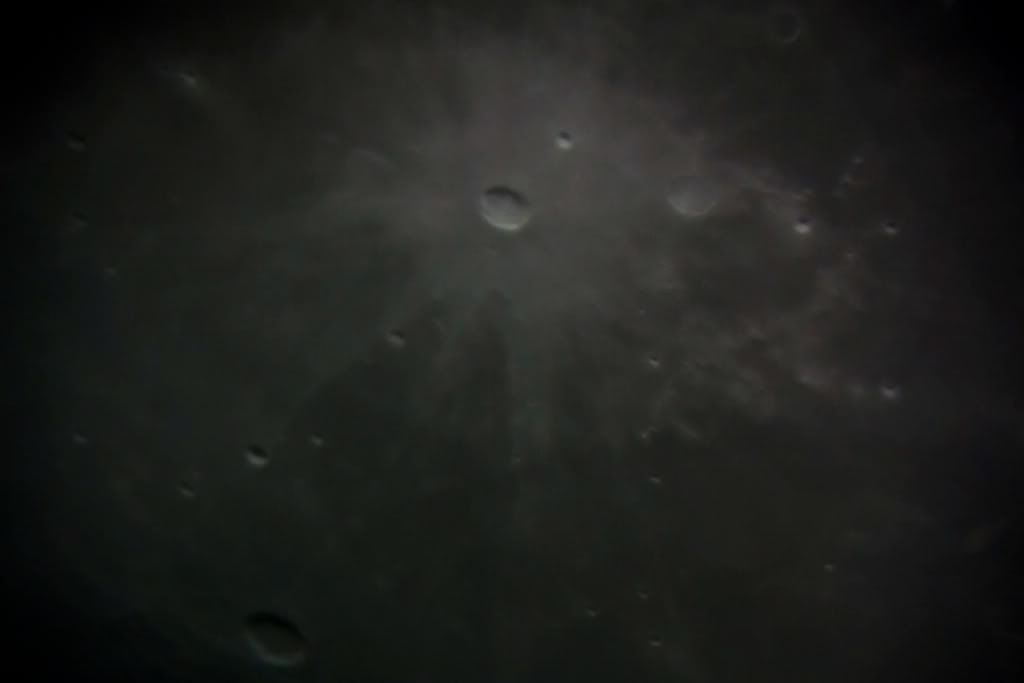
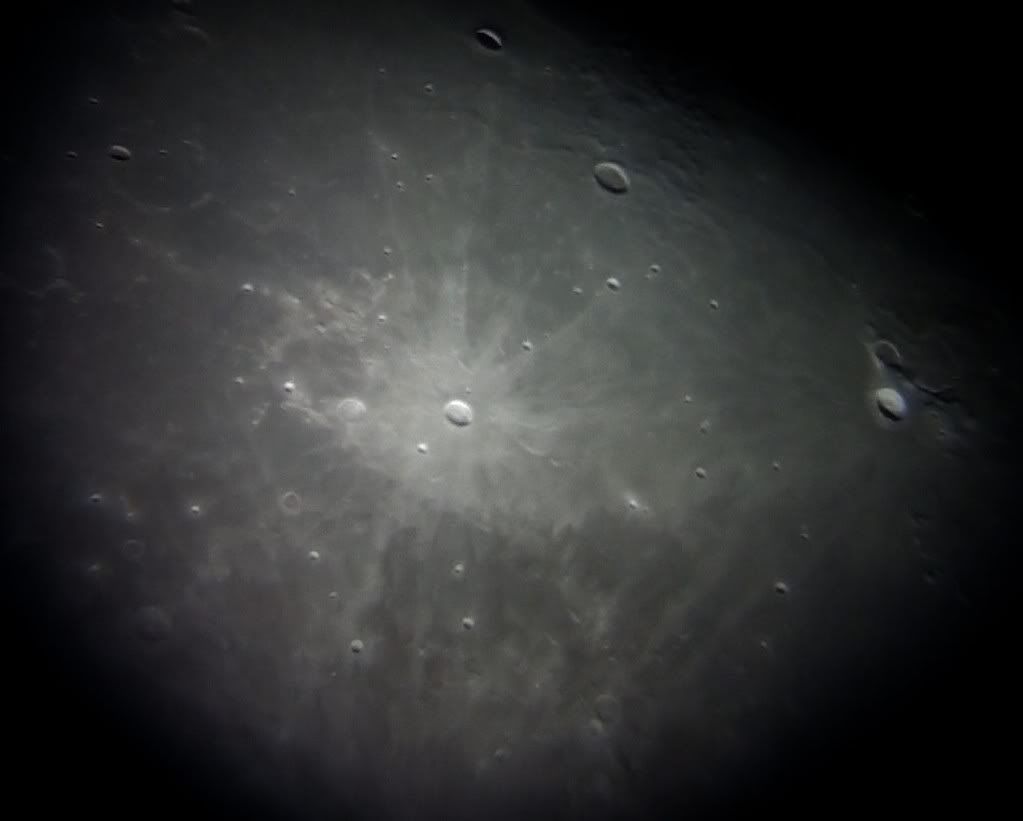
    These three photos are snapshots of a video.Vignetting is visible on the edge of the images but I did not cut it because for not losing some regions.
       Today I will analyze the second image, and I'll write something about Kepler crater (32 km) from the center of the photo.
       Kepler is a crater that lies between Oceanus Procellarum and Mare Insularum west to the east. In the southeast is the crater Encke (in a photo 1 is to the east, in photo 2 is on the west by Kepler).
       Kepler is most notable for the prominent ray system. The rays spread around over a distance of 300 kilometers, which overlap with other craters.One of Tycho's rays that extends on the Oceanus Procellarum, intersects with Kepler.
       Other craters that
 are visible in photo 2: Marius crater (41 km.)-one with a perfectly round shape north of Kepler (and Marius A under him), Reiner (30 km.) top-most in the middle,and Aristarchus (40 km.) on the right on the picture.

Crater name is taken from the german mathematician, astronomer and astrologer Johannes Kepler (27.12.1571-15.11.1630). He is best known for his laws of motion of planets. Astronomers, later, codified this laws by his works : Astronomia nova and Harmonices Mundi.

 
All images are © Copyright 2010-2015 Lupu Victor. All rights reserved.Images may not be reproduced, published, or copied in any form without written permission of the author. Thank you for respecting the intellectual property rights. ASTROFOTOGRAFIA | Lupu Victor Astronomy - Contact - About
Design by Free WordPress Themes | Bloggerized by Lasantha - Premium Blogger Themes | Online Project management