
 Monday, July 13, 2015
 Unknown

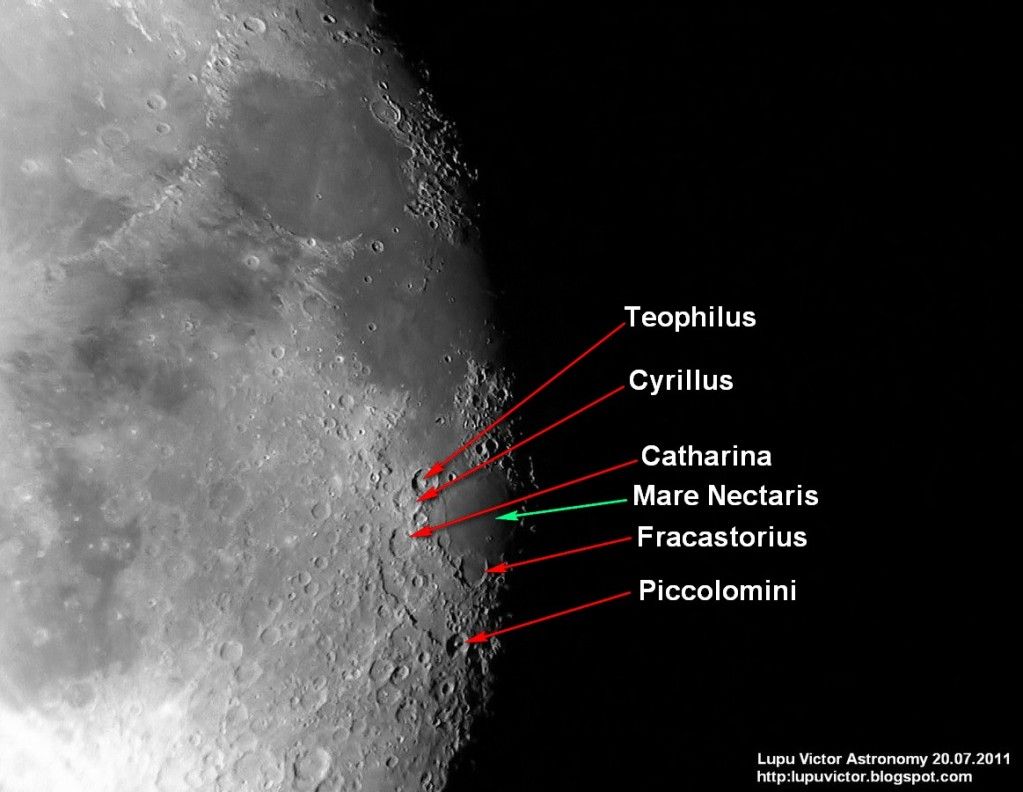
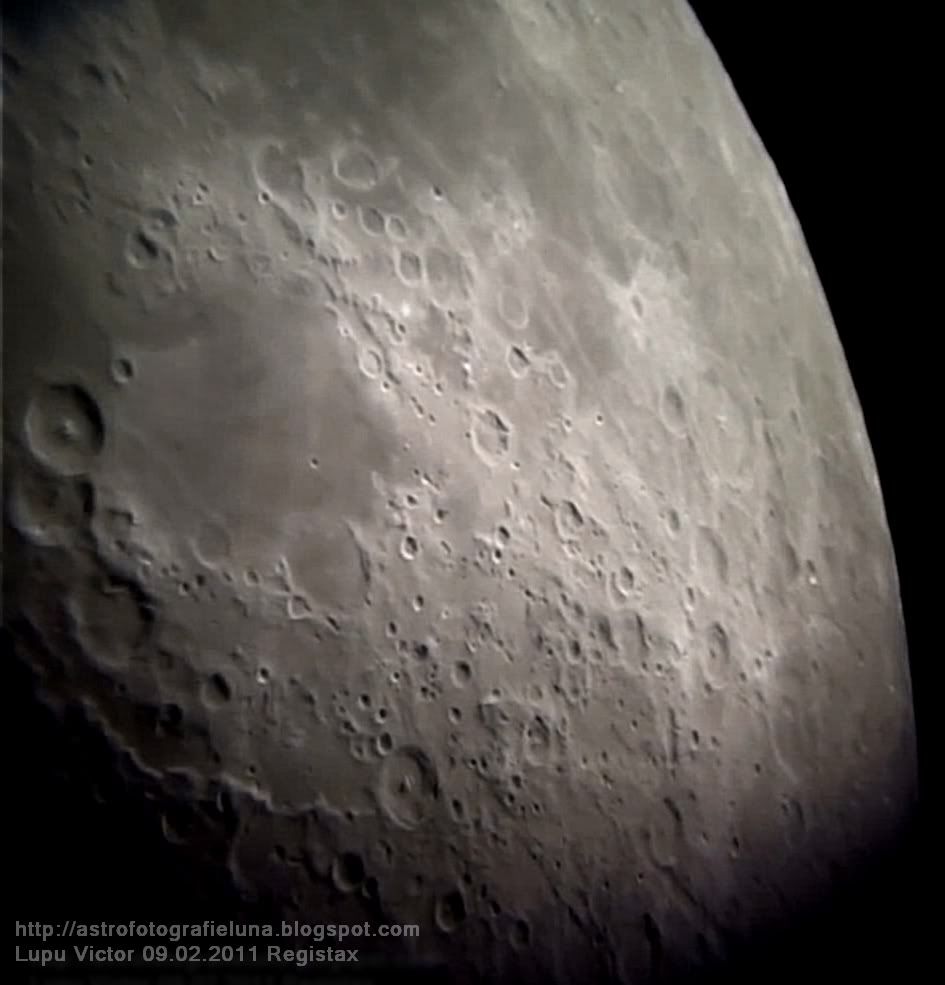
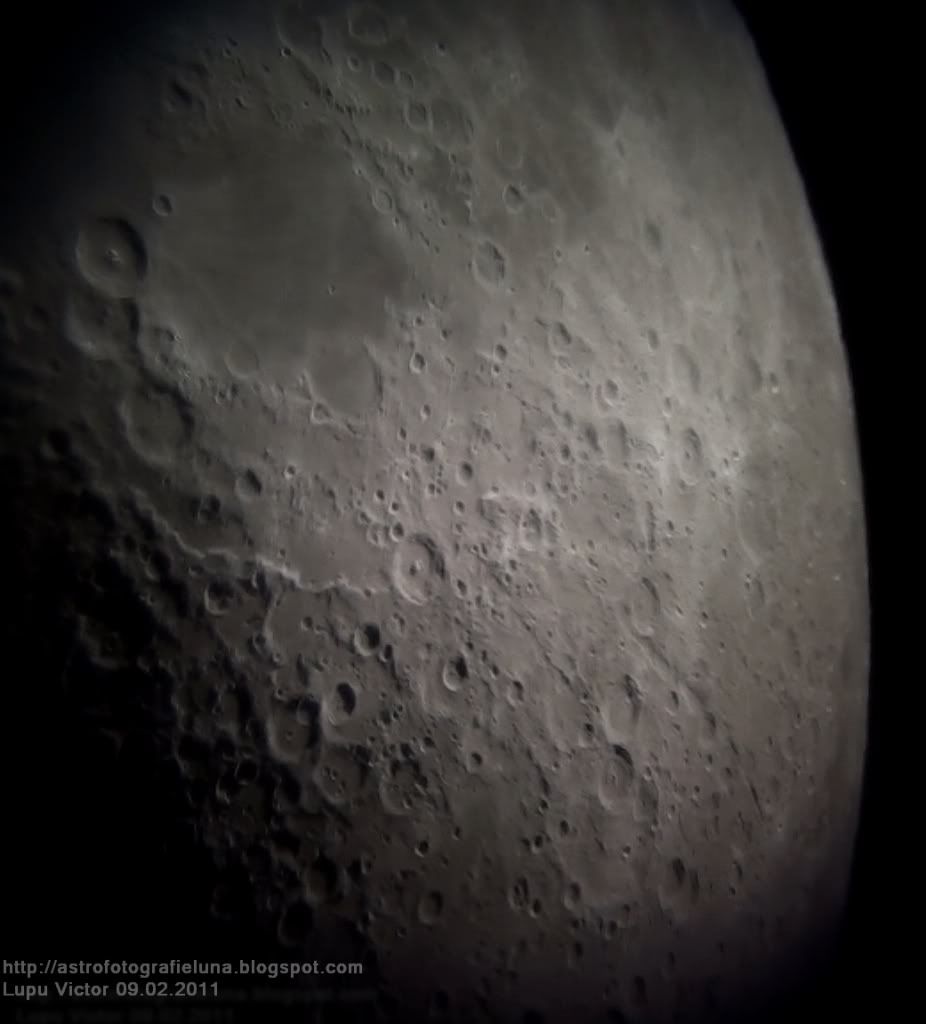
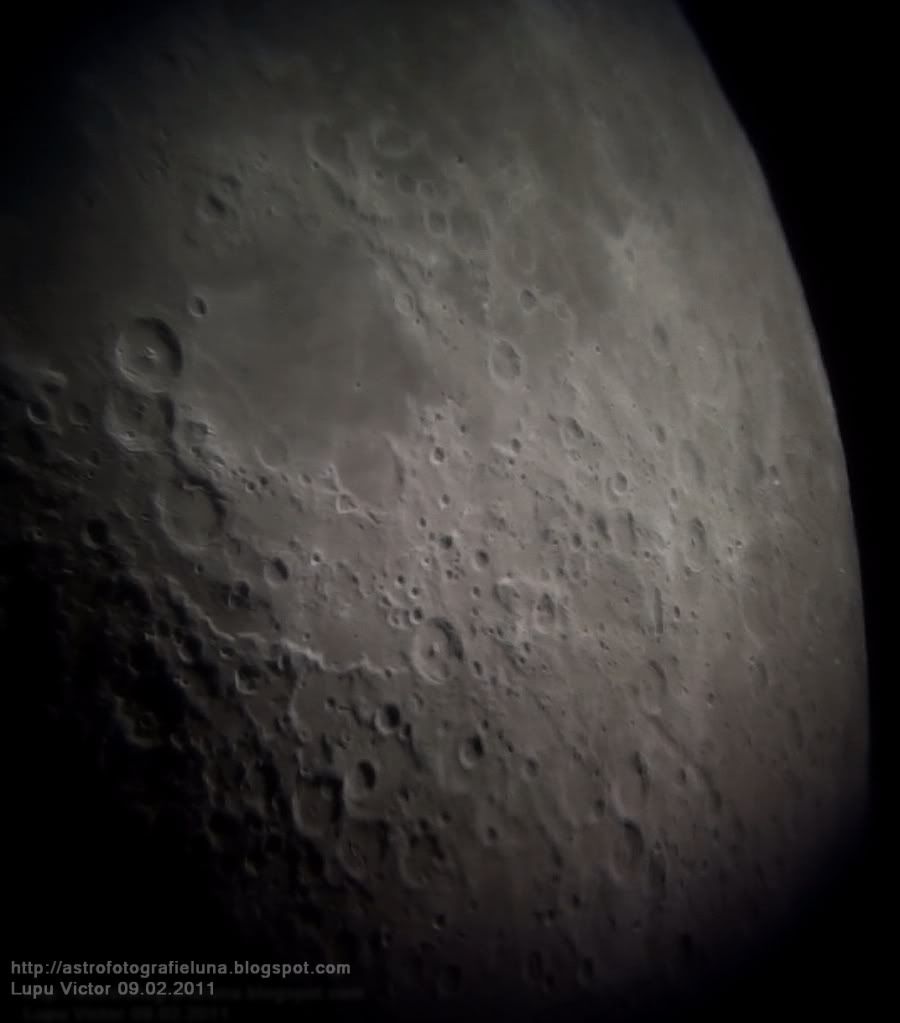
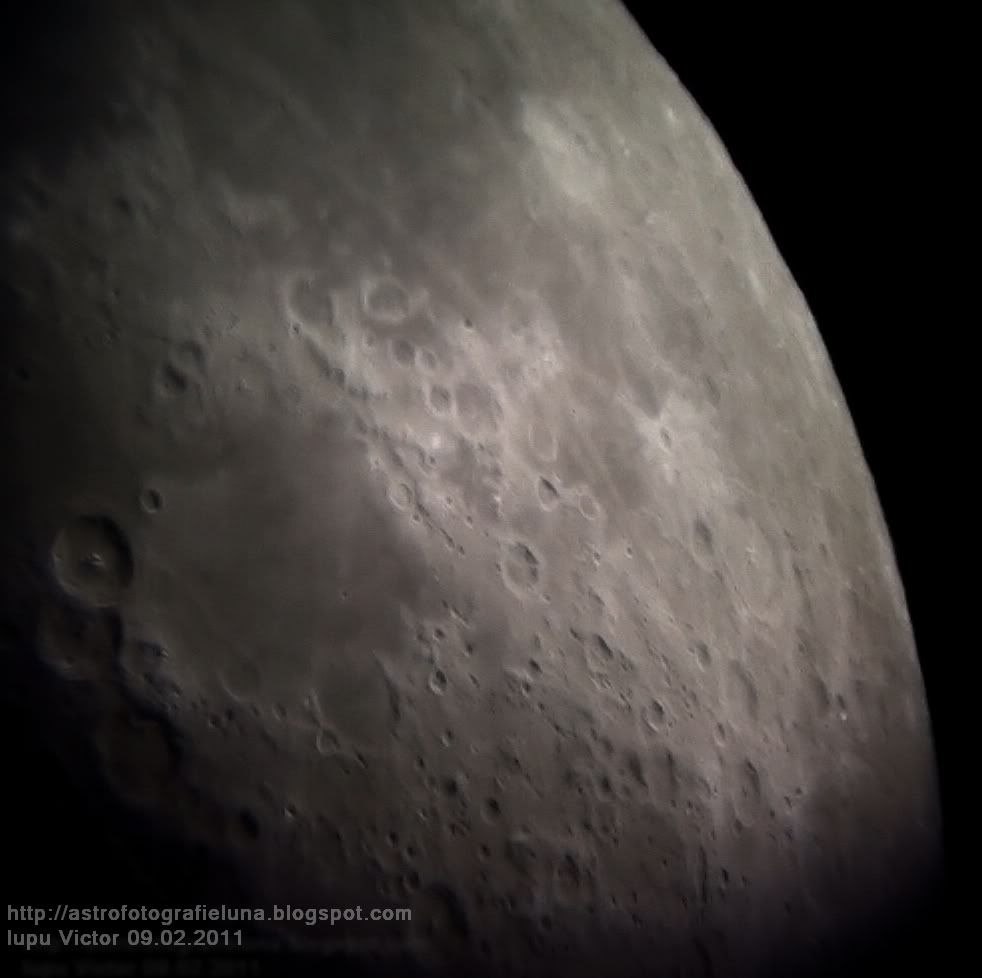
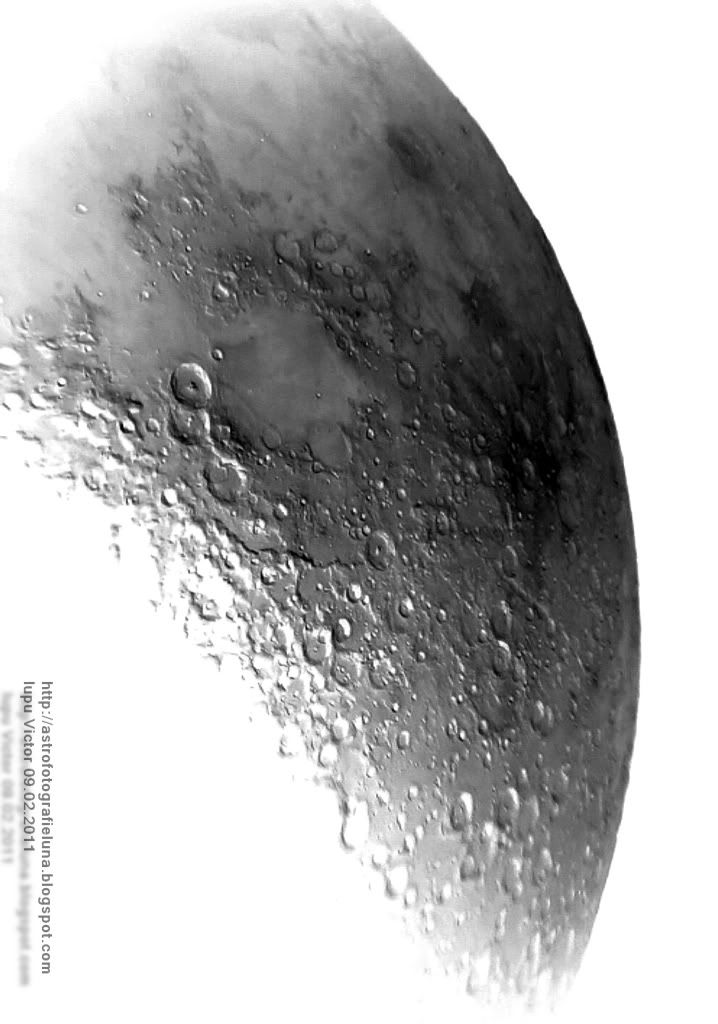
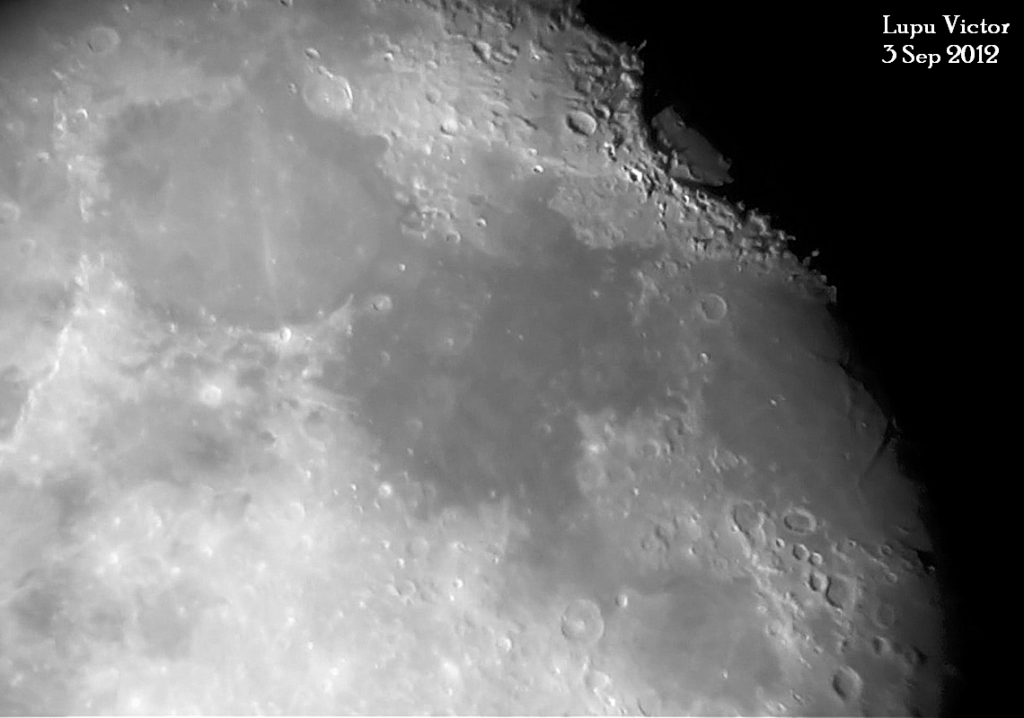
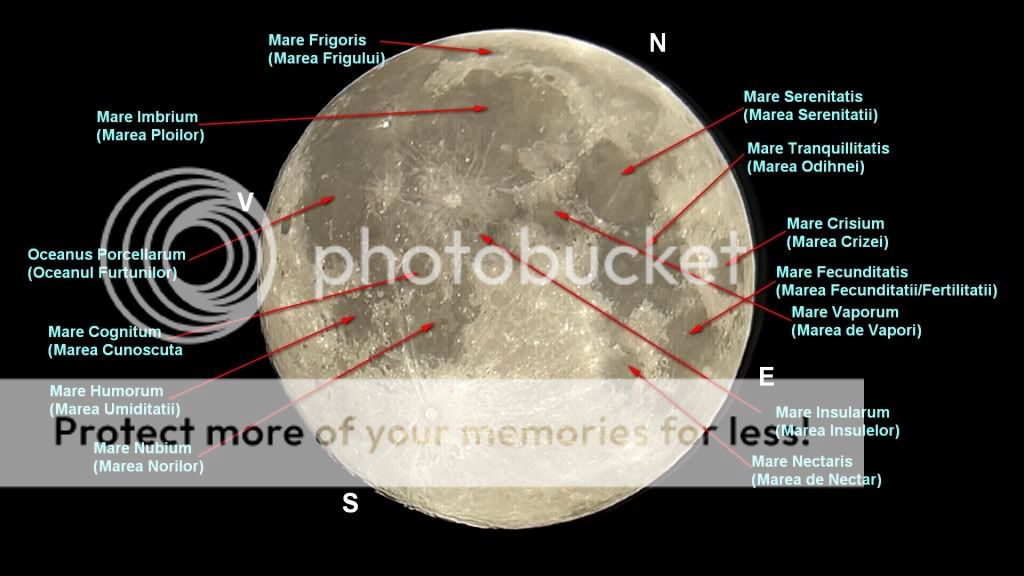
East Moon is interesting to observe thtough binoculars and telescope. Here we see large basins distinct between them, such as Mare Crisium, Serenitatis and Tranquillitatis, Fecunditatis and Nectaris.
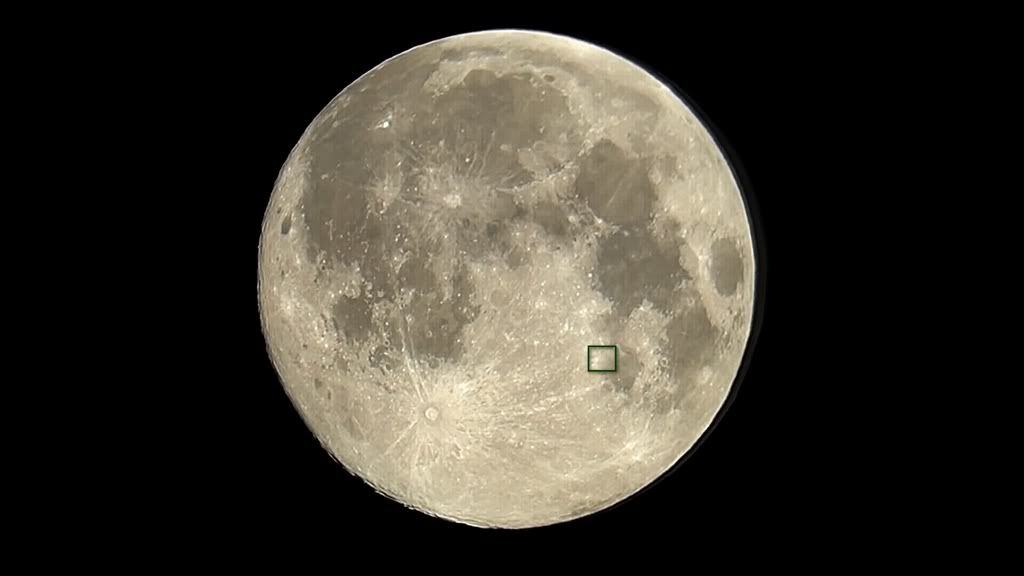
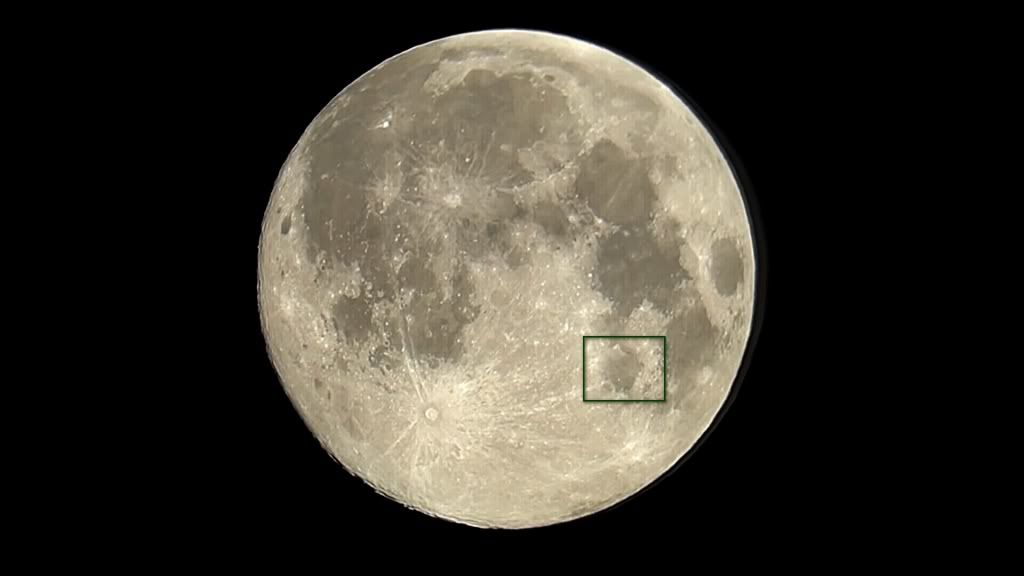
These are dark parts of the Moon. With the bright parts of the Moon is another story. They are bright because they have a high albedo, being excavated materials scattered like rays following impacts, and in contact with sunlight have a high brightness. Among them we identify a small crater on the western Mare Crisium named Proclus (28 km), but which is very highlighted when it is full Moon, around it observing rays like spikes. The same situation is also with another 2 small craters in southeastern Moon called Stevinus A (8 km) and Furnerius A (12 km).

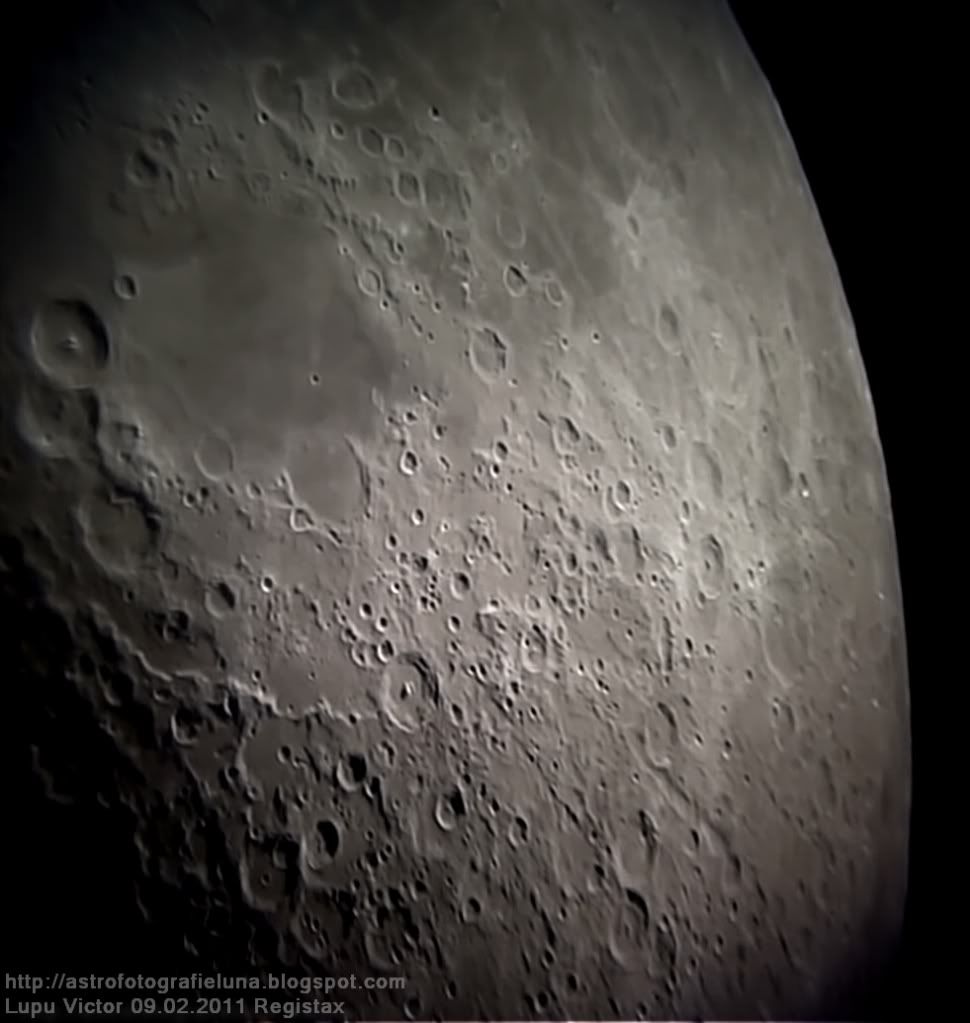
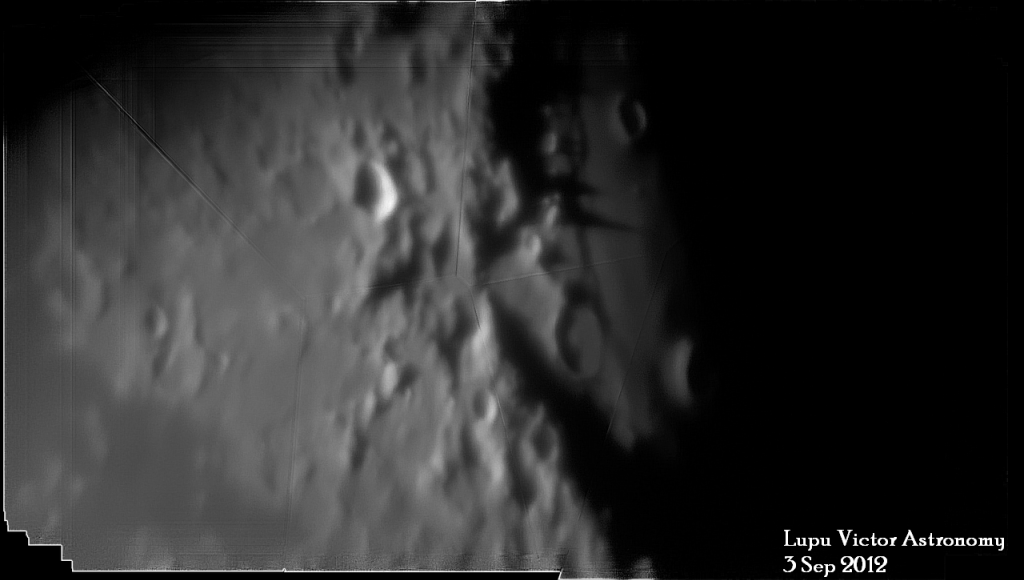
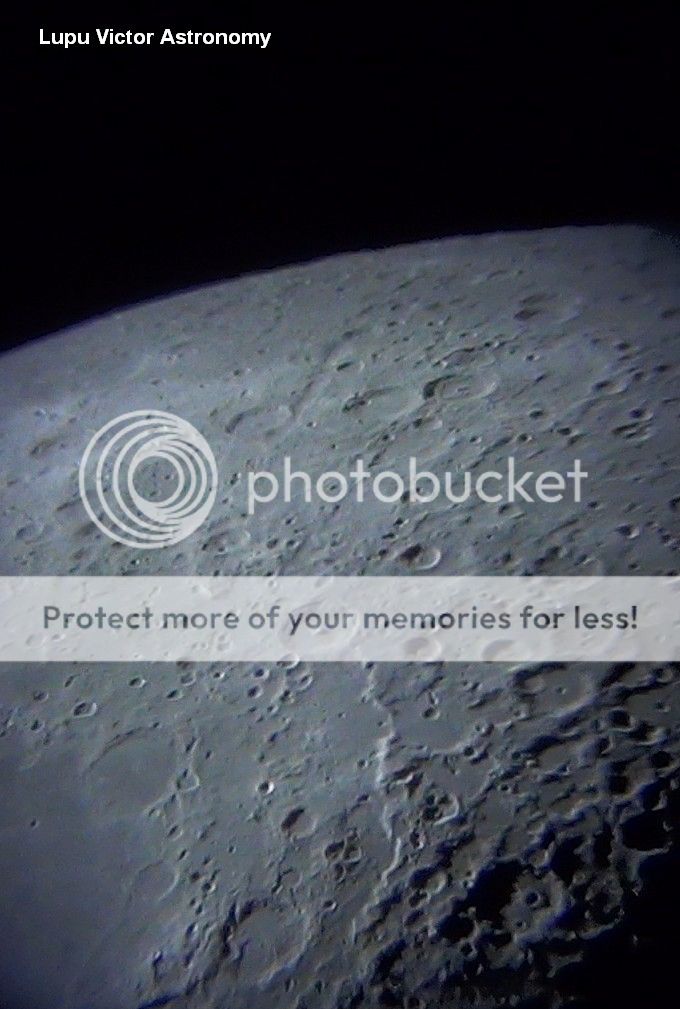
Craters were filmed with a video camera attached to an astronomical 203 mm Newtonian telescope.
In the Gif picture below are labeled craters and other lunar features in the region. To better understand this photo, you should note that the label with the name or the letter of larger craters could be found at their center, and on the small craters, you should find them around them, usually above.

Magnitude: -11.90
Phase: 0.86
Distance: 400.253 km
Illuminated: 85.8% (0% = new, 100% = full)
Astronomical Instrument: Celestron C8-Newtonian telescope
Eyepiece: Plossl 20mm, 2x Barlow
Mount: CG5 (EQ5)
Camera: Sony CX105
Filter: no
Date: 06.11.2011
Location: Baia Mare, Romania
Processing: FastStone Image Viewer
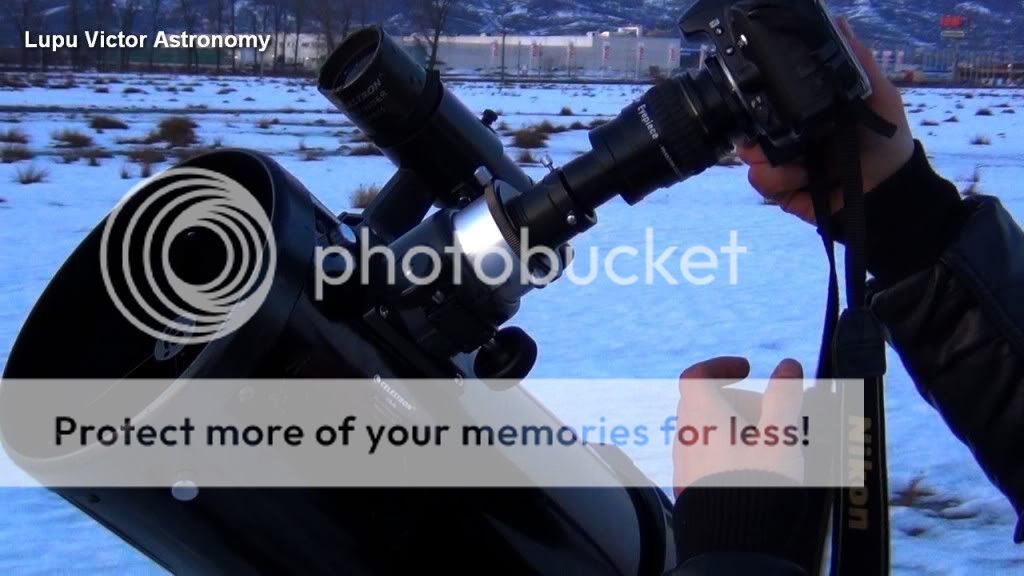
The video was made with the camera mounted on the telescope, to be more exact on the telescope eyepiece. To protect the telescope from vibrations, I used a tracking motor from Lacerta, and thus the image was more stable.
However, even with this tracking device for celestial bodies, there were vibrations of the telescope tube, causing the image to be slightly unstable. For this, I used the video stabilization option in Sony Vegas editing software, so the video was 100% correct on this issue.
Unstable aspect of the image through the telescope is caused by a combination of turbulence in the Earth's atmosphere and increased streams of heat from the ground and buildings.
Images were obtained by attaching a camera directly into the eyepiece of an astronomical telescope of 8 inch Newtonian; For this reason the eyepiece visual field was increased.
These are dark parts of the Moon. With the bright parts of the Moon is another story. They are bright because they have a high albedo, being excavated materials scattered like rays following impacts, and in contact with sunlight have a high brightness. Among them we identify a small crater on the western Mare Crisium named Proclus (28 km), but which is very highlighted when it is full Moon, around it observing rays like spikes. The same situation is also with another 2 small craters in southeastern Moon called Stevinus A (8 km) and Furnerius A (12 km).
Craters were filmed with a video camera attached to an astronomical 203 mm Newtonian telescope.
In the Gif picture below are labeled craters and other lunar features in the region. To better understand this photo, you should note that the label with the name or the letter of larger craters could be found at their center, and on the small craters, you should find them around them, usually above.
Magnitude: -11.90
Phase: 0.86
Distance: 400.253 km
Illuminated: 85.8% (0% = new, 100% = full)
Astronomical Instrument: Celestron C8-Newtonian telescope
Eyepiece: Plossl 20mm, 2x Barlow
Mount: CG5 (EQ5)
Camera: Sony CX105
Filter: no
Date: 06.11.2011
Location: Baia Mare, Romania
Processing: FastStone Image Viewer
The video was made with the camera mounted on the telescope, to be more exact on the telescope eyepiece. To protect the telescope from vibrations, I used a tracking motor from Lacerta, and thus the image was more stable.
However, even with this tracking device for celestial bodies, there were vibrations of the telescope tube, causing the image to be slightly unstable. For this, I used the video stabilization option in Sony Vegas editing software, so the video was 100% correct on this issue.
Unstable aspect of the image through the telescope is caused by a combination of turbulence in the Earth's atmosphere and increased streams of heat from the ground and buildings.
Images were obtained by attaching a camera directly into the eyepiece of an astronomical telescope of 8 inch Newtonian; For this reason the eyepiece visual field was increased.




.jpg)