Visit Worldwide Topsites
Showing posts with label Montes Alpes. Show all posts

Tuesday, 24 February 2015

The Moon. North lunar craters Video through telescope.


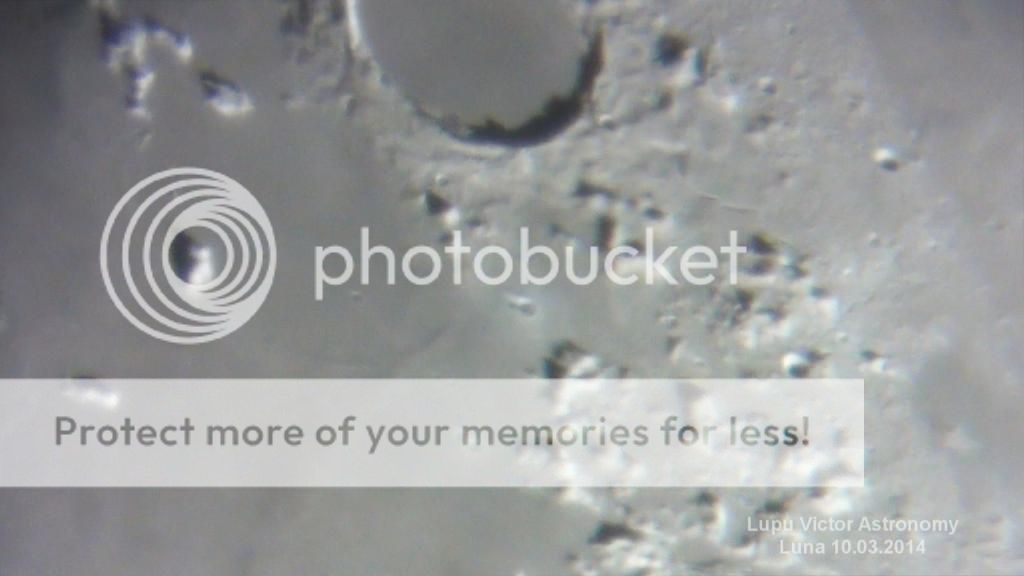
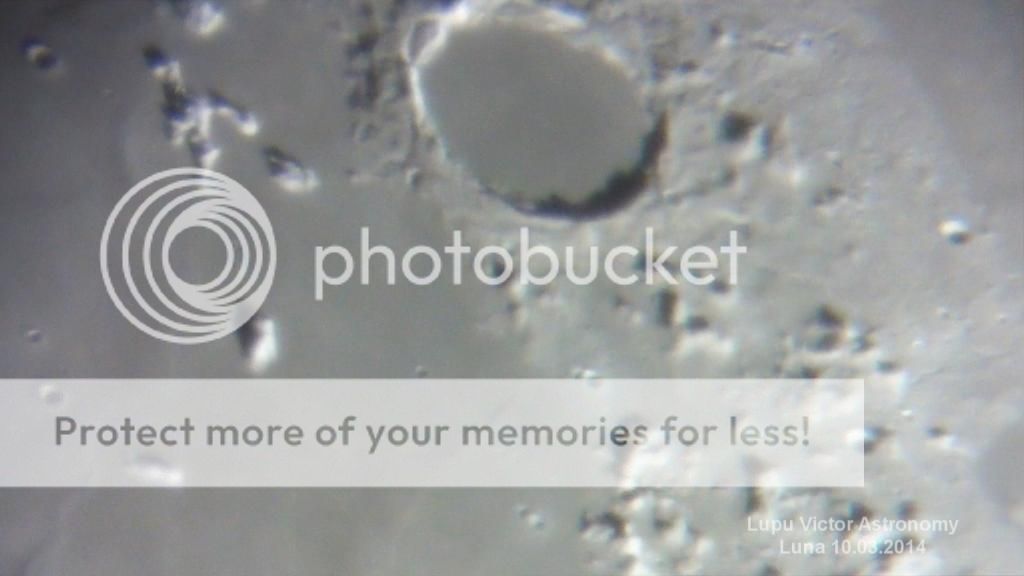
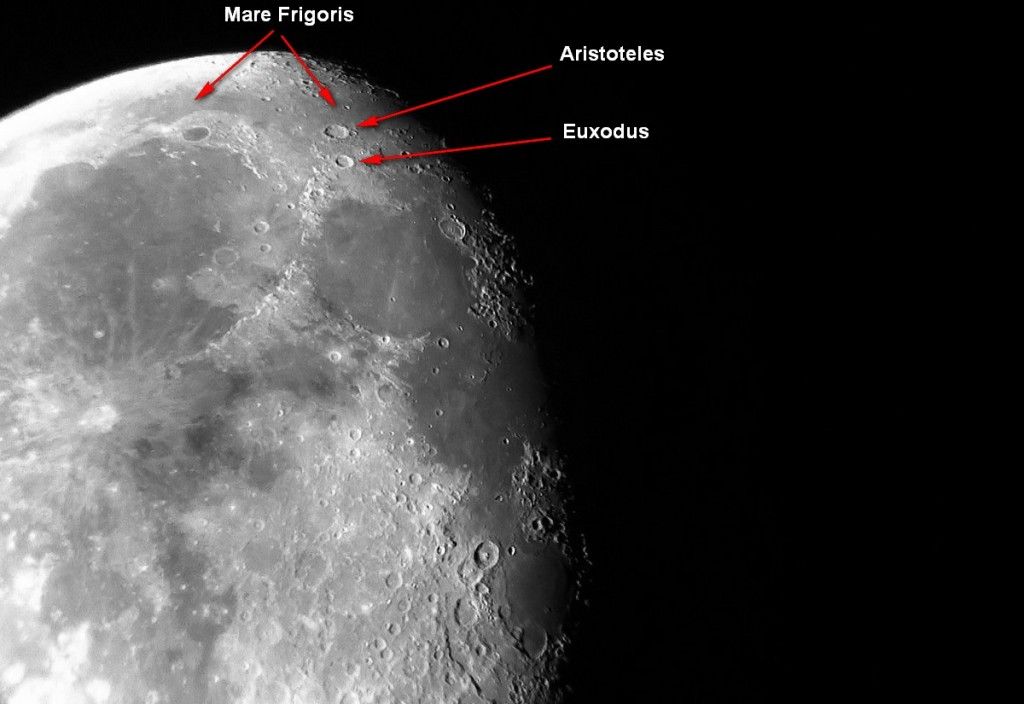
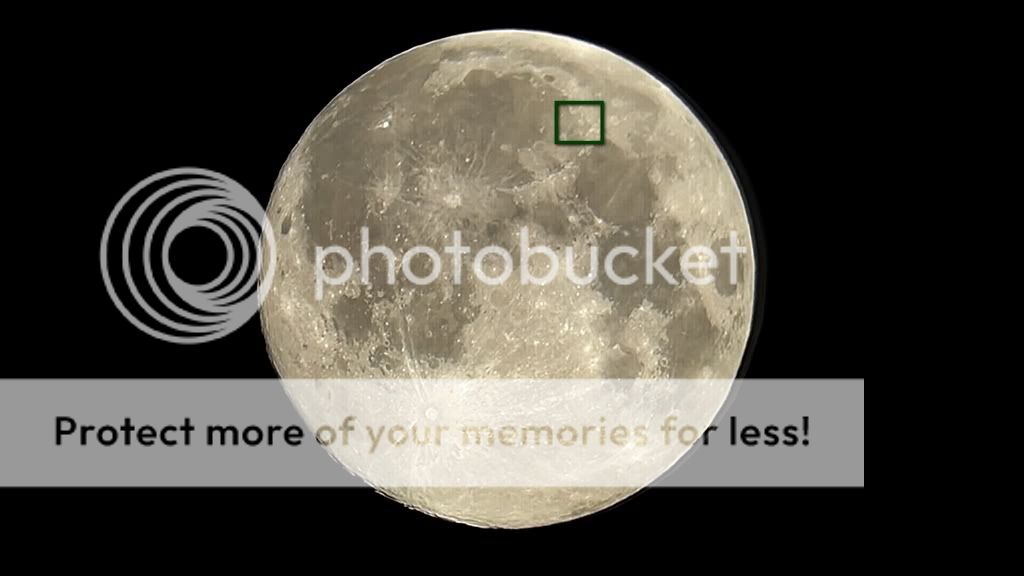
In these images we can see many craters on the Moon, namely its north. These include features such as mountains and craters as: Vallis Alpes / Montes Alpes, Plato (109 km), Hercules / Atlas (69/87 km), Burg (40 km), Aristoteles / Euxodus (87/67 km)
The video was also used in Registax program to process images with higher quality, but also for simple video captures.

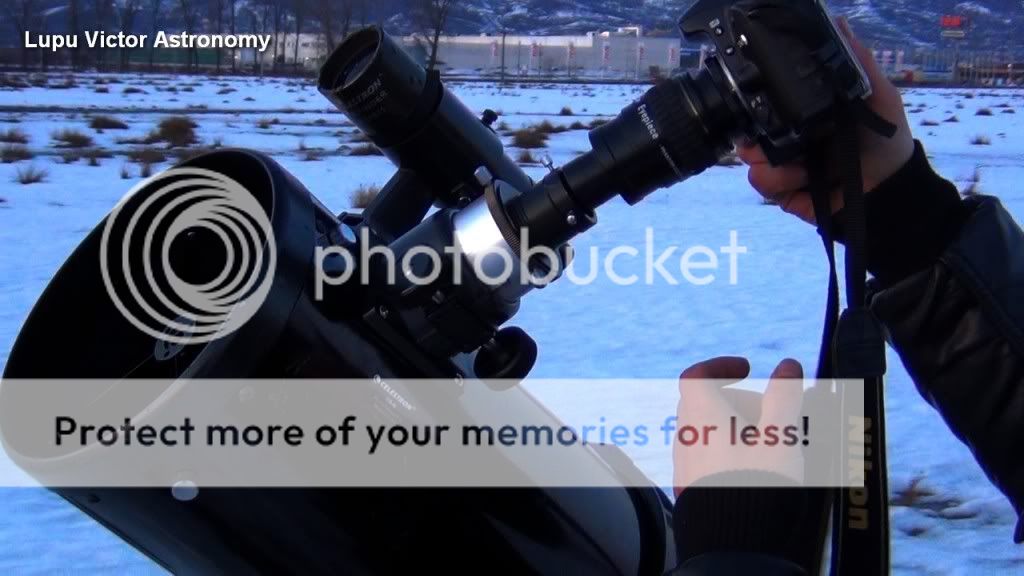
The video was made with the camera mounted on the telescope, to be more exact on the telescope eyepiece. To protect the telescope from vibrations, I used a tracking motor from Lacerta, and thus the image was more stable.

However, even with this tracking device for celestial bodies, there were vibrations of the telescope tube, causing the image to be slightly unstable. For this, I used the video stabilization option in Sony Vegas editing software, so the video was 100% correct on this issue.

Unstable aspect of the image through the telescope is caused by a combination of turbulence in the Earth's atmosphere and increased streams of heat from the ground and buildings.

Images were obtained by attaching a camera directly into the eyepiece of an astronomical telescope of 8 inch Newtonian; For this reason the eyepiece visual field was increased.

Images processed in Registax of crater Plato, here.
Unprocessed images (video captures), of crater
Plato are here.

Moon Age: 9.05 days
Phase: 70.5% (0% = New, 100% = Full)
Distance: 399.221 km


Optics (telescope or lenses): Celestron C8-Newtonian telescope, eyepiece 20mm Plossl, 2x barlow
Mount: CG5 (EQ5)
Camera: Sony CX130
Filter: no
Date: 10/03/2014
Location: Baia Mare, Romania
Processing: Sony Vegas HD Platinum 10.0


Sunday, 22 February 2015

The crater Plato. Photos of the Moon through telescope. Registax Images.

If we were to take in chronological order as lunar landscape formed on this area, I think it would not be difficult to decipher.
I think this area at first was invaded by impacts about as the Moon's south pole, but later lava covered the area, leaving a smooth plateau, namely Mare Imbrium and Mare Frigoris. Lava however, failed to cover the higher areas, such as the crater Plato, high region around it called Montes Alpes, and peaks Mons Pico, Montes Recti and Montes Teneriffe.

The crater Plato (109 km), I think it was magnificent before being flooded. I imagine how it would look deeper and maybe even with inner terraced walls and a central peak. All these features have disappeared beneath magma that came to hide the old relief. After the area was flooded by lava, other impacts have occurred that led to the appearance of some small craters on Mare Imbrium and Mare Frigoris like crater Bliss (20 km), or Plato D (10 km), B (13 km) or E (7 km).

 Info Plato crater.
Coordinates51.6°N 9.3°W
Diameter109 km
Depth1.0 km
Colongitude9° at sunrise
EponymPlato

1856 video frames in Registax.
3612 video frames in Registax.
3838 video frames in Registax.
173 video frames in Registax.
1 video frames in Registax.

Moon Age: 9.05 days
Phase: 70.5% (0% = New, 100% = Full)
Distance: 399.221 km


Optics (telescope or lenses): Celestron C8-Newtonian telescope, eyepiece 20mm Plossl, 2x barlow
Mount: CG5 (EQ5)
Camera: Sony CX130
Filter: no
Date: 10/03/2014
Location: Baia Mare, Romania
Processing: Registax,  FastStone Image Viewer


Image of 3 March 2012.


Tuesday, 25 November 2014

Registax Telescope images of Montes Alpes.

66  frames, in Registax.
160  frames, in Registax.

At the southeast of the crater Plato (101 km), is a mountainous area called Montes Alpes. It is divided into two by a straight valley, called Vallis Alpes. I do not know the origin of this interesting feature, which becomes even more puzzling since in the middle of this valley, there is a ditch that divides the valley into two, along its entire length.
Vallis Alpes, makes the communication between Mare Frigoris to the east, and Mare Imbrium to the west.

Moon Age: 9.05 days
Phase: 70.5% (0% = New, 100% = Full)
Distance: 399.221 km


Optics (telescope or lenses): Celestron C8-Newtonian telescope, eyepiece 20mm Plossl, 2x barlow
Mount: CG5 (EQ5)
Camera: Sony CX130
Filter: no
Date: 10/03/2014
Location: Baia Mare, Romania
Processing: Registax,  FastStone Image Viewer


Image from 29 April 2012.


Tuesday, 16 September 2014

Montes Teneriffe, Alpes and Plato crater on the Moon.


In these images, are delimited two types of terrain: A smooth one, and one with hights. The smooth land is a small part Mare Imbrium basin, and the floor of the crater Plato (101 km), which is not at all different in color and appearance from the basin, and the high land is seen here as the Montes Alpes, and several isolated mountains of the Mare Imbrium, as Montes Teneriffe and Mons Pico.

What I like about this picture, is the shadow edge of the crater Plato projected on the floor of this beautiful crater.


Moon Age: 9.05 days
Phase: 70.5% (0% = New, 100% = Full)
Distance: 399.221 km


Optics: Celestron C8-Newtonian telescope, 20mm Plossl, 2x barlow
Mount: CG5 (EQ5)
Camera: Sony CX130
Filter: no
Date: 10/03/2014
Location: Baia Mare, Romania
Processing: FastStone Image Viewer


Monday, 25 August 2014

North Moon. Montes and Vallis Alpes


To the east of the crater Plato, Alpes mountains are situated , some scattered mountains, cut in two by a "sword" called Vallis Alpes.
In the upper left corner, see an isolated mountain on Mare Imbrium called Mons Pico.
Mons Pico, probably was named by Schröter for the Pico von Teneriffe (Teide).


Image from 29 april 2012.

Moon Age: 9.05 days
Phase: 70.5% (0% = New, 100% = Full)
Distance: 399.221 km


Optics: Celestron C8-Newtonian telescope, 20mm Plossl, 2x barlow
Mount: CG5 (EQ5)
Camera: Sony CX130
Filter: no
Date: 10/03/2014
Location: Baia Mare, Romania
Processing: FastStone Image Viewer


Tuesday, 16 April 2013

Region between Plato and Aristotle craters Images by Telescope


In these photographs, the crater Plato (101 km), is close to the terminal, the boundary between light and darkness. Shadow of the eastern edge, is covering nearly half of the crater floor, projecting the sharp peaks in some aggressive forms on the smooth plateau of the crater.

In these photos, note Montes Alpes, separated by a cut, a valley called Vallis Alpes. It has a length of 166 km. If you start with a car at one end, you will get to the other in about 2h 30m-3h.

In the upper region, is a part of Mare Frigoris, which lies to the north of these mountains, and which are scattered by a few craters. These are the Timaeus (33 km), Archytas (32 km) and Protagoras (22 km).

  Egede flooded crater (37 km), is located right of the Alpes mountains, on which remained visible just the upper edge, having a ring aspect. Aristoteles (87 km), is the largest crater in the photos, which you can see on right in the images.

Age of the Moon: 7 days
Phase: 51% (0% = New, 100% = Full)
Distance: 384.488 km


Optics: Celestron C8-Newtonian telescope, 20mm Plossl, 2x Barlow
Mount: CG5 (EQ5)
Camera: Sony CX130
Filter: no
Date: 29.04.2012
Location: Baia Mare, Romania
Processing: video captures, FastStone Image Viewer


Saturday, 3 September 2011

Lunar Images Montes Alpes-Euxodus and Aristoteles

Photographer: Victor Lupu
Optics: Celestron C8-Newtonian telescope, plossl 20mm, 2x Barlow
Mount: CG5 (EQ5)
Device: Sony CX105 at 5-7x optical zoom
Total magnification: 500-700x
Filter: No
Date: 12/05/2011
Location: Baia Mare, Romania
Processing: Sony Vegas 10 video captures
In these captures you can see Vallis Alpes-Alpine Valley (in the first 3 pictures), which is like a sword that cuts in two Montes Alpes- or Alps Mountains. In these photos taken at 700x, and decreasing gradually in magnification, there are two craters called Aristoteles and Euxodus.
Aristotle has an area of 87 km, meaning land away from Baia Mare to Dej.


The image below is a video capture made ​​on July 20, 2011.

Saturday, 30 April 2011

Cassini crater and Montes Alpes

Photographer: Victor Lupu
Optics: Celestron C8-Newtonian reflector telescope, plossl 20mm, 2x Barlow
Mount: CG5 (EQ5)
Device: Sony HDR CX105
Filter: No
Date: 14/11/2010
Location: Baia Mare, Romania
Processing: video capture


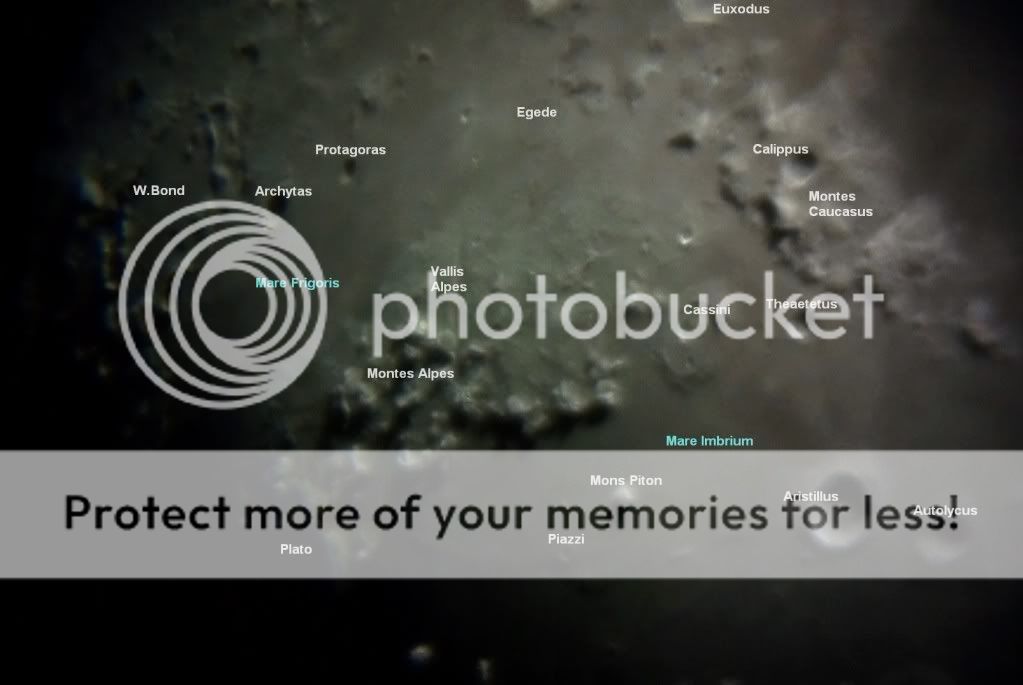
        Montes Alpes are mountains located on the north face of the visible Moon,northeast of Mare Imbrium. They were named after the Alps mountains in Europe. To the west are less tall, while the east they make a more robust area with a higher albedo. The mountains begins close by the Cassini crater, and continuing intermittently until the eastern edge of the crater Plato.
        Vallis Alpes is a large rift valley that extends as a narrow cleft in the Montes Alpes and connects Mare Imbrium and Mare Frigoris. The total length of this cleft is about 180 km, and reaches a maximum width of 20 km.

Below is a photographic map in wich are observed Cassini, Montes Alpes, but Aristillus with Autolycus too.


All images are © Copyright 2010-2015 Lupu Victor. All rights reserved.Images may not be reproduced, published, or copied in any form without written permission of the author. Thank you for respecting the intellectual property rights. ASTROFOTOGRAFIA | Lupu Victor Astronomy - Contact - About
Design by Free WordPress Themes | Bloggerized by Lasantha - Premium Blogger Themes | Online Project management