Visit Worldwide Topsites
Showing posts with label Craters-Plato. Show all posts

Saturday, 14 March 2015

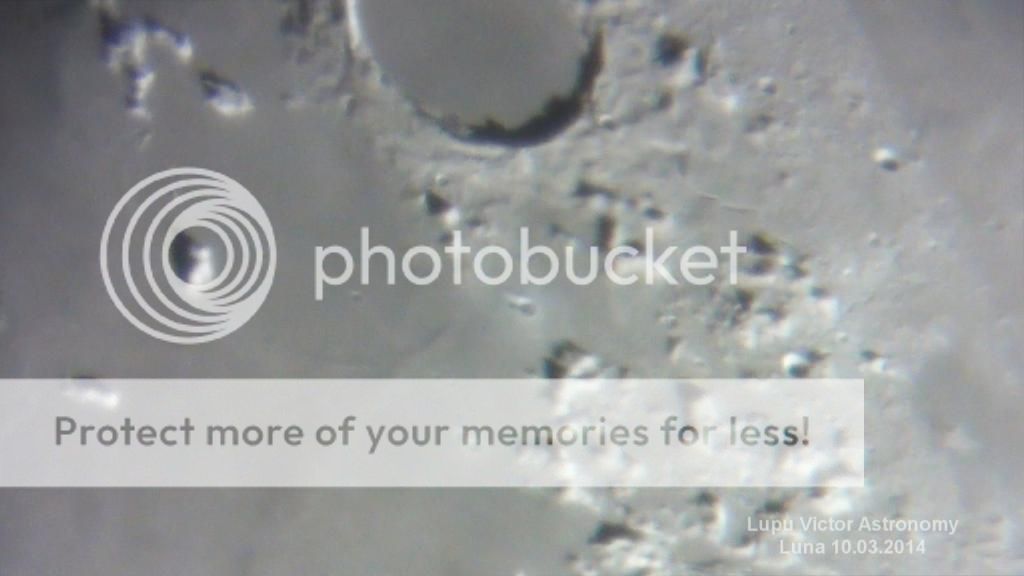
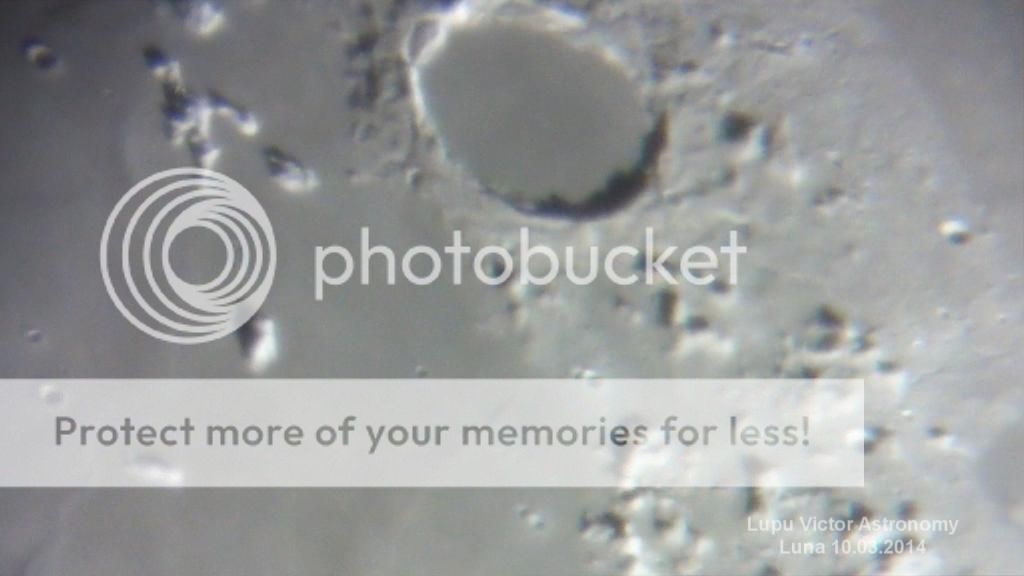
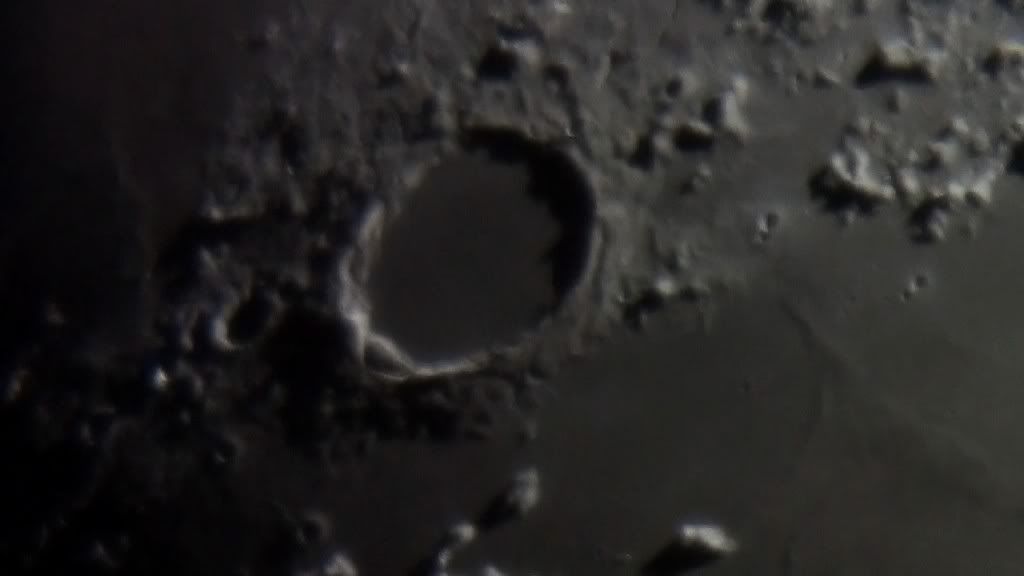
Detailed video images by telescope. Plato crater on the Moon.


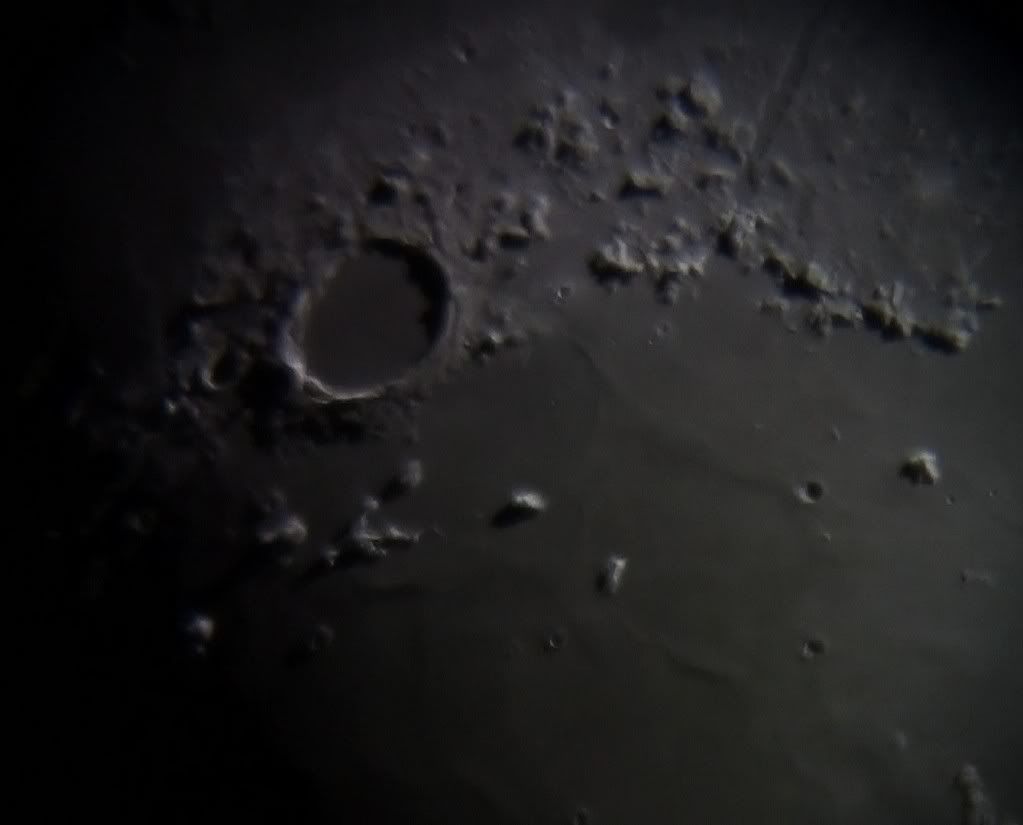
The astronomical telescope is pointed at the moon's north pole, using motor tracking from Lacerta. We see here crater Plato (109 km).

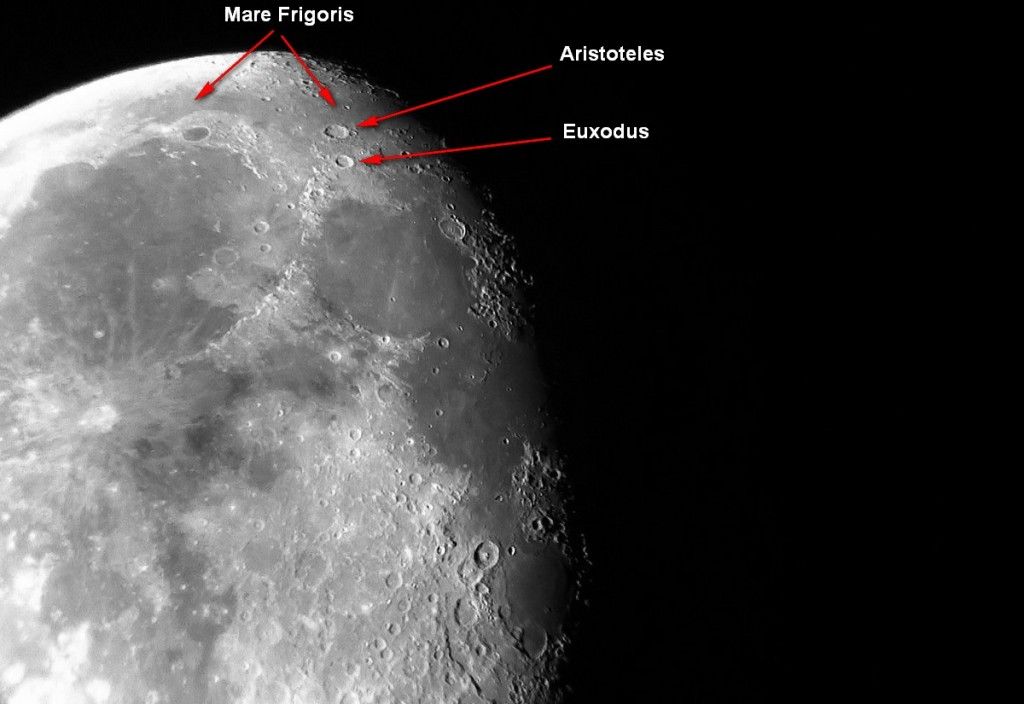
Plato crater (101 km.) is an impact crater filled with lava. It is located on the northeast shore of Mare Imbrium, and the Montes Alpes western mountains. Mare Imbrium-in the photo is in north. To the south in photo, is Mare Frigoris. To the west of the crater, are Montes Alpes.
Plato is about 3.84 billion years old, only slightly younger than the Mare Imbrium on the south (north in the photo). The rim is irregular, with peaks of 2 km height distorted making prominent projecting shadows on the floor of the crater when the sun is at an small angle. Plato shape is circular, but appears oval on Earth because of his position.
The video was also used in Registax program to process images with higher quality, but also for simple video captures.

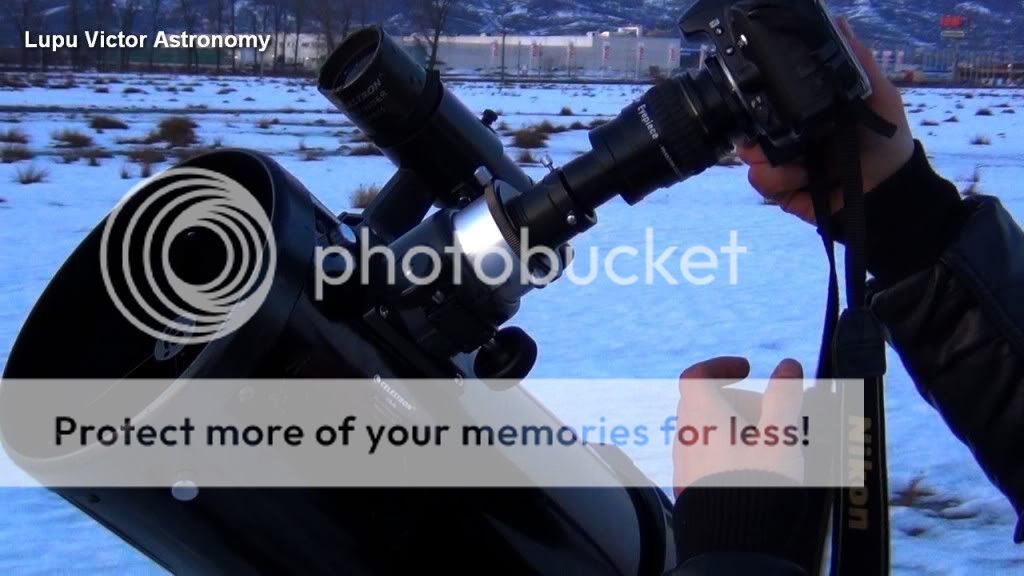
The video was made with the camera mounted on the telescope, to be more exact on the telescope eyepiece. To protect the telescope from vibrations, I used a tracking motor from Lacerta, and thus the image was more stable.

However, even with this tracking device for celestial bodies, there were vibrations of the telescope tube, causing the image to be slightly unstable. For this, I used the video stabilization option in Sony Vegas editing software, so the video was 100% correct on this issue.
Unstable aspect of the image through the telescope is caused by a combination of turbulence in the Earth's atmosphere and increased streams of heat from the ground and buildings.

Images were obtained by attaching a camera directly into the eyepiece of an astronomical telescope of 8 inch Newtonian; For this reason the eyepiece visual field was increased.

Images processed in Registax, here.
Unprocessed images (video captures), are here.


Moon Age: 9.05 days
Phase: 70.5% (0% = New, 100% = Full)
Distance: 399.221 km


Optics (telescope or lenses): Celestron C8-Newtonian telescope, eyepiece 20mm Plossl, 2x barlow
Mount: CG5 (EQ5)
Camera: Sony CX130
Filter: no
Date: 10/03/2014
Location: Baia Mare, Romania
Processing: Sony Vegas HD Platinum 10.0


 Info Plato crater.
Coordinates51.6°N 9.3°W
Diameter109 km
Depth1.0 km
Colongitude9° at sunrise
EponymPlato


Sunday, 22 February 2015

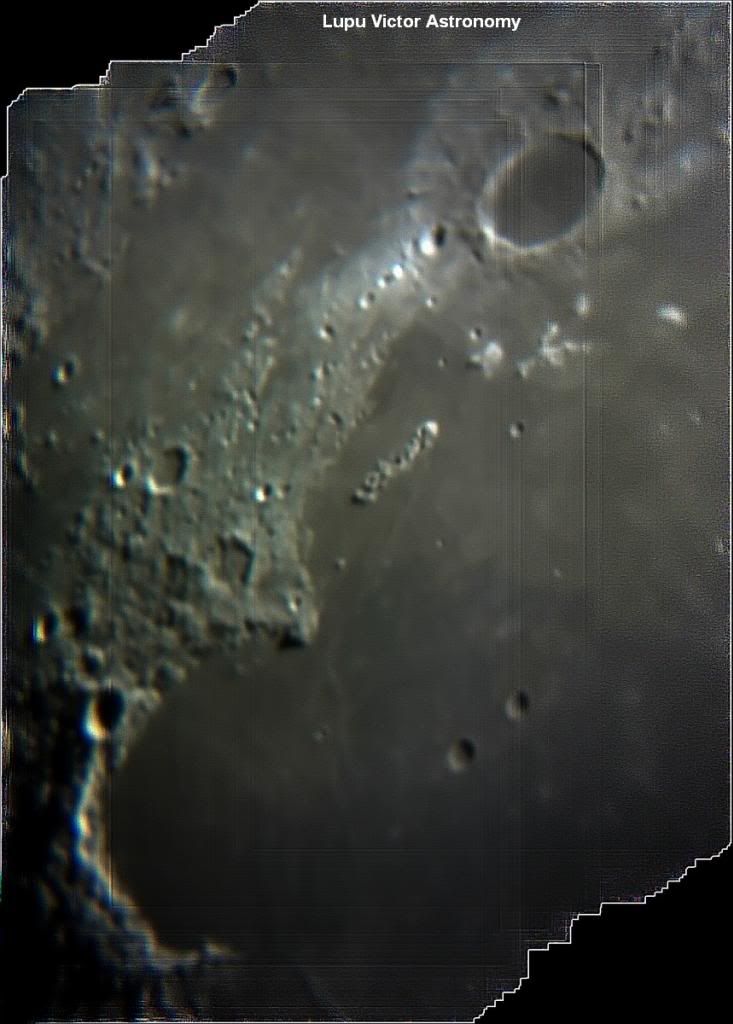
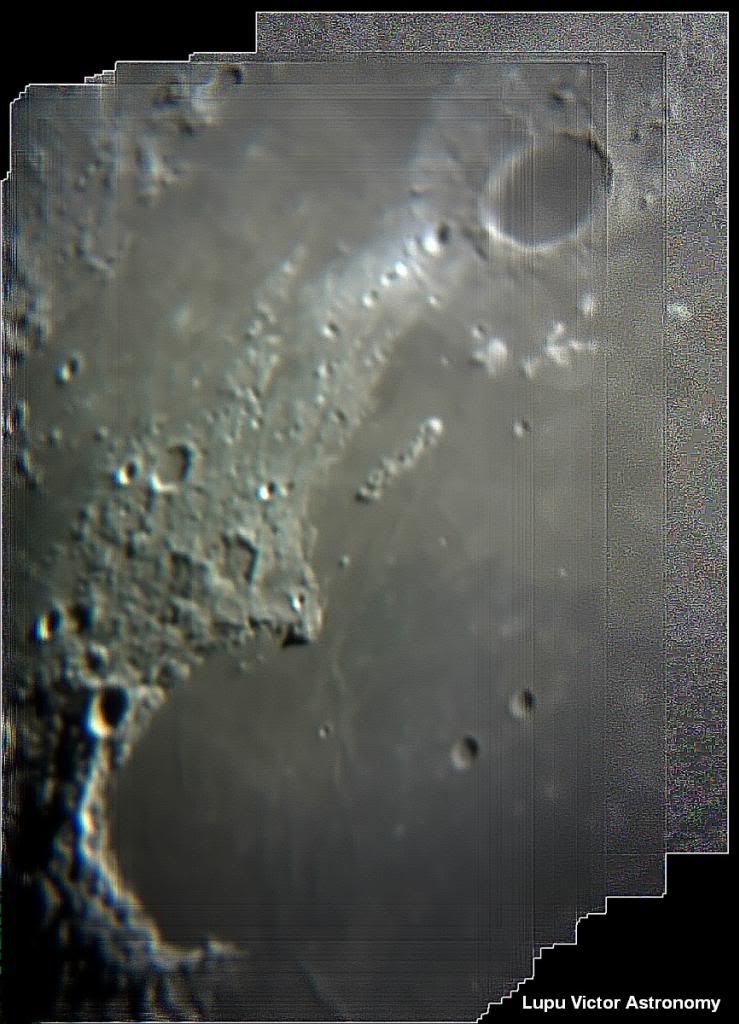
The crater Plato. Photos of the Moon through telescope. Registax Images.

If we were to take in chronological order as lunar landscape formed on this area, I think it would not be difficult to decipher.
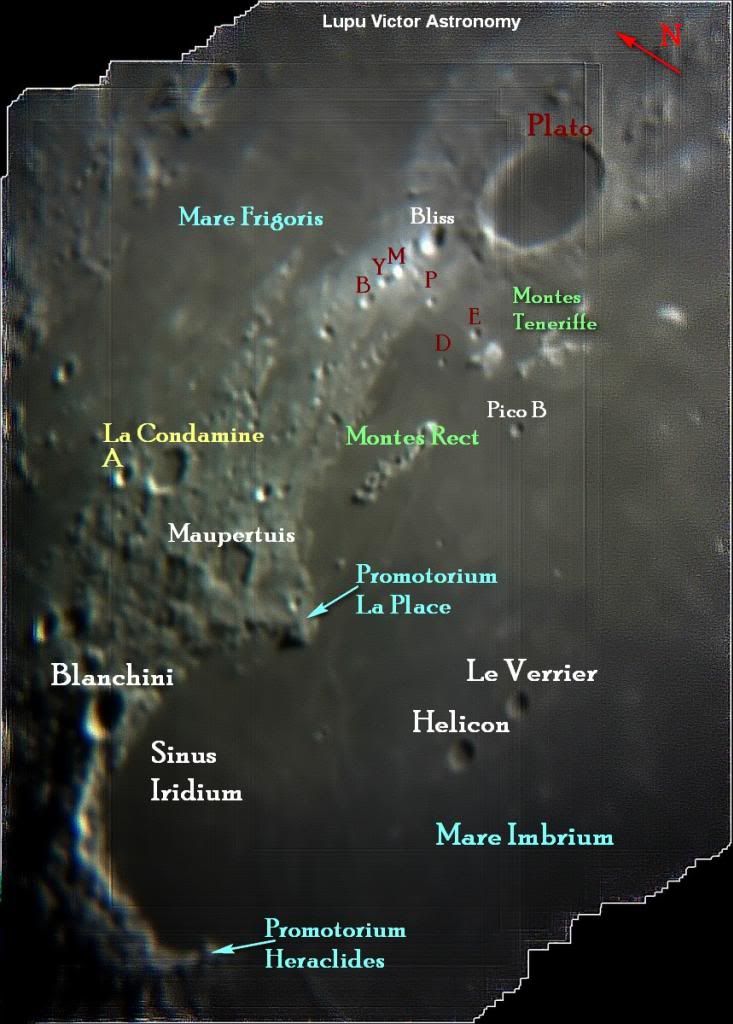
I think this area at first was invaded by impacts about as the Moon's south pole, but later lava covered the area, leaving a smooth plateau, namely Mare Imbrium and Mare Frigoris. Lava however, failed to cover the higher areas, such as the crater Plato, high region around it called Montes Alpes, and peaks Mons Pico, Montes Recti and Montes Teneriffe.

The crater Plato (109 km), I think it was magnificent before being flooded. I imagine how it would look deeper and maybe even with inner terraced walls and a central peak. All these features have disappeared beneath magma that came to hide the old relief. After the area was flooded by lava, other impacts have occurred that led to the appearance of some small craters on Mare Imbrium and Mare Frigoris like crater Bliss (20 km), or Plato D (10 km), B (13 km) or E (7 km).

 Info Plato crater.
Coordinates51.6°N 9.3°W
Diameter109 km
Depth1.0 km
Colongitude9° at sunrise
EponymPlato

1856 video frames in Registax.
3612 video frames in Registax.
3838 video frames in Registax.
173 video frames in Registax.
1 video frames in Registax.

Moon Age: 9.05 days
Phase: 70.5% (0% = New, 100% = Full)
Distance: 399.221 km


Optics (telescope or lenses): Celestron C8-Newtonian telescope, eyepiece 20mm Plossl, 2x barlow
Mount: CG5 (EQ5)
Camera: Sony CX130
Filter: no
Date: 10/03/2014
Location: Baia Mare, Romania
Processing: Registax,  FastStone Image Viewer


Image of 3 March 2012.


Tuesday, 16 September 2014

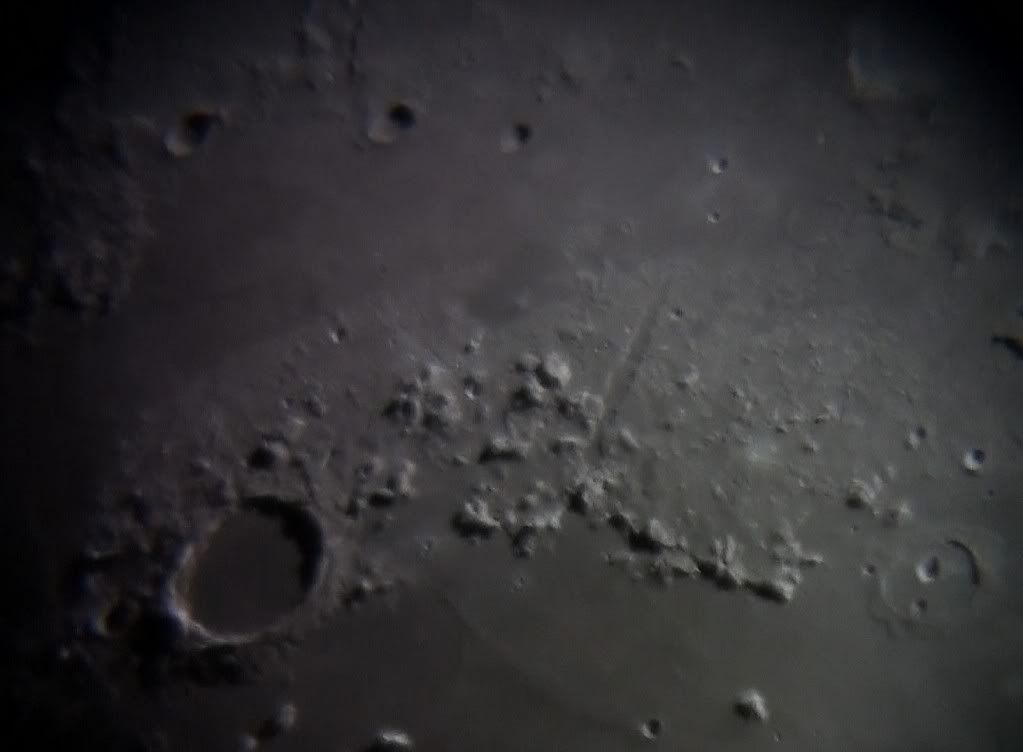
Montes Teneriffe, Alpes and Plato crater on the Moon.


In these images, are delimited two types of terrain: A smooth one, and one with hights. The smooth land is a small part Mare Imbrium basin, and the floor of the crater Plato (101 km), which is not at all different in color and appearance from the basin, and the high land is seen here as the Montes Alpes, and several isolated mountains of the Mare Imbrium, as Montes Teneriffe and Mons Pico.

What I like about this picture, is the shadow edge of the crater Plato projected on the floor of this beautiful crater.


Moon Age: 9.05 days
Phase: 70.5% (0% = New, 100% = Full)
Distance: 399.221 km


Optics: Celestron C8-Newtonian telescope, 20mm Plossl, 2x barlow
Mount: CG5 (EQ5)
Camera: Sony CX130
Filter: no
Date: 10/03/2014
Location: Baia Mare, Romania
Processing: FastStone Image Viewer


Sunday, 27 October 2013

Video of Plato crater by telescope.

Crater Plato (101 km) is not very large, but large enough to become distinct in an area where there are not so many craters. In the north there are few craters of the Moon compared to south, where they are numerous, and thus, they are personalized and easy to detect.

Plato has a dark floor, similar to the color of its south basin, Mare Imbrium. It is not a deep crater being completely flooded by lava, and the floor level I think is the same as of Mare Imbrium.

North of Plato's Mare Frigoris can be observed in this video when the camera moves to the top of the crater.

Age of the Moon: 11 days
Distance: 386 658
Phase: 85% (0% = New, 100% = full)


Optical Telescope CelestronC8 "-Newtonian plossl20mm, 2x Barlow
Mount: CG5 (EQ5)
Device: Sony CX-130
Video Mode: Full HD 1920x1080 progressive
Filter: no
Date: 23/03/2013
Location: Baia Mare, Romania
Processing and editing: Sony Vegas 10

Thursday, 15 August 2013

HD Video by astronomical telescope crater Plato and Sinus Iridum bay

Plato crater and Sinus Iridum, are both located on the north Moon on southern Mare Frigoris. There are two common articles with these videos, those being processed in Registax: Crater Plato Registax images and Sinus Iridum in sunlight Pictures through the telescope. Both have pictures from this video.


Between the two, Sinus Iridum and Plato (101 km), are 367 km from the eastern edge of the Sinus Iridum (Promotorium Laplace), and the center of Plato. In this area are Montes Teneriffe and Montes Recti located on the plateau of Mare Imbrium basin.

The sun shines from a high angle considering that the Moon was 93% illuminated.

I hope you enjoy this video made in a frosty winter night of 30 to 31 December 2013, the Earth's atmosphere was clean.

Most of these video craters can be seen even with binoculars and a good view is when the sun is at a low angle.

Moon Age: 17 days
Phase: 93% (0% = New, 100% = full)
Distance: 396.848 km


Video by Lupu Victor
Optics: CelestronC8 "-Newtonian telescope, plossl 20mm, 2x Barlow
Mount: CG5 (EQ5) motorized
Device: Sony CX-130
Video mode: Full HD progressive 1920x1080
Filter: no
Date: 31/12/2012
Location: Baia Mare, Romania
Processing and editing: Sony Vegas 10

Thursday, 6 June 2013

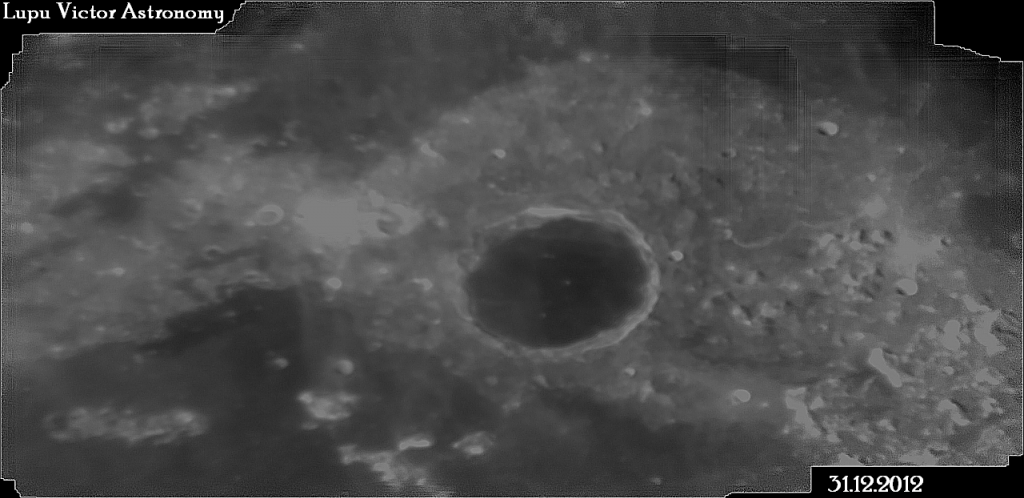
Crater Plato Image in Registax


Watch marvelous crater in the center of these images, with dark floor like Mare Imbrium basin, located at the bottom of images, and like Mare Frigoris, north. This crater is called Plato (101 km) and is on the northern Moon. It is actually one image processed in Registax, which I edited it several times.

This crater at that time had a rounder shape than other times, when I noticed it more oval. Often, crater shapes changes a little, as seen from Earth, because of the Moon libration, so Moon it does not stay fixed facing us, but has a periodic motion tilt.

This crater is surrounded on all sides by a highlands like mountains. On Plato's right, start Montes Alpes, which continues beyond the image.

Image was processed in Registax of a video from which it was took out 875 frames at 75% best quality, merged to form a single image.

Age of the Moon: 17 days
Phase: 93% (0% = New, 100% = full)
Distance: 394.960 km


Optics: Celestron C8-Newtonian telescope, 20mm Plossl, 2x Barlow
Mount: CG5 (EQ5) motorized
Camera: Sony CX130
Filter: no
Date: 31/12/2012
Location: Baia Mare, Romania
Processing: Registax, FastStone Image Viewer


The picture above is of 3 March 2012.

Sunday, 5 May 2013

Plato and Sinus Iridium Registax Images

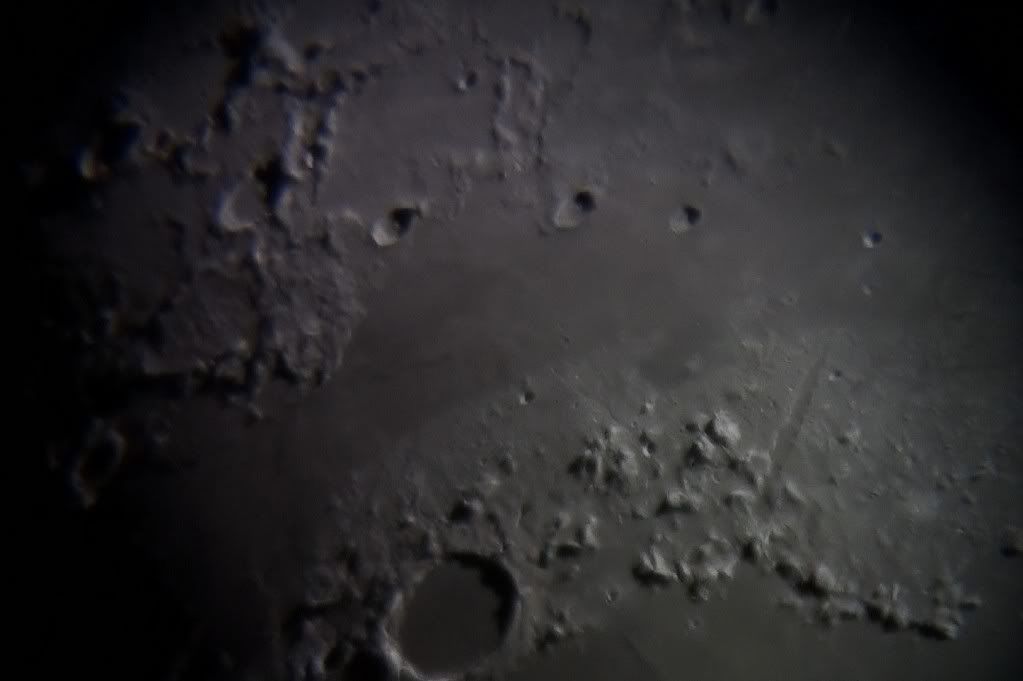
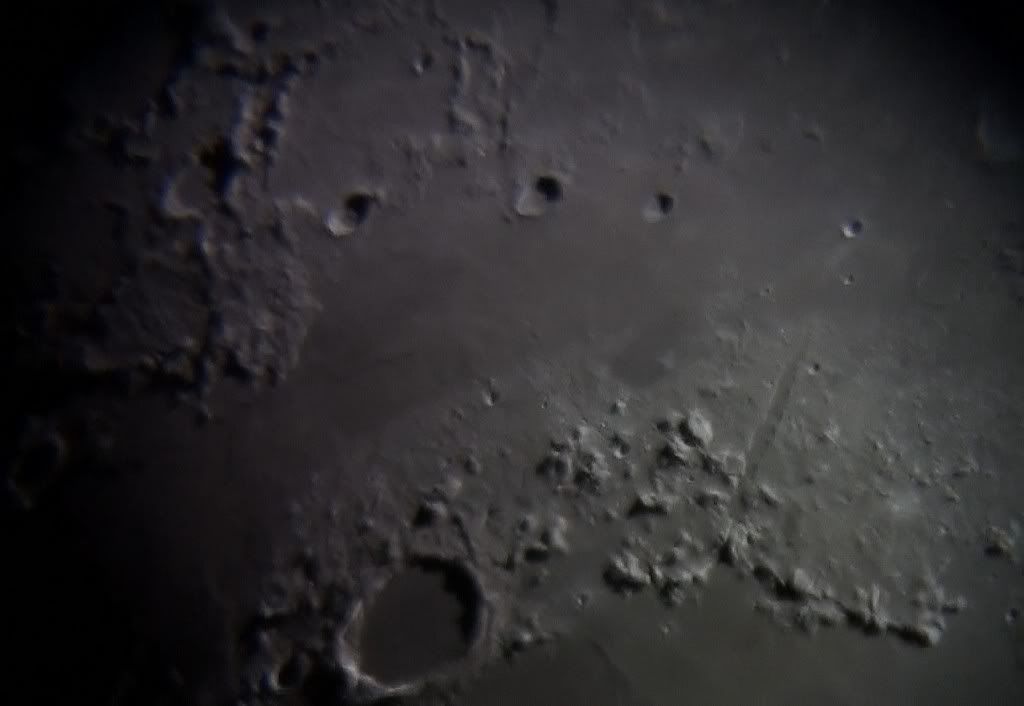
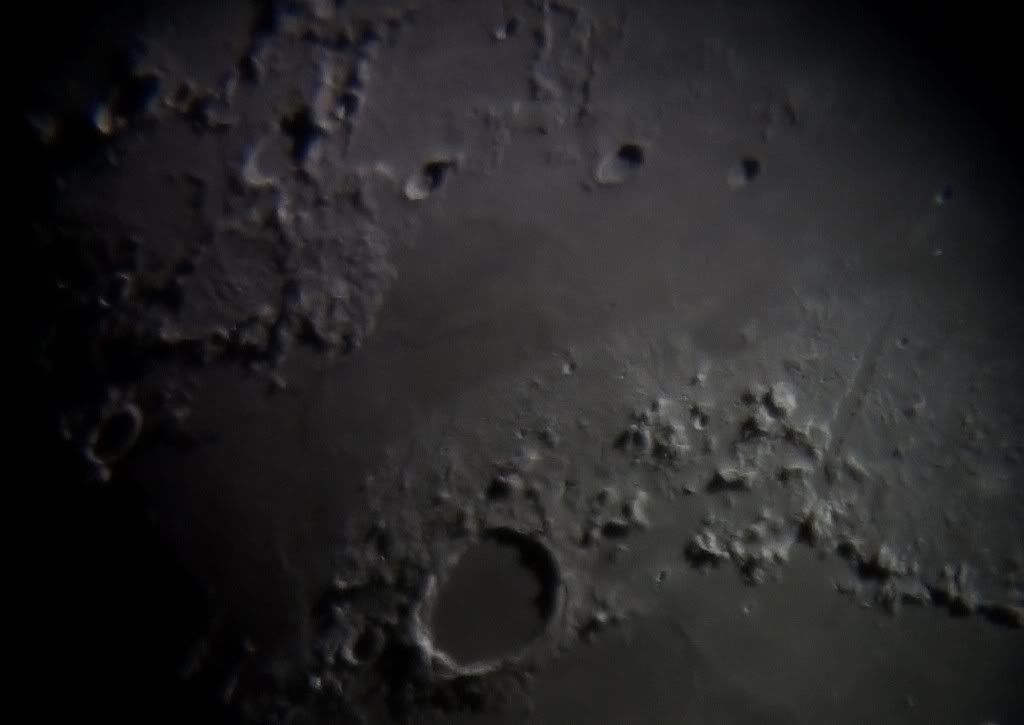
Registax image 265 frames to 90%
Registax image 269 frames to 90%
Registax image 345 frames to 85%


The north of the Moon has many features to discuss. I talked about one of the regions in the article East of Sinus Iridium Bay Registax pictures , in which we described the characteristics of the eastern Sinus Iridium.

 In these pictures we see more features such as a part of the Mate Frigoris (top in photos), a part of Mare Imbrium (bottom in photos), on which is situated two small distinct craters called Helicon and Le Verrier, and also observe Plato crater, upper right in photo.

   Sinus Iridium is a gulf that has no resemblance on the entire surface of the Moon. Because the Moon visible from Earth is full of basins (mare), the craters have special features, not like the unseen Moon, where there are not so many basins but with highlands, mountains, deep craters full of unaffected by lava as we see on visible Moon from Earth. I would not wish that one day, the Moon to appear on our sky with the unseen part.

Age of the Moon: 9 days
Phase: 75% (0% = New, 100% = Full)
Distance: 392.049 km


Optics: Celestron C8-Newtonian telescope, 20mm Plossl, 2x Barlow
Mount: CG5 (EQ5)
Camera: Sony CX130
Filter: no
Date: 03/03/2012
Location: Baia Mare, Romania
Processing: Registax, FastStone Image Viewer


Tuesday, 16 April 2013

Region between Plato and Aristotle craters Images by Telescope


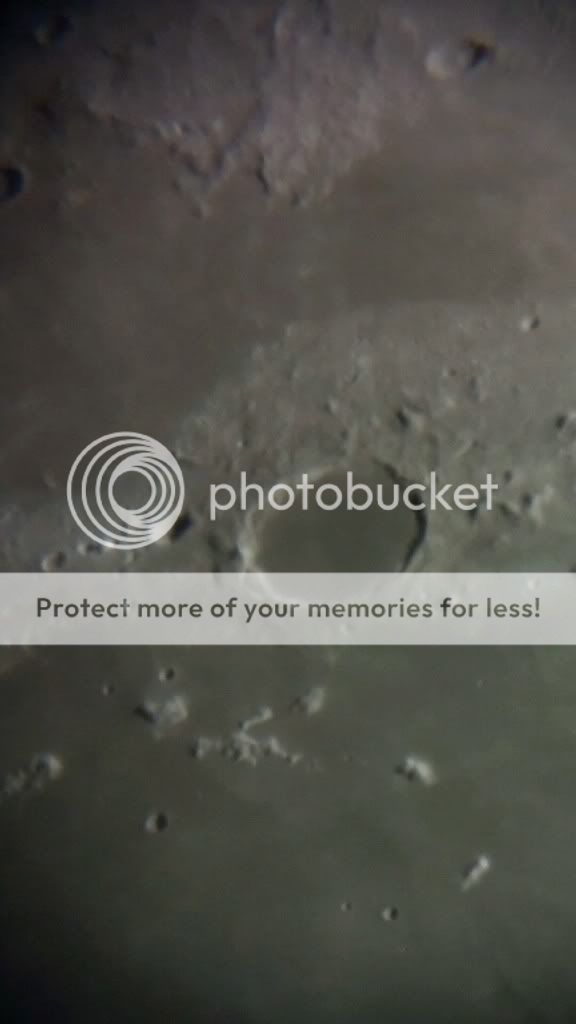
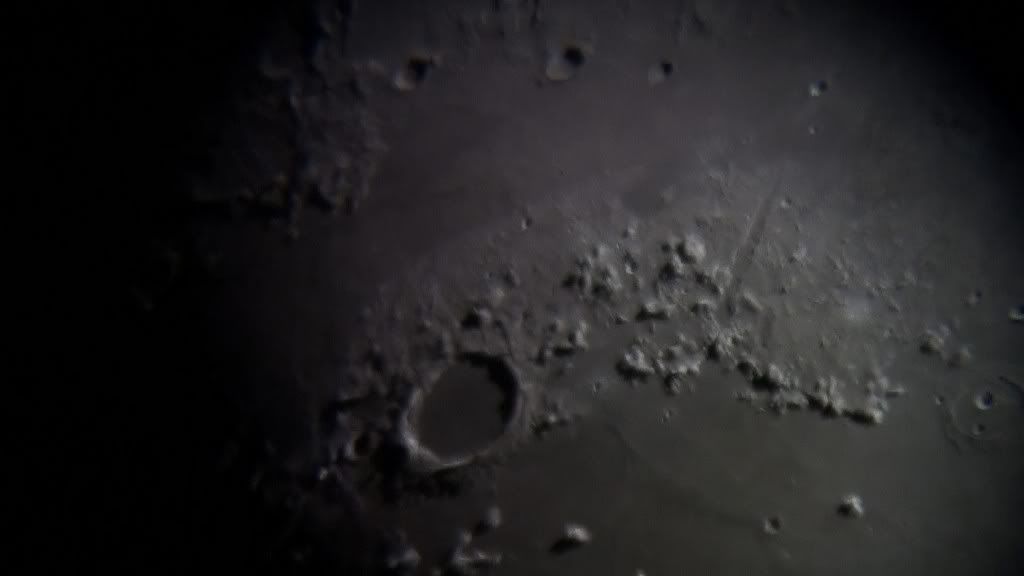
In these photographs, the crater Plato (101 km), is close to the terminal, the boundary between light and darkness. Shadow of the eastern edge, is covering nearly half of the crater floor, projecting the sharp peaks in some aggressive forms on the smooth plateau of the crater.

In these photos, note Montes Alpes, separated by a cut, a valley called Vallis Alpes. It has a length of 166 km. If you start with a car at one end, you will get to the other in about 2h 30m-3h.

In the upper region, is a part of Mare Frigoris, which lies to the north of these mountains, and which are scattered by a few craters. These are the Timaeus (33 km), Archytas (32 km) and Protagoras (22 km).

  Egede flooded crater (37 km), is located right of the Alpes mountains, on which remained visible just the upper edge, having a ring aspect. Aristoteles (87 km), is the largest crater in the photos, which you can see on right in the images.

Age of the Moon: 7 days
Phase: 51% (0% = New, 100% = Full)
Distance: 384.488 km


Optics: Celestron C8-Newtonian telescope, 20mm Plossl, 2x Barlow
Mount: CG5 (EQ5)
Camera: Sony CX130
Filter: no
Date: 29.04.2012
Location: Baia Mare, Romania
Processing: video captures, FastStone Image Viewer


Thursday, 17 May 2012

Video by telescope Between Plato and Sinus Iridium through a telescope

In this 3:51 minute long video of the North of the Moon, is presented a region called Sinus Iridium. The image is upside down as seen through the telescope.
Bay of Rainbows, or Sinus Iridium, consists of Montes Jura mountains, forming a bay. It is actually the remnants of the walls of a large crater.
 Isolated and elongated mountain from Mare Imbrium, is Montes Rectum.
On Imbrium sea are visible two different colour shades that divides the sea in two. This highlights shows in fact that there are two types of soil found in this area.
Helicon and Le Verrier are two isolated craters located "offshore", visible in the region where the lunar surface color is darker.


Video: Victor Lupu
Optics: Celestron C8 "-Newtonian telescope, plossl 20mm, 2x Barlow
Mount: CG5 (EQ5)
Device: Sony CX-130
Video mode: Full HD 1080p (1920x1080) progressive
Filter: no
Date: 03/03/2012
Location: Baia Mare, Romania
Processing and Editing: Sony Vegas 10

Tuesday, 2 August 2011

Video-Plato lunar crater through telescope


Video by: Victor Lupu
Optics: Celestron C8-Newtonian telescope, plossl 20mm, 2x Barlow
Mount: CG5 (EQ5)
Device: Sony CX105
Filter: No
Date: 11/05/2011
Location: Baia Mare, Romania

        Photos of this video where you can see crater Plato closer are here Plato Crater and Mare Frigoris.
Around the crater are Alpes mountains, named after the Alps of Earth. Mare Imbrium on south of the crater. It is interesting that Plato's floor is very smooth and has no craters. It seems to have been flooded by lava during the time when our Moon was a ball of lava.It was not been bombarded by other impacts. I think it's one of the favorite crater of any amateur astronomer who holds a telescope.

Sunday, 24 July 2011

Plato crater and Mare Frigoris

Photographer: Victor Lupu
Optics: Celestron C8-Newtonian telescope, plossl 20mm, 2x Barlow
Mount: CG5 (EQ5)
Device: Sony CX105
Filter: No
Date: 11/05/2011
Location: Baia Mare, Romania
Processing: video captures

These images of Plato crater are newer. You can see differences in soil composition on Mare Frigoris (Sea of cold) that has a diameter of 1.446 km.

The image below is a video capture made ​​on July 20, 2011.

Tuesday, 28 June 2011

Video-Plato Moon crater astronomy telescope


Plato crater video. Video captures are here > Plato crater
Video by: Victor Lupu
Optics: Celestron C8-Newtonian telescope, plossl 20mm, 2x Barlow
Mount: CG5 (EQ5)
Device: Sony CX105
Filter: No
Date: 13/04/2011
Location: Baia Mare, Romania

Monday, 27 June 2011

Plato crater


Photographer: Victor Lupu
Optics: Celestron C8-Newtonian telescope, plossl 20mm, 2x Barlow
Mount: CG5 (EQ5)
Device: Sony CX105
Filter: No
Date: 13/04/2011
Location: Baia Mare, Romania
Processing: Sony Vegas 10 captures video


          Plato crater is one of the most searched craters for observing on the Moon through the telescope. It is 101 km wide, easily distinguished by the dark floor surrounded by a bright edge, and it is for a long time a subject of speculation and controversy.
Picture above is overturned as seen through the telescope ,made on 13/02/2011 .

 
All images are © Copyright 2010-2015 Lupu Victor. All rights reserved.Images may not be reproduced, published, or copied in any form without written permission of the author. Thank you for respecting the intellectual property rights. ASTROFOTOGRAFIA | Lupu Victor Astronomy - Contact - About
Design by Free WordPress Themes | Bloggerized by Lasantha - Premium Blogger Themes | Online Project management