Visit Worldwide Topsites
Showing posts sorted by relevance for query barrow. Sort by date Show all posts

Wednesday, 12 October 2011

North craters of the Moon-Lunar Features

            16 july 2011 picture of north's Moon through my telescope


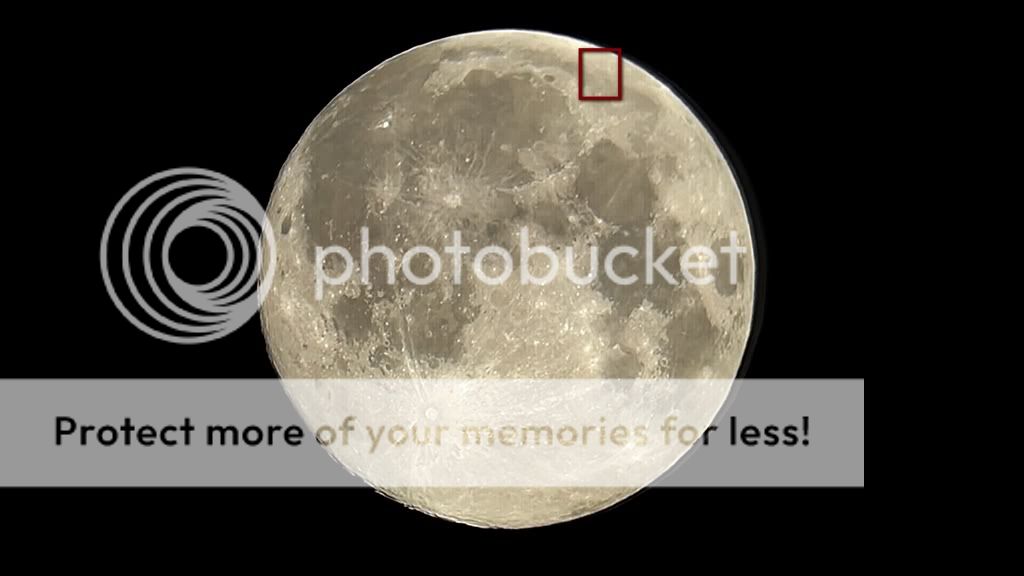
           North of the Moon is less affected by craters, which are dispersed, leaving place to the large lava seas that covered them long time ago. I think that should be more craters on the north of the Moon, but they are covered by lava,and we will never have the opportunity to see them. Geological and cosmic chain of events occurred in its formation, made it look like we see it today.

          The Moon craters are named after great personalities of the branch of science such as astronomers, mathematicians, inventors, but not only (eg crater Michael Jackson, just north of the crater Posidonius).

          Notable craters on the north side of the Moon are Plato 101 km, Aristoteles/ Euxodus-67 and 87 km in diameter, Archimedes of 83 km, and Sinus Iridium (which would have to be a crater, but it was flooded with lava).

List of features on the North side of the Moon:
>Craters:

Alexander
Anaxagoras- young crater with ray system
Anaximander - crater without central peak
Archytas - almost circular crater with sharp edges
Archimedes-large crater without central peak
Aristoteles -presents  uneven crater floor
Aristillus-crater with ray system
Arnold - ancient crater rounded by other impacts
Atlas
Autolycus-have a ray system of 400 km.
Babbage-in this crater there is Babbage A, which is younger.
Baillaud - close to the Moon terminal.
Barrow
Bianchini
Bouguer
Burg - on the center of Lacus Mortis
Barrow-remodeled by other craters and lava flows.
C. Mayer - young crater with sharp edges.
Carpenter
Cassini - contains many craters on its floor.
Calippus - crater surrounded by Caucasus mountains.
Chacornac - distorted crater, irregular.
Challis - eroded crater and hit by older impacts.
Daniell - oval crater.
Delisle
Democritus
Epigenes - eroded crater.
Euctemon - renewed lava crater floor.
Euxodus-crater central peak not present.
Endymion - lunar crater located at the terminal with a low albedo.
Egede-a lava flooded remnant crater.
Fontenelle
Foucault
G. Bond
Galle - crater with sharp edges.
Gartner
Goldschmidt - crater eroded and incised by other impacts.
Grove
Gruithuisen
Hall
Harding
Harpalus
Heis
Hercules - crater with terraced inner walls.
J. Herschel - heavily eroded crater.
Keldish
La Condamine
Lichtenberg
Luther
Main - crater near the north pole.
Mairan - eroded crater.
Markov
Maupertuis
Meton - clover-shaped crater (three combined craters)
Michael Jackson - small craterformer Posidonius J.
Mason
Mitchell - crater attached to the edge of the crater Aristotle.
Mouchez - a remnant of a lunar crater.
Neison
Oenopides - old eroded crater.
Philolaus - crater with a pair of central peaks.
Plana
Plato - large crater filled with lava.
Poncelet
Posidonius - fractured crater floor.
Protagoras - circular crater.
Scoresby - crater with sharp edges.
Sharp - crater surrounded by mountains.
Sheepsharks
Sitter - forms a trio with other two craters.
 South
 Strabo
Timaeus - pentagonal crater with rounded edges.
Theaetetus - polygonal shaped crater.
W. Bond - irregular shaped crater.
 Williams
>Other formations:

Lacus Mortis - strange crater.
Sinus Iridium- a large crater with missing edge.
Vallis Alpes - valley that divides Montes Alpes the two.

Mountains:

Montes Alpes - named after the Alps of Earth.
Montes Apenninus - a wide range of mountain (Mons Huygens is the largest peak).
Montes Caucasus - the highest peaks reach 6000 m.
Mons Pico - isolated mountain on Mare Imbrium.
Mons Piton - isolated mountain on Mare Imbrium.
Montes Recti-mountain with a length of 90 km and width of 20 km).
Montes Spitzbergen - the edge of a crater.
Montes Teneriffe - mountain rises to 2.4 km.

>Seas:

Mare Frigoris - dates from the Imbrian era.
Mare Imbrium - formed when a massive object hit the Moon, and the lava flooded the crater.

>Missions on the north side of the Moon:

Luna 17 & Lunokhod 1 in 1970, was the first of two unmanned rovers that landed on the Moon sent by the Soviet Union, as part of Lunokhod program.
Video below shows the location of features on the Moon's northern hemisphere.


Video: Victor Lupu
Optics: Celestron C8 "-Newtonian telescope, plossl 20mm, 2x Barlow
Mount: CG5 (EQ5)
Device: Sony CX105
Total Magnification: 100x
Resolution: 1920x1080
Bitrate: 16000, FPS: 50
Filter: No
Date: 09/09/2011
Location: Baia Mare, Romania
Edit: Video stabilized in Sony Vegas


To see the photographic map of the north area of the Moon, view:
Photographic map of the Moon: North Zone. Lunar Atlas.

For those who like the pictures of my articles, would be nice to pay attention on advertising that appear in the blog by a click, because it is the only way I could buy one day a better telescope.
Tuesday, 11 December 2012

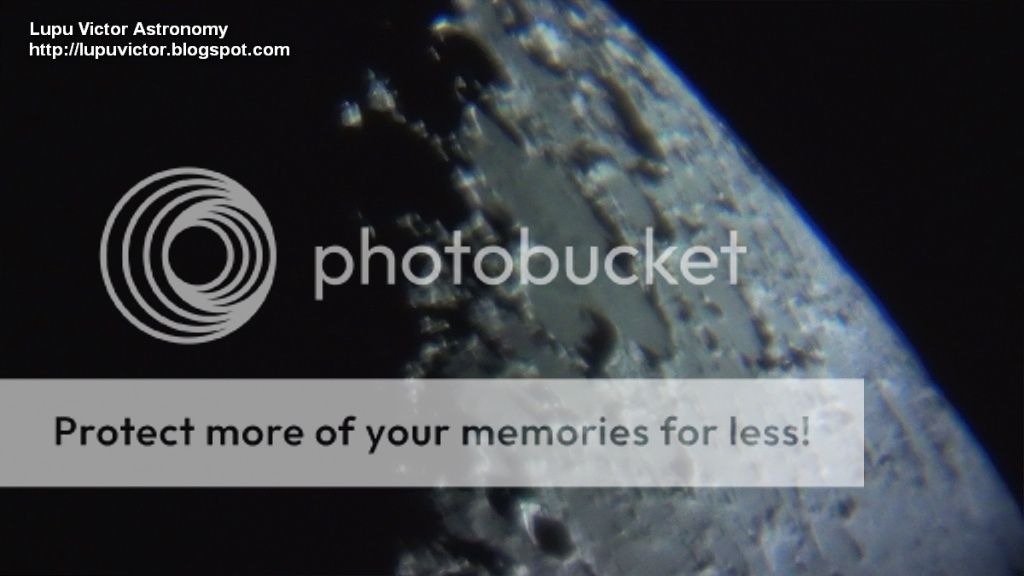
Telescope images of the northern lunar crater Meton


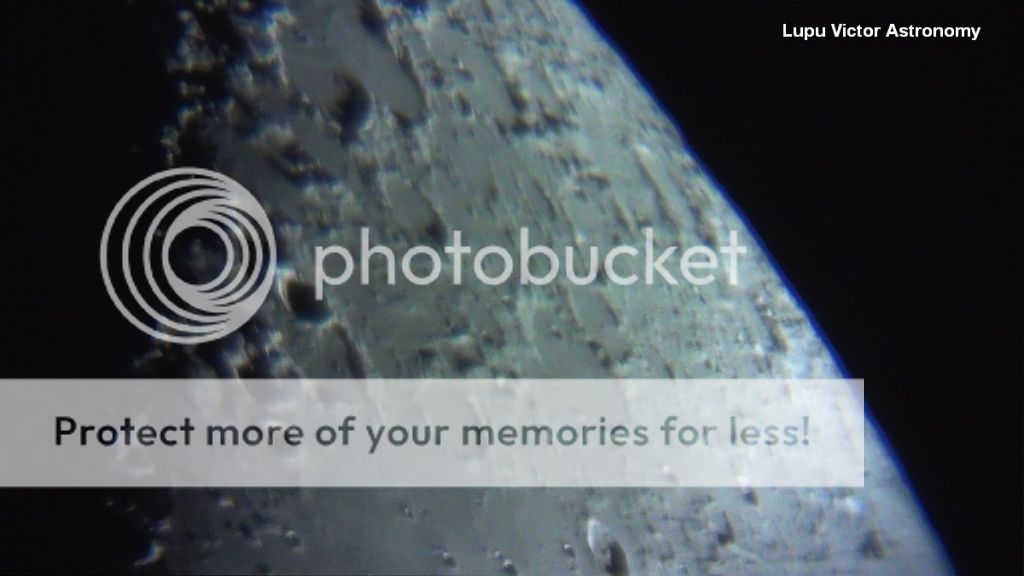
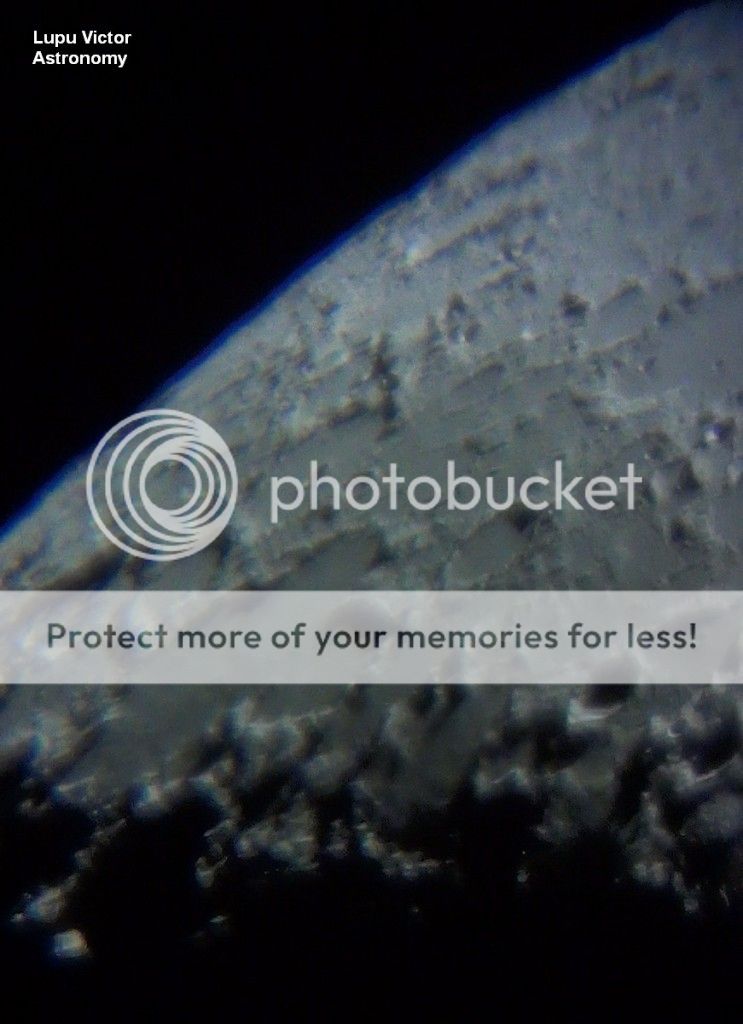
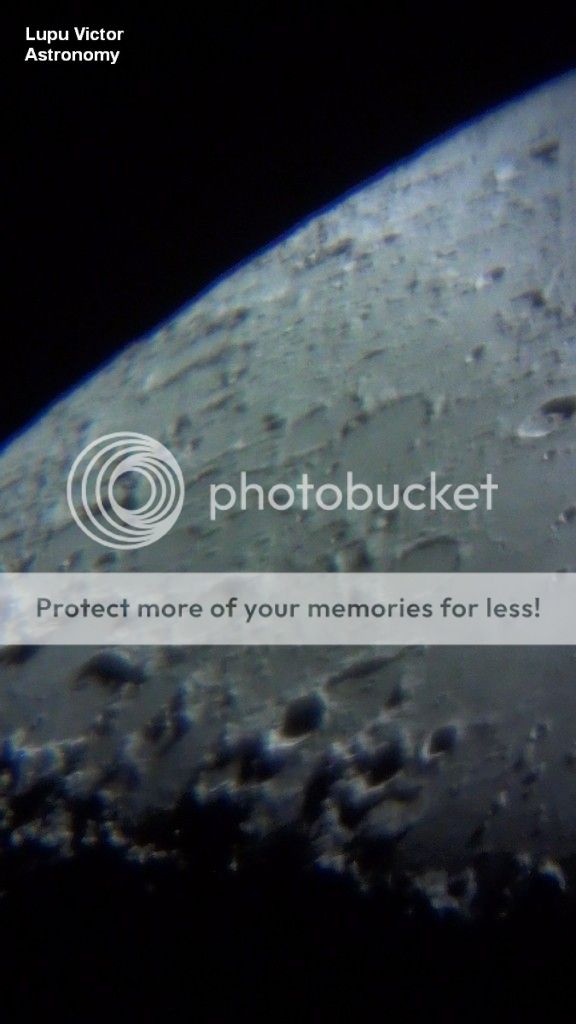
Barrow (93 km), is bordering Goldschmidt at the east side of the wall. Barrow, which in these pictures is full of darkness, enters on the south-west of the crater Meton (122 km), which is a flat crater with a well-defined edge, and laced with a number of large bays: Meton C and D. further east is Neison, a circular crater (53 km), with the floor flat and dark, and northeast of Meton is Baillaud.

In these images are other distinguishable craters as: Arnold, Kane, C. Mayer, and the northernmost being Petermann.

Optics: Celestron C8-Newtonian telescope, 20 mm Plössl, 2x barlow
Mount: CG5 (EQ5)
Camera: Sony CX130
Filter: no
Date: 04/27/2012
Location: Baia Mare, Romania
Processing: video capture, FastStone Image Viewer


Thursday, 19 May 2011

W. Bond and Meton lunar craters


W. Bond is an irregularly shaped crater located on the north side of the Moon, north of Mare Frigoris. It lies east of the crater Epigenes (55 km), and south-west of Barrow (93 km). Along the southwestern edge is Timaeus (33 km).
What remains of the outer edge of W. Bond has been eroded and reshaped. South-eastern edge is relatively well defined, but the rest is irregular, jagged, and not very prominent.
The interior is flat compared to the region where is locared, although there are sections of rough terrain near the north edge. In the center is a narrow rille crossing to the east side. In the interior,to the east, is W. Bond B, a circular crater-shaped bowl. W. Bond C is located on north-east.

Meton (122 km) crater is composed of several merged craters flooded with lava, forming the remnant of some walls in the shape of a clover leaf. Barrow (93 km) is attached to the south-west side. To the northwest is the crater Scoresby (56 km), and at east are Baillaud and Euctemon. Meton C (77 km) is south of the crater is Meton.


Photographer: Victor Lupu
Optics: Celestron C8-Newtonian reflector telescope, plossl 20mm, 2x Barlow
Mount: CG5 (EQ5)
Device: Sony HDR CX105
Filter: No
Date: 13/04/2011
Location: Baia Mare, Romania
Processing: video captures


Thursday, 25 August 2011

Video-Goldschmidt lunar crater through telescope


Video name: Crater Goldschmidt
Video by: Victor Lupu
Optics: Celestron C8-Newtonian telescope, plossl 20mm, 2x Barlow
Mount: CG5 (EQ5)
Device: Sony CX105 at 7x optical zoom
Total magnification: 700x
Resolution: 1920x1080
Focal: 1 "25
Filter: No
Date: 11/05/2011
Location: Baia Mare, Romania
Editing: Sony Vegas 10, stabilized video

In this video stabilized in Sony Vegas are craters near the north pole of the Moon.Crater Goldschmidt (120 km), and tied to the left is Anaxagoras (51 km).
Craters that are not in the center of the objective: left is Barrow and  Epigenes (55 km), below.

Friday, 19 July 2013

Amazing detail of Crater Meton Pictures of Moon

Crater Meton2 frames at 100% best quality


Crater Meton, 186 frames at 90% best quality


I find this area as one of the "quietly" areas on the Moon, although it is full of craters. Most of them were flooded by lava in the past, leaving only the upper parts of their walls visible. For this reason, no crater here has their mountain peaks in the center as in other areas of the moon.

Observe the clover shaped crater in the center of images, because it has several lava-flooded craters rings. This is the crater Meton (122 km), and "leaves" are named in counterclockwise direction: Meton C, D, E and F. As a distinguishing feature of Meton C, see a small whitish spot on its floor, in the center of which is a tiny crater, but it is noticed due to the lighter ejection of material.

Meton, takes its name from Meton of Athens, who lived in the 5th century BC. He was a Greek mathematician, astronomer and engineer.

Scoresby crater (56 km) is located northwest of Meton. Other craters visible in images: Barrow (93 km), Challis (56 km) and Main (46 km), Euctemon (62 km), Nelson (53 km), Baillaud (90 km), C. Mayer (38 km) and Moigno (37 km).

Image processing in Registax of a video that have taken 186 shots, merged to form a single image.


Age of the Moon: 17 days
Phase: 93% (0% = New, 100% = full)
Distance: 394.960 km


Optics: Celestron C8-Newtonian telescope, 20mm Plossl, 2x Barlow
Mount: CG5 (EQ5) motorized
Camera: Sony CX130
Filter: no
Date: 31/12/2012
Location: Baia Mare, Romania
Processing: Registax, FastStone Image Viewer


Sunday, 7 August 2011

Video-Meton and Barrow lunar craters


Video by: Victor Lupu
Optics: Celestron C8-Newtonian telescope, plossl 20mm, 2x Barlow
Mount: CG5 (EQ5)
Device: Sony CX105
Filter: No
Date: 11/05/2011
Location: Baia Mare, Romania
Meton lunar crater is located on the north of the Moon.It has a depth of 2.6 km, and is a formation composed of several craters, rings that were joined by lava flood. The result is a crater-shaped leaf clover.

Sunday, 21 July 2013

HD Video by astronomical telescope Crater Meton on the Moon

The video presented here refers to another article Amazing detail of Crater Meton Pictures of Moon, in which I have presented images extracted from the video in Registax.
 Clarity of the atmosphere was quite acceptable on the day before New Year, but it was very cold, only managing to stay out for a few moments with hot tea in my thermos, but the wind was quite strong especially between the blocks where the wind is more powerful.

Video below, is focused on the north side of the Moon, ie the crater Meton, over which it is observed that some albedo rays traversing. These rays come from the new crater, Anaxagoras (51 km), the ejection being scattered over a large part of the region.
The image is inverted, upside down, as seen through a telescope.

Meton (122 km), which is a crater observed skew from Earth through a telescope due to its northern position of the Moon, and is easily distinguished due to its flower shape like petals. Actually it consists of several craters that were united by lava in the past.

On the first impression is about five craters, but we can not know how many others were in the central area under the hardened lava.

Meton has neighbors many craters: northwest is Scoresby (56 km), northwest Euctemon (62 km), southeast Neison (53 km), south C. Mayer (38 km), and to the west is the crater Barrow (93 km).

In some moments, according to Moon libration, the crater is seen better, so that is not oval, but inclined towards the observer, and thus its characteristics are distinguished better.

The western part of Meton is irregular, its edge being interrupted here and there, and the floor in general is riddled with countless other small craters, which are distinguished only by an 8-inch telescope.

Age of the Moon: 17 days
Phase: 93% (0% = New, 100% = full)
Distance: 396.848 km


Video by Lupu Victor
Optics: CelestronC8 "-Newtonian telescope, plossl 20mm, 2x Barlow
Mount: CG5 (EQ5) motorized
Device: Sony CX-130
Video mode: Full HD progressive 1920x1080
Filter: no
Date: 31/12/2012
Location: Baia Mare, Romania
Processing and editing: Sony Vegas 10


Wednesday, 6 July 2011

On Mare Frigoris-Archytas Protagoras and Timaeus craters

Photographer: Victor Lupu
Optics: Celestron C8-Newtonian telescope, plossl 20mm, 2x Barlow
Mount: CG5 (EQ5)
Device: Sony CX105
Filter: No
Date: 11/05/2011
Location: Baia Mare, Romania
Processing: Sony Vegas 10 video
captures


Mare Frigoris is occupying most of these captures, on which are craters such as Aristoteles, Egede, W. Bond, Barrow, Meton, Protagoras, Archytas and Timaeus.
          Archytas (32 km) is an impact crater , which is on the northern edge of Mare Frigoris. To the northwest is the Timaeus (33 km), comparable in size to Archytas, and Protagoras (22 km), which is smaller,in the opposite direction to the southeast.
Archytas's rim has sharp edges and presents aspects of erosion due to subsequent impacts. Outer wall is nearly circular, with a slight passive bulge southeast. The interior is rough, and has a pair of central peaks.

Friday, 20 May 2011

Goldschmidt and Anaxagoras lunar craters


Photographer: Victor Lupu
Optics: Celestron C8-Newtonian reflector telescope, plossl 20mm, 2x Barlow
Mount: CG5 (EQ5)
Device: Sony HDR CX105
Filter: No
Date: 13/04/2011
Location: Baia Mare, Romania
Processing: video capture

         Goldschmidt (120 km), is a large lunar crater that is located in the north of the Moon. The crater is circular, although the western edge is overlapped by Anaxagoras (51 km). Almost attached to the eastern edge of South-east is Barrow (93 km), the two craters are separated by a robust growth over a 30 km in radius. Further south is Epigenes (55 km).
        Epigenes (55 km) is a lunar crater that lies just north-west of W. Bond crater. North of Epigenes is Goldschmidt,and Birmingham crater lies south-west.
       Crter name is given from Epigenes of Byzantium (Greek: Έπιγένης; unknown-c. 200 BC) who was a Greek astrologer. He was a supporter of astrology, which, though scorned by many Greek intellectuals, was accepted and adopted by many Greeks from the seventh century BC.
        Mouchez (82 km), is the remnant of a lunar crater that is located northwest of Anaxagora.Almost the entire eastern edge of this crater is missing, and the rest is very worn and eroded. This formation looks like a survivor arc from south to north-east. Near the southern end is a small crater Mouchez C.
        Anaxagoras (51 km) is a young crater that lies in the crater Goldschmidt. In the southeast is Epigenes and south is Birmingham. Anaxagoras crater is newer, young enough to have a ray system that has not been eroded. Rays stretch at a distance of over 900 kilometers from the rim of the crater, reaching to Plato to the south.
Name of the crater comes from Anaxagoras (Greek: Ἀναξαγόρας, Anaxagoras, approx. 500 BC - 428 BC) who was a Greek pre-socratic philosopher. Born in Clazomenae , Asia , was the first philosopher who brought philosophy from Ionia to Athens. He tried to give a scientific knowledge of eclipses, meteorites, rainbows and the Sun, which he described as a mass of fire higher than the Peloponnese.

 
All images are © Copyright 2010-2015 Lupu Victor. All rights reserved.Images may not be reproduced, published, or copied in any form without written permission of the author. Thank you for respecting the intellectual property rights. ASTROFOTOGRAFIA | Lupu Victor Astronomy - Contact - About
Design by Free WordPress Themes | Bloggerized by Lasantha - Premium Blogger Themes | Online Project management