Visit Worldwide Topsites
Showing posts sorted by relevance for query Archytas. Sort by date Show all posts

Wednesday, 6 July 2011

On Mare Frigoris-Archytas Protagoras and Timaeus craters

Photographer: Victor Lupu
Optics: Celestron C8-Newtonian telescope, plossl 20mm, 2x Barlow
Mount: CG5 (EQ5)
Device: Sony CX105
Filter: No
Date: 11/05/2011
Location: Baia Mare, Romania
Processing: Sony Vegas 10 video
captures


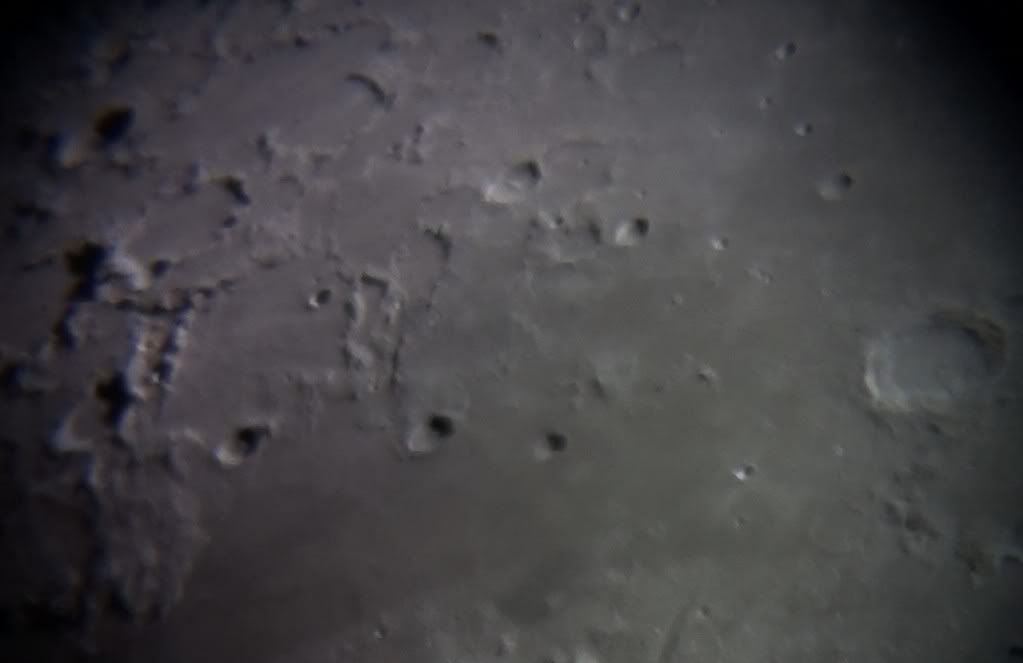
Mare Frigoris is occupying most of these captures, on which are craters such as Aristoteles, Egede, W. Bond, Barrow, Meton, Protagoras, Archytas and Timaeus.
          Archytas (32 km) is an impact crater , which is on the northern edge of Mare Frigoris. To the northwest is the Timaeus (33 km), comparable in size to Archytas, and Protagoras (22 km), which is smaller,in the opposite direction to the southeast.
Archytas's rim has sharp edges and presents aspects of erosion due to subsequent impacts. Outer wall is nearly circular, with a slight passive bulge southeast. The interior is rough, and has a pair of central peaks.

Wednesday, 4 July 2012

All astronomy labels Images Videos News

These are all astronomy labels in one page. If they are too many and did not fit on the main page of the site.You can choose to press 'Ctrl-F' to find what you are interested in.


3D Moon in 3Dfication program(2)About me(6)Accessories(3)Astronomical calendar 2012(1)Astronomical Observatories(1)Astronomical Phylosophy(1)Astronomy news(13)Astronomy Questions and Answers(1)Astronomy terms(2)Astrophotography cameras(2)Astrophotography without telescope(4)Conjunctions(2)Contact me(1)Craters(162)Craters of the center(35)Craters of the east(25)Craters of the north pole(32)Craters of the south pole(50)Craters of the west(29)Craters-Abulfeda and Almanon(4)Craters-Albategnius(4)Craters-Alexander(1)Craters-Apianus(5)Craters-Archimedes(6)Craters-Archytas and Timaeus(2)Craters-Aristarchus and Herodotus(2)Craters-Aristillus and Autolycus(4)Craters-Aristoteles and Eudoxus(8)Craters-Arzachel Thebit and Rupes Recta(5)Craters-Bailly(2)Craters-Balmer and Vendelinus(4)Craters-Biela(2)Craters-Boussingault(9)Craters-Bullialdus(2)Craters-Burg(1)Craters-Byrgius(2)Craters-Capuanus and Palus Epidemiarum(4)Craters-Casatus and Klaproth(2)Craters-Cassini and Vallis Alpes(5)Craters-Catharina(4)Craters-Clavius(7)Craters-Cleomedes(4)Craters-Condorcet(5)Craters-Copernicus(7)Craters-Crüger(1)Craters-Dalambre Taylor and Dolland(1)Craters-Deslandres and Lexell(3)Craters-Endymion(4)Craters-Eratosthenes and Sinus Aestuum(4)Craters-Firmicus and Apollonius(3)Craters-Flammarion Mösting Gyldén and Réaumur(1)Craters-Fracastorius(1)Craters-Furnerius(2)Craters-Gassendi(7)Craters-Geber Abenezra and Azophi(1)Craters-Goldschmidt and Anaxagoras(8)Craters-Grimaldi(6)Craters-Guericke and Parry(1)Craters-Gutenberg(1)Craters-Gärtner and Democritus(1)Craters-Hainzel(3)Craters-Heraclitus and Licetus(6)Craters-Hercules and Atlas(7)Craters-Hommel and Pitiscus(1)Craters-J. Herschel(1)Craters-Janssen(3)Craters-Julius Caesar(4)Craters-Kepler(4)Craters-Langrenus(3)Craters-Letrone(1)Craters-Lilius(1)Craters-Macrobius(4)Craters-Manilius(3)Craters-Manzinus and Curtius(2)Craters-Maurolycus and Barocius(6)Craters-Menelaus(5)Craters-Messala and Geminus(1)Craters-Moretus(9)Craters-Nearch Jacobi and Boguslawsky(3)Craters-Oenopides(1)Craters-Orontius(4)Craters-Pallas and Murchison(3)Craters-Pentland Scott and Demonax(3)Craters-Petavius(7)Craters-Philolaus(2)Craters-Phocylides and Nasmyth(5)Craters-Piccolomini(5)Craters-Plato(7)Craters-Plinius(4)Craters-Pontecoulant(2)Craters-Posidonius(5)Craters-Proclus(6)Craters-Ptolemaeus Alphonsus and Alpetragius(5)Craters-Reinshold and Lansberg(1)Craters-Rhaeticus(1)Craters-Rheita and Metius(5)Craters-Sasserides and Gauricus(1)Craters-Scheiner(4)Craters-Schickard(10)Craters-Schiller(6)Craters-Scoresby(1)Craters-Steinheil and Watt(2)Craters-Stevinus and Snellius(3)Craters-Strabo and Thales(1)Craters-Stöfler and Maurolycus(2)Craters-Theaetatus and Calippus(3)Craters-Theophilus and Cyrillus(4)Craters-Triesnecker(4)Craters-Tycho Longomontanus and Maginus(12)Craters-Vega(3)Craters-Vieta Mersenius and Cavendish(2)Craters-Vlacq and Rosenberger(2)Craters-W.Bond and Meton(6)Craters-Walther Purbach and Regiomontanus(6)Craters-Wilhelm and Pitatus(2)Craters-Wolf(1)Craters-Zucchius Bettinus Kircher(2)Download astronomy softwares(3)DSLR astronomy pictures(10)Eclipses(6)Eclipses-Lunar(4)Eclipses-Solar(1)Equipment(5)Eyepieces(1)Gallery(12)Gallery- Mosaics(2)Gallery-DSLR(17)Gallery-Registax(21)Gallery-Snapshots(12)How to(7)How to edit a picture(2)How to know names of Moon craters(1)How to maintain Newtonian telescope's mirror(1)How to mount DSLR to the telescope(1)How to take pictures of the Moon(1)How to work astrophotography(1)Lacus Excellentiae(1)Lacus Mortis(1)Lacus Somniorum(2)Lacus Timoris(1)Lakes on the Moon(1)Lunar atlas Center maps(1)Lunar atlas East maps(1)Lunar atlas North maps(1)Lunar atlas South maps(1)Lunar atlas West maps(1)Map of the Moon craters(1)Mare Australe(1)Mare Crisium(7)Mare Fecunditatis(1)Mare Frigoris(3)Mare Humorum(4)Mare Imbrium(1)Mare Marginis(1)Mare Nectaris(2)Mare Nubium(1)Mare Oceanus Procellarum(3)Mare on the Moon Lunar Seas(2)Mare Serenitatis and Mare Tranquillitatis(6)Mare Smythii(1)Mare Spumans(4)Mare Undarum(4)Mare Vaporum(1)Montes Alpes(3)Montes Apenninus(6)Montes Carpatus(1)Montes Caucasus(3)Montes Haemus(2)Montes Jura(3)Montes Riphaeus(1)Montes Spitzbergen(2)Montes Taurus(1)Moon Art(13)Moon Perigee(1)Moon Sun Halo(1)Mosaics(6)Mountains of the Moon(14)My way of editing Moon photos(4)Occultations(1)Palus Somni(3)Planets(16)Planets-Jupiter(9)Planets-Mars(3)Planets-Saturn(8)Planets-Venus(8)Rupes Altai(4)Sinus Iridium(7)Sinus Lunicus(2)Sinus Medii(1)Sinus Succesus(1)Stars(9)Stars-Aldebaran(1)Stars-Arcturus(2)Stars-Betelgeuse(2)Stars-Casiopeia(1)Stars-Orion(4)Stars-Pleiades(4)Stars-Rigel(1)Stars-Sirius(2)Sunspots(6)Telescopes(1)The colours of the Moon(4)The Moon(9)The Sun(9)Things about the Moon(5)Venus transition 2012(2)Videos of the Moon(120)Weird sightings(3)Wich camera is good for astrophotography?(4)


Monday, 28 November 2011

The Chain of craters on Mare Frigoris caused by a single asteroid? - Telescope images

Photographer: Victor Lupu
Optics: Celestron C8-Newtonian telescope, plossl 20mm, 2x Barlow
Mount: CG5 (EQ5)
Device: Sony CX105 at 8x optical zoom
Total: 800x
Filter: no
Date: 11/05/2011
Location: Baia Mare, Romania
Processing: Sony Vegas 10 video captures


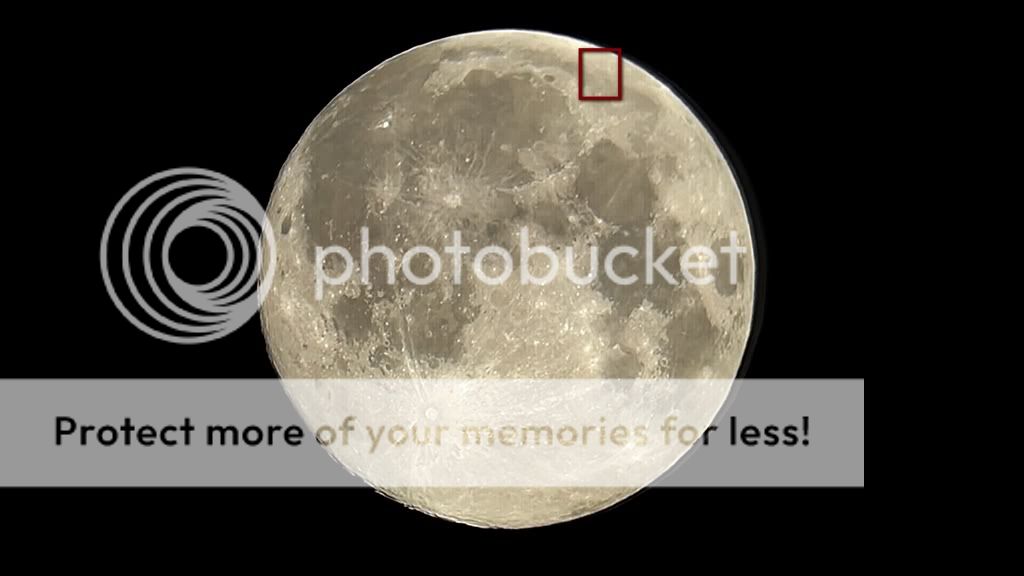
A chain of craters that pass near the west of the giant crater W. Bond is seen in video capture images in this article. The chain of craters (see photo below to see where it is), starts with large craters and ends with the smallest one (Aristoteles A).

When I see these chain craters which diminishes in size, I wonder if they have a single source, a single body that disintegrated before touching the lunar surface.


 A good example is the comet Comet Shoemaker-Levy 9 (D/1993 F2 official), a the comet that disintegrated before reaching Jupiter (crashed in July 1994, providing the first direct observation of an extraterrestrial collision of solar system objects).


So these lunar craters below, that I listed from largest to smallest, I think that comes from the impact of a single body that disintegrated, causing a chain:
-Anaxagoras (51 km) attached to the western edge of Goldschmidt
-Epigenes (55 km) located northwest of W. Bond
-Timaeus (33 km) which is located at the southwest edge of W. Bond, on Mare Frigoris
-Archytas (32 km) which is on Mare Frigoris

-Protagoras (22 km) which is on Mare Frigoris
-Aristotle A It is the small crater in the chain, and that on Mare Frigoris

Anaxagoras and Epigenes craters in my opinion, could be caused from the impacts of individual asteroids, although I do not think so, but these have as source a single fireball that disintegrated before meeting with the lunar surface.


Wednesday, 12 October 2011

North craters of the Moon-Lunar Features

            16 july 2011 picture of north's Moon through my telescope


           North of the Moon is less affected by craters, which are dispersed, leaving place to the large lava seas that covered them long time ago. I think that should be more craters on the north of the Moon, but they are covered by lava,and we will never have the opportunity to see them. Geological and cosmic chain of events occurred in its formation, made it look like we see it today.

          The Moon craters are named after great personalities of the branch of science such as astronomers, mathematicians, inventors, but not only (eg crater Michael Jackson, just north of the crater Posidonius).

          Notable craters on the north side of the Moon are Plato 101 km, Aristoteles/ Euxodus-67 and 87 km in diameter, Archimedes of 83 km, and Sinus Iridium (which would have to be a crater, but it was flooded with lava).

List of features on the North side of the Moon:
>Craters:

Alexander
Anaxagoras- young crater with ray system
Anaximander - crater without central peak
Archytas - almost circular crater with sharp edges
Archimedes-large crater without central peak
Aristoteles -presents  uneven crater floor
Aristillus-crater with ray system
Arnold - ancient crater rounded by other impacts
Atlas
Autolycus-have a ray system of 400 km.
Babbage-in this crater there is Babbage A, which is younger.
Baillaud - close to the Moon terminal.
Barrow
Bianchini
Bouguer
Burg - on the center of Lacus Mortis
Barrow-remodeled by other craters and lava flows.
C. Mayer - young crater with sharp edges.
Carpenter
Cassini - contains many craters on its floor.
Calippus - crater surrounded by Caucasus mountains.
Chacornac - distorted crater, irregular.
Challis - eroded crater and hit by older impacts.
Daniell - oval crater.
Delisle
Democritus
Epigenes - eroded crater.
Euctemon - renewed lava crater floor.
Euxodus-crater central peak not present.
Endymion - lunar crater located at the terminal with a low albedo.
Egede-a lava flooded remnant crater.
Fontenelle
Foucault
G. Bond
Galle - crater with sharp edges.
Gartner
Goldschmidt - crater eroded and incised by other impacts.
Grove
Gruithuisen
Hall
Harding
Harpalus
Heis
Hercules - crater with terraced inner walls.
J. Herschel - heavily eroded crater.
Keldish
La Condamine
Lichtenberg
Luther
Main - crater near the north pole.
Mairan - eroded crater.
Markov
Maupertuis
Meton - clover-shaped crater (three combined craters)
Michael Jackson - small craterformer Posidonius J.
Mason
Mitchell - crater attached to the edge of the crater Aristotle.
Mouchez - a remnant of a lunar crater.
Neison
Oenopides - old eroded crater.
Philolaus - crater with a pair of central peaks.
Plana
Plato - large crater filled with lava.
Poncelet
Posidonius - fractured crater floor.
Protagoras - circular crater.
Scoresby - crater with sharp edges.
Sharp - crater surrounded by mountains.
Sheepsharks
Sitter - forms a trio with other two craters.
 South
 Strabo
Timaeus - pentagonal crater with rounded edges.
Theaetetus - polygonal shaped crater.
W. Bond - irregular shaped crater.
 Williams
>Other formations:

Lacus Mortis - strange crater.
Sinus Iridium- a large crater with missing edge.
Vallis Alpes - valley that divides Montes Alpes the two.

Mountains:

Montes Alpes - named after the Alps of Earth.
Montes Apenninus - a wide range of mountain (Mons Huygens is the largest peak).
Montes Caucasus - the highest peaks reach 6000 m.
Mons Pico - isolated mountain on Mare Imbrium.
Mons Piton - isolated mountain on Mare Imbrium.
Montes Recti-mountain with a length of 90 km and width of 20 km).
Montes Spitzbergen - the edge of a crater.
Montes Teneriffe - mountain rises to 2.4 km.

>Seas:

Mare Frigoris - dates from the Imbrian era.
Mare Imbrium - formed when a massive object hit the Moon, and the lava flooded the crater.

>Missions on the north side of the Moon:

Luna 17 & Lunokhod 1 in 1970, was the first of two unmanned rovers that landed on the Moon sent by the Soviet Union, as part of Lunokhod program.
Video below shows the location of features on the Moon's northern hemisphere.


Video: Victor Lupu
Optics: Celestron C8 "-Newtonian telescope, plossl 20mm, 2x Barlow
Mount: CG5 (EQ5)
Device: Sony CX105
Total Magnification: 100x
Resolution: 1920x1080
Bitrate: 16000, FPS: 50
Filter: No
Date: 09/09/2011
Location: Baia Mare, Romania
Edit: Video stabilized in Sony Vegas


To see the photographic map of the north area of the Moon, view:
Photographic map of the Moon: North Zone. Lunar Atlas.

For those who like the pictures of my articles, would be nice to pay attention on advertising that appear in the blog by a click, because it is the only way I could buy one day a better telescope.

Tuesday, 16 April 2013

Region between Plato and Aristotle craters Images by Telescope


In these photographs, the crater Plato (101 km), is close to the terminal, the boundary between light and darkness. Shadow of the eastern edge, is covering nearly half of the crater floor, projecting the sharp peaks in some aggressive forms on the smooth plateau of the crater.

In these photos, note Montes Alpes, separated by a cut, a valley called Vallis Alpes. It has a length of 166 km. If you start with a car at one end, you will get to the other in about 2h 30m-3h.

In the upper region, is a part of Mare Frigoris, which lies to the north of these mountains, and which are scattered by a few craters. These are the Timaeus (33 km), Archytas (32 km) and Protagoras (22 km).

  Egede flooded crater (37 km), is located right of the Alpes mountains, on which remained visible just the upper edge, having a ring aspect. Aristoteles (87 km), is the largest crater in the photos, which you can see on right in the images.

Age of the Moon: 7 days
Phase: 51% (0% = New, 100% = Full)
Distance: 384.488 km


Optics: Celestron C8-Newtonian telescope, 20mm Plossl, 2x Barlow
Mount: CG5 (EQ5)
Camera: Sony CX130
Filter: no
Date: 29.04.2012
Location: Baia Mare, Romania
Processing: video captures, FastStone Image Viewer


All images are © Copyright 2010-2015 Lupu Victor. All rights reserved.Images may not be reproduced, published, or copied in any form without written permission of the author. Thank you for respecting the intellectual property rights. ASTROFOTOGRAFIA | Lupu Victor Astronomy - Contact - About
Design by Free WordPress Themes | Bloggerized by Lasantha - Premium Blogger Themes | Online Project management