Visit Worldwide Topsites
Showing posts with label Craters. Show all posts

Friday, 13 January 2012

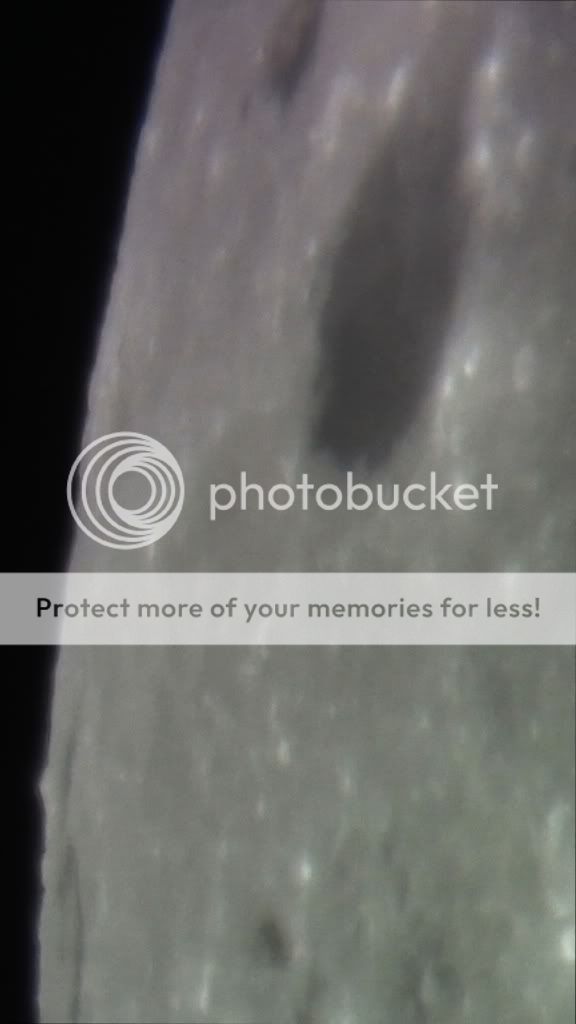
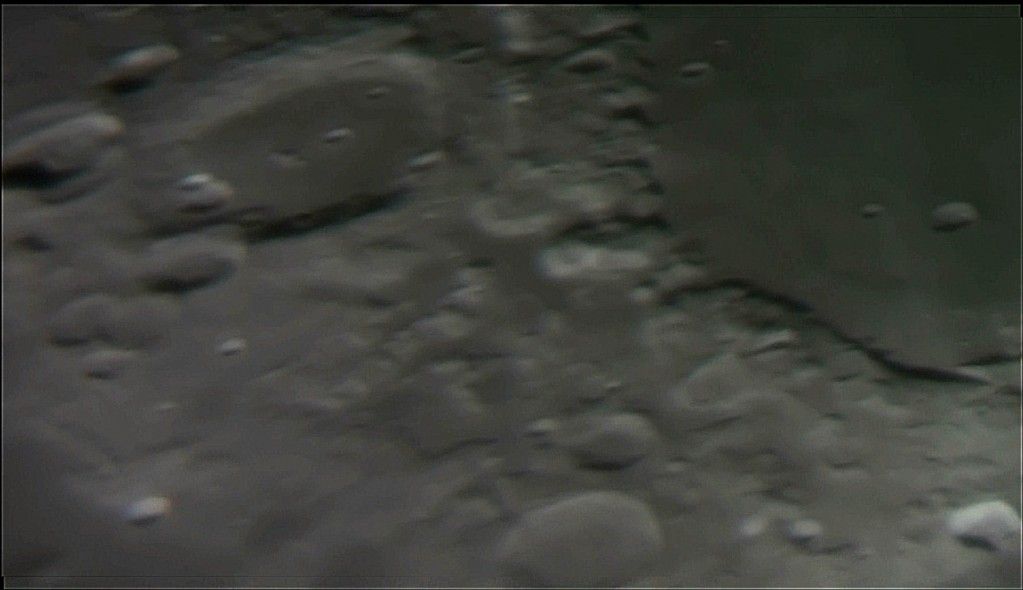
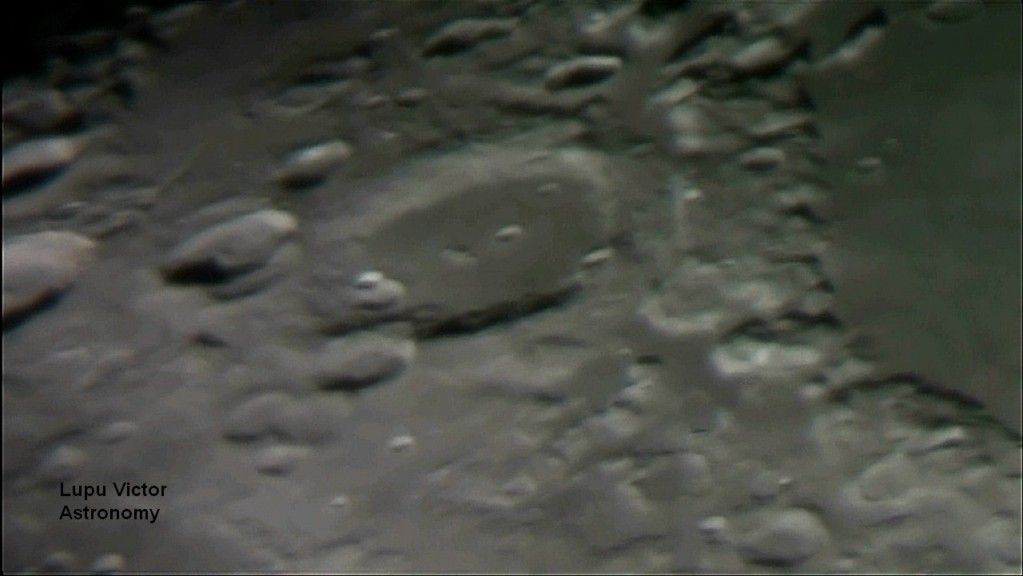
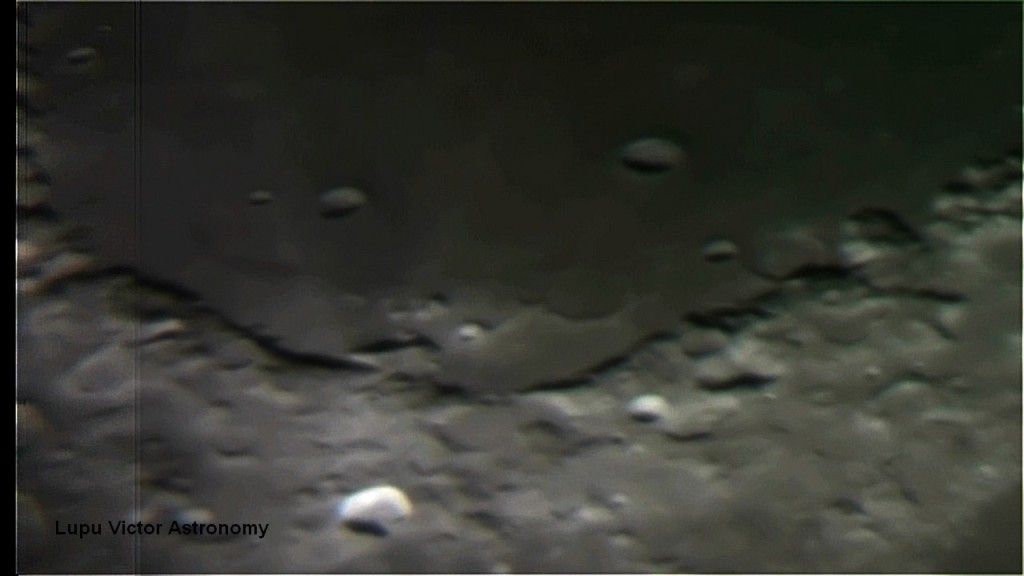
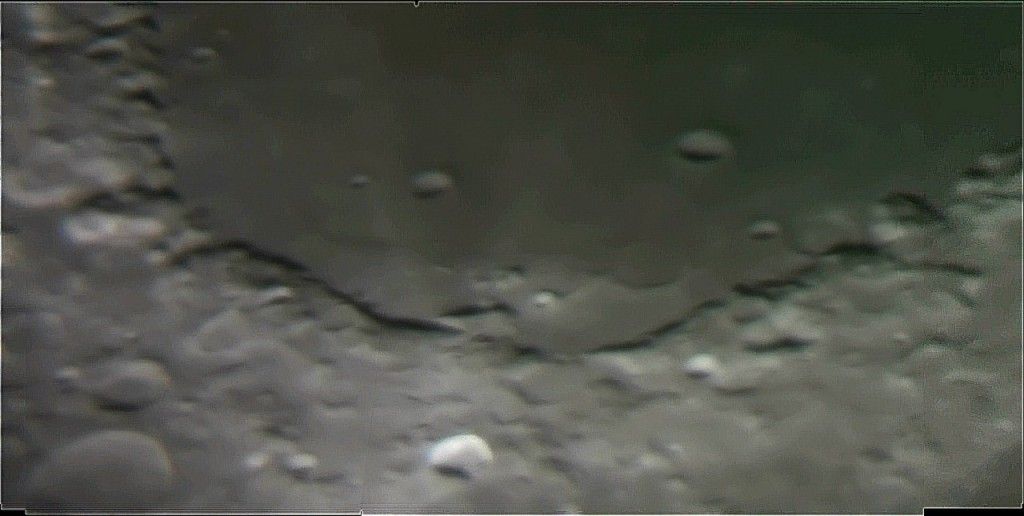
Astronomical telescope images. Grimaldi crater area in light.


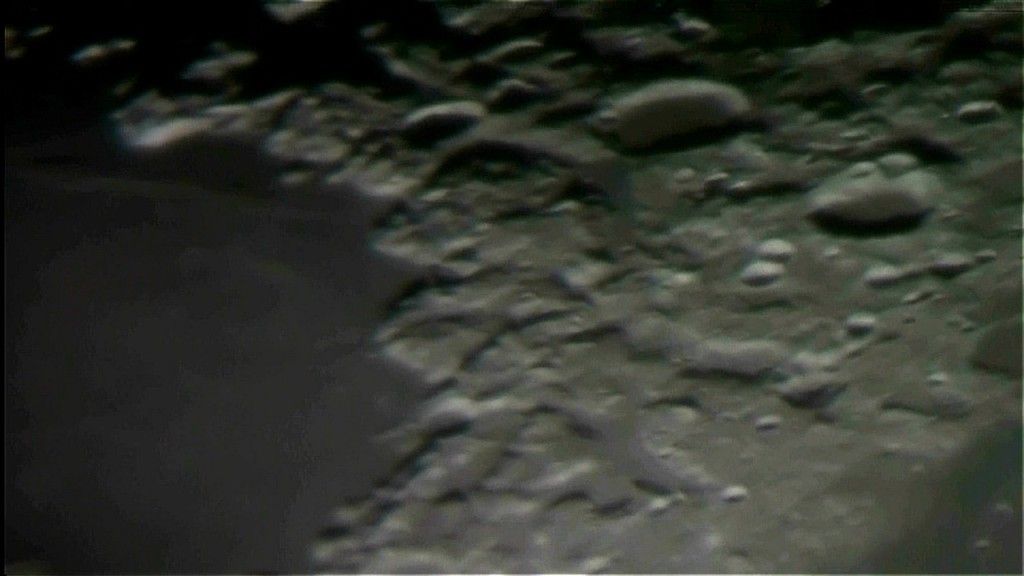
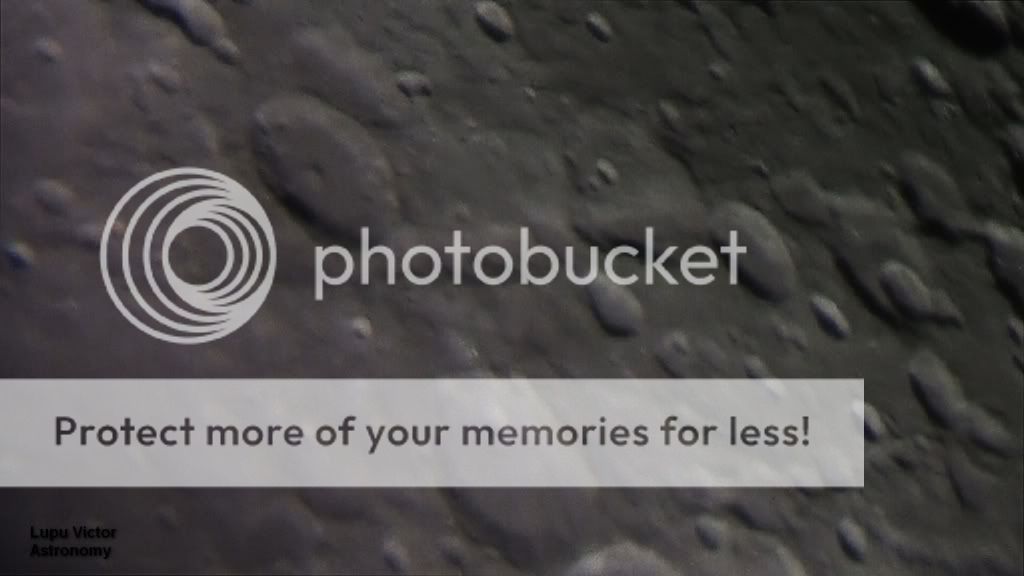
In these astronomical photos by telescope is Grimaldi crater. It is the largest dark stain. These captured images from the wastern part of the Moon to terminal, are in sunlight, so it's all about dark spots and bright spots, not shadows.

According to the arrangement of pictures from top to bottom, Grimaldi gradually makes its appearance in the foreground. This crater has the appearance of a sea rather then a crater.

All features seen in this area have an oval shape because their positions on the Moon, but most are circular.

The other dark spot on the northwest of Grimaldi, is Riccioli Rima. A few miles south of Grimaldi, is Crüger crater (45 km). The most distinctive feature of this crater is the very dark floor, which is a crater with the lowest albedo features on the Moon. Lacus Aestatis (90 km) or "Lake of summer", is located northwest of Crüger.


Photographer: Victor Lupu
Optics: Celestron C8-Newtonian telescope, plossl 20mm, 2x Barlow
Mount: CG5 (EQ5)
Device: Sony CX105 to 6x optical zoom
Total Magnification: 600x
Filter: no
Date: 08/16/2011
Location: Baia Mare, Romania
Processing: video capture, FastStone Image Viewer

Monday, 9 January 2012

Astro pictures through telescope: Craters Firmicus Apollonius and Mare Spumans. Lunar selenology.


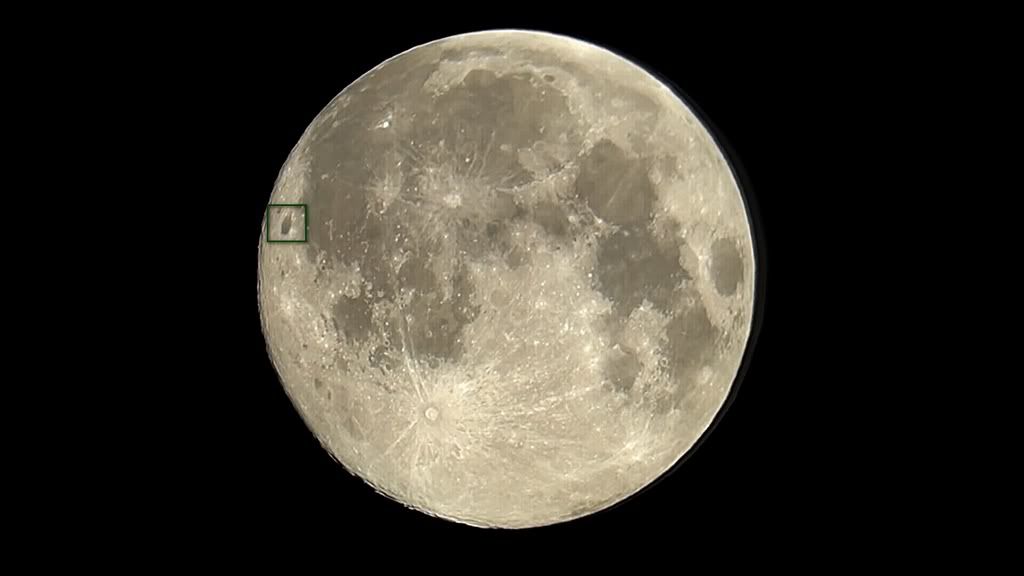
These craters of the Moon are located on the west as seen from the Earth (which is always the same face toward us).

 In the photos below I put the name of each crater or sea, to be easier to locate, and craters with satellite craters named with letters, have their colors.
These astronomical pictures are from the video that can be found here: Video by astronomical telescope-near Western Mare Crisium.

    Firmicus (56 km), is a lunar crater that is located in the eastern part of the Moon, and appears oval due to its position near the edge. It is however almost circular.The crater is located west of the Mare Undarum, and northeast of the crater Apollonius (53 km), similar in size. North of Firmicus are craters van Albada (22 km) and Auzout (33 km). Annexed to the northwest edge, is Lacus Perseverantiae wich is a Moon sea in miniature.

Apollonius (53 km), is a lunar crater located west of the Mare Undarum, north-east of Sinus Successus wich lies on Mare Fecunditatis, and north of Condon crater (35 km).
Apollonius's outer rim is somewhat worn and is superimposed by a pair of small craters (including Apollonius E) on the west wall. The  interior is almost flat, the floor has a low albedo and has been covered by lava. It has no central peak or notble small craters on the floor.
Both craters, Firmicus and Apollonius have a depth of 1.5 km.

Mare Spumans (139 km), from Latin "foaming sea", is visible in these lunar images, and is located south of Mare Undarum. Apollonius W crater is located on the western edge of the sea, and south os the Mare is Maolaurin crater (50 km), and its sateklite craters T (35 km) and H (44 km).


Photographer: Victor Lupu
Optics: Celestron C8-Newtonian telescope, plossl 20mm, 2x Barlow
Mount: CG5 (EQ5)
Device: Sony CX105 to 8x optical zoom
Total Magnification: 800x
Filter: no
Date: 08/16/2011
Location: Baia Mare, Romania
Processing: video capture, FastStone Image Viewer

Friday, 6 January 2012

Astronomy lecture.Western Mare Crisium.Pictures by telescope


These captures of western Crisium sea through the telescope, are presented in another article: Video by astronomical telescope-near Western Mare Crisium.
There are many present craters on this large area, and I will only talk about features that were not discussed before.

We start with Burkhardt crater (57 km), which is located between craters Geminus (86 km), on north, and Cleomedes on south.
Burckhardt is located on two slightly smaller-sized craters on the opposite sides, producing a triple crater formation. Burckhardt E (39 km), is covered by the southwest quadrant of Burckhardt's, while Burckhardt F (43 km), is covered by the northwest quadrant. Crater rim is circular, but somewhat irregular in shape. There is a central peak near the midpoint of the crater floor.

Stucked in the western edge of the crater Cleomedes, is Tralles, and to the east of Cleomedes is the crater Delmotte (32 km), a small crater, whose characteristics are difficult to see because of its position.

Continue to the next photo description below, are craters Macrobius and Tisserand, 64 and 37 km, crater ray Proclus (28 km), and west of Proclus is Palus Somni , an area of 143 km,.

In the third picture below, there are many small craters on the surface of the sea, but also on its edge.
Peirce crater (19 km) with Picard (23 km), are those who are most "into the sea" of Crisium.
Picard's interior has a series of terraces, which seismologists have attributed to a collapse of the crater floor. The lowest point of the crater floor is about 2000 meters below its rim, and has a small hill in the center.

Other craters located further to the edge of the sea are Yerkes (36 km), Lick (31 km), Greaves (14 km), and Glaisher crater (16 km).

Yerkes crater (36 km), it seems interesting, because its inside was almost completely flooded by lava, leaving only a shallow remnant edge above the seaand the edge is the most visible in west. The floor has a similar albedo with the large Crisium sea, so Yerkes's features are not distinct by surroundings.

About craters Firmicus (56 km) and Apollonius (53 km), I will speak in another article dedicated to them.


Photographer: Victor Lupu
Optics: Celestron C8-Newtonian telescope, plossl 20mm, 2x Barlow
Mount: CG5 (EQ5)
Device: Sony CX105 to 8x optical zoom
Total Magnification: 800x
Filter: no
Date: 08/16/2011
Location: Baia Mare, Romania

Processing: video capture, FastStone Image Viewer


Above are images processed in Registax.

Tuesday, 3 January 2012

Astronomy lecture-Photos by telescope.Crater Metius


Rheita and Metius craters through the telescope.
 Metius crater, 88 km across, I forgot to describe it.
Metius is an impact crater located in rugged mountainous areas southeast of the Moon. The rim of the southwest is close to Fabricius. To the northwest is the crater Brenner. Proceeding to the northeast is Rheita and the long valley, Vallis Rheita.

The floor is relatively flat, with small central peaks. Most prominent crater on the floor is Metius B, 14 km, located near the northeastern edge.
This crater is the eponymous of dutch geometer and astronomer Adriaan Adriaanszoon, which was known as Metius.

Photographer: Victor Lupu
Optics: Celestron C8-Newtonian telescope, plossl 20mm, 2x Barlow
Mount: CG5 (EQ5)
Device: Sony CX105 to 8x optical zoom
Total Magnification: 800x
Filter: no
Date: 08/16/2011
Location: Baia Mare, Romania
Processing: video capture, FastStone Image Viewer

Friday, 30 December 2011

Astronomy lecture-crater Biela-telescope images


Biela crater (76 km), is a lunar impact crater on the rugged highlands of the Moon's south-east and has a depth of 3.1 km. The crater is east of Rosenberger, and south-east of the Watt-Steinheil double craters.

 The rim of the crater is covered by a pair of small craters, but notable: Biela C (26 km) on north-east edge and Biela W (16 km) along the western inner wall. Biela B crater (43 km) is attached to the outer edge of the southwest. Biela's edge remains relatively well-defined, especially in the southeast.

The interior is flat and without notable small craters on it. There is a central peak formation, three ridges located to the north-east of the midpoint.

Biela, was named after Baron Wilhelm von Biela,-( Wilhelm Freiherr von Biela ), (March 19, 1782 - February 18, 1856) which was a German-Austrian officer and an amateur astronomer.
Photographer: Victor Lupu
Optics: Celestron C8-Newtonian telescope, plossl 20mm, 2x Barlow
Mount: CG5 (EQ5)
Device: Sony CX105 to 8x optical zoom
Total Magnification: 800x
Filter: no
Date: 08/16/2011
Location: Baia Mare, Romania
Processing: video capture, FastStone Image Viewer

Thursday, 29 December 2011

Pontécoulant crater. Pictures by telescope


Pontécoulant (91 km), is a prominent impact crater that is located in the south-east of the Moon, which has a depth of 1.8 km. Because of its position, appears oval in shape seen from the Earth and it is difficult to see much detail. Nearby craters Hanno (56 km) north-east, and on south, comparable in size, is Helmholtz.

This crater has a terraced inner wall, which is almost circular, but with an outward extension to the south-est.B The rim is somewhat affected, but retains many details. Pontécoulant partially overlaps Pontécoulant E (44 km), a crater wich is older, on the southern edge.

Crater's name is Gustave Doulcet Philippe, Comte of Pontécoulant (1795-1874), who was a French astronomer.

Photographer: Victor Lupu
Optics: Celestron C8-Newtonian telescope, plossl 20mm, 2x Barlow
Mount: CG5 (EQ5)
Device: Sony CX105 to 8x optical zoom
Total Magnification: 800x
Filter: no
Date: 08/16/2011
Location: Baia Mare, Romania
Processing: video capture, FastStone Image Viewer

Tuesday, 27 December 2011

List of south features of the Moon-Southern lunar Hemisphere


Southern hemisphere of the Moon is in rough terrain, heavily cratered and with mountainous areas.
At the poles, the sun is always at small angles, so this is creating a unique environment, but also some difficulties in interpreting the geological region.
The southern hemisphere of the Moon craters are very different in size, appearance and how they were formed by impacts in the past.
Personally, the most interesting craters on south, I find Tycho, a crater with rays showing a very high albedo, rays that are left behind from the initial impact, wich can be seen from Earth with the naked eye or binoculars.
Another great crater is Clavius​​, a large crater with other small craters lying inside it in a decreasing order to form a spiral.
Shiller is another crater, interesting to me because of its elongated shape similar to a caterpillar.
 On the southern hemisphere of the Moon seen from Earth, there is only a sea, Mare Nubium that penetrate down to the crater Pitatus.

There are not mountains on the Moon's southern hemisphere. Maybe were probably destroyed by countless impacts were.

Most notable craters of the Moon southern hemisphere, in alphabetical order, are:

Aliacensis
Apianus
Asclepi
Baco
Ball

Barocius
Biela
Blanchinus
Boguslawsky
Bosching
Boussingault
Brown
Buch
Casatus
Cichus
Clairaut
Clavius
Curtius
Cuvier
Cysatus
Deluc
Demonax
Deslandres
Fabricius
Faraday
Fernelius
Frisius
Gauricus
Gemma
Gruemberger
Hagecius
Heinsius
Hell
Helmholtz
Heraclitus
Hommel
Jacobi
Janssen
Kaiser
Kinau
Klaproth
Lexell
Licetus
Lilius
Longomontanus
Maginus
Manzinus
Maurolycus
Metius
Miller
Montanari
Moretus
Mutus
Neander
Nearch
Neumayer
Newton
Nonius
Orontius
Pentland
Picret
Pitatus
Pitiscus
Playfair
Poisson
Pontanus
Pontecoulant
Proctor
Rabbi Levi
Rheita
Riccius
Rosenberger
Sasserides
Saussure
Sempilius
Short
Scheiner
Schiller
Schomberger
Scott
Steinheil
Stofler
Tannerus
Tycho
Vlaq
Watt
Weiss
Werner
Wilhelm
Wurzelbauer
Zach


Seas:
Mare Nubium

Space missions on the south side of the Moon:
Ranger 9 was launched on March 24, 1965 by United States of America and was intentionally crashed on the lunar surfaceon crater Alphonsus.
Ranger 9 was designed to achieve an impact trajectory and to transmit pictures of the lunar surface in high-resolution during the flight until the impact.
  Ranger 9 successfully transmitted 5814 images with a resolution of up to 1.5 m.

LCROSS United States launched the LCROSS (Lunar Crater Observation and Sensing Satellite) which was deliberately crashed into the Moon's south pole on crater Cabeus on October 9, 2009
The mission was designed to search for water ice on the lunar surface and examining the resulting cloud, caused by impact. The mission ended with the discovery of significant amounts of water.

Moon Impact Probe was launched by India, and it was deliberately crashed on 14 November 2008 at the lunar south pole.
 It had 35 kg, and was released from Chandrayaan-1 Lunar Orbiter. It was equipped with a video camera, a radar altimeter and a mass spectrometer.


Video: Victor Lupu
Optics: CelestronC8 "-Newtonian telescope, plossl20mm, 2x Barlow
Mount: CG5 (EQ5)
Device: SonyCX105 at 7x optical zoom
Total Magnification: 700x
Filter: no
Date: 16/08/2011
Location: Baia Mare, Romania
Processing and editing: Sony Vegas 10


To see the photographic map of the south area of the Moon, view: Photographic map of the Moon: South Zone. Lunar Atlas.

For those who like my astro pictures or my articles, it woul be great if you could pay attention on advertising that appear in the blog by a click and maybe one day I could buy a better telescope.

 
All images are © Copyright 2010-2015 Lupu Victor. All rights reserved.Images may not be reproduced, published, or copied in any form without written permission of the author. Thank you for respecting the intellectual property rights. ASTROFOTOGRAFIA | Lupu Victor Astronomy - Contact - About
Design by Free WordPress Themes | Bloggerized by Lasantha - Premium Blogger Themes | Online Project management